Pickleball Backhand Dink: Choose Bounce or Volley Without Reaching
Learn when to let a backhand dink bounce and when to take it out of the air, using contact space, balance, paddle stability, and recovery as your decision cues.
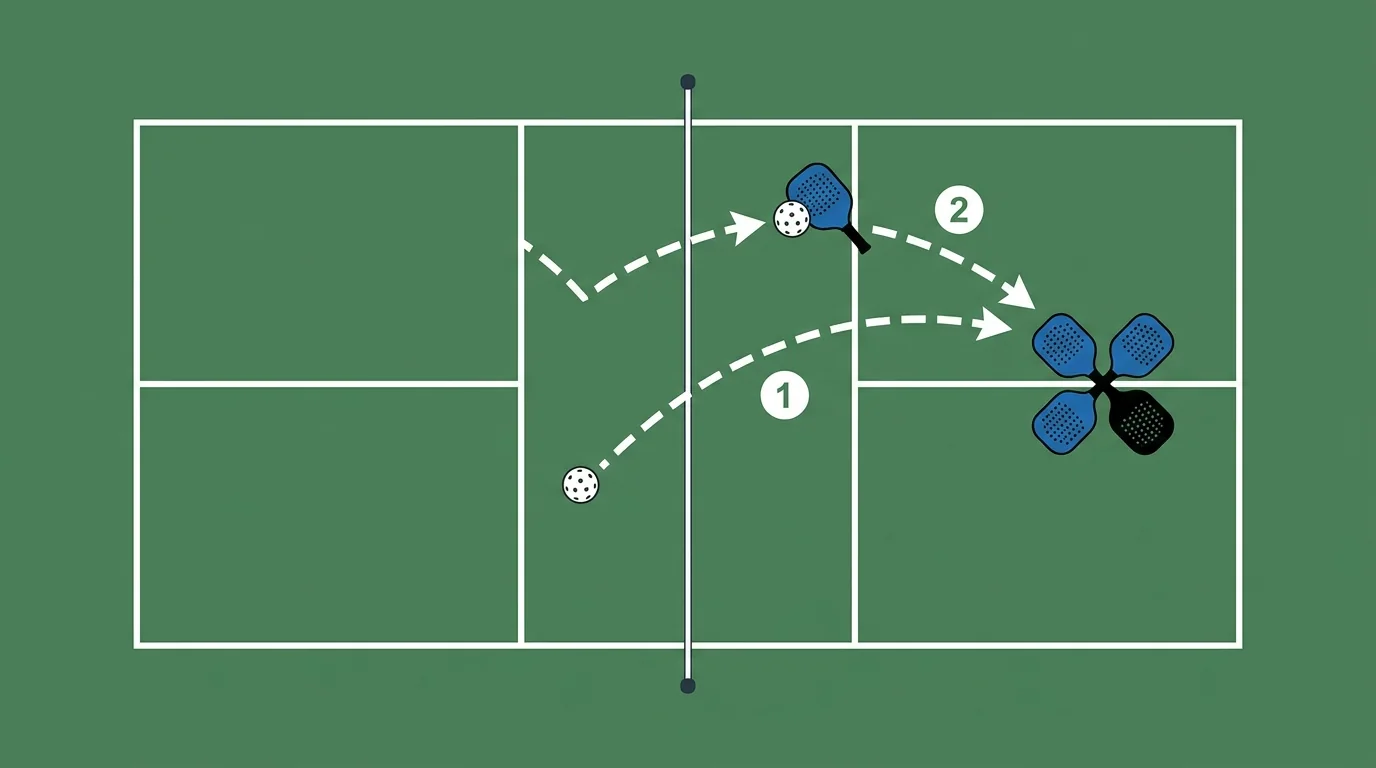
A backhand dink gets easier when you stop treating the earliest possible contact as the best one. Read the ball, make room with your feet, and choose the contact that keeps you balanced. Take it out of the air only when you can meet it comfortably in front of your body. If the ball crowds you, let it bounce and use the extra space for a cleaner swing.
The aim is a repeatable ball that clears the net with margin, lands in the opponent's Non-Volley Zone, and leaves you ready for the next exchange. Use the contact window, your balance, and the expected bounce to decide before the shot turns into a reach.
Read the contact window first
Track the ball as it crosses the net. Read its height, width, pace, and likely bounce. Keep the paddle in front of your torso and use small adjustment steps so the contact stays in front instead of drifting beside your hip. The useful question is not, “Can I take this early?” Ask, “Which contact lets me stay balanced?”
Choose the volley when you can meet the ball in front with a quiet, compact motion. You should not need to lean forward, reach sideways, or pin the elbow against your body. An early volley takes time away from the opponent, but it also gives you less time to organize the paddle face. A jammed volley may stay in play while still giving the opponent a ball they can attack.
Let the ball bounce when the bounce gives you more space, height, or time. Move behind it with small steps, support the movement with your knees and hips, and prepare the paddle before the ball enters the contact zone. Letting it bounce is not giving up the point. It is a way to earn a cleaner contact.
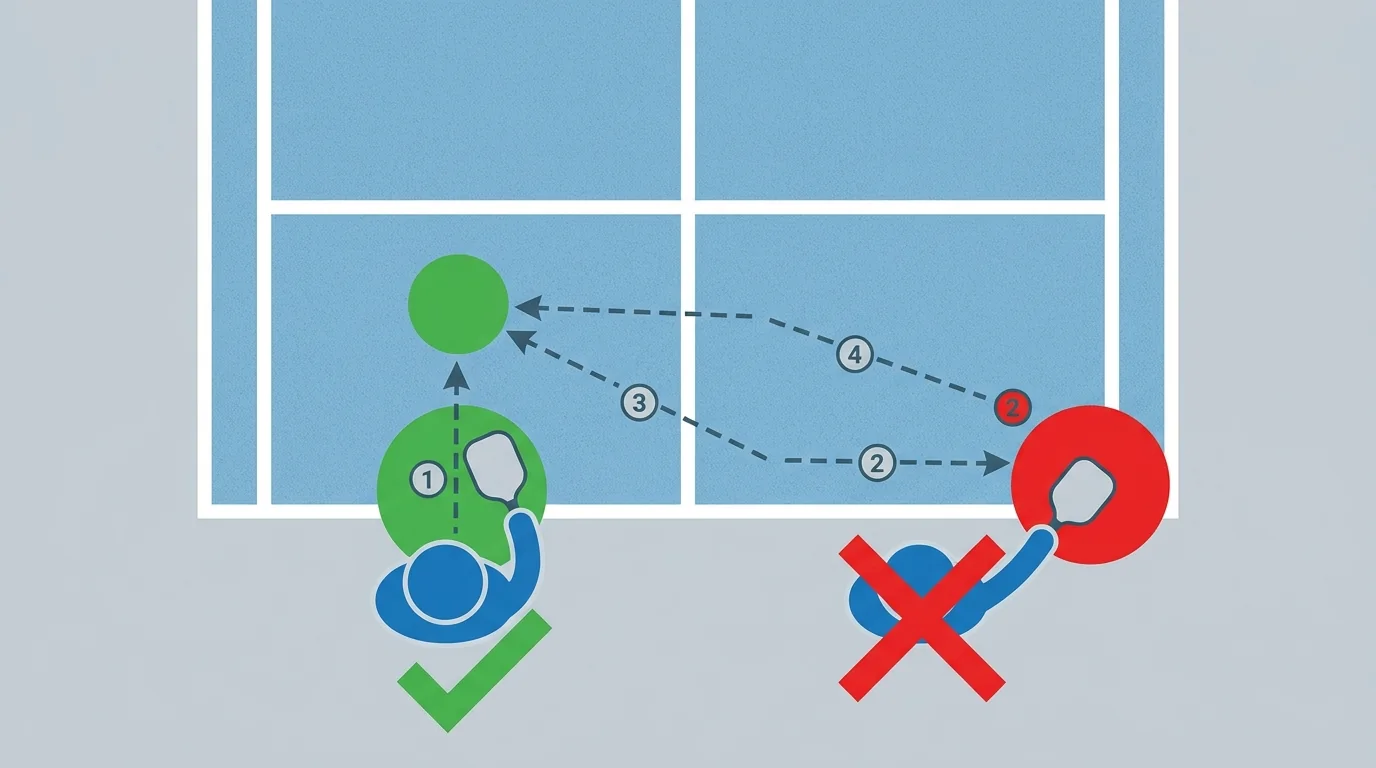
Use the handle, elbow, torso, and ball as a quick check. Contact comfortably in front supports a compact path and a predictable paddle face. Contact beside the hip encourages a jab; contact behind the body usually becomes a rescue. If your feet stop and your hand suddenly has to create height, direction, and touch at once, the decision was probably late.
Build the dink around a stable paddle face
Use a comfortable Continental-style grip or your usual neutral grip, with enough relaxation to absorb pace. Set the paddle face before the ball arrives instead of changing it at the last second. Let the shoulder lead while the elbow adjusts naturally to preserve your spacing. Stable does not mean frozen. Keep the wrist quiet enough that the face does not flip through contact.
Prepare near the expected contact, slightly behind and below the ball when it is low. Guide the paddle forward on the gentle upward path needed to clear the net, then finish compactly and recover the paddle in front of your torso. A low ball needs enough lift; a higher ball can travel more forward. Do not aim at the tape. A little extra net margin is better than a rushed, low-percentage stroke.
If the ball floats, check whether the face is too open, the path is lifting too much, or contact is late. If it dies in the net, check whether the face is too closed, contact is too low, or your feet failed to create room. If one ball flies and the next dies, look for a late wrist, elbow, or paddle-face change before trying to add spin.
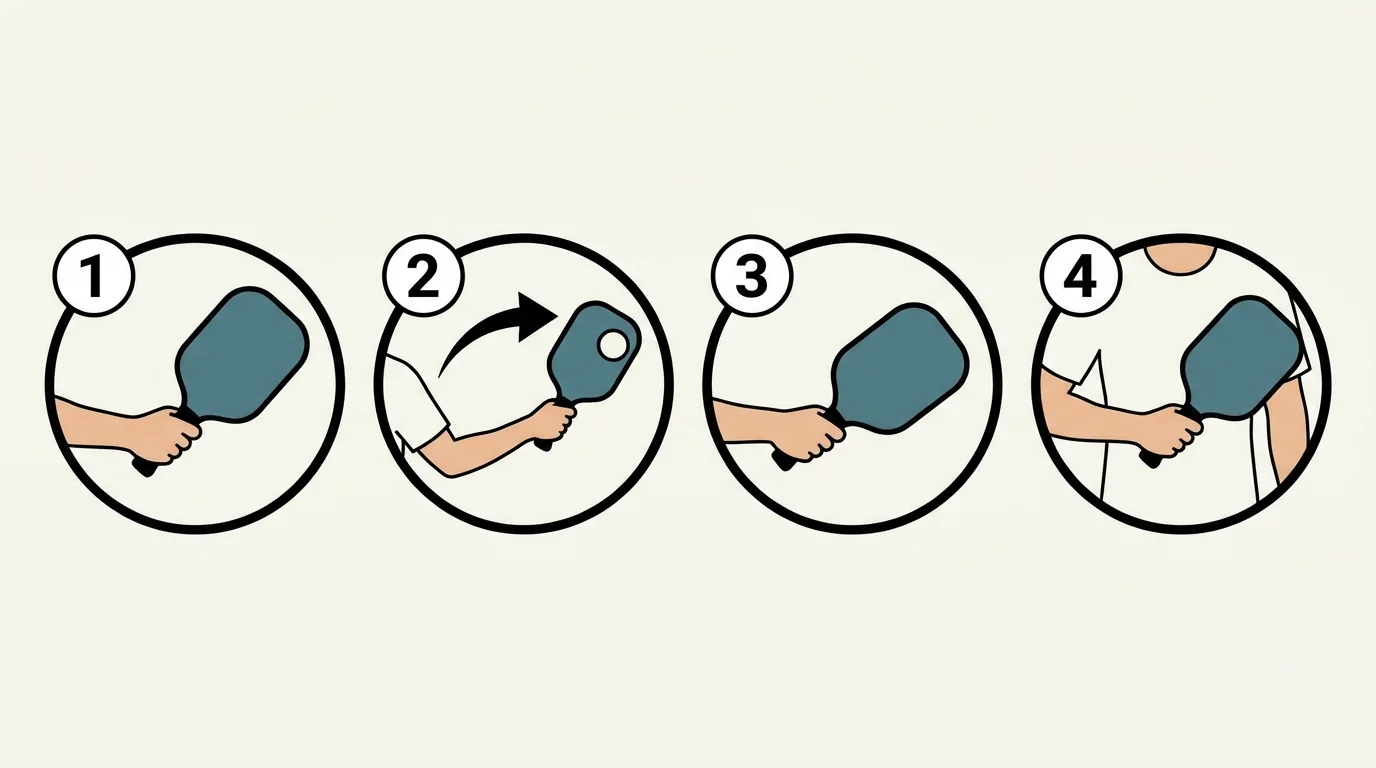
One hand usually preserves reach, while two hands can add support and face stability. Neither option fixes late feet. Compare both from the same feed and judge contact position, balance, face stability, and recovery speed rather than counting makes alone. Keep the version that produces the cleaner ball while you are moving.
Progress from feeds to live decisions
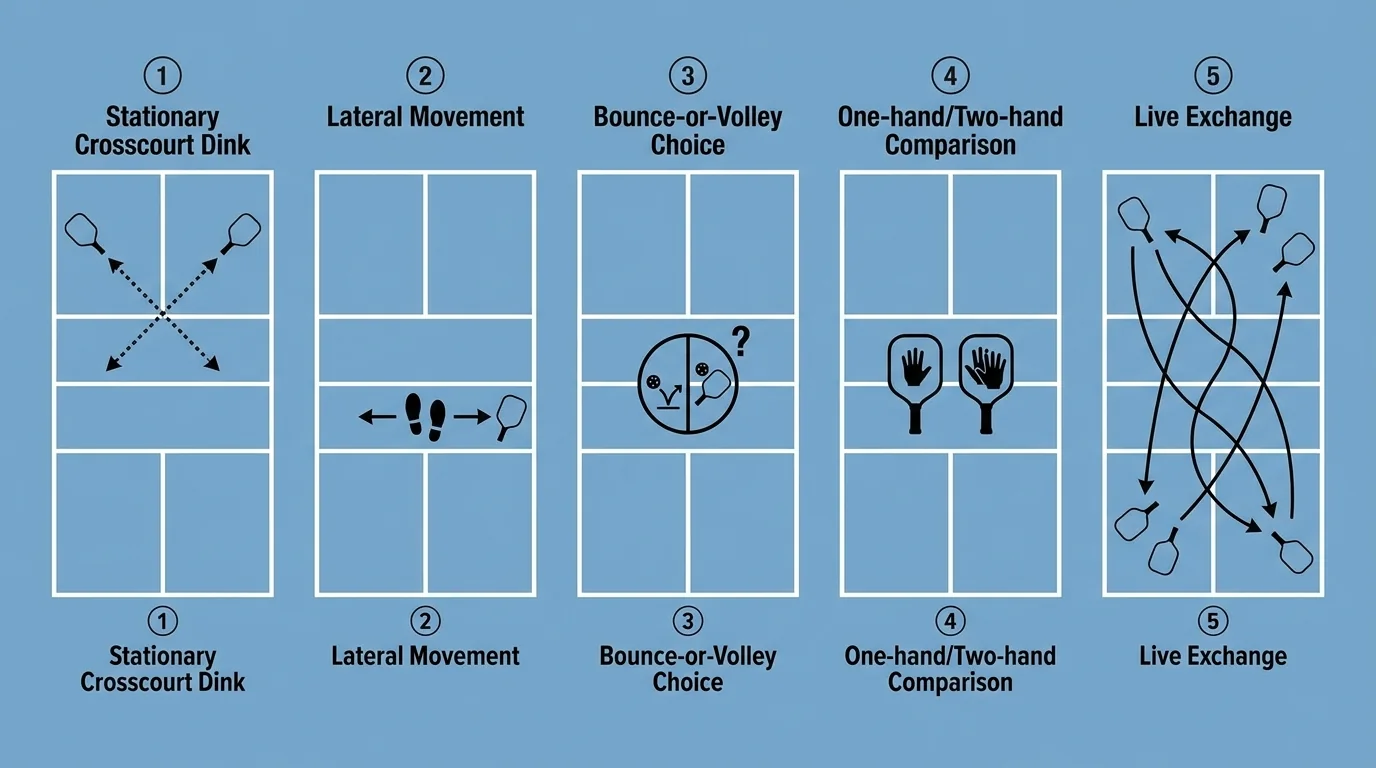
Train the choice in stages. Begin with stationary crosscourt backhand dinks at the kitchen line. Prepare early, keep the hand in front, and use enough net margin. Next, have a feeder vary the width without adding pace. Move before reaching, and notice whether contact occurs in front, beside the hip, or behind the body.
Then add a bounce-or-volley call. The feeder varies height and depth. Call “bounce” or “volley” before the ball reaches the kitchen line, then execute the ordinary backhand dink. Volley only when you can meet the ball without leaning. Let it bounce when the bounce improves your spacing. A reaching contact is not a good volley simply because it stayed in play.
Compare one-handed and two-handed rounds from the same feed. Track reach, face stability, tension, and recovery speed. Finally, play a live backhand-only exchange. For the first five contacts, do not speed up and do not run around the ball to steal a forehand. Count rallies that remain unattackable, and note whether the same error returns when the rhythm changes.
Add slice, roll, or flick work only after the neutral dink survives movement and decision-making. A slice should not rescue poor spacing. A roll belongs to a ball that is high enough and comfortably in front. A flick is an offensive choice for an attackable ball, not a substitute for trusting the basic dink.
The simple rule is to choose the better contact, not automatically the earlier one. Read the ball, move enough to protect your space, organize the paddle face, and recover ready for the next exchange. When the backhand dink becomes an ordinary shot, your opponent sees fewer rushed balls to attack.