Pickleball Kitchen Drop Step: Reach Wide Balls and Recover
Build a safer path to the kitchen with a compact pickleball third-shot drop, better target margin, and a controlled transition after contact.
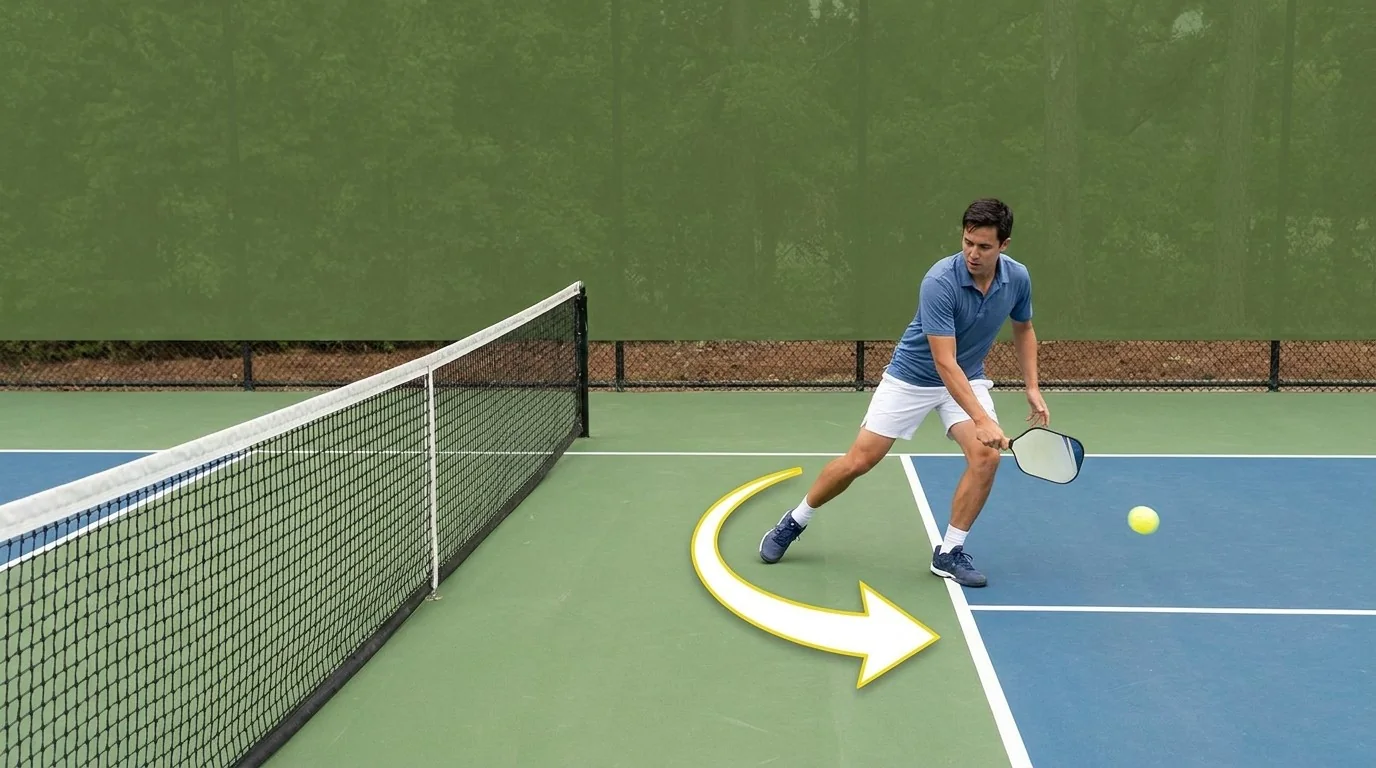
The pickleball kitchen drop step is a footwork choice for reaching a wide ball without turning the shot into a desperate lunge. Turn your body, place the outside foot, and lower into a stable base before contact. That small sequence gives you more control and leaves a better route back toward the kitchen line.
Start with the job of the third-shot drop
After the serve and return, the serving team is usually behind the baseline while the receiving team has had time to move forward. The drop is meant to narrow that court-position gap. It should clear the net with usable margin, descend into the kitchen, and make the next contact difficult enough for you to move up.
A drop is not simply a slower drive. A drive uses pace to pressure the other side; a drop uses height, touch, and placement to buy time. Let the incoming ball, your balance, and the opponents’ positions guide that choice. Do not decide to drop or drive before you have read the ball.
Build the step before you swing
Begin in a balanced stance and prepare the paddle early. As the ball moves wide, turn so your hips and shoulders can travel with it. Let the outside foot drop and load underneath you instead of crossing your feet or reaching from an upright position. Keep the inside foot available for the next adjustment.
Move behind the ball whenever you can. Reaching tends to change the paddle face and makes the landing less predictable. A compact backswing keeps the contact point in front of your body, where small corrections are easier. Hold the paddle loosely enough to absorb pace, but keep the hand controlled. A sudden wrist flick is not a substitute for a stable base.
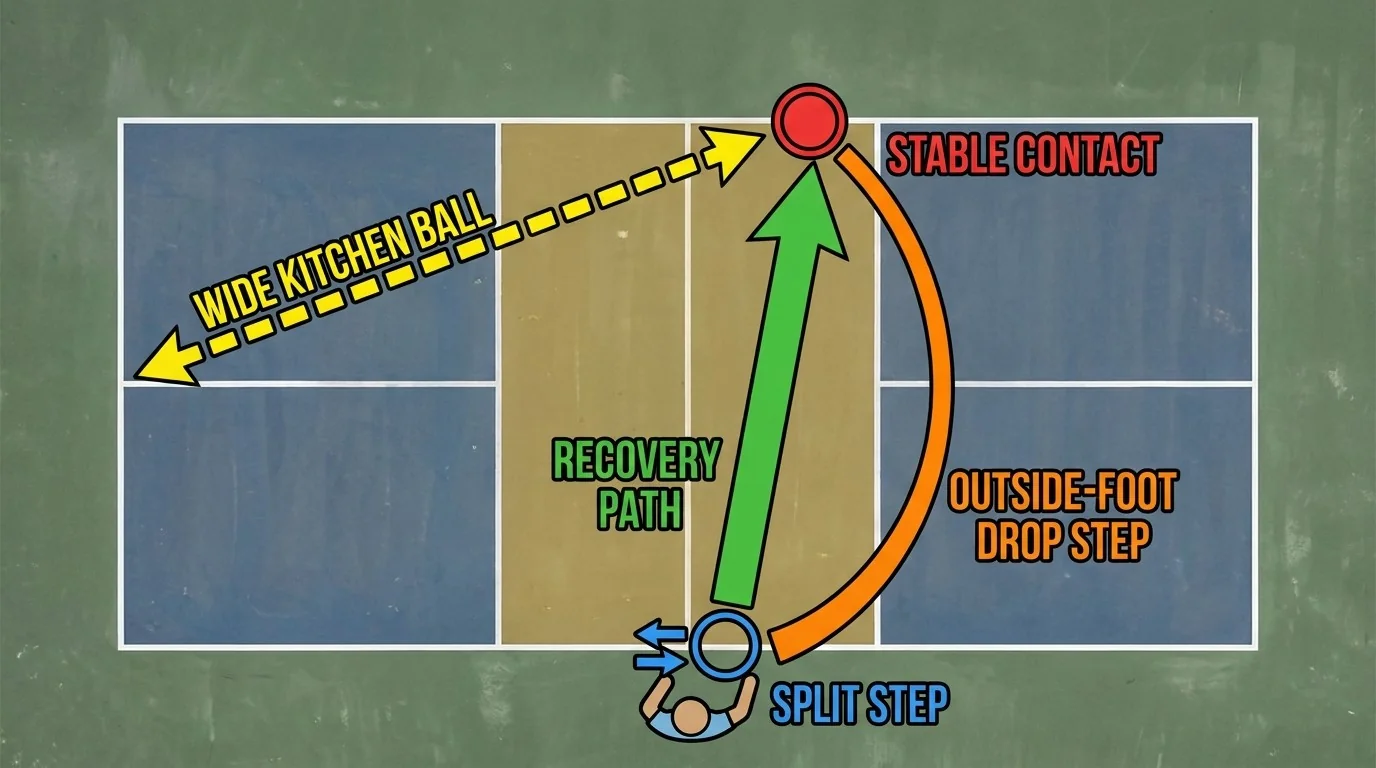
Give the drop room to clear the net
The kitchen is the destination, but net clearance comes first. Give the ball enough height to cross the net and enough forward travel to fall into the non-volley zone. A ball that travels a little too deep can still keep the rally alive; a ball in the net ends the point immediately. Build a dependable margin before aiming at a narrow landing spot.
Read the return before choosing the shape of the drop. If you are stretched or contacting from farther back, a higher, softer ball can give you more time. If you arrive balanced, a lower and more direct drop may be available. Use an open side or a moving opponent when the situation supports it, but do not give away net clearance for the sake of a clever target.
Move up only after you have information
The drop and the transition belong together, but contact is not a command to sprint. Watch the ball’s height and the opponents’ response. Move forward in controlled steps with the paddle ready. If the drop is high or looks attackable, pause and prepare for the next ball instead of assuming you already own the kitchen.
In doubles, match your partner’s movement so the team does not create a large gap. The goal is a balanced formation near the kitchen line, not a race to get there first. If the drop lands short or the opponents make comfortable contact, be ready to reset rather than forcing the forward move.
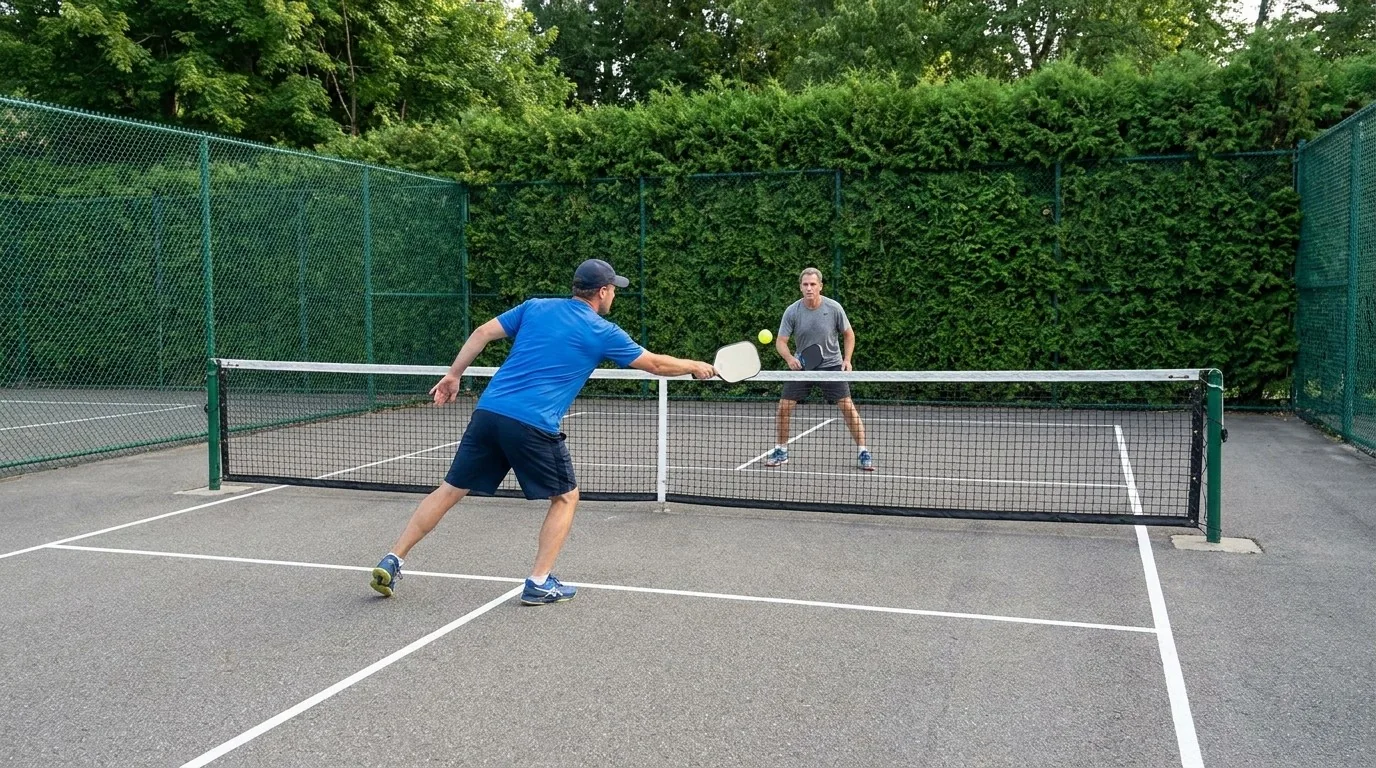
Practise the decision in stages
Start with cooperative feeds from the baseline. Hit ten drops toward one broad kitchen target. Score three things separately: legal net clearance, kitchen depth, and balanced recovery. This prevents one lucky landing from hiding poor preparation or a rushed transition.
Next, vary the feed’s depth and direction. Move your feet behind the ball, keep the swing compact, and choose extra height when the ball pulls you wide. Finish with cooperative points in which the serving team may drive or drop, then explain why the choice fit the ball and the opponents’ position.
Watch for the common errors: a large backswing, crossed feet, reaching instead of moving, a squeezed grip, aiming at the line every time, and moving forward without reading the opponents’ contact. Correct one variable at a time. A repeatable arc, safe net clearance, and disciplined recovery matter more than occasional perfection.
A reliable third-shot drop turns time into court position. Turn before the wide ball pulls you off balance, lower into the outside-foot step, choose a target with margin, and treat the recovery step as part of the shot.