Pickleball Kitchen Spacing: Keep the Right Distance
Learn pickleball kitchen spacing with small steps, balanced posture, partner awareness, and drills that make your front-court position easier to repeat.
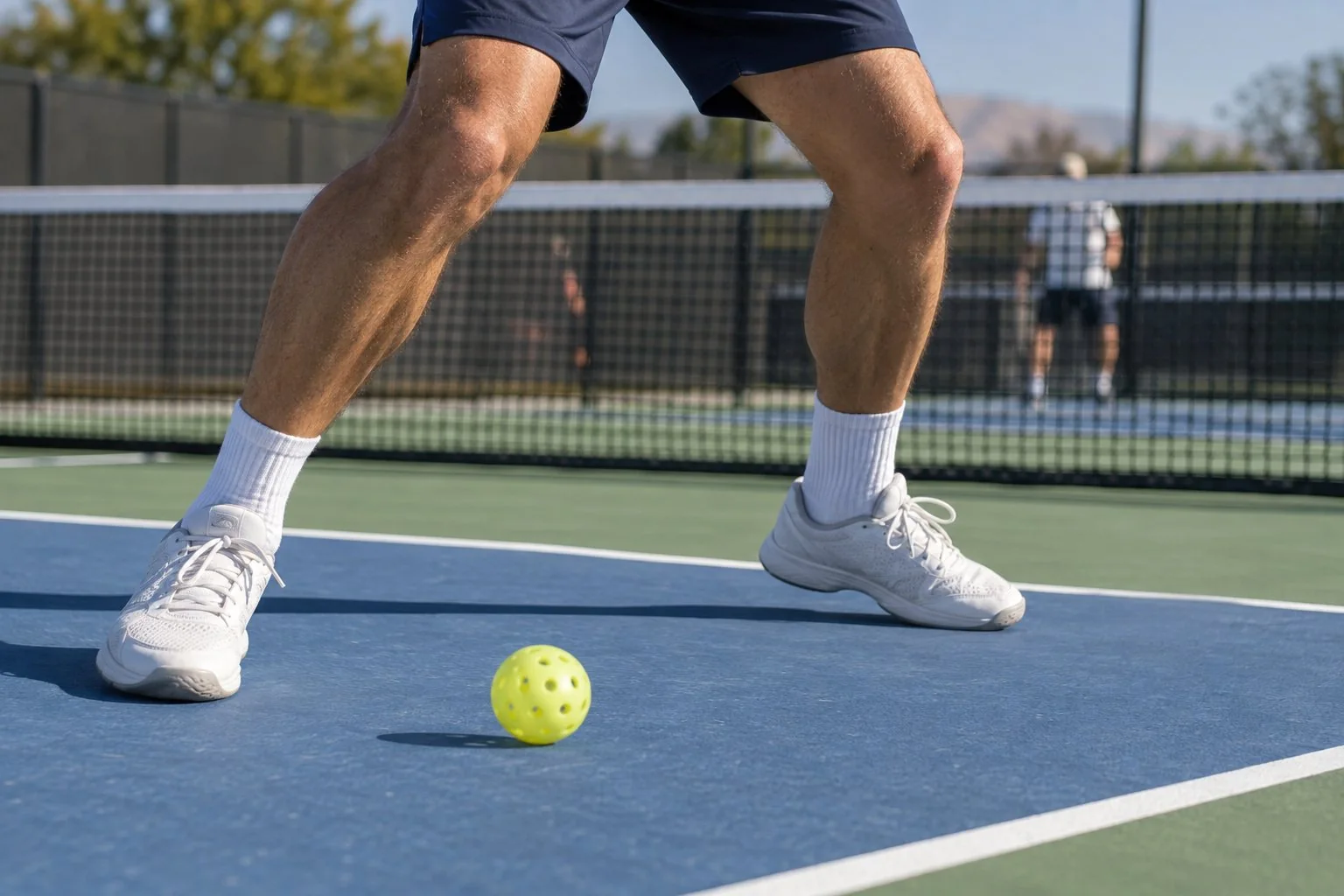
pickleball kitchen spacing is not about standing on one exact inch of the court. It is a repeatable front-court spacing habit: balanced feet, room to adjust, and enough awareness to move with your partner.
Why does kitchen spacing matter?
Standing too close can make a rushed step turn into a line contact, while standing too far back gives short balls more room. Think of spacing as an adjustable working zone rather than a fixed mark.
Where should your feet and weight be?
Use small adjustment steps with relaxed knees and a stable upper body. Move the feet before reaching with the arm. After contact, regain balance before deciding whether to close space or hold position.
How should partners move together?
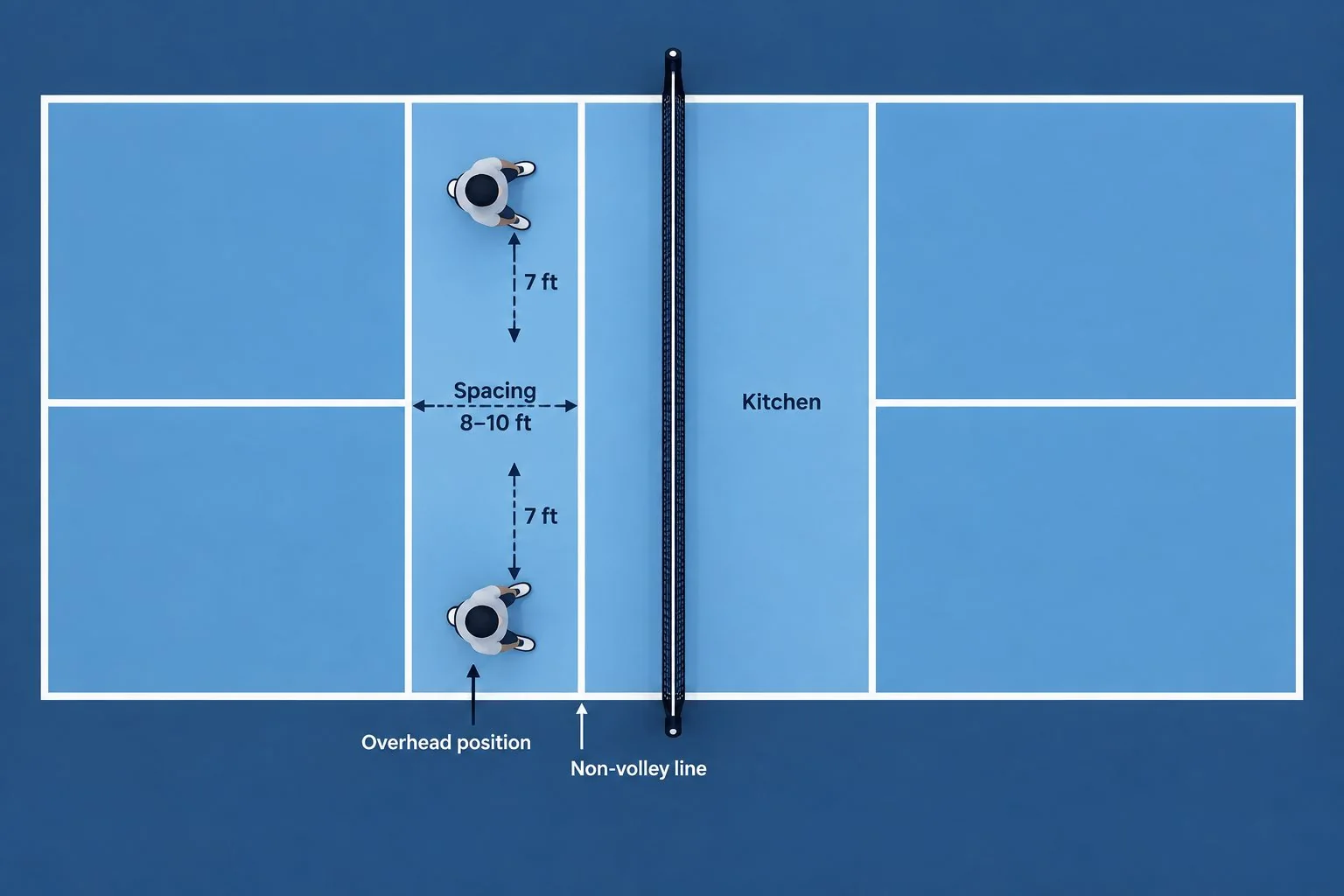
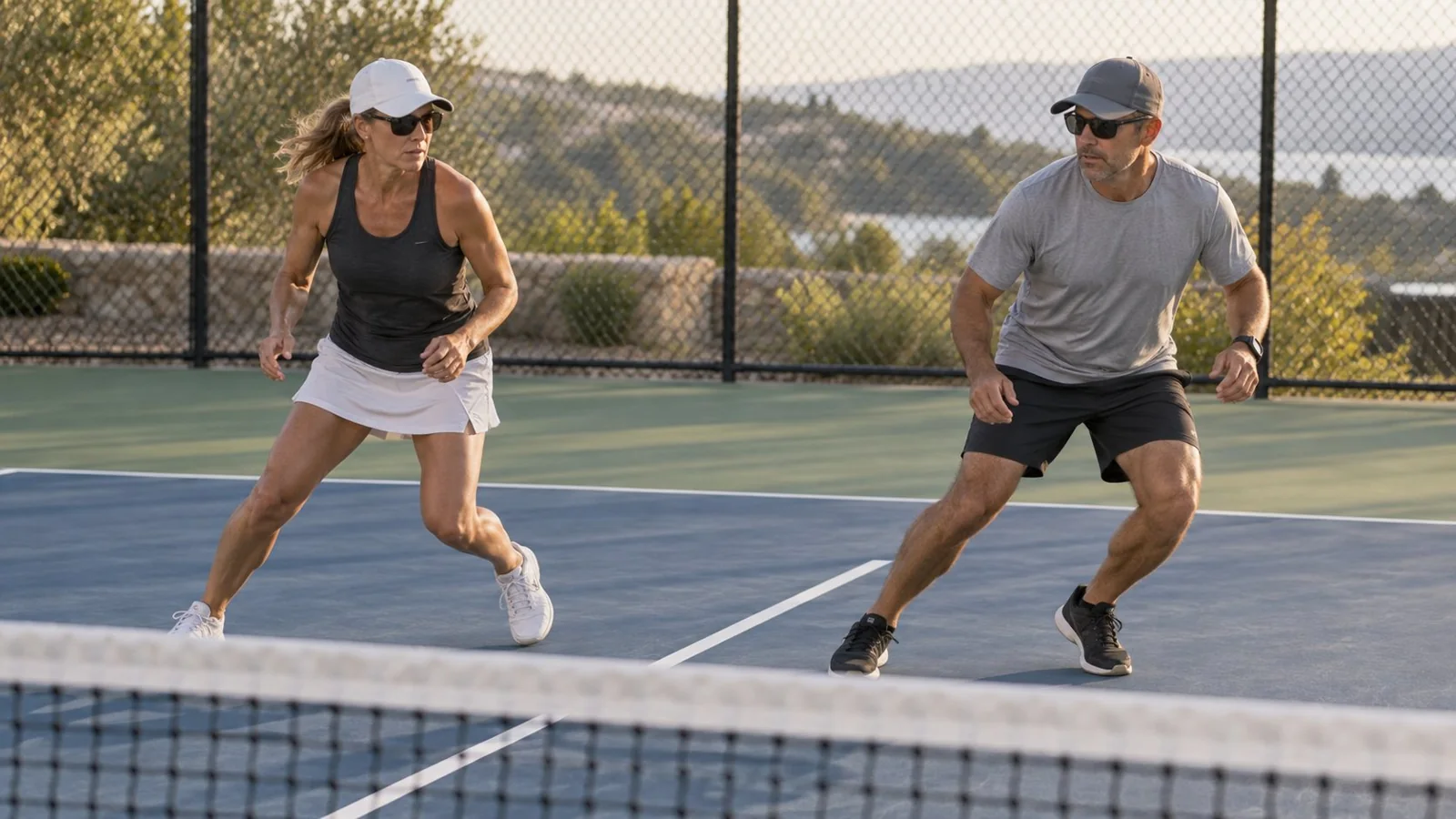
In doubles, keep a generally connected shape and communicate early with short calls. If one player shades toward the sideline, the partner covers only the useful gap instead of crossing the middle.
Which drills build control?
Place two markers in front of the kitchen line. Practice 10 steps left and 10 right, returning to a balanced stance each time. If 16 of 20 repetitions stay controlled, that is an 80% practice observation, not a match guarantee.
Why does kitchen spacing matter?
Standing too close can make a rushed step turn into a line contact, while standing too far back gives short balls more room. Think of spacing as an adjustable working zone rather than a fixed mark. Use small adjustment steps with relaxed knees and a stable upper body. Move the feet before reaching with the arm. After contact, regain balance before deciding whether to close space or hold position.
How should partners move together?
In doubles, keep a generally connected shape and communicate early with short calls. If one player shades toward the sideline, the partner covers only the useful gap instead of crossing the middle. Place two markers in front of the kitchen line. Practice 10 steps left and 10 right, returning to a balanced stance each time. If 16 of 20 repetitions stay controlled, that is an 80% practice observation, not a match guarantee.
Checklist avant de jouer
Observez la balle, gardez les appuis actifs, communiquez tôt et revenez à une position équilibrée après chaque échange. Répétez une seule modification à la fois pour savoir ce qui vous aide réellement.
Use small adjustment steps with relaxed knees and a stable upper body. Move the feet before reaching with the arm. After contact, regain balance before deciding whether to close space or hold position. In doubles, keep a generally connected shape and communicate early with short calls. If one player shades toward the sideline, the partner covers only the useful gap instead of crossing the middle. Use small adjustment steps with relaxed knees and a stable upper body. Move the feet before reaching with the arm. After contact, regain balance before deciding whether to close space or hold position. In doubles, keep a generally connected shape and communicate early with short calls. If one player shades toward the sideline, the partner covers only the useful gap instead of crossing the middle. Use small adjustment steps with relaxed knees and a stable upper body. Move the feet before reaching with the arm. After contact, regain balance before deciding whether to close space or hold position. In doubles, keep a generally connected shape and communicate early with short calls. If one player shades toward the sideline, the partner covers only the useful gap instead of crossing the middle.