Pickleball Load Step: Shift Weight Before You Swing
Learn how to use the pickleball load step to shift weight actively, rotate the body, choose the right stance, and prepare a cleaner swing.
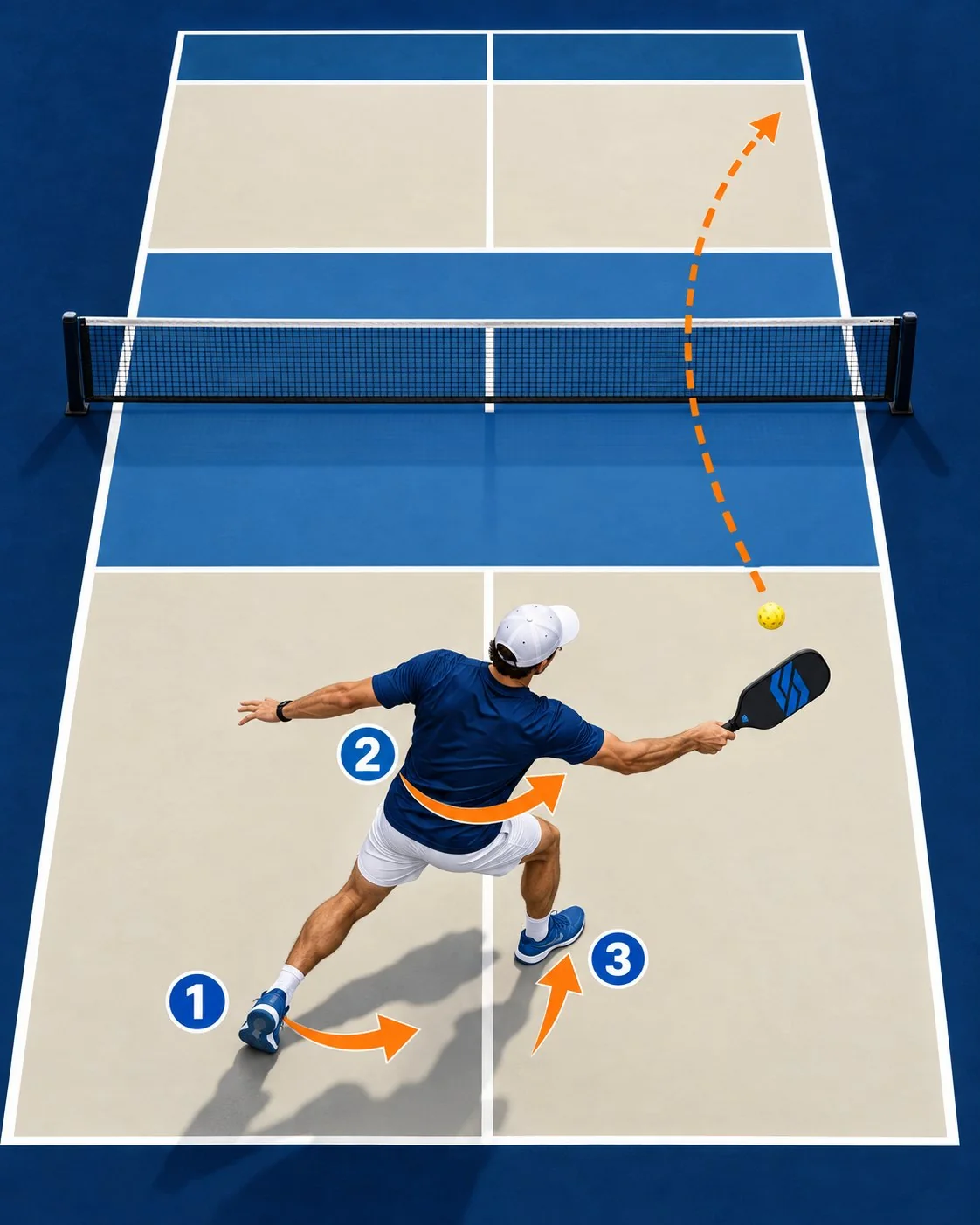
The pickleball load step is the small weight shift that prepares your body before the swing begins. Instead of leaning passively toward the ball, you push from the non-hitting leg, load the hitting side, and let the hips and shoulders turn together. That sequence gives you balance, space, and a cleaner contact point without asking the arm to create everything alone.
Build the load step from the ground up
Start in an athletic ready position with soft knees and weight on the balls of your feet. When the ball moves toward your forehand, push from the opposite leg rather than simply tipping your torso sideways. Your weight should travel onto the hitting-side leg while your paddle and shoulders begin preparing for contact.
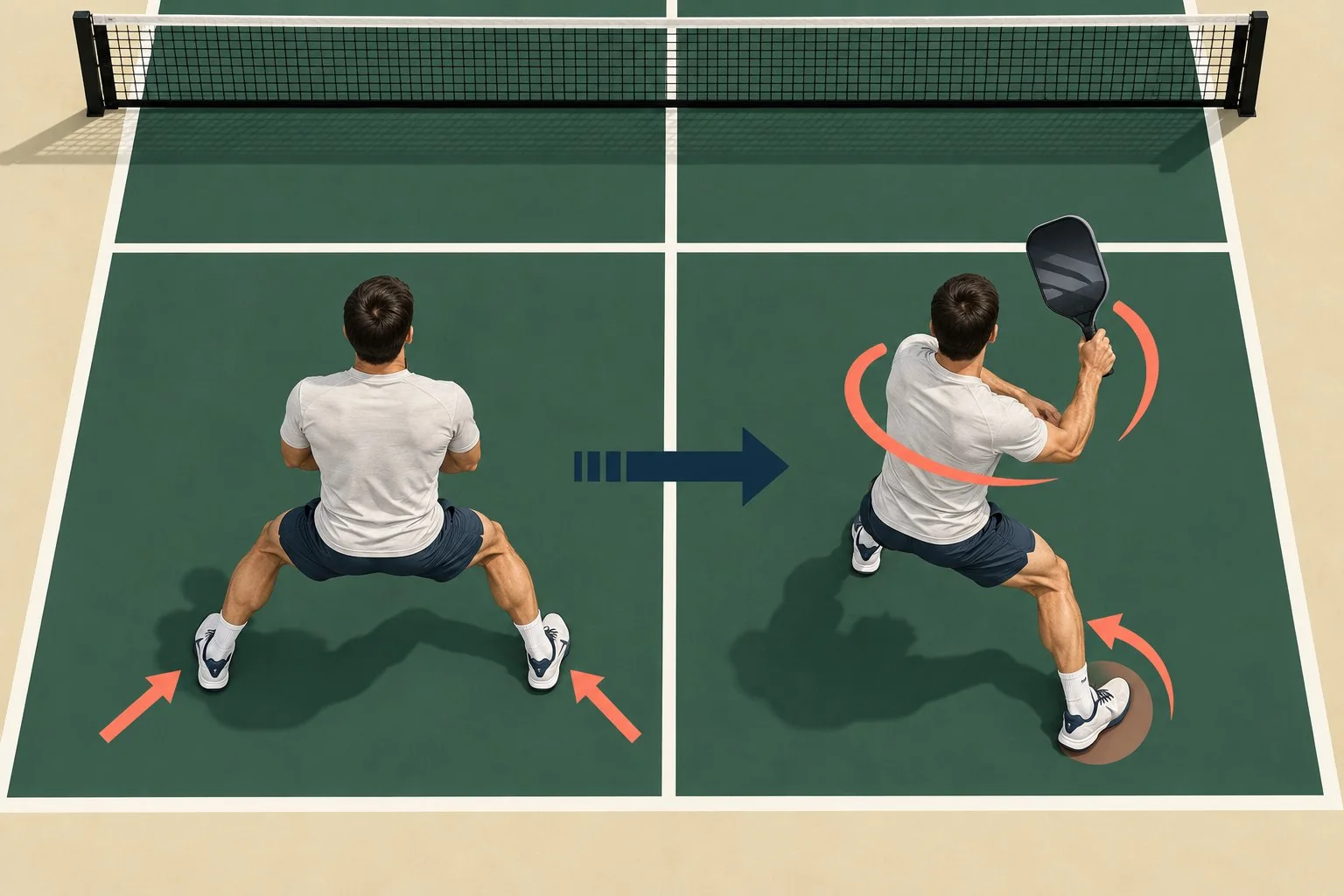
The distinction matters. A passive lean moves your upper body first and often leaves your feet late. An active push starts the movement from the floor, so you arrive with a stable base and can still adjust if the ball changes direction. Think of the move as a short launch, not a long lunge.
Add a small unit turn as the weight transfers. The non-hitting foot rotates inward, then the knee, hips, shoulders, and paddle follow in sequence. The paddle is positioned by the body turn instead of being dragged into place by an isolated arm swing. Keep the turn compact when the ball is arriving quickly.
Choose the stance after you load
The load step comes first; the stance choice comes second. If the ball is fast or close and you have little room, stay in an open stance and strike from the loaded position. This keeps the preparation short, which is useful during dink exchanges, quick volleys, and transition play.
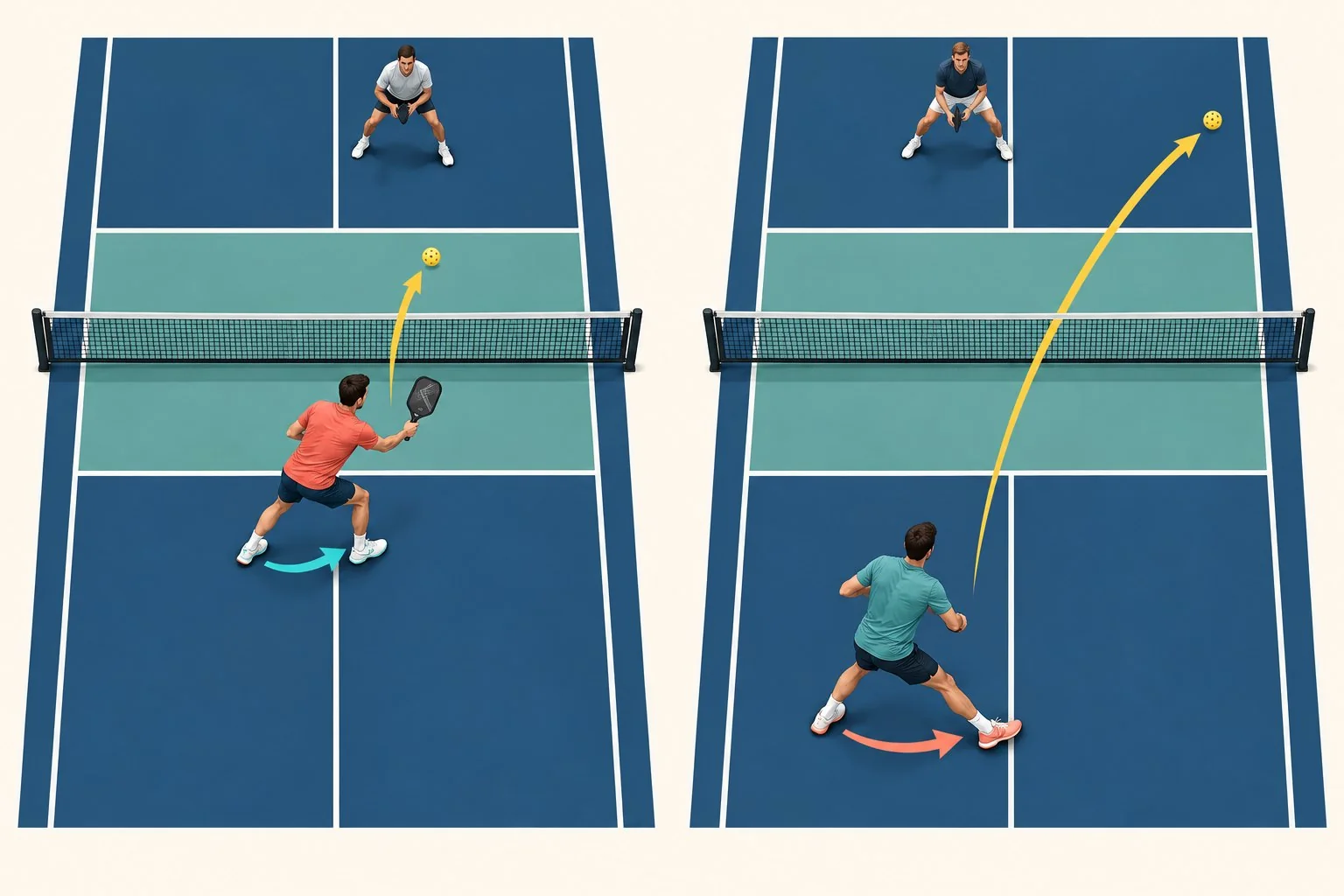
When you have more time and space, let the non-hitting foot step through into a more closed stance. That extra step carries body weight toward the ball and can support a fuller drive or drop from the baseline. Do not force the closed stance on every ball; the point is to preserve timing, not to make every swing look the same.
A useful checkpoint is simple: after the load, ask whether your feet are ready for the next direction. If the ball is close, keep the motion compact. If the ball gives you room, step through. Either way, the weight transfer should leave you balanced rather than falling toward the sideline.
Know when to modify the movement
The load step works best when you are moving laterally toward a ball. A ball aimed directly at your body is different. Loading toward the hitting side can jam you, so first create space with a small move away or a turn, then choose the stroke that fits the new contact point. Footwork is a tool, not a rule that overrides the ball.
Keep the paddle ready through the movement. If the hand drops while you shift weight, the body may be prepared but the response will still be late. Maintain a relaxed grip, keep the head steady, and let the contact happen in front of the body when the ball allows it.
Practise the load step deliberately
Begin without a ball. From ready position, call “forehand,” push from the non-hitting leg, load the hitting side, and pause for one second. Check that the knees remain soft, the chest is turned slightly, and the paddle is already prepared. Repeat on the backhand side by reversing the direction of the weight transfer.
Next, add a split step before the load. Land lightly, read the direction, then push into the appropriate side. Feed balls at three speeds: slow enough to feel the sequence, moderate enough to require timing, and quick enough to demand an open stance. On each repetition, judge the quality of the base before judging the shot result.
Finish with a decision drill. For a close ball, load and hit without an extra step. For a deeper ball, load and step through. For a body ball, create space before loading. Those three calls teach the movement pattern while preserving the situational awareness that makes it useful in a rally.
The load step will not win a point by itself. It makes the next action easier by placing your weight, turn, paddle, and contact point in the same conversation. Push from the ground, rotate as a unit, choose the stance that matches your time, and keep enough balance to recover after the swing.