Pickleball Lob Coverage: Turn Safely and Stay in the Point
A practical guide to covering pickleball lobs with a safe turn, the right footwork for mid-court and deep balls, and a controlled recovery plan.
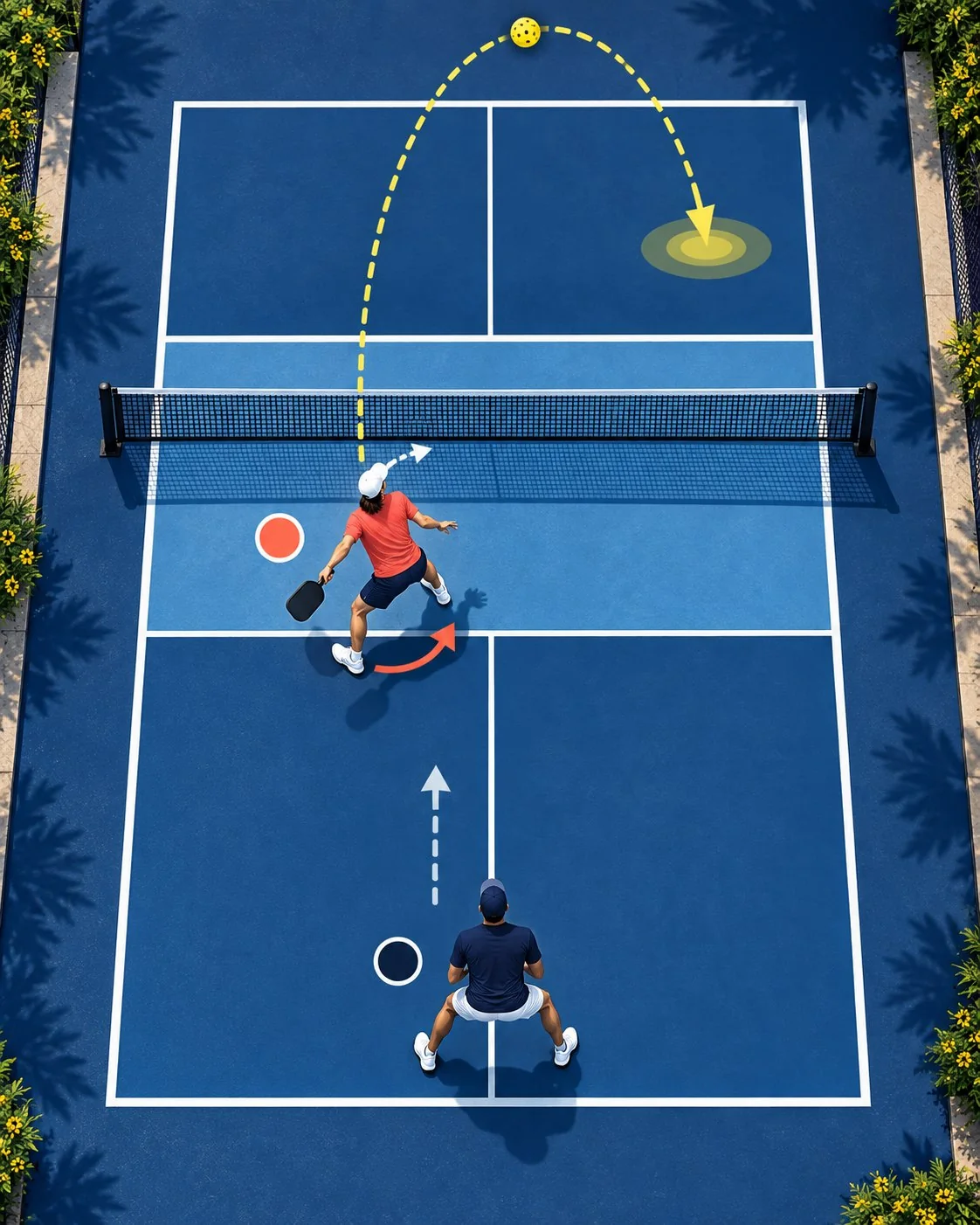
A lob should not turn a doubles point into a panic sprint. The useful response begins before the swing: recognize the ball, turn safely, and decide whether you can take it in the air or need to let it bounce. pickleball lob coverage is less about hitting harder than about arriving behind the ball with enough balance to make a sensible next shot.
Turn first instead of backpedaling
Looking up while moving straight backward is a poor combination. It shortens your steps, pulls your weight onto your heels, and makes a fall more likely. The first move is to open the door: shift onto the non-dominant foot, pivot the hips roughly sideways to the net, and bring the dominant leg back. A right-handed player can load the right side this way; a left-handed player reverses the pattern.
The turn gives you three useful things at once: a wider, more stable base, a safer view of the ball, and a body position that can move toward the contact point. Do not wait for the lob to reach its peak. As soon as the ball rises and your partner calls, turn and track it. Keep your eyes on the ball, but avoid twisting your neck while your feet continue moving blindly.
Match the footwork to the lob
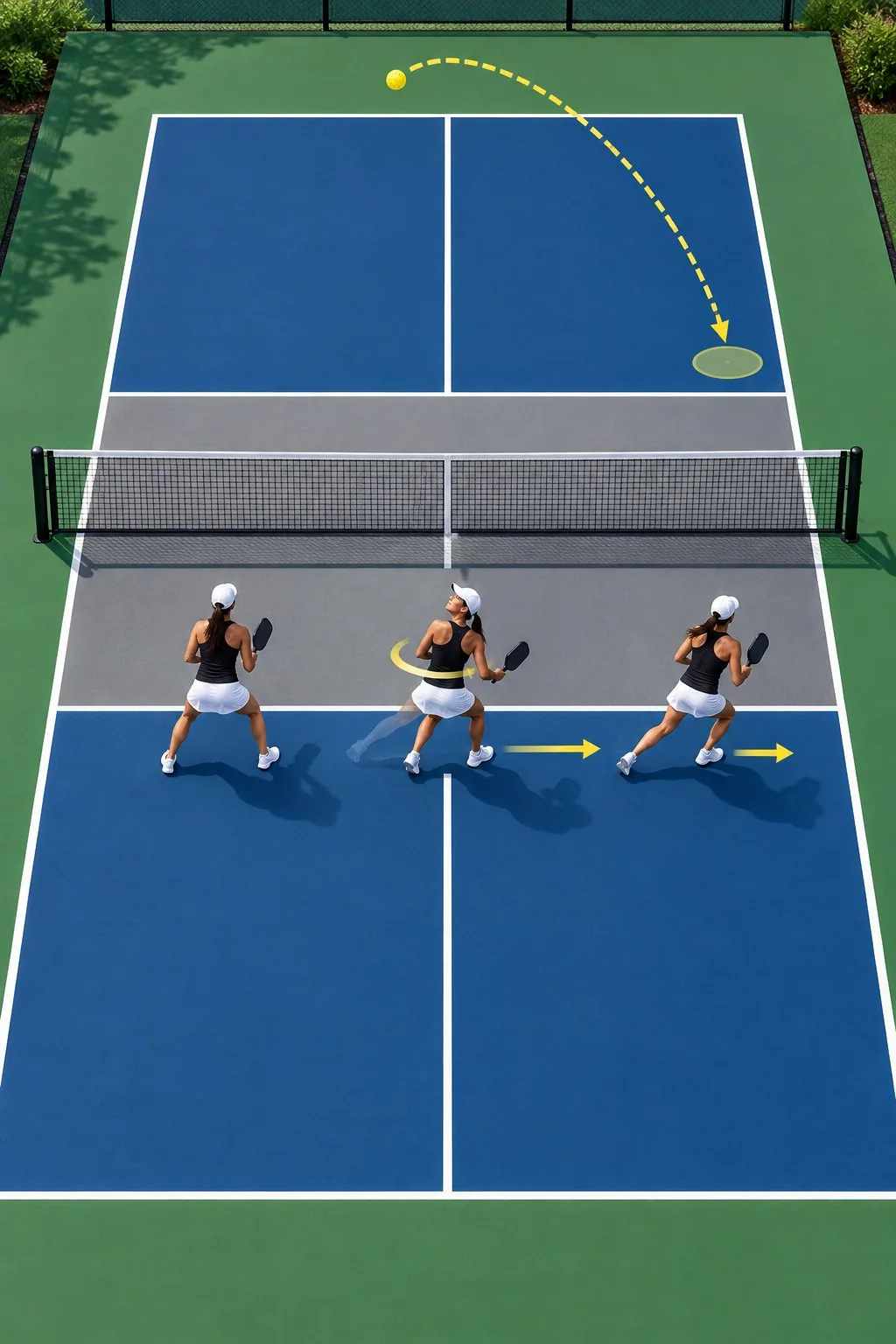
A mid-court lob may be reachable before it bounces. After opening the door, move laterally into position, keep the ball in front of you, and choose containment over a heroic finish. A controlled overhead or deep punch is often enough to neutralize the lob. The goal is to regain your position, not to force a winner while your feet are still drifting.
A deep lob needs a different answer. Open the door, track the flight, then close the turn in the direction you must run. Use a balanced crossover or running step to get behind the ball rather than shuffling all the way backward. If the ball will land safely and you cannot reach it with time to spare, let it bounce. Choosing the bounce is not failure; it is safer than reaching backward or swinging while falling away.
Choose the return that restores the point
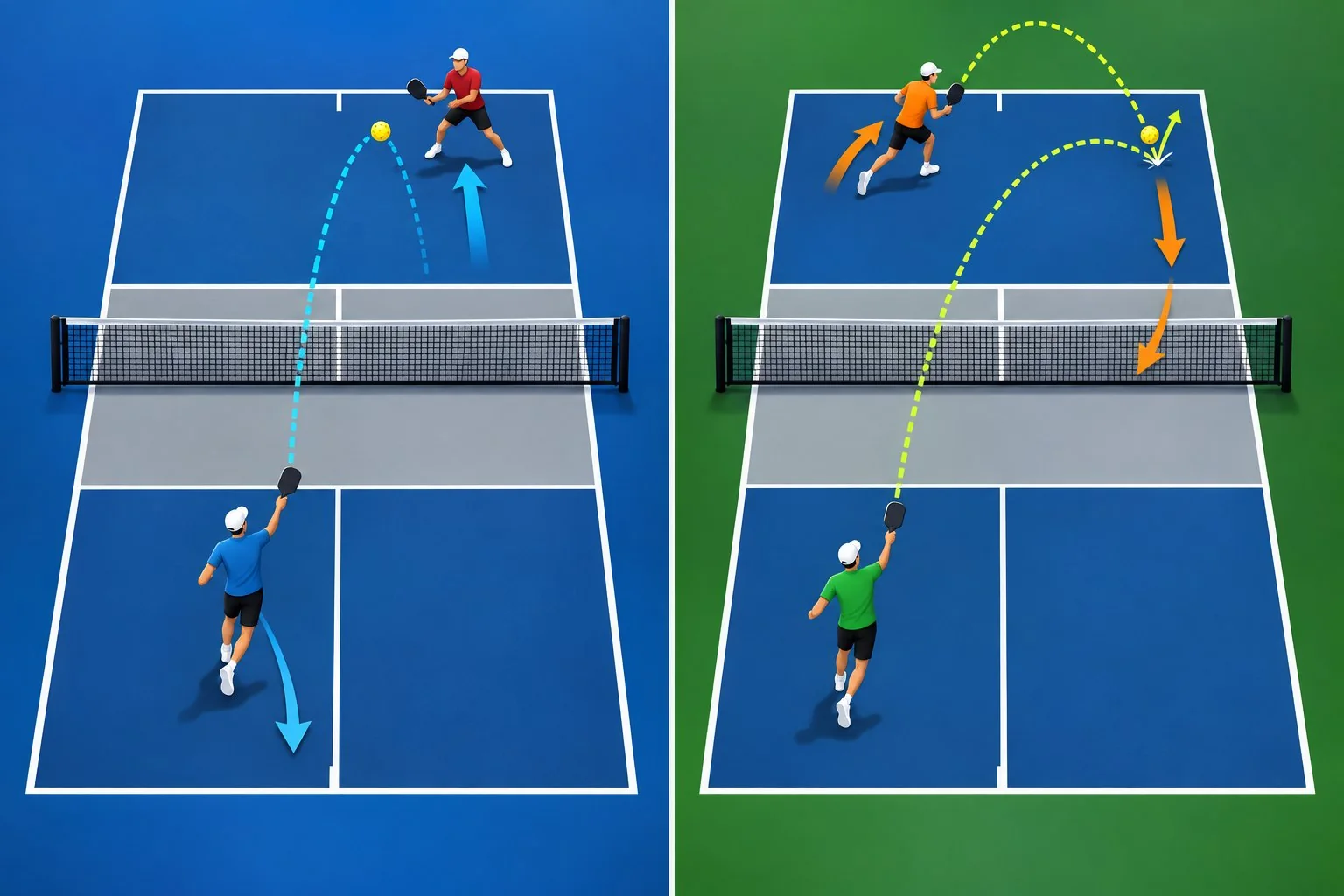
After a deep bounce, resist the retrieval-and-rip. You are usually behind the baseline while the opponents are closer to the kitchen, so a full-power drive from an unstable base often leaves an easy ball. A controlled drop can buy time and help you work forward. When you are late or stretched, a high defensive lob can also restore breathing room and give both partners time to reorganize.
Make the decision from your balance. If you arrive set behind the ball, send a purposeful ball with height and depth. If you are still recovering, prioritize margin and a playable bounce. Keep the return away from a comfortable overhead when possible, then start moving back toward a neutral position instead of admiring the shot.
Communicate and recover together
Lob coverage is a team responsibility. Call “mine” or “you” early, before both players begin moving toward the same space. If the defender’s momentum carries them across the court, call “switch”; if each player can return to the original lane, call “stay.” The exact word matters less than saying it early and committing to the decision.
A simple practice drill starts with both teams near the kitchen. Feed a soft ball, then lob to a chosen side. The defender rehearses the turn, tracks the flight, and chooses overhead, drop, or defensive lob. The partner calls the coverage and both players recover. Begin with predictable mid-court lobs, then vary the depth and direction. Count repetitions only when the defender turns before running, contacts in balance, and the pair finishes organized.
The best habit is straightforward: turn, create space, choose the lowest-risk return, and recover. With that sequence, a lob becomes a problem you can solve rather than an ambush that dictates the rally.