Pickleball Lob Defense: When to Reset Instead
Learn pickleball lob defense: read the ball early, choose a safe reset or overhead, recover with balance, and track decisions in practice.
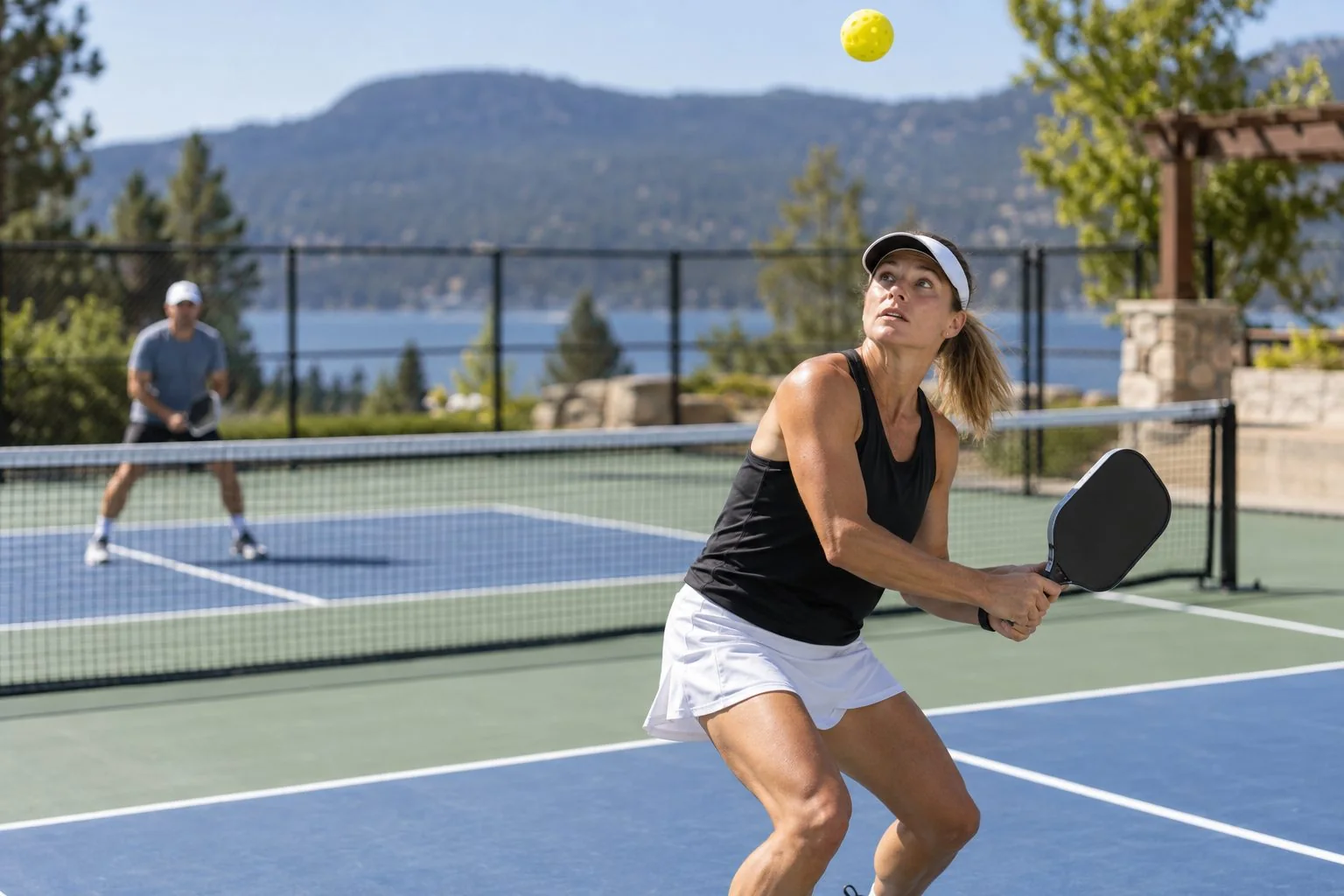
pickleball lob defense reset decision starts with an early read, small recovery steps, and a choice between taking the ball overhead or buying time with a reset. A lob is not automatically an attacking ball. Its height, depth, spin, and your balance determine the safer response.
How do you read a pickleball lob?
Turn the shoulders early and track the ball over the hitting side. A high ball that lands short may be reachable with an overhead, while a deep ball that sends you toward the baseline often calls for a controlled return. Keep the paddle available rather than pointing it at the sky.
Do not backpedal blindly. Use a crossover or shuffle step, then turn so you can brake before contact. Looking at the ball and the opponent’s position together helps you avoid chasing a lob that will land out.
When should you reset instead?
Choose a reset when the ball is behind you, your feet are still moving, or contact would be below a comfortable hitting height. Send the ball with height and margin toward the opponent’s non-volley zone, then recover instead of admiring the shot. A safe reset can turn a defensive exchange into a neutral one.
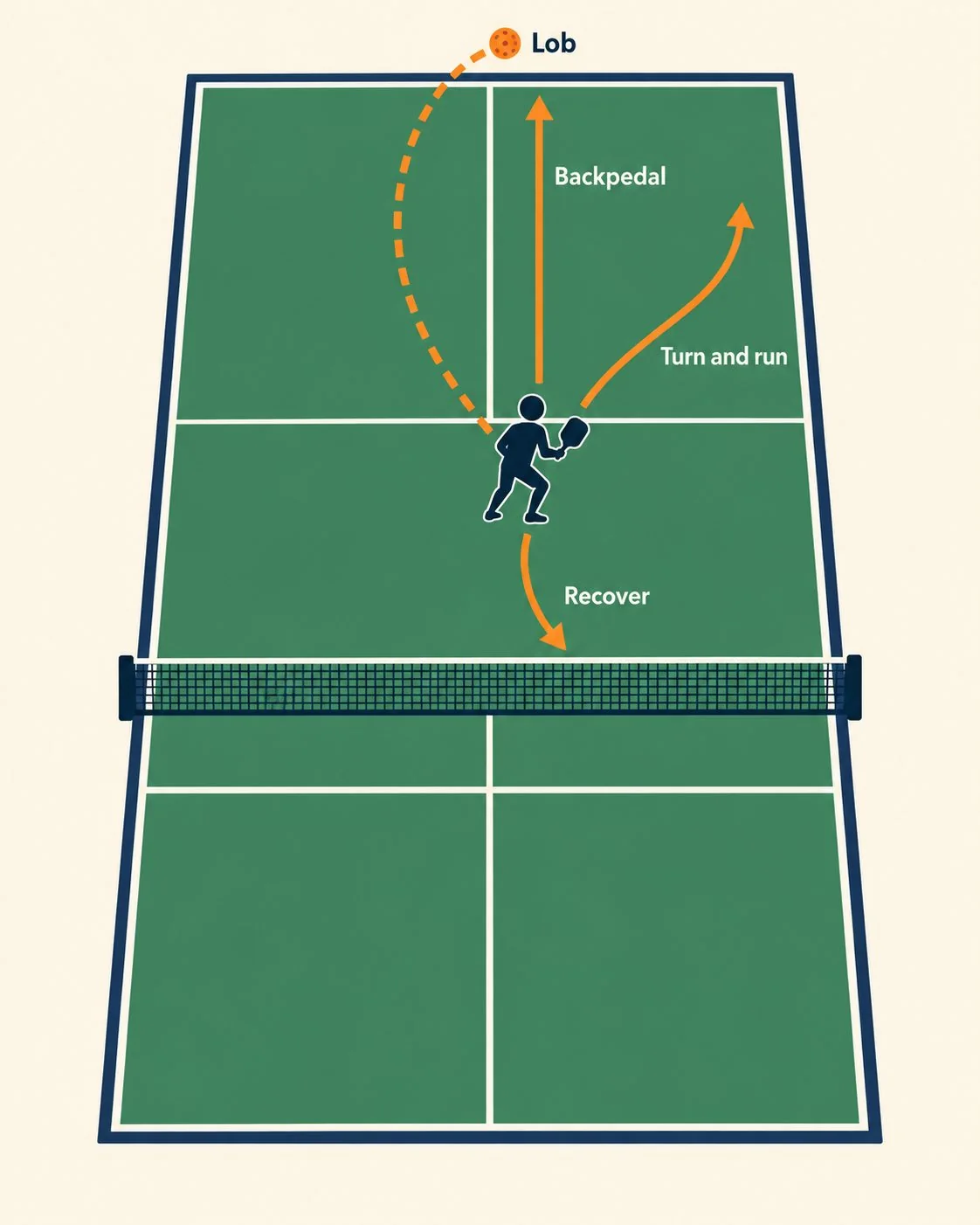
Measure one practice block. Ask a partner to hit 20 mixed lobs. If you make 12 balanced decisions that either reach a controlled target or produce a safe reset, the session score is 12 ÷ 20 = 60%. Record overhead errors separately from late resets; the fixes are different.
How should doubles partners recover?
The player taking the lob calls it early. The partner shades toward the middle without standing directly behind the hitter. Once the ball is returned, both players recover according to the next shot, not according to the position they held before the lob.
A short call such as “back,” “mine,” or “switch” is easier to hear than a long explanation during the rally. Agree on the call before play so both players know who covers a lob between them.
Which drills improve lob defense?
Start with predictable feeds. Hit 10 lobs to the forehand side and 10 to the backhand side, counting only contacts made with balanced feet. If the scores are 8 and 6, the results are 80% and 60%. Next, add random depth while keeping the same recovery cue.
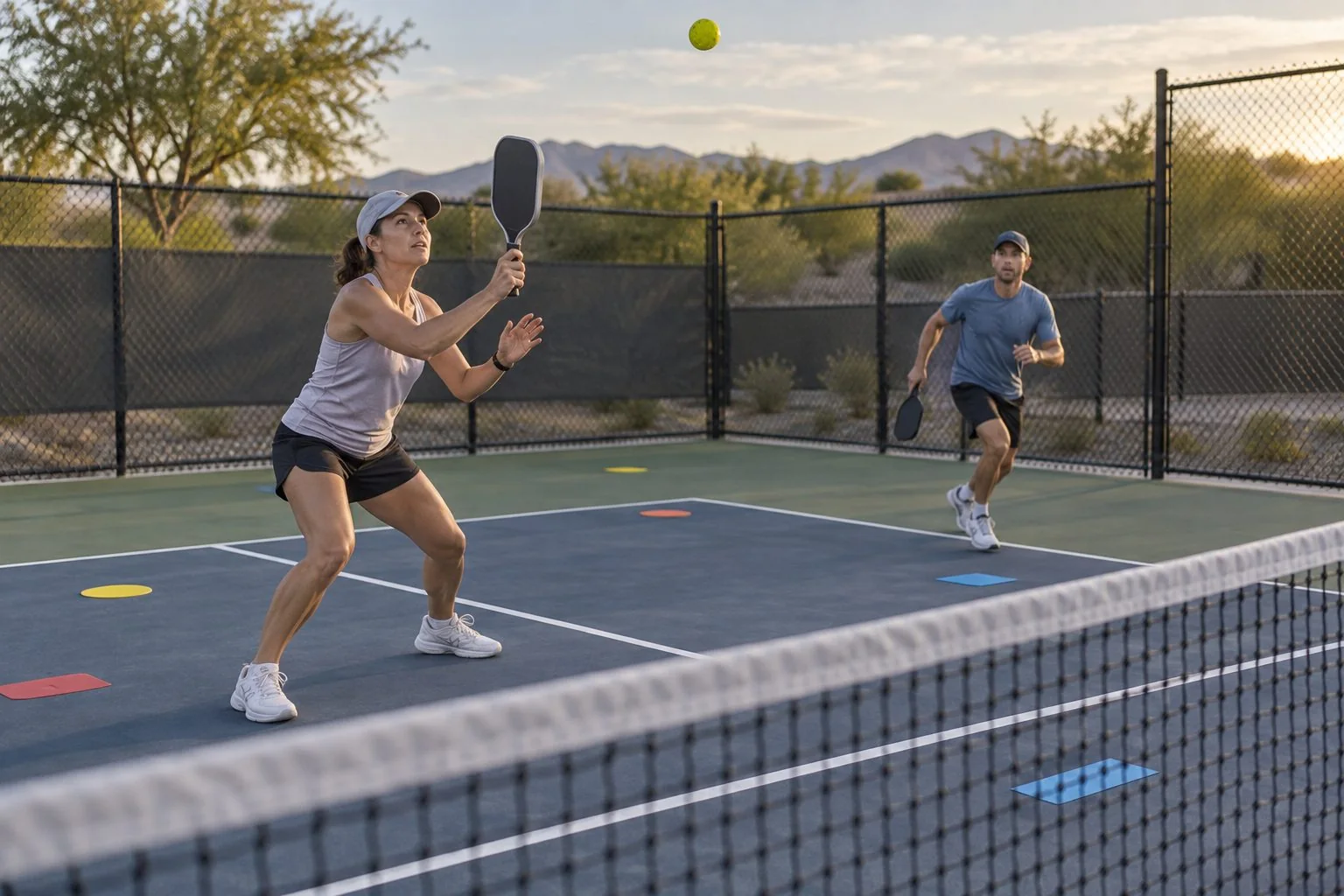
Stop the drill when fatigue changes your footwork. A defensive skill is useful only when you can brake, see the ball, and make a deliberate next choice.
Quick checklist
Read early. Turn safely. Brake before contact. Reset when late. Call the lob. Recover together.
Build the habit in stages. Start with cooperative feeds to the body, then send the ball left and right while the player keeps the paddle in front. Use three sets of 10 balls and record balanced contacts, not just balls that cross the net. For example, 8, 7, and 6 successful responses equal 80%, 70%, and 60%. Add pace only after the feet remain quiet at contact. Between sets, note whether the miss came from a late read, a reaching step, or an unstable paddle face. Changing one condition at a time makes the comparison useful. Rest when fatigue changes the stroke, and treat these figures as practice observations rather than a promise about match performance.