Pickleball Low Ball Reach: Keep Your Balance Through Contact
A practical guide to pickleball lunge recovery: reach short or wide balls with control, brake at contact, and return to ready position for the next shot.
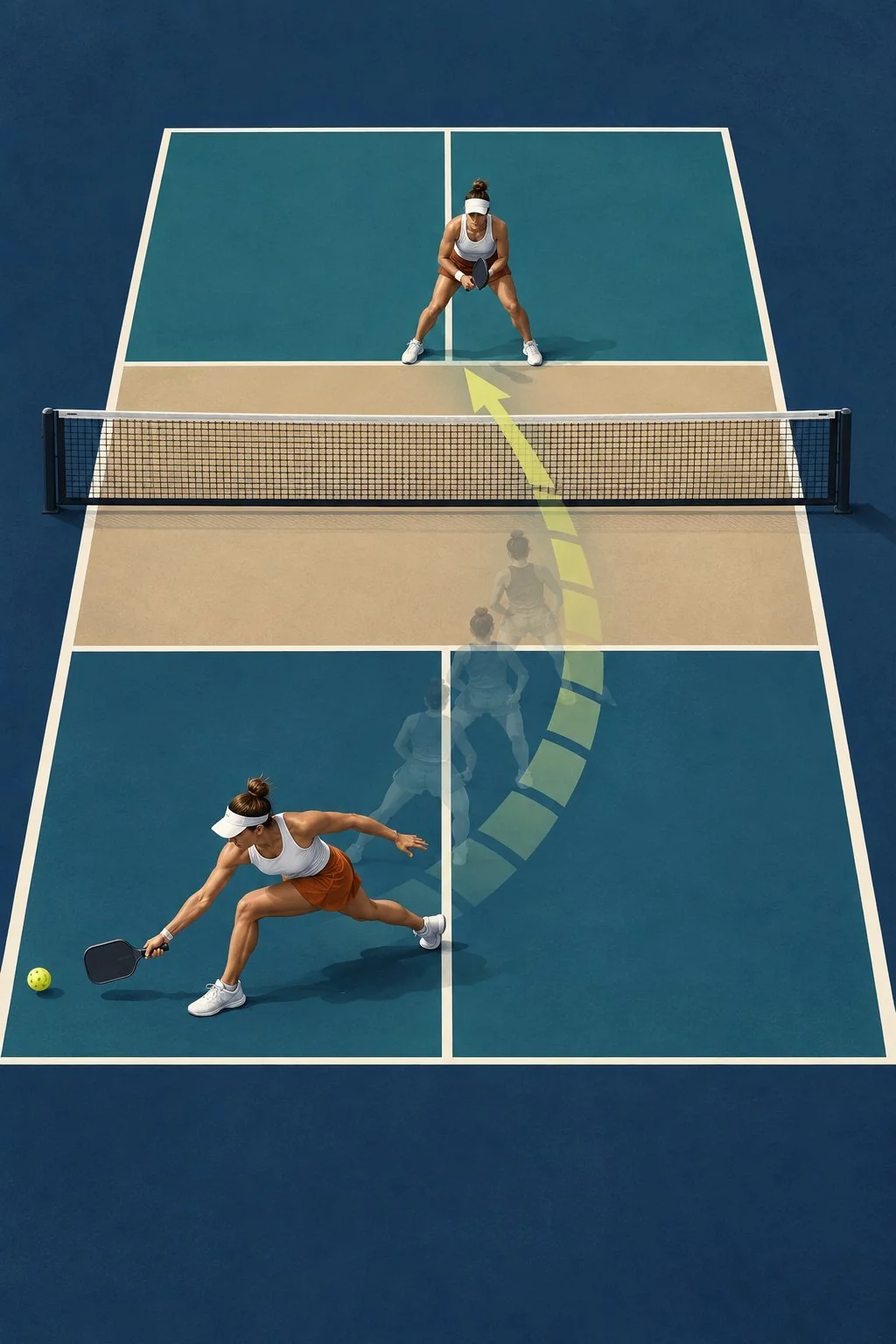
A pickleball low ball reach lets you reach a short or wide ball without turning one good contact into the next problem. The move is not a dramatic dive. It is a measured extension of the base, a stable contact, and a deliberate return to a position where you can play the following shot.
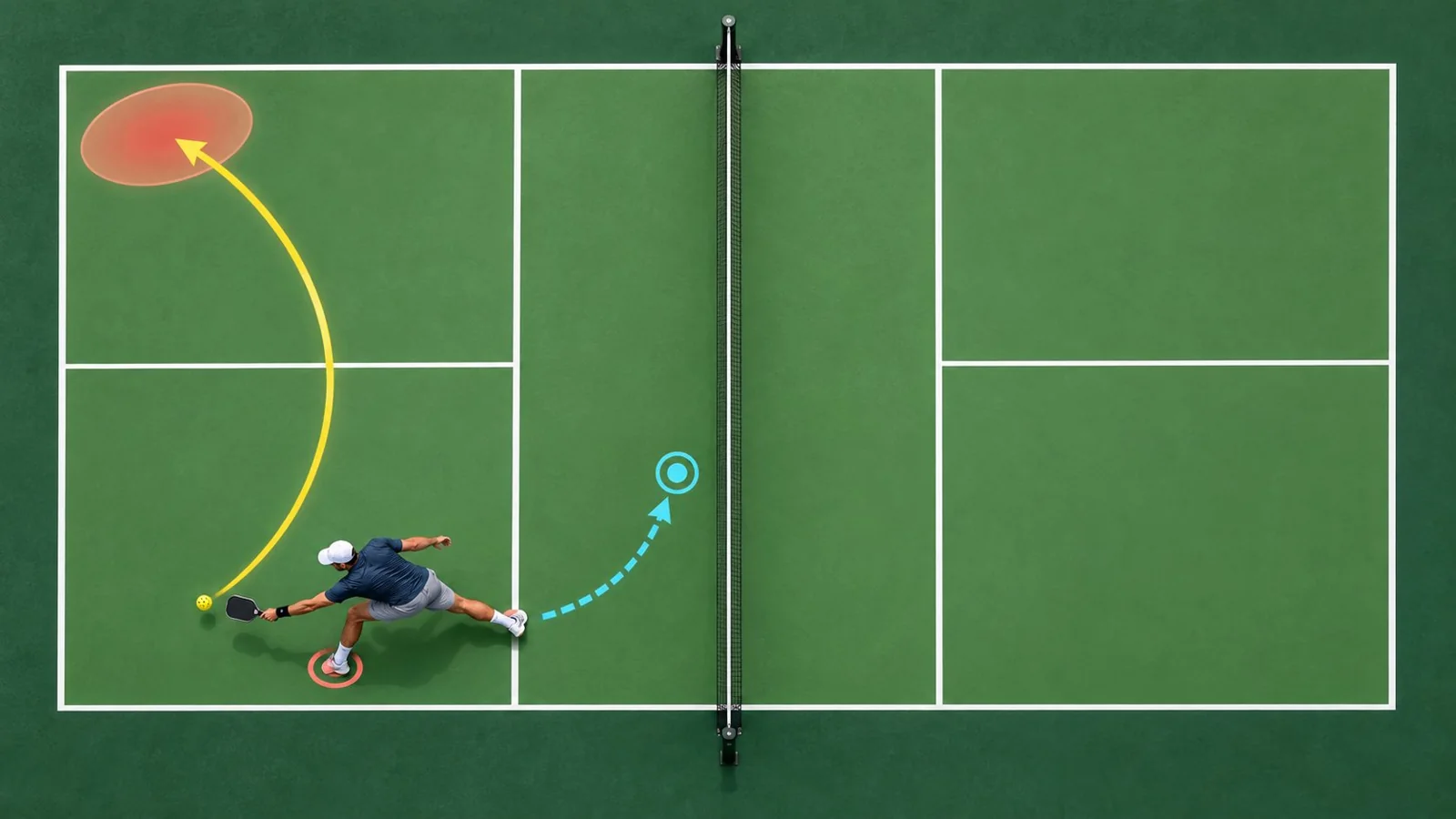
Read first, then choose the lunge
Start from a balanced ready position with the paddle in front. Watch the opponent’s contact and the ball’s height before committing. If the ball is reachable with a small shuffle, shuffle first; a lunge should be the answer to distance, not a substitute for early reading. Keep the paddle available as the feet move so the reach does not become a late, wild swing.
For a ball just outside your comfortable base, take a short adjustment step toward it. If the ball is shorter or wider, extend the nearest leg while keeping the knee soft. Your chest should stay as close to facing the net as the situation allows. Reaching with a straight, locked leg makes the contact fragile and makes the recovery expensive.
Brake at contact instead of falling through it
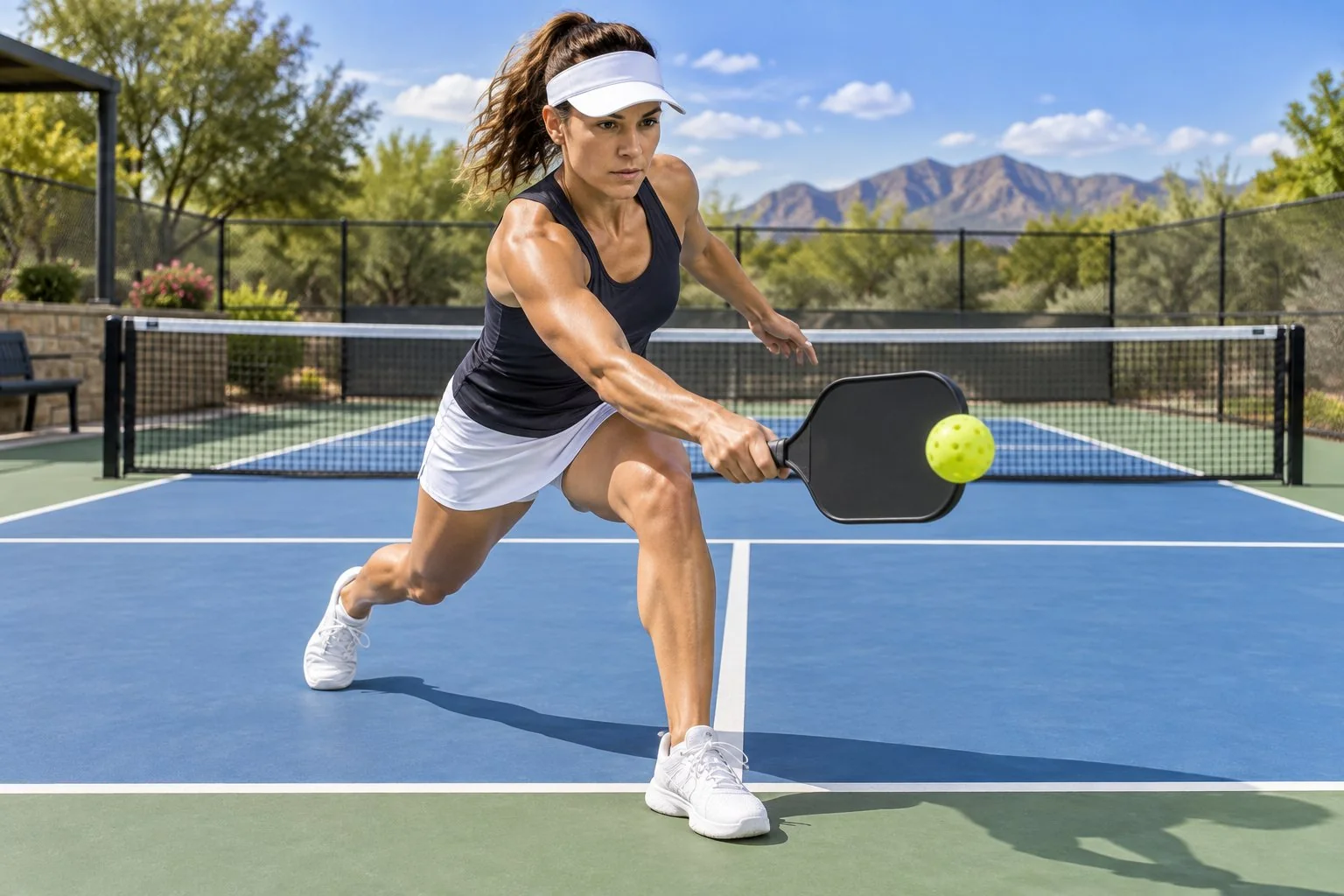
The front leg is both a reach and a brake. Land with the knee bent, lower your center of gravity, and let the paddle meet the ball in front of the body. Keep the swing compact. On a low ball, absorb pace and choose a safe target rather than trying to manufacture power from an unstable stance.
A useful checkpoint is whether you could pause for a moment after contact without toppling. You do not need to freeze during a rally, but the feeling of control exposes common errors: leaning so far that the rear foot lifts, swinging across the body, or contacting beside the hip. If the ball is too far away for a balanced touch, accept a defensive reply and buy time for the next movement.
Push back with the recovery step
Do not stand upright before recovering. As soon as the ball leaves the paddle, push from the loaded front leg and bring the feet back underneath you. Depending on the direction, that may be a recovery step toward the middle, a small crossover, or a shuffle that restores your coverage. The paddle should return to the ready position while the feet recover, not after the next ball is already coming.
In doubles, recovery is also a partner decision. If you have been pulled wide, your partner may shade toward the open middle while you work back. Communicate when the ball has forced a large displacement, then rebuild your side-by-side spacing instead of racing blindly to the line. A balanced recovery protects the next lane more reliably than an ambitious first reach.
Train the movement in small progressions
Begin without a ball. From ready position, step or lunge to a forehand-side marker, touch the imaginary contact point, push back, and reset the paddle. Repeat on the backhand side. Keep the reach short enough that every repetition ends in balance. Then add gentle feeds that alternate between a comfortable ball and one that requires a wider extension.
Progress to a three-ball pattern: shuffle, lunge, recover. The feeder should vary direction without making the feed reckless. Count a repetition as successful only when the contact is controlled and the recovery finishes with the paddle in front. Film from the side if possible; a video often reveals an upright landing or a late recovery that feels invisible in real time.
When fatigue changes the landing, shorten the distance and slow the feed. Good pickleball lunge recovery is repeatable footwork: read early, bend the landing knee, make a compact contact, and push back before admiring the shot.