Pickleball Low Contact Reset: Clear the Net and Recover
A practical pickleball defensive contact point guide: keep low balls playable with compact control, safe net clearance, and balanced recovery.
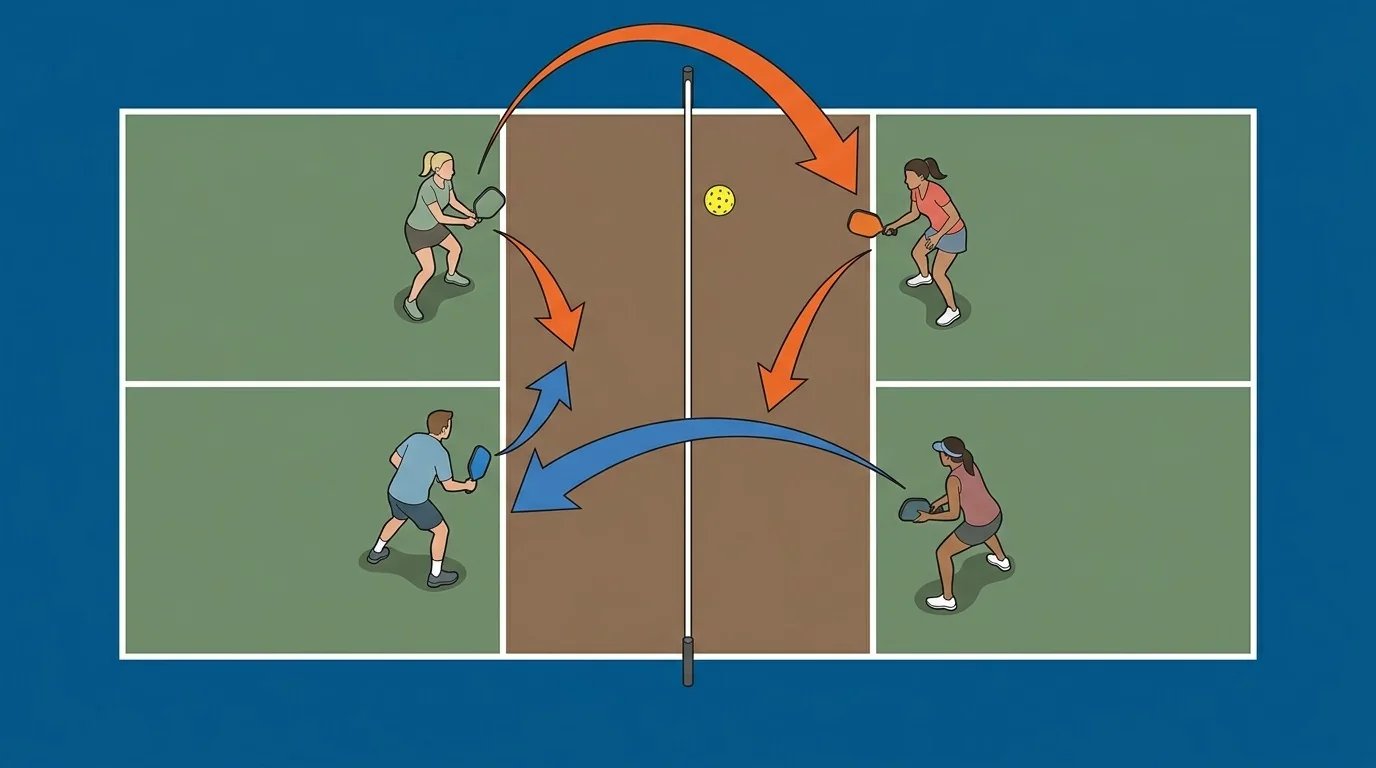
In pickleball, the same swing can be the right attack on one ball and the wrong choice on the next. Start with two pieces of information: the ball’s height relative to the net and the position of all four players. A ball clearly above the net on your side may be attackable. A ball below the net usually calls for a controlled reset that protects the rally.
Read the ball before choosing the shot
Begin with the ball, not with the shot you want to hit. When the ball rises above net height, you have a larger contact window and can send pace downward more safely. When the ball is low, you must lift it over the net. A hard swing from that position often produces a high reply that the opponent can attack. Soften the pace, add enough height, and choose a landing area that makes the next contact uncomfortable.
Height is only the first filter. A high ball far behind you, wide near the sideline, or reached from an unstable stance may still be a poor attack. A ball just below net height can be manageable when you are balanced and the target has room. Check your feet and court position before committing.
Add court position and opponent balance
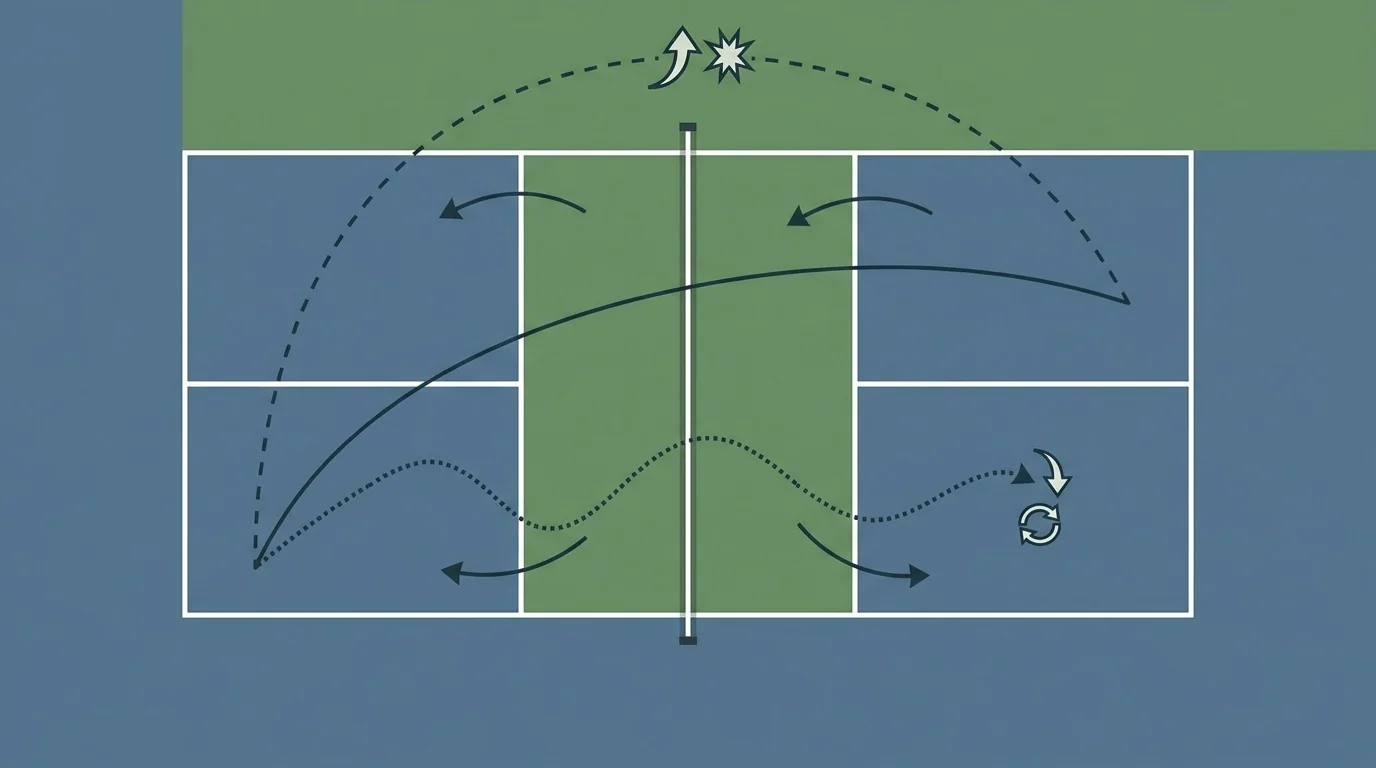
Your location changes the value of the same ball. At the kitchen line, a high ball in front of your body can support a compact volley toward the opponent’s feet or into open space. A high ball behind you may be better handled with a neutral shot. In the transition area, a low ball often deserves a reset that helps you move forward instead of a rushed drive from a falling stance.
Watch the opponents as well. If one player is moving wide or reaching, a controlled ball away from that player may be useful. If both opponents are settled at the kitchen with paddles ready, avoid giving them a comfortable high ball. The middle can reduce angles, but it is not automatically safe. The trajectory and spacing still have to support the choice.
Attack when contact supports it
An attack should start with a ball you can contact in front of your body and above the net. Keep the preparation compact, stay balanced through contact, and select a target with margin. A firm ball at the feet is often more valuable than a low-percentage attempt near the line. Recover immediately after the attack because the opponent may block the pace back.
If the ball is high but your feet are late, choose control instead. An attack can be technically available and still be tactically wrong if it leaves you leaning or out of position. The aim is to improve the next exchange, not to force a winner from every elevated ball.
Reset when the ball is low
A reset absorbs pace and sends the ball into a landing window that is difficult to attack. Use a relaxed grip, a quiet paddle, and enough lift to clear the net safely. From the transition zone, let the ball descend into the kitchen when possible, then move forward behind the shot. Keep your feet ready for the opponent’s response rather than rushing ahead while watching the bounce.
Practise the decision, not just the stroke
Use cooperative feeds that vary both height and location. The feeder sends some balls above net height and others low toward the transition zone. Before contact, the hitter calls a simple choice: attack, reset, or neutral. After the shot, return to a ready position. Score the decision separately from the outcome so a well-chosen reset still counts as a good repetition.
Add movement and a partner who can block or counter. Attack only when you are balanced and the ball is above the net. Otherwise, reset or neutralize. Finish with live points and review one question after each rally: did the shot match the ball height, the contact position, and the opponents’ balance?
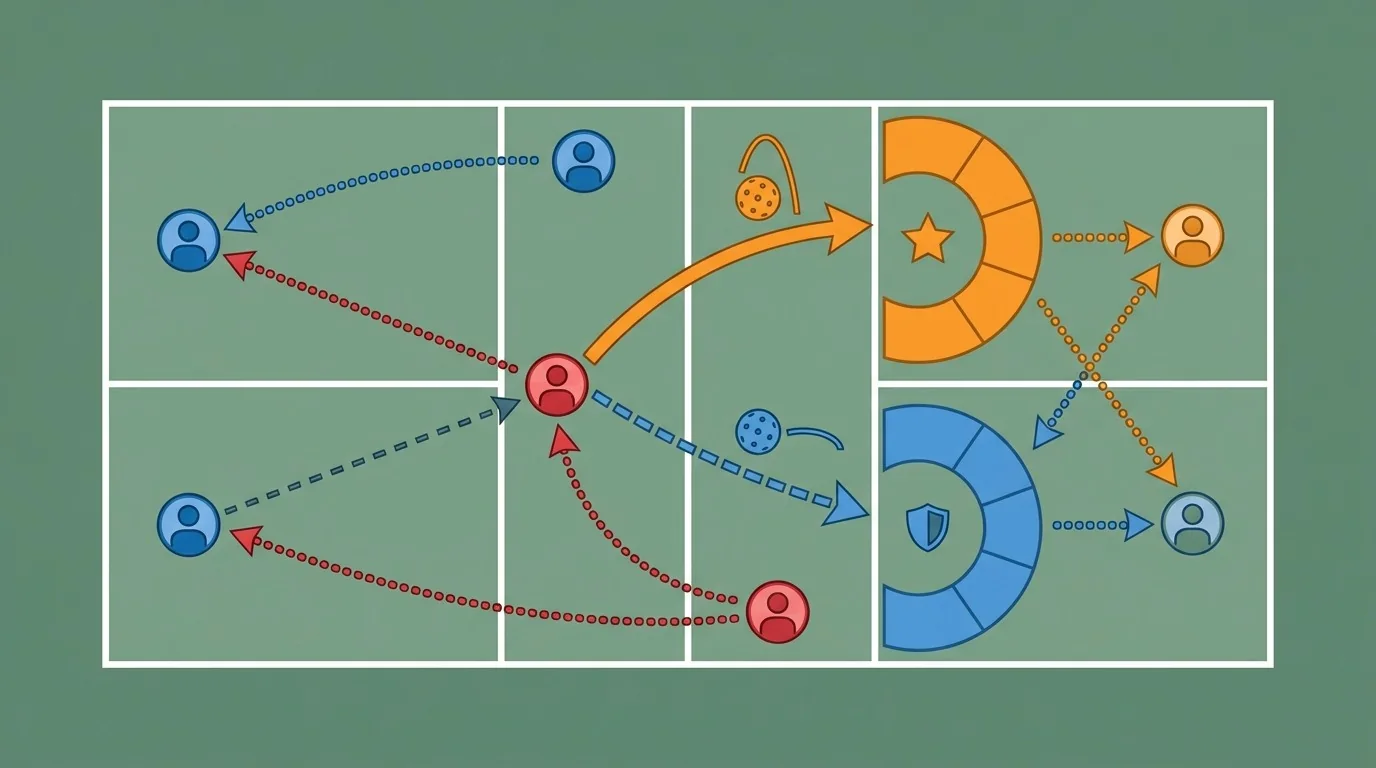
Reliable pickleball shot selection follows a repeatable order: read height, check position, notice balance, choose a target, and recover for the next ball. When the decision matches the information in front of you, you give opponents fewer easy attacks.