Pickleball Middle Ball Communication: Make Clear Calls in Doubles
A practical guide to middle-ball communication in pickleball doubles: agree on responsibility, call early, move with purpose, cover the open space, and practise the habit.
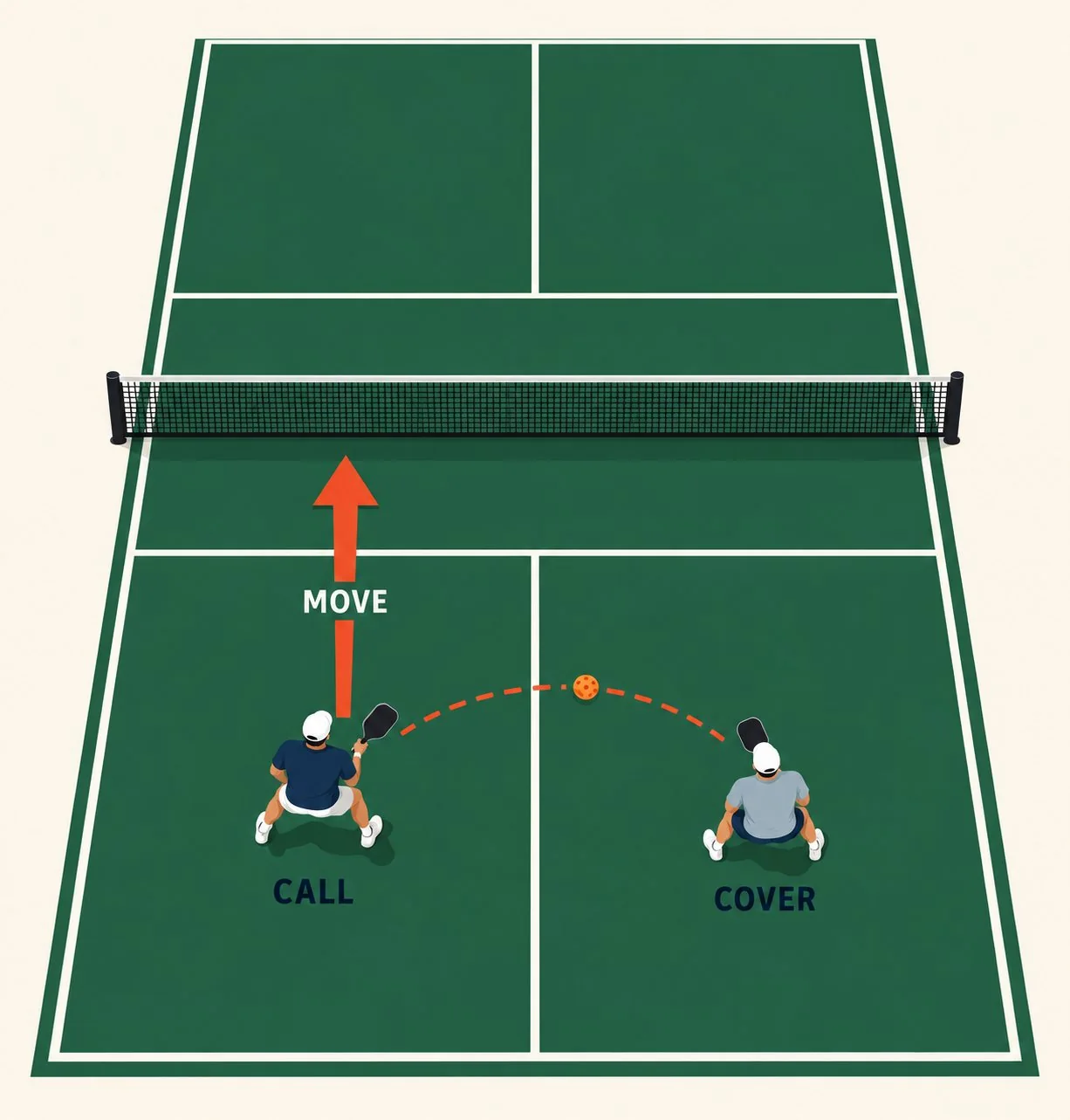
Many doubles points become messy because both players see the same ball and neither takes responsibility. A clear middle-ball call removes that hesitation. The goal is not to prove which partner has priority on every shot; it is to decide early, move with purpose, and keep the pair connected for the next ball.
Decide before the rally gets fast
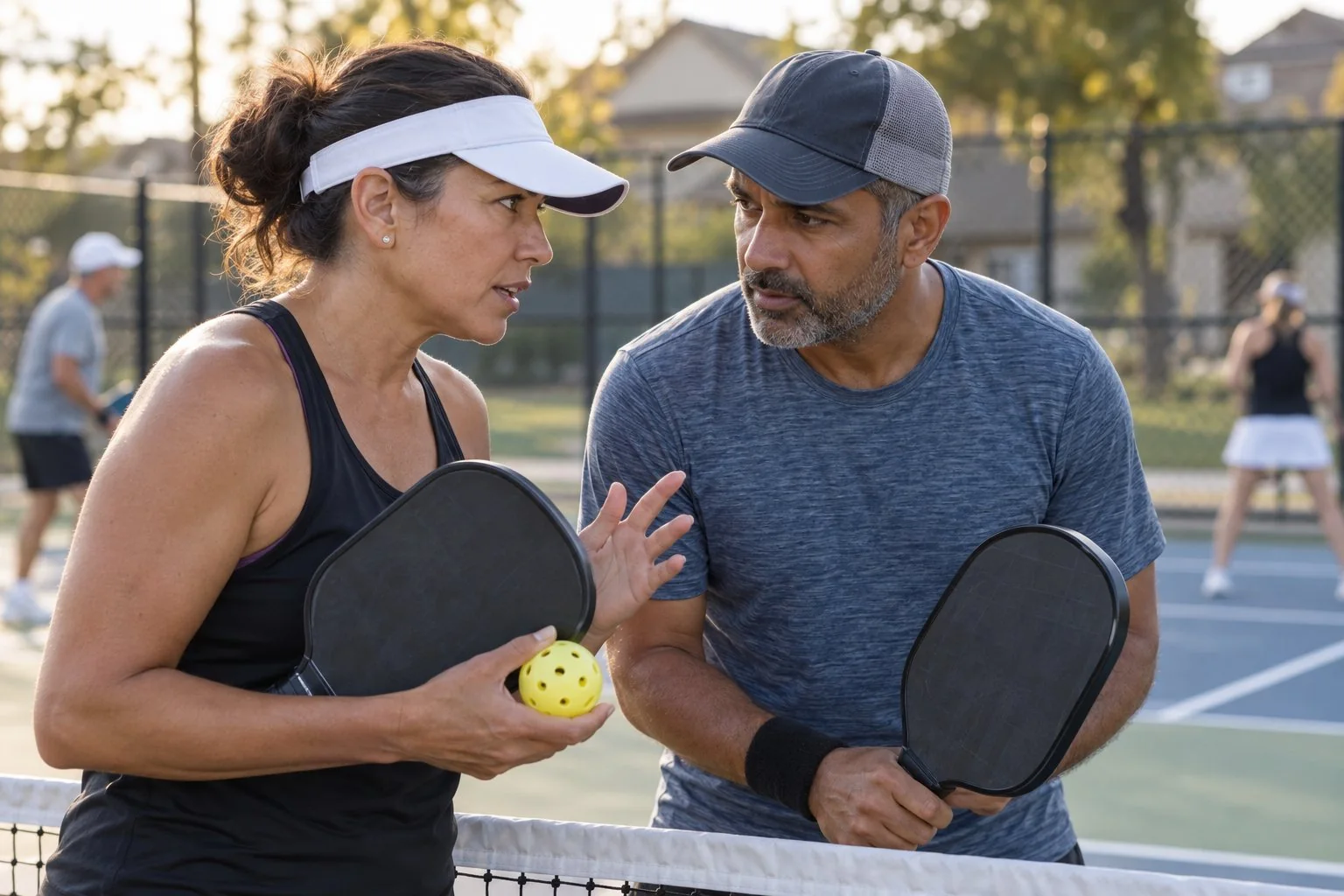
Start with a simple agreement during the warm-up. Decide whether the player with the forehand in the middle takes most of those balls, or whether the player with the better angle and earlier contact has priority. The agreement is a starting point, not a rigid rule. A ball that is clearly in one player’s comfortable strike zone should not become a dangerous last-second handoff.
The important detail is that both partners know the plan. If the middle is shared, use a short call such as “mine” or “yours.” Avoid long explanations while the ball is traveling. A single word arrives sooner and leaves the other player free to cover. Call before the swing, not after the ball has already passed the decision point.
Call, move, and cover the next ball
The caller should move through the ball rather than reaching across from a dead stop. Keep the paddle ready, make a balanced contact, and recover toward the pair’s normal spacing. The partner should yield without turning away from play. After giving up the ball, take a small adjustment step toward the open space and watch the opponents’ reply.
Do not let a middle-ball call pull both partners toward the same spot. The caller owns the shot; the partner protects the court that the movement opens. Stay connected enough that a dink, speed-up, or counter does not create a large seam between you. If the ball is high and attackable, the call should still be followed by a controlled target rather than an automatic swing at maximum pace.
Lobs need the same clarity. The player who can turn and track the ball safely should call for it, while the partner gives room and covers the middle. If the caller cannot reach the lob in balance, say so early and let the partner prepare for the bounce or defensive reply. Communication is a safety tool as much as a tactical one.
Practice communication without creating chaos
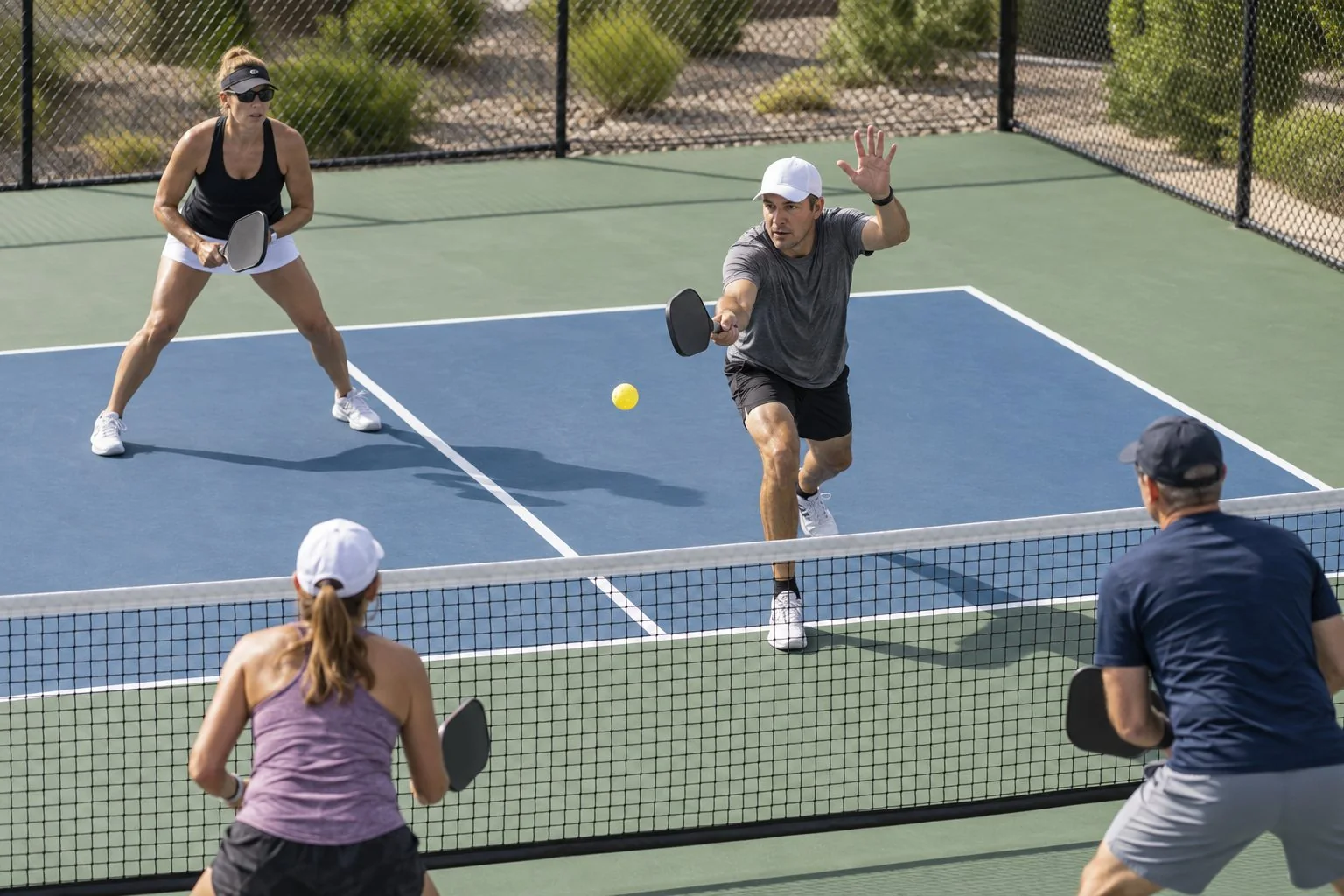
Begin with cooperative feeds. Stand in normal doubles positions and have a feeder send comfortable balls between the partners. Award the point only when one player calls before contact, the partner yields, and both players finish in a usable recovery position. This rewards the complete habit instead of loudness alone.
Next, vary the feed: alternate middle balls with balls clearly aimed at each player. The receiver must call only when responsibility is genuinely shared. Add a second ball after the first contact so the partner learns to move immediately into coverage rather than watching the caller.
Finish with live points in which both partners use the same short vocabulary. Review only one question between rallies: was the call early enough to change the partner’s decision? If not, move closer to the agreed responsibility line, simplify the word, or slow the feed. Clear communication is repeatable when it is early, brief, and tied to a movement plan.
A reliable doubles pair does not need to call every ball. It needs a shared default, an early voice on the uncertain ones, and disciplined coverage after the call. That combination turns the middle from a source of hesitation into a manageable part of the court.