Pickleball Paddle Face Awareness: Read the Angle Before Contact
A practical guide to reading paddle face angle before contact, matching it to ball height, court position, and safer pickleball decisions.
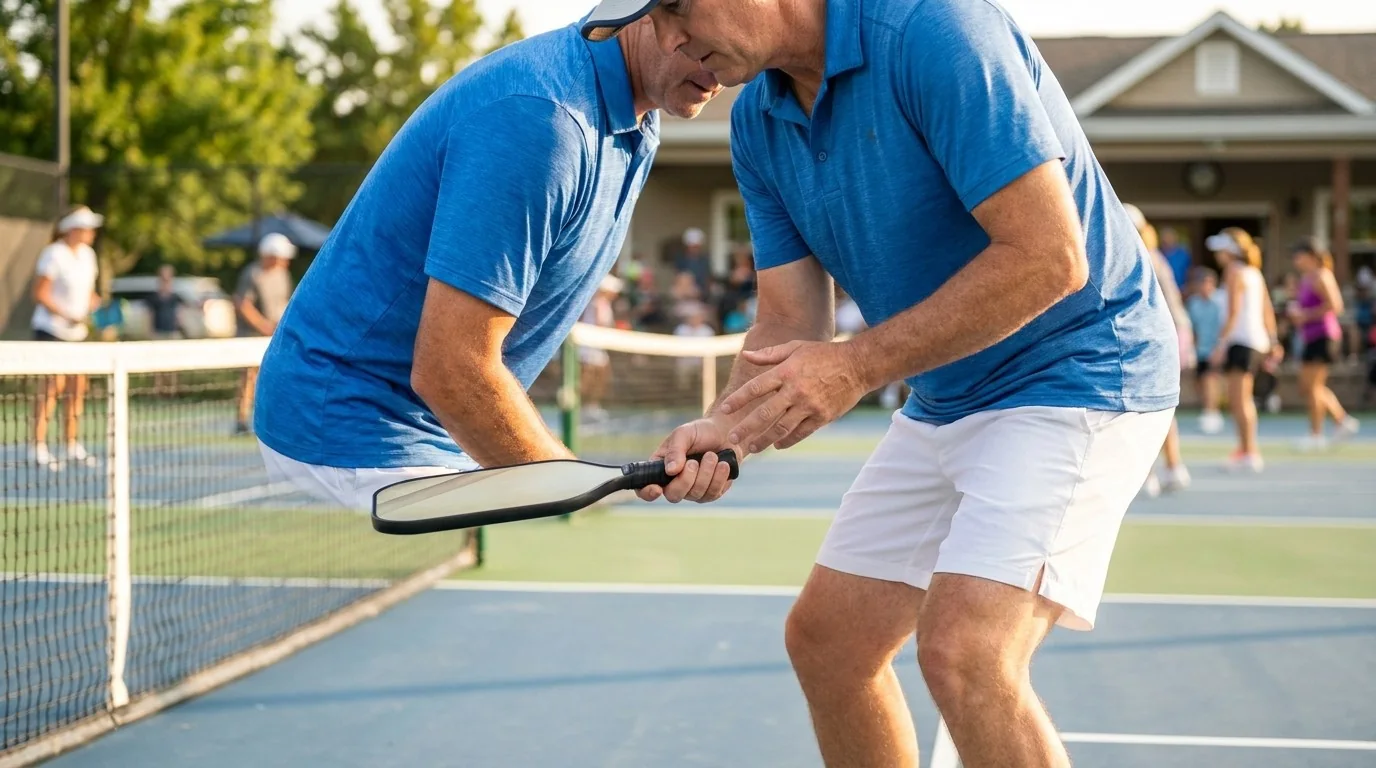
Paddle-face awareness means noticing where the hitting surface is pointing before the ball reaches you. The face does not have to stay frozen. Its angle affects launch height, direction, and the margin you have over the net, so reading it early is more useful than trying to rescue the shot at the last instant.
Make the paddle face an early cue
Begin with the paddle in front of your body and a grip relaxed enough for small adjustments. As the ball comes in, notice whether the face points somewhat upward, toward the target, or down toward the court. This is not a command to lock your wrist. It is a quick link between your preparation and the shot you intend to play.
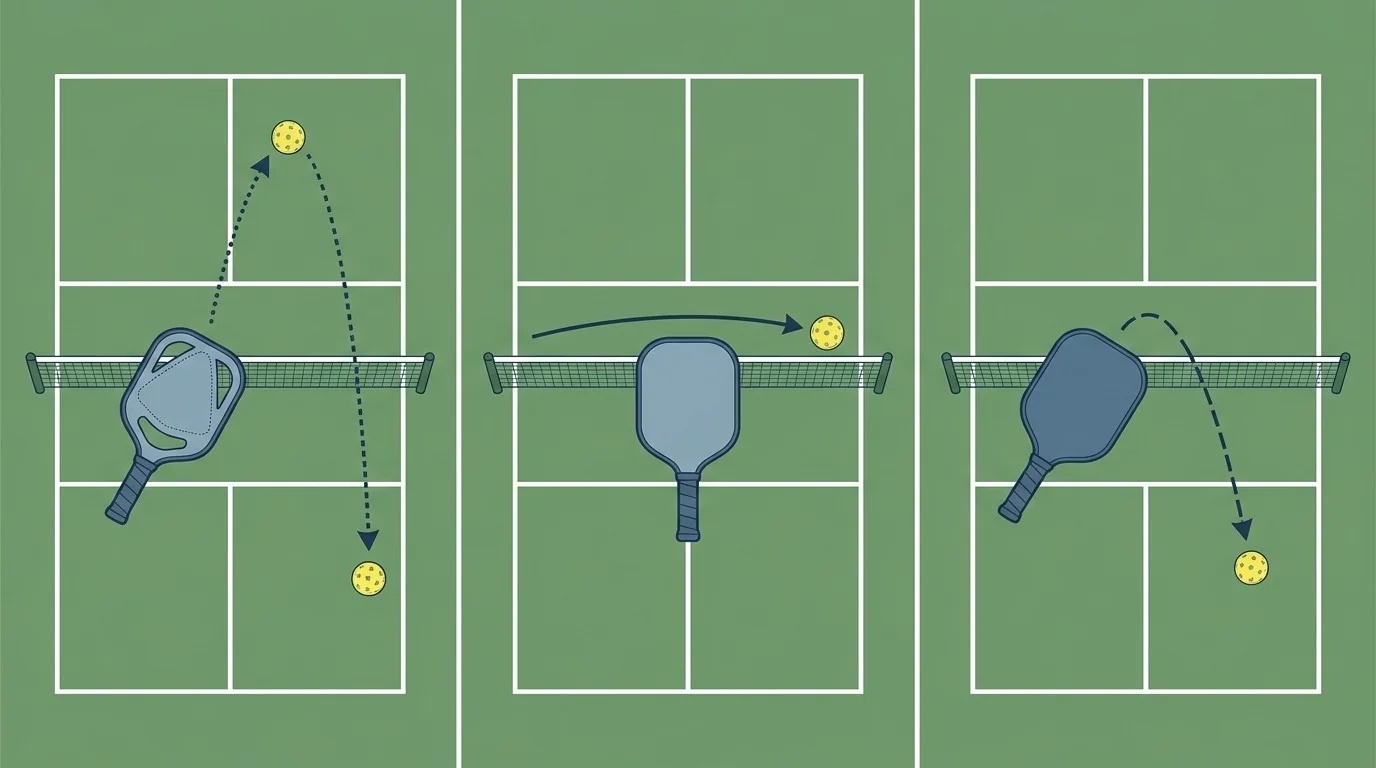
An open face generally sends the ball higher, while a more closed face tends to lower the launch. The result also depends on swing path, contact point, pace, and spin. Treat the angle as one piece of information, not a magic answer. If the ball keeps floating long, inspect the face and your forward acceleration. If it clips the net, inspect the low contact and whether you allowed enough lift.
Read the ball before correcting
A ball below your comfortable contact window usually needs room and lift. Move the paddle under it without a dramatic scoop, keep the motion compact, and let the face provide enough height to clear the net. A higher ball may allow a firmer neutral face, a block, or an attack when your balance and court position support that choice.
When the opponent adds pace, avoid answering with a large wrist change. A stable face and shorter motion can absorb speed more reliably. If you are late, choose playable height and direction rather than trying to create a perfect angle beside your hip. Earlier preparation and better footwork are often the real fix.
Match the face to your court position
At the kitchen, a small face change has a big effect because the net is close and the reaction window is short. Keep the paddle in front, protect your body line, and make compact adjustments. If the ball is attackable, choose the target before you swing. If it is low, create clearance and accept a reset.
In the transition zone, balance matters more than forcing a finishing angle. Stabilize before contact when you can, then use a neutral or slightly open face to manage the incoming ball. From the baseline, the extra distance gives you more room to create height, but an overly open face can still send the ball long. Match the angle to the arc you want and the opponent's position.
Use a simple awareness drill
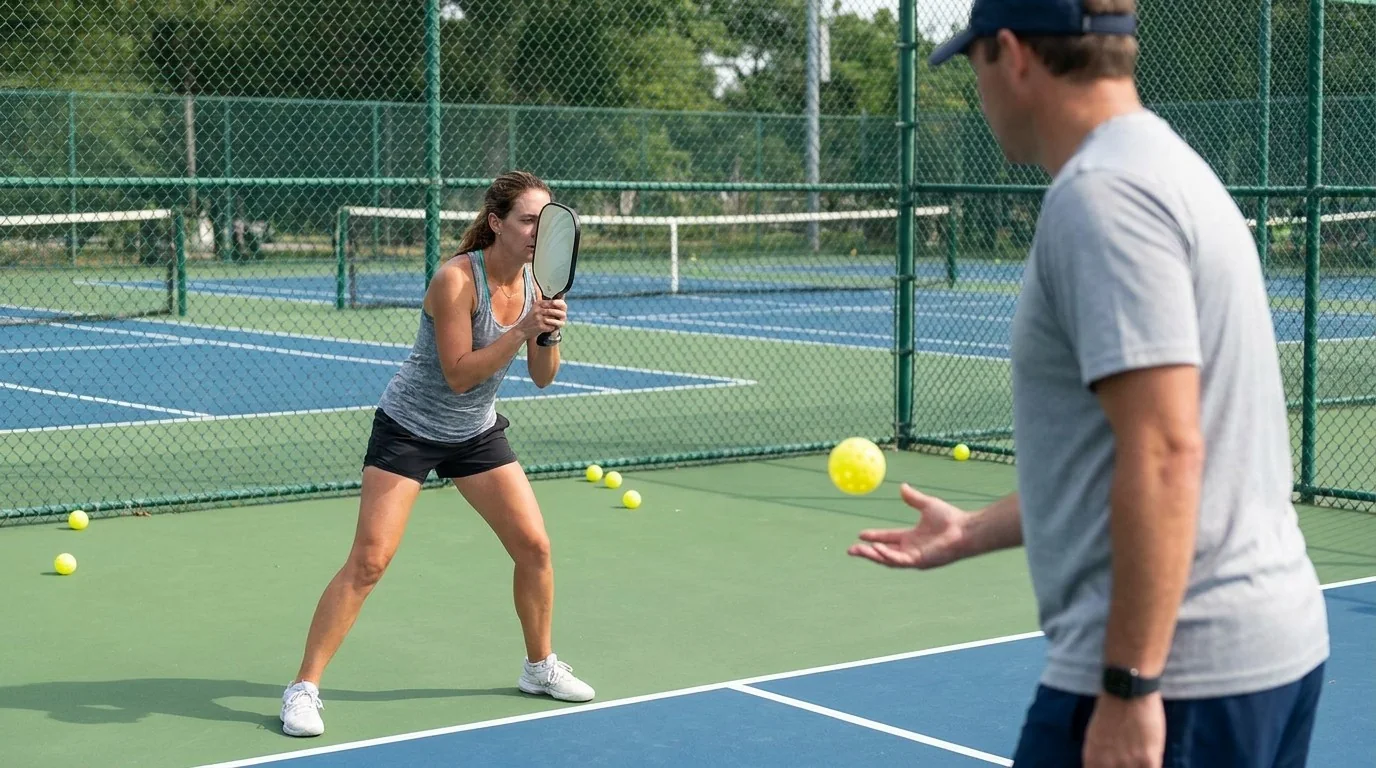
Have a partner feed three controlled balls: one low, one waist-high, and one slightly high. Before each contact, say "low," "middle," or "high," then decide whether the face should be open, neutral, or closed relative to your target. Do not chase speed. Count the repetitions in which you prepared early, contacted in front, and cleared the net with useful margin.
Repeat the drill with a blocker sending moderate pace. Keep the face quiet and change only what the ball requires. Finish with a cooperative rally in which you call the intended height before each reset. If the ball keeps missing, diagnose in this order: feet and spacing, contact point, face angle, then swing speed.
Paddle-face awareness turns a vague miss into an observable choice. Prepare early, read the ball's height, set a face that supports the intended arc, and use balanced movement to give the paddle room to work.