Pickleball Paddle Grip Size: How to Find a Comfortable Fit
Measure your pickleball paddle grip size, spot an uncomfortable fit, and make small adjustments with the right overgrip or replacement grip.
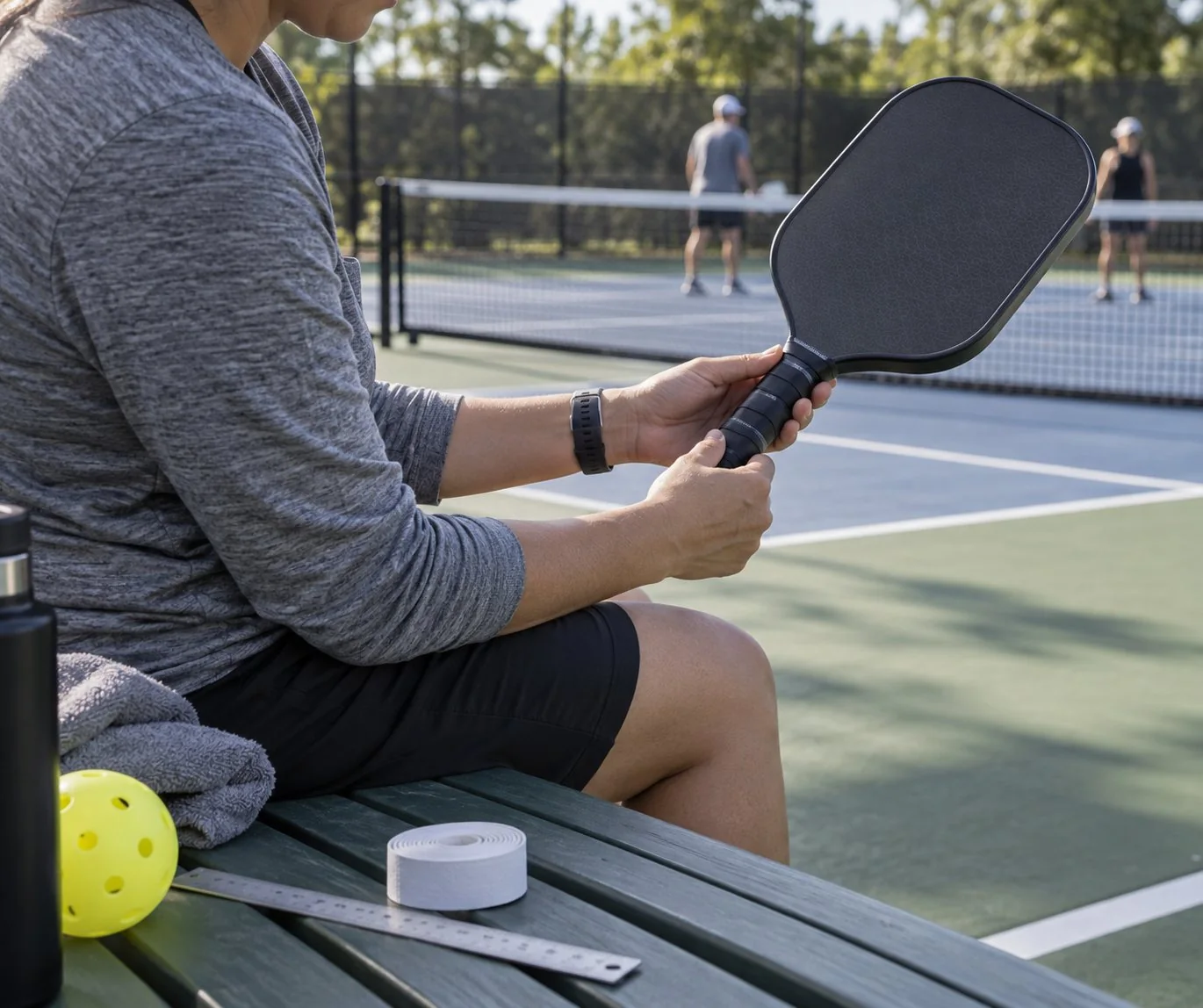
The right pickleball paddle grip size should feel secure without making you squeeze hard. A handle that is too small can feel unstable, while one that is too large may restrict quick hand adjustments. Before replacing a paddle, check whether a simple grip change can solve the problem.
How to measure your pickleball paddle grip size
Start with the paddle in your normal playing hand. Use a relaxed continental-style hold, similar to shaking hands with the handle. Look at the space between the tip of your ring finger and the pad below your thumb. Slide the index finger of your other hand into that space.
A snug fit is a useful starting point. If the index finger cannot enter, the handle may be too large. If there is a wide gap and your fingers wrap deeply around the handle, it may be too small. This is a fitting check, not a medical test, so comfort during actual play still matters.
For a more precise estimate, measure from the middle crease of your palm to the tip of your ring finger. Compare that measurement with the grip circumference listed by the paddle maker. Many adult paddles fall roughly between 4 and 4.5 inches, often in eighth-inch increments. Measurements are only a starting point because handle shapes and grip materials differ.
Test the paddle with the grip you normally use. A thick replacement grip or an overgrip changes the final circumference. If you are between sizes, starting slightly smaller usually leaves room for a thin overgrip or a small build-up later.
Signs your grip is too small or too large
A grip that is too small can encourage excessive squeezing. You may notice the paddle twisting on off-center contact, forearm tension, or a need to re-grip frequently during a fast exchange. A larger handle can sometimes reduce that movement, but adding thickness should be gradual.
A grip that is too large may make your hand feel cramped. Quick transitions between forehand and backhand can become awkward, and the wrist may feel less free on soft shots. Bulky wrapping can also create pressure points in the palm. Do not judge the size after one casual swing; play a short session with normal serves, returns, dinks, and volleys.
Sweat creates a separate problem. If the handle is the right size but becomes slippery, try a fresh overgrip rather than buying a new paddle. Tacky wraps suit players who want more surface grip. Cushioned wraps add softness, while perforated options can help move moisture away from the palm. The best choice depends on your hands and playing conditions.
How to adjust the handle without changing paddles
An overgrip is a thin layer placed over the existing base grip. It can restore tack and add a modest amount of circumference. Wrap it evenly from the butt cap toward the top, keeping steady tension and consistent overlap. If the handle becomes lumpy, remove the wrap and start again rather than accepting an uneven surface.
Use a full replacement grip when the original base has hardened, cracked, flattened, or separated. Remove the old material, clean loose residue from the handle, and let it dry before applying the new grip. An overgrip cannot restore cushioning that has already failed underneath.
If you need only a small increase, add one layer and test it for several sessions. More material is not automatically better. Keep notes on comfort, control, and whether you still squeeze during rallies. Stop using the setup if it causes persistent pain, numbness, or weakness and seek appropriate professional advice.
A comfortable pickleball paddle grip size is the one that lets you hold the paddle securely with a relaxed hand and make normal changes without thought. Measure first, adjust in small steps, and let real play—not packaging claims—make the final decision.