Pickleball Paddle Ready Position: React Earlier at the Kitchen
A practical guide to the pickleball paddle ready position: keep the paddle centered, time your feet, choose a controlled response, and recover together.
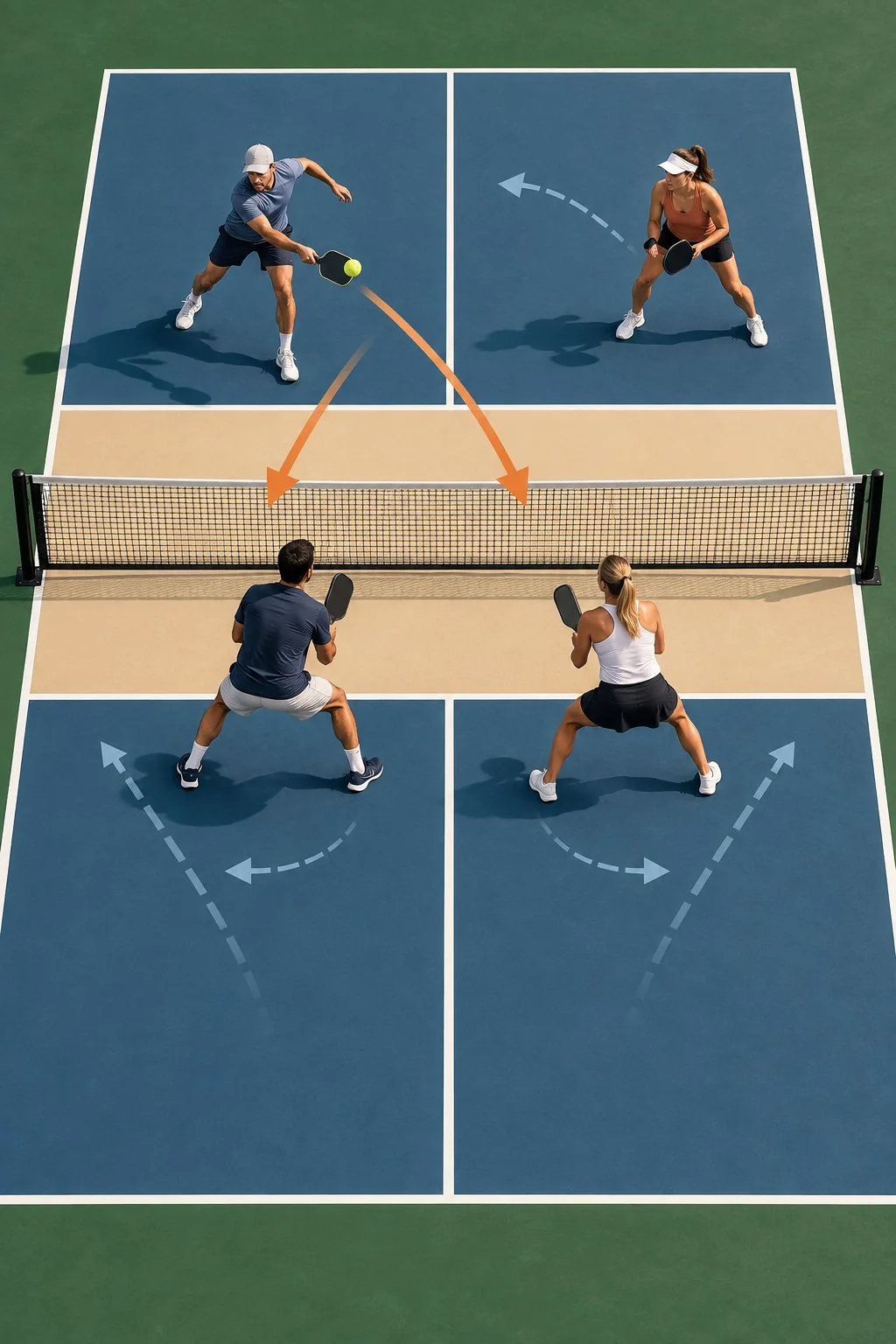
The pickleball paddle ready position is the quiet starting point for fast exchanges at the kitchen. It is not a stiff pose and it is not about holding the paddle as high as possible. The goal is to keep the paddle available in front of the torso, the knees unlocked, and the feet ready to make a small adjustment before the ball forces a reach.
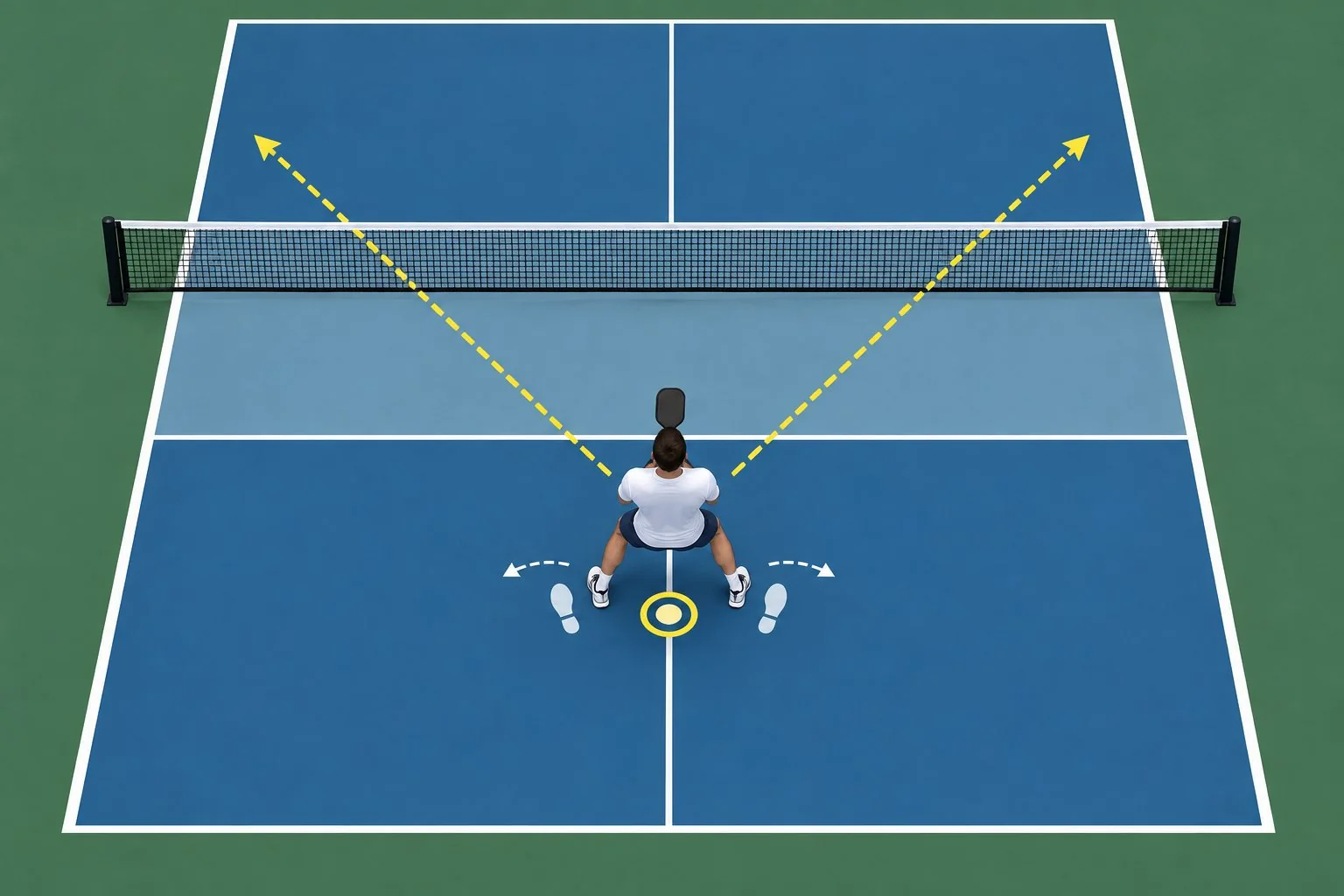
Build a neutral position you can repeat
Stand roughly an arm's length from the kitchen line, with the feet comfortable rather than locked together. Keep the chest facing the net and place the paddle in the middle of the body, where either side can reach it. Relax the hand enough to feel the handle without squeezing. A neutral face and compact preparation make the next decision simpler.
Avoid parking the paddle beside the hip or letting the free hand disappear. Those habits lengthen the first move. Keep the head still, watch the opponent through contact, and let the ball's height and direction choose the response.
Time the feet to the opponent's contact
As the opponent begins the forward swing, make a small split step so both feet can push. Land around contact, not long before it. If the ball travels wide, use short lateral steps and keep the torso available to the net; do not lean first and reach second. In doubles, the partner should slide with you so the middle and the open lane do not become gifts.
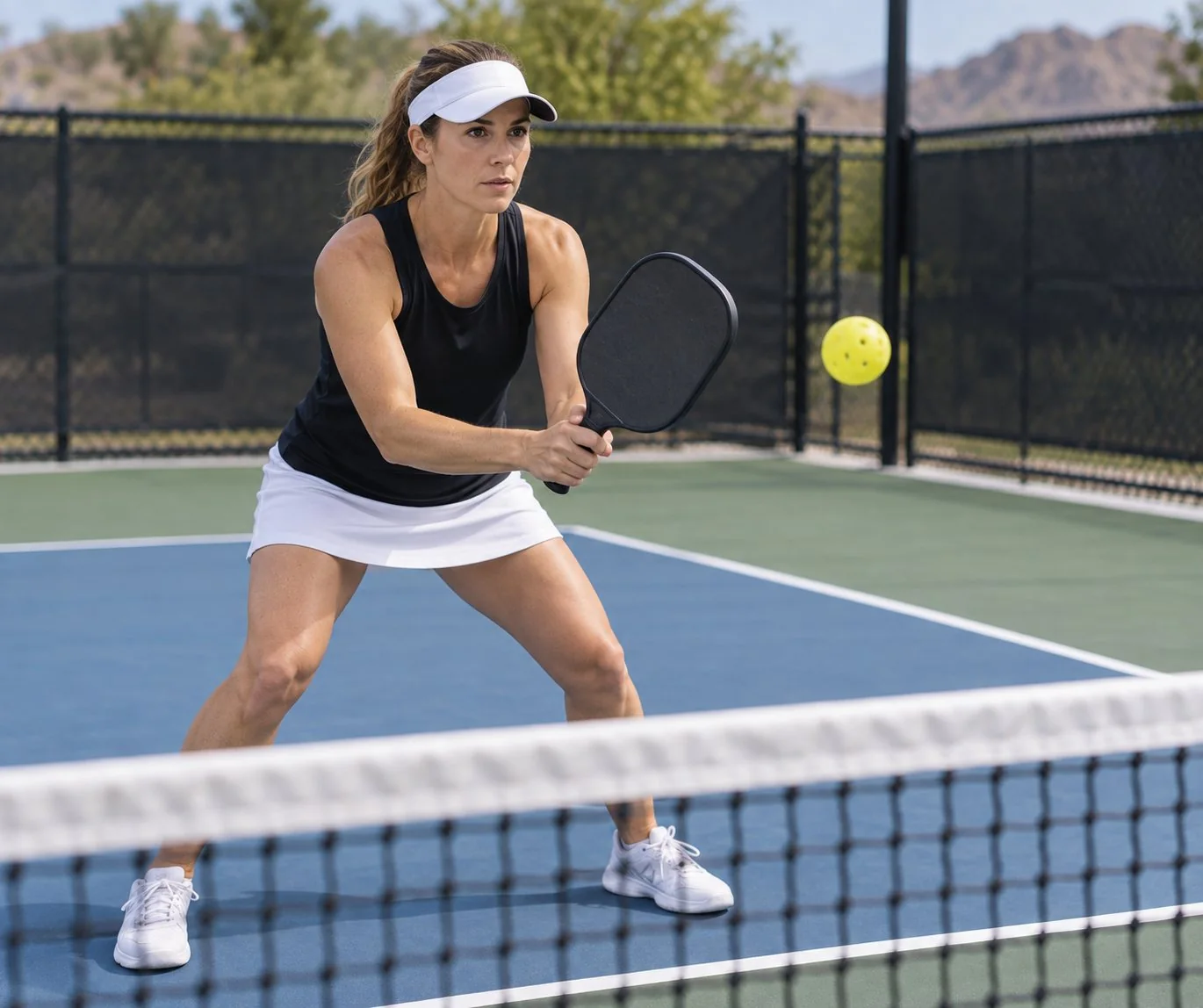
Match the shot to the contact window. Absorb a low or fast ball with a compact block or reset rather than trying to create a large swing. When the ball rises into a comfortable zone, a punch or controlled attack can be appropriate. The ready position is successful when it buys a stable contact, not when it makes every ball look attackable.
After contact, return the paddle to the center immediately. Recover your feet before admiring the shot. Common errors are standing upright, reaching with the arm while the feet stay still, and drifting away from the partner. A quiet paddle plus active feet gives you more than either habit alone.
Turn the ready position into a repeatable drill
Begin with shadow repetitions: set the paddle, split on an imagined contact, take two lateral steps, and recover to the center. Add gentle feeds to the forehand and backhand while freezing after each block. Check three things: paddle in front, knees still loaded, and weight balanced over both feet.
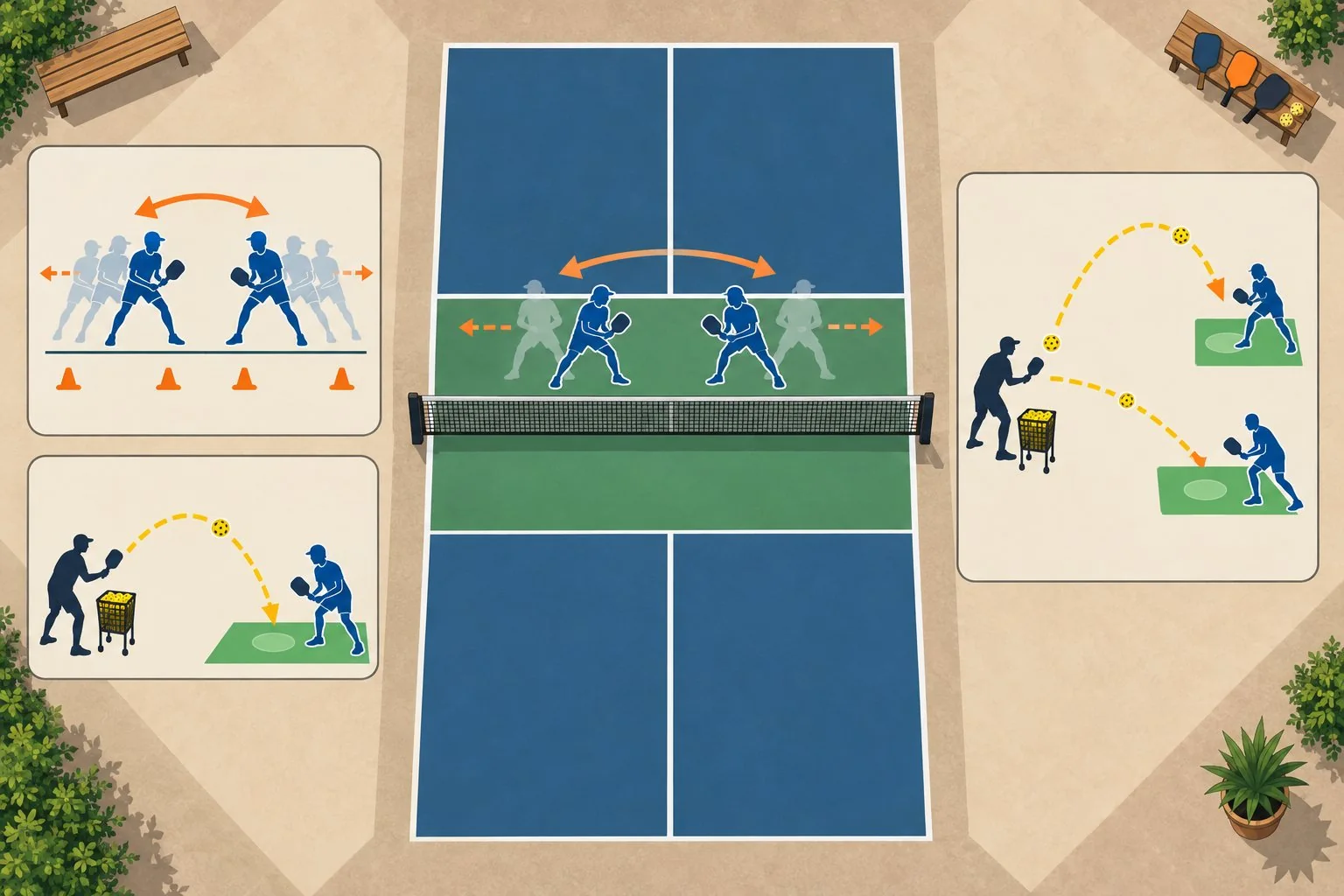
Progress to mixed feeds where the partner alternates a low ball, a comfortable ball, and a wide ball. Call “absorb,” “punch,” or “move” only after reading the feed. In doubles, repeat the drill with both players sliding together and recovering together. Track balanced contacts and correct decisions, not winners.
Slow the drill down whenever the paddle drops, the feet cross unnecessarily, or the torso turns away from the net. With repetition, the ready position becomes an automatic reset after every shot, letting you react to the ball you actually receive instead of guessing at the one you fear.