Pickleball Paddle Storage: A Simple Pre-Game Check
Use this pickleball paddle storage check to control heat, moisture, pressure, and transport, then inspect the paddle before your next session.
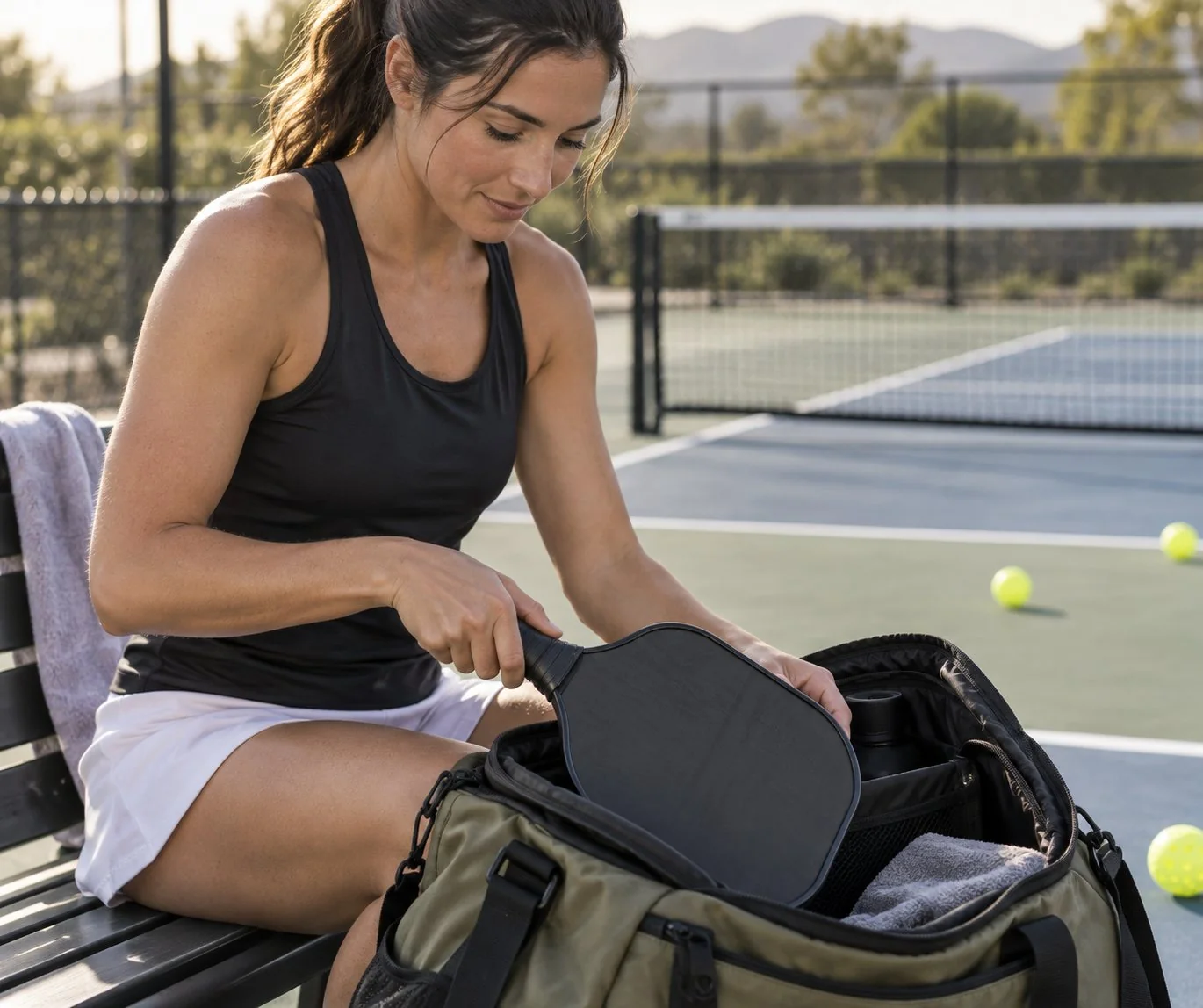
pickleball paddle storage check protects the paddle when storage controls heat, moisture, pressure, and careless contact with other gear. A bag is useful, but it is not a substitute for checking the handle, face, and edge guard before play.
What is the main risk?
Keep the paddle out of a hot car and away from direct sunlight for long periods. Do not place heavy shoes or bottles on the face. Moisture should dry before the paddle is sealed in a compartment, because a damp wrap and trapped heat can make inspection harder.
How should storage be checked?
Use a simple baseline check. Record 20 controlled shots before a storage change and count 13 that stay balanced and reach the target, or 65%. After a week of safer storage, repeat the same drill; 16 of 20 is 80%. These are personal practice observations, not a laboratory durability rating.
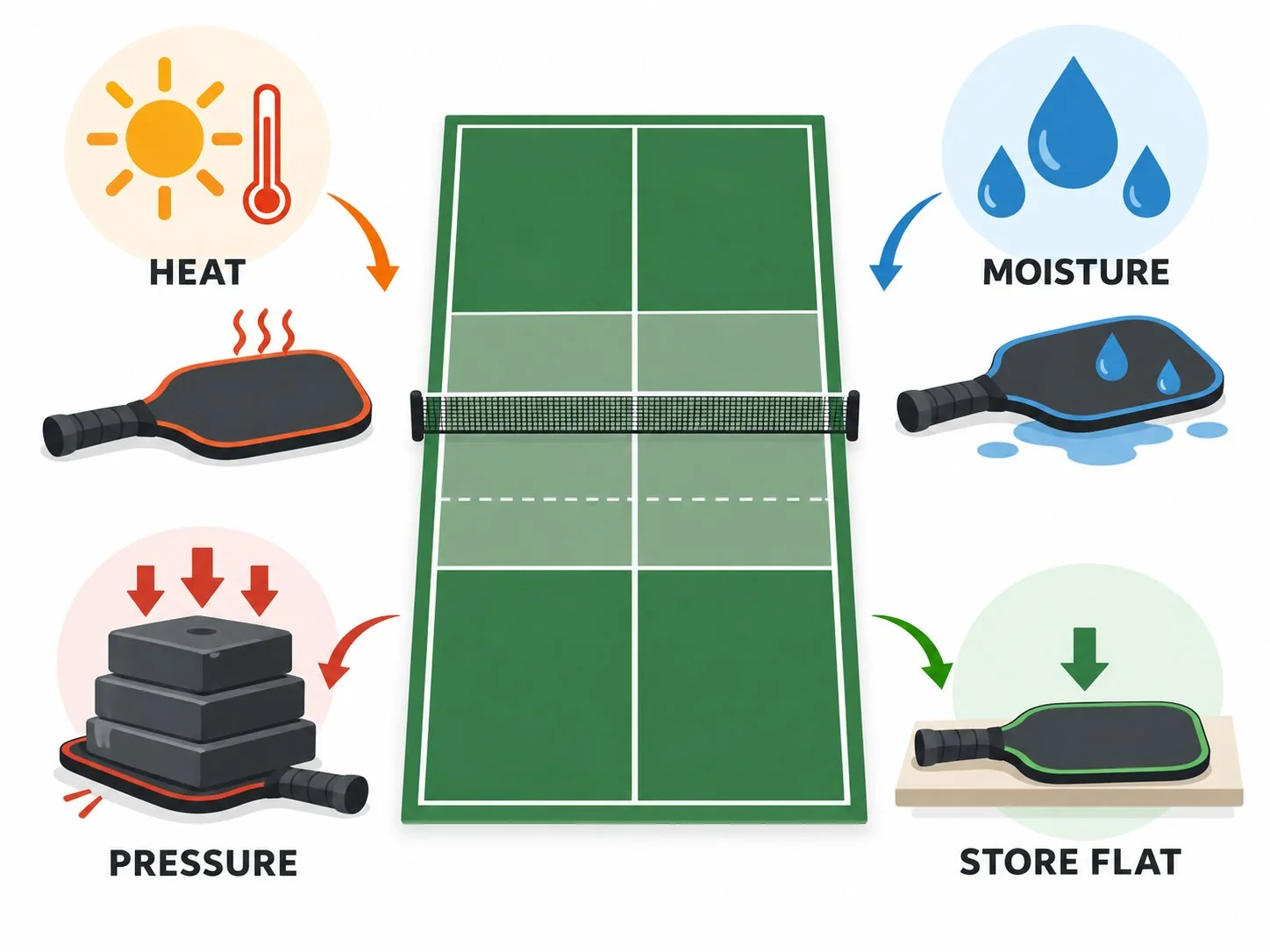
A protective cover can reduce scratches during transport, but it should not press hard against the edge. Store the paddle flat or in a stable sleeve, keep it separate from sharp objects, and avoid bending the face while loading a vehicle.
How do you measure the result?
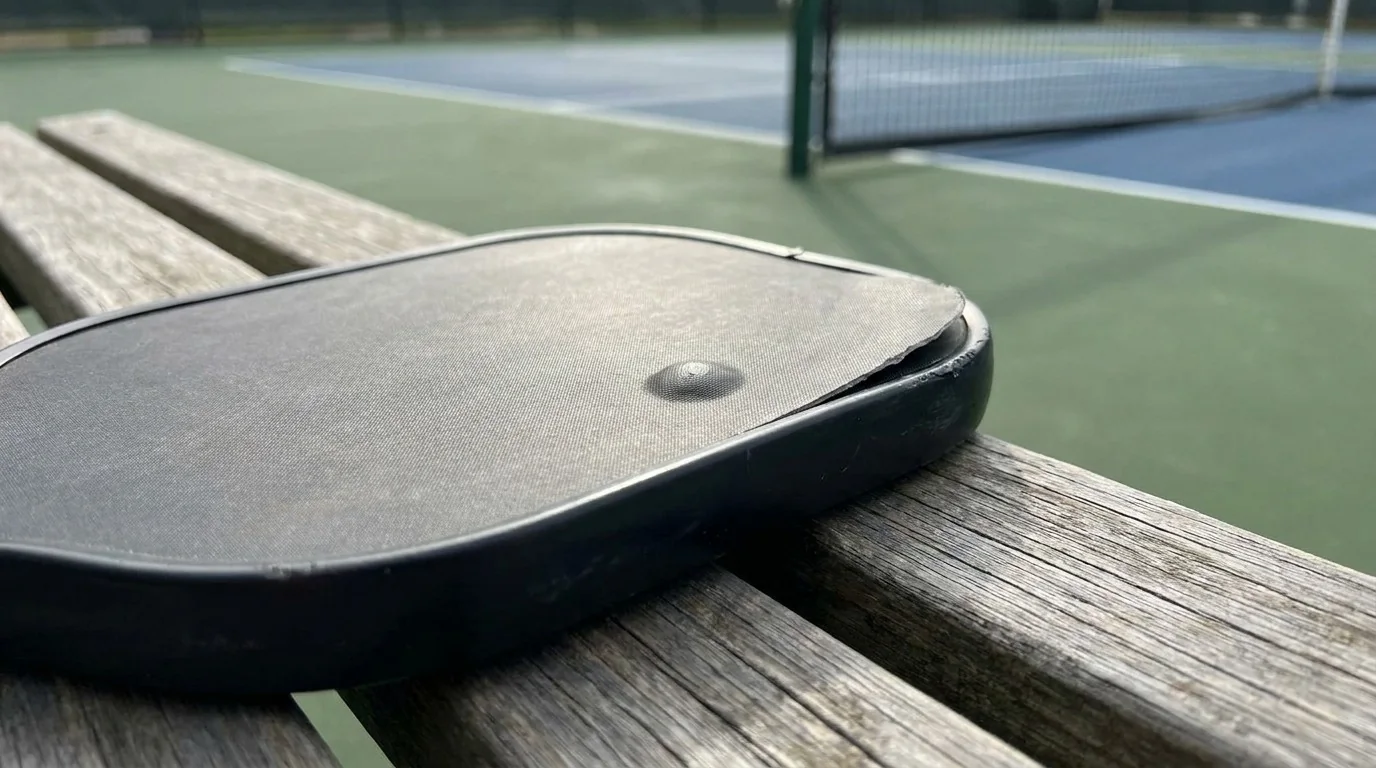
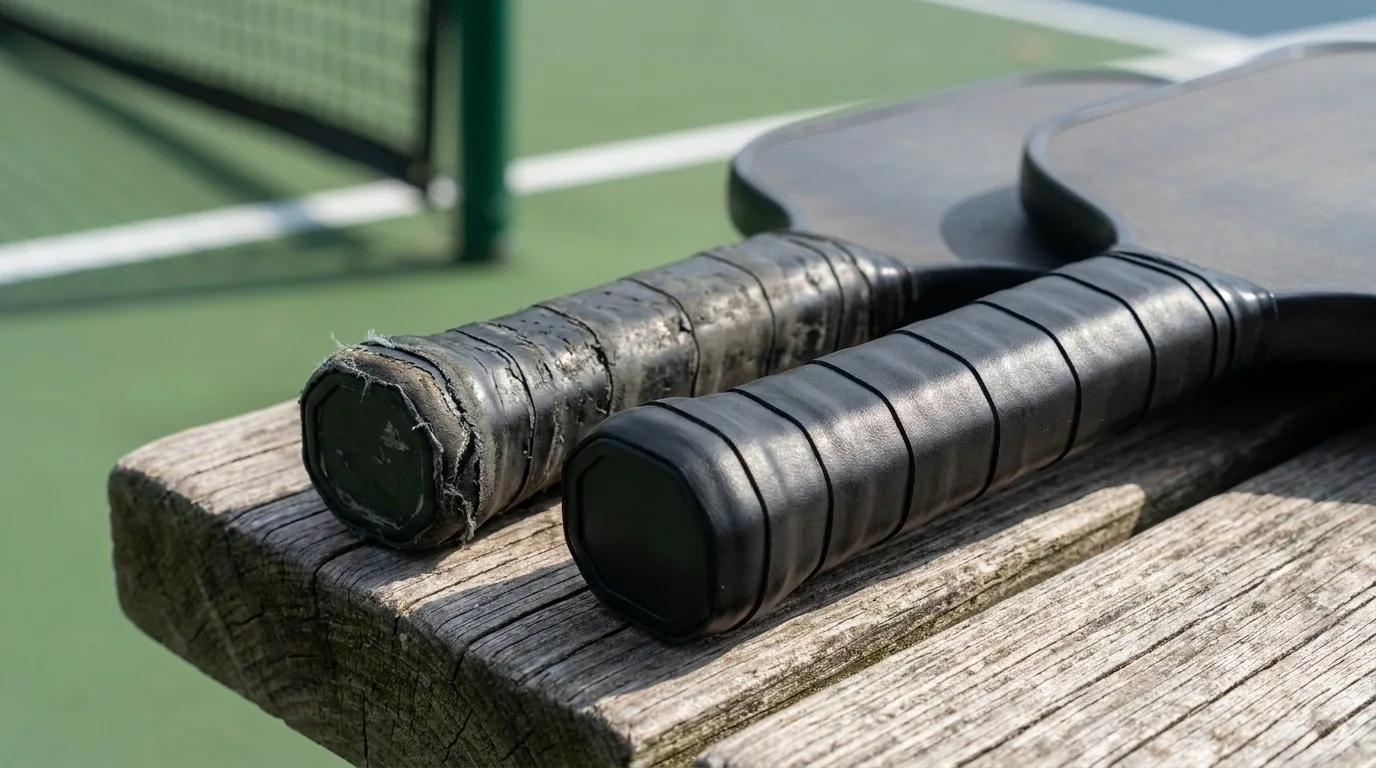
Inspect the grip for movement, the butt cap for rattling, and the face for cracks or lifting material. If the handle shifts, stop hard hitting until the equipment is assessed. A new wrap cannot repair structural damage.
Which habits help?
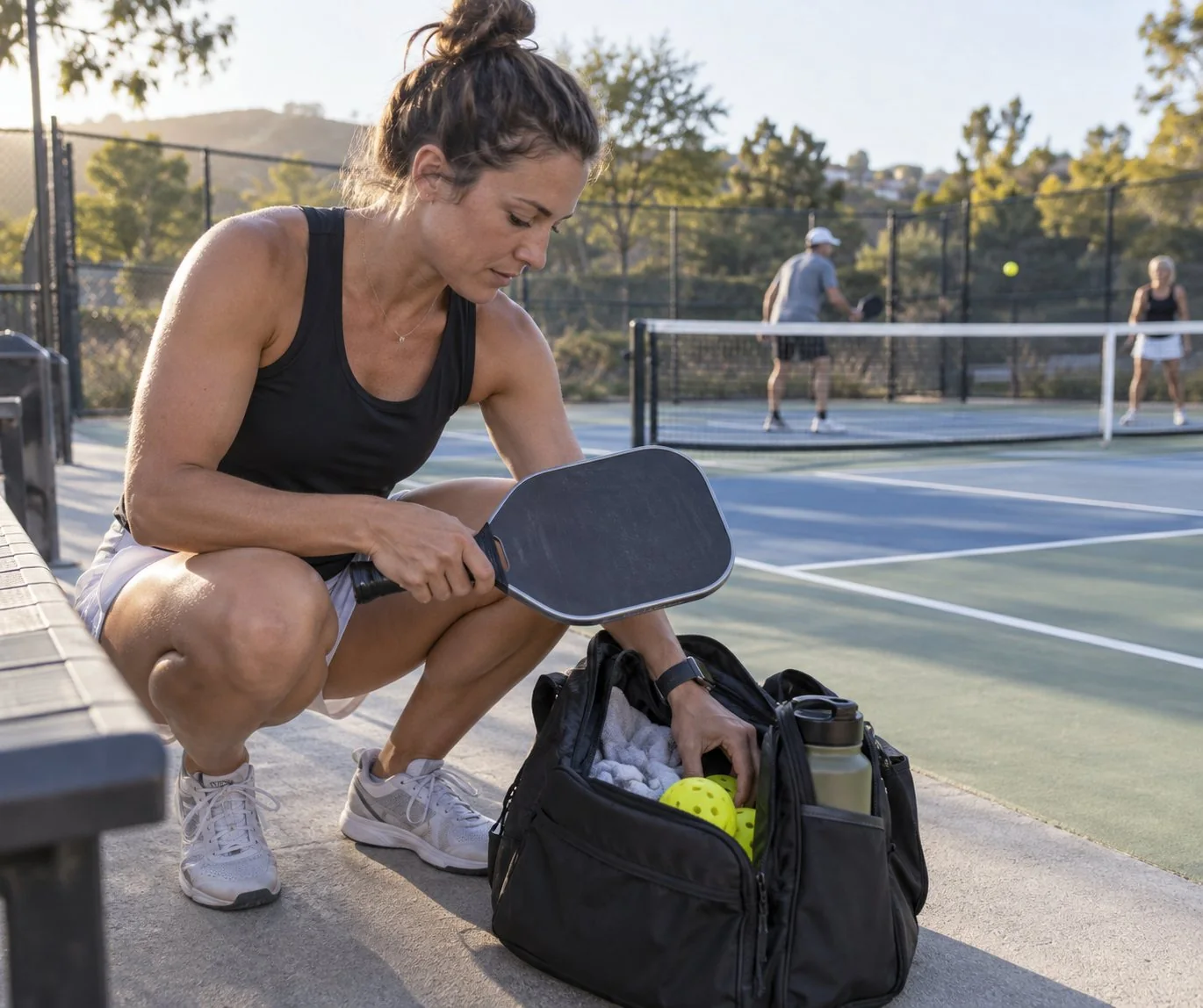
Use three checks before a session: temperature, dryness, and visible damage. Change one storage habit at a time and write down what changed. Stop if pain or equipment movement alters the stroke.
Checklist
pickleball paddle storage check protects the paddle when storage controls heat, moisture, pressure, and careless contact with other gear. A bag is useful, but it is not a substitute for checking the handle, face, and edge guard before play. Use three checks before a session: temperature, dryness, and visible damage. Change one storage habit at a time and write down what changed. Stop if pain or equipment movement alters the stroke.
Keep a short equipment log beside your normal gear checklist. Note where the paddle was stored, whether it was dry, and whether the face, edge guard, handle, and butt cap looked unchanged. If a new rattle or movement appears, separate the paddle from match use until it can be assessed. A storage habit should make inspection easier, not hide the condition under a tight cover. Test one change at a time, such as removing heat exposure or keeping wet towels in a separate compartment, and compare what you observe after several sessions. These observations describe your own routine; they are not a durability guarantee or a substitute for the maker’s instructions.
Keep a short equipment log beside your normal gear checklist. Note where the paddle was stored, whether it was dry, and whether the face, edge guard, handle, and butt cap looked unchanged. If a new rattle or movement appears, separate the paddle from match use until it can be assessed. A storage habit should make inspection easier, not hide the condition under a tight cover. Test one change at a time, such as removing heat exposure or keeping wet towels in a separate compartment, and compare what you observe after several sessions. These observations describe your own routine; they are not a durability guarantee or a substitute for the maker’s instructions.