Pickleball Transition Contact Point: Keep the Ball in Front
Learn to keep the pickleball in front during transition: control your approach, build a balanced contact point, choose the right shot, and recover ready.
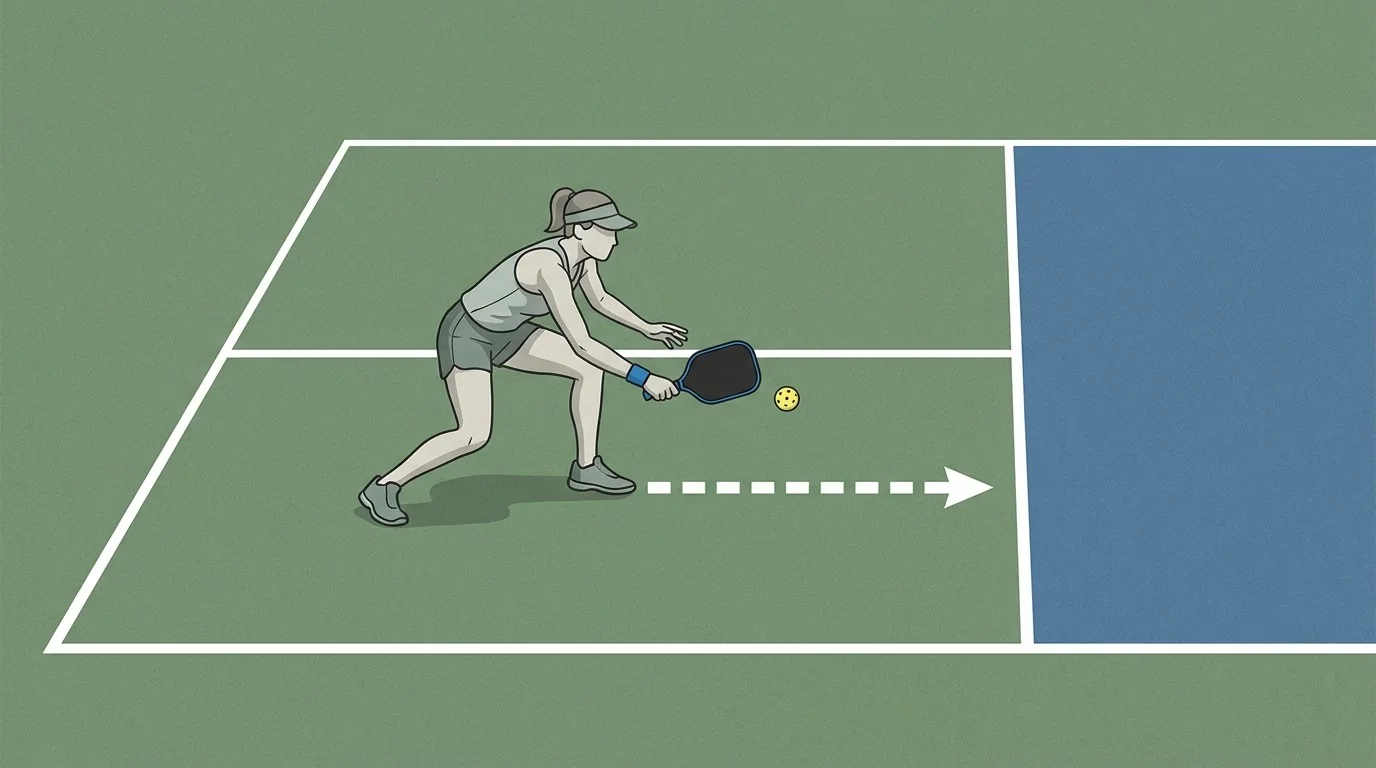
The transition-zone contact point should stay in front of your body. That sounds simple, but it is easy to lose when you are moving from the baseline toward the kitchen. If your feet keep running while your paddle arrives late, you are forced to reach, swing while off balance, or let the ball get beside you. The fix is to move with enough control that you can meet the ball in front, choose a useful target, and keep moving or settle when the situation calls for it.
Why contact in front changes the transition
A transition shot is not usually a one-swing winner. It helps you survive the middle of the court, make the next ball harder to attack, and earn a better position. The contact point is central to that job. When the ball is in front, you can direct the paddle toward the target and transfer your weight forward. When the ball drifts beside or behind you, the same swing becomes a rescue.
Keep the paddle comfortably in front of your body as you advance. Your feet do not need to race. Use a pace that lets you take a controlled step to either side. If the opponent sends a ball that deserves pace, slow down or pause so you can prepare instead of carrying your momentum into contact.
Your ready base should be roughly shoulder width, with weight on the balls of your feet and the knees free to bend. Do not lock the legs while you watch your shot. Finish organized enough to handle the reply.
Set up the contact point
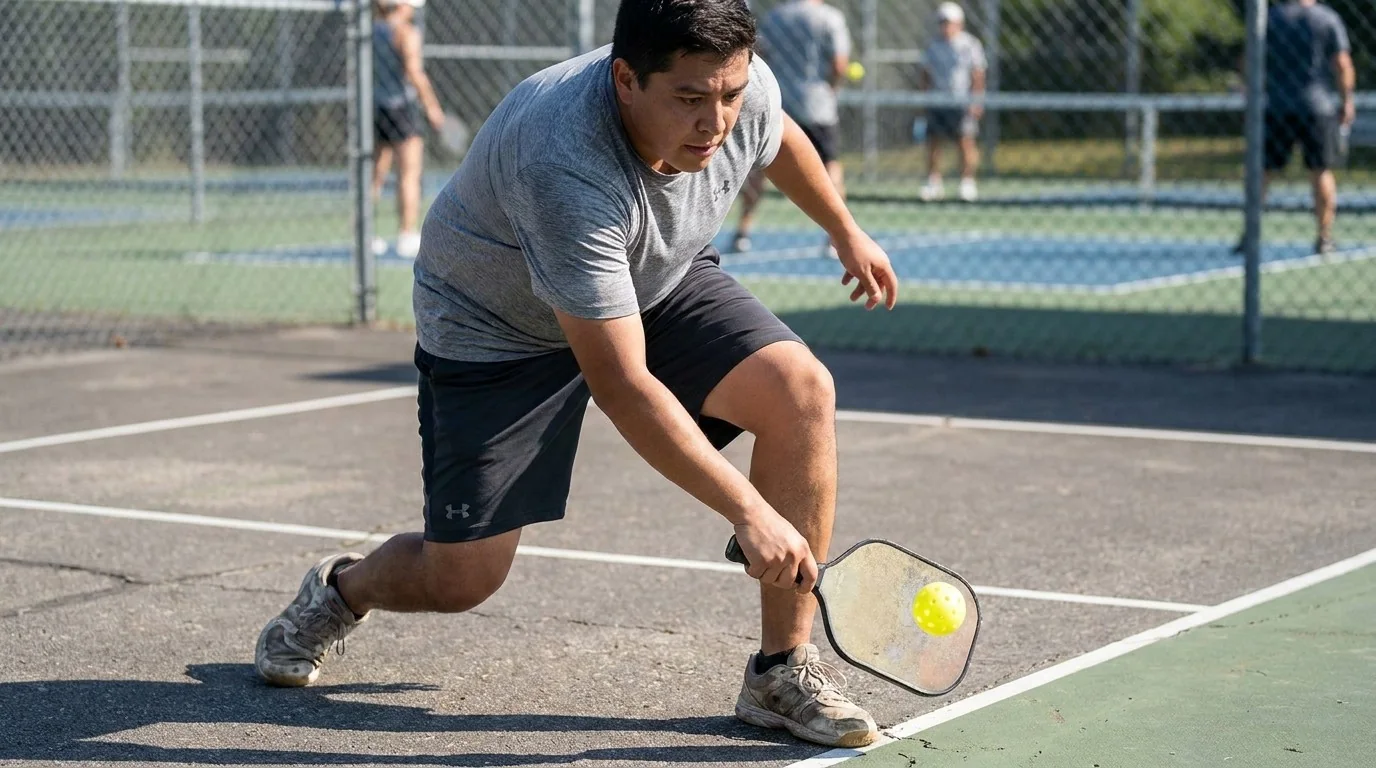
Start with the paddle in front of your sternum and your eyes on the opponent. As the ball approaches, make small steps rather than reaching with the arm. Create space so the ball can arrive in front of the lead foot. The exact foot depends on the ball and your stroke; the repeatable idea is that the paddle and ball meet ahead of your center, not beside your hip.
Keep the wrist quiet through contact. Present the paddle face to the ball’s path, then let the follow-through travel toward the intended target. Avoid a last-second wrist flick when the ball is low. A compact, stable face gives you a better chance to clear the net and keep the reply playable.
Choose the shot from the ball and the opponents, not from a preset rule. A low ball with opponents ready at the kitchen often calls for a controlled drop or reset. A higher ball that gives you room, especially when an opponent is not ready, may support a drive. If you are stretched or late, use height and a safer target rather than forcing pace.
A three-stage transition drill
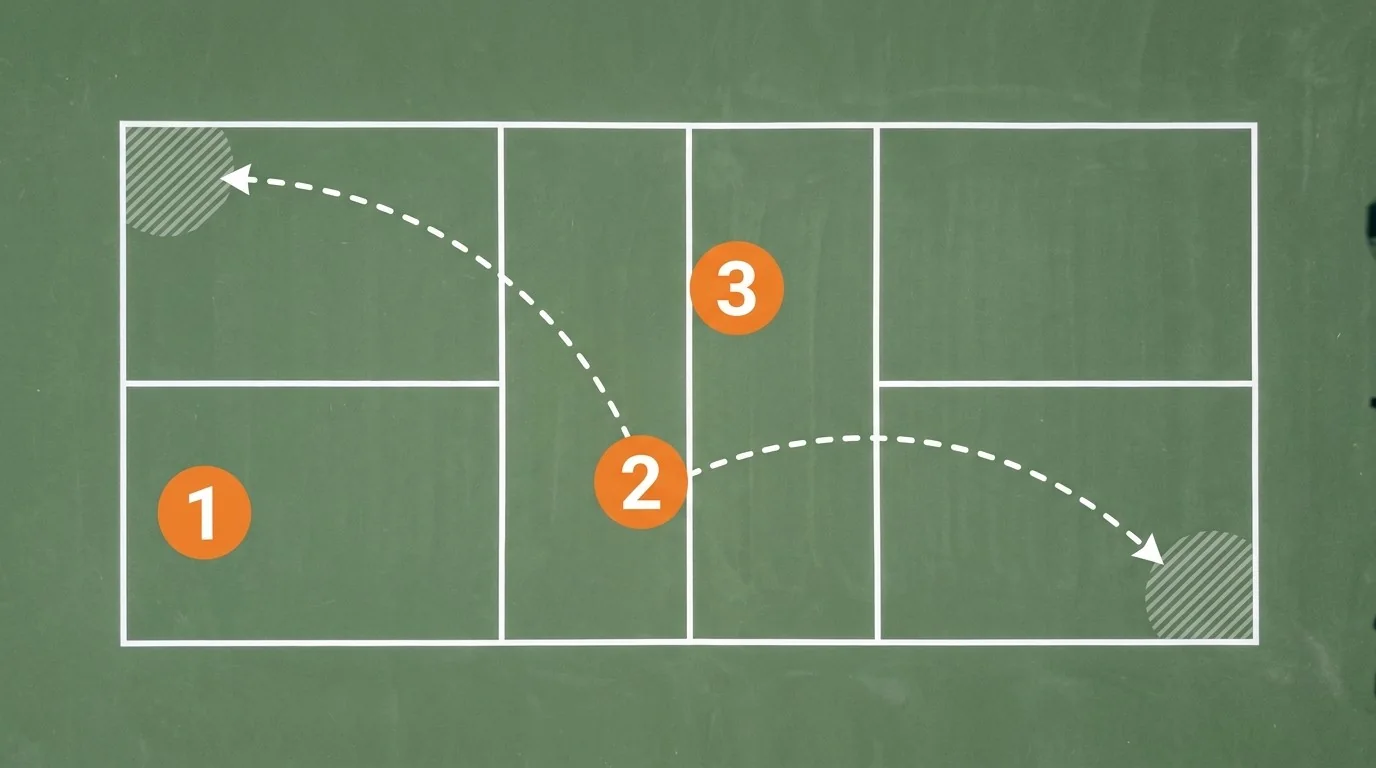
Use two players on one half of the court. One player feeds from near the kitchen line. The working player starts near the baseline or in the transition area. Begin with cooperative feeds that allow the mover to focus on the feet and contact point.
Stage 1: Move and meet
The feeder sends a ball that bounces in front of the working player. Move forward under control, keep the paddle in front, and contact the ball in front of the body. Send the reply to a comfortable target below the feeder’s sternum. Do not chase the kitchen line yet. Your first task is to repeat the contact shape while moving.
Stage 2: Change the target
When the contact is repeatable, vary the target height. Work from a higher target toward the waist, then lower toward the knees and feet as your control allows. The lower target demands better margin and a quieter swing. If the ball drops too low for a clean attacking contact, choose the softer option and keep the ball playable.
Stage 3: Add the decision
Now let the feeder vary the ball slightly. The working player decides whether to drop, drive, or slow down and reset. After the shot, recover with the paddle in front and prepare for the next feed. The feeder should increase direction or pace only when the mover can keep the contact in front without losing balance.
Count a useful repetition when you stayed balanced, met the ball in front, sent it to a controlled target, and finished ready for the reply. A ball that lands safely but leaves you reaching is not the pattern you want to repeat.
Common errors and quick fixes
Running too fast. If you cannot take a controlled step in either direction, your approach pace is too high. Slow down before the expected contact.
Letting the paddle trail behind. Start every feed with the paddle in front of the body. Keep it there while you move, then make small adjustments around the ball.
Reaching instead of creating space. Move your feet first. A short adjustment step can turn a late, side contact into a balanced contact in front.
Using one shot for every ball. Read height, depth, opponent position, and your own balance. A drop, drive, or reset is a decision, not a badge of consistency.
Admiring the shot. After contact, recover immediately. Keep the paddle ready and continue forward only when the next ball gives you permission.
The transition becomes easier when you stop treating it as a sprint to the kitchen. Move with purpose, keep the contact in front, and let the ball tell you whether to keep advancing or settle for the next shot.