Pickleball Paddle Weight Balance: How to Match Swing Feel to Your Game
A practical guide to head-heavy, neutral, and handle-heavy pickleball paddle balance, with safe tests for swing feel, control, stability, and comfort.
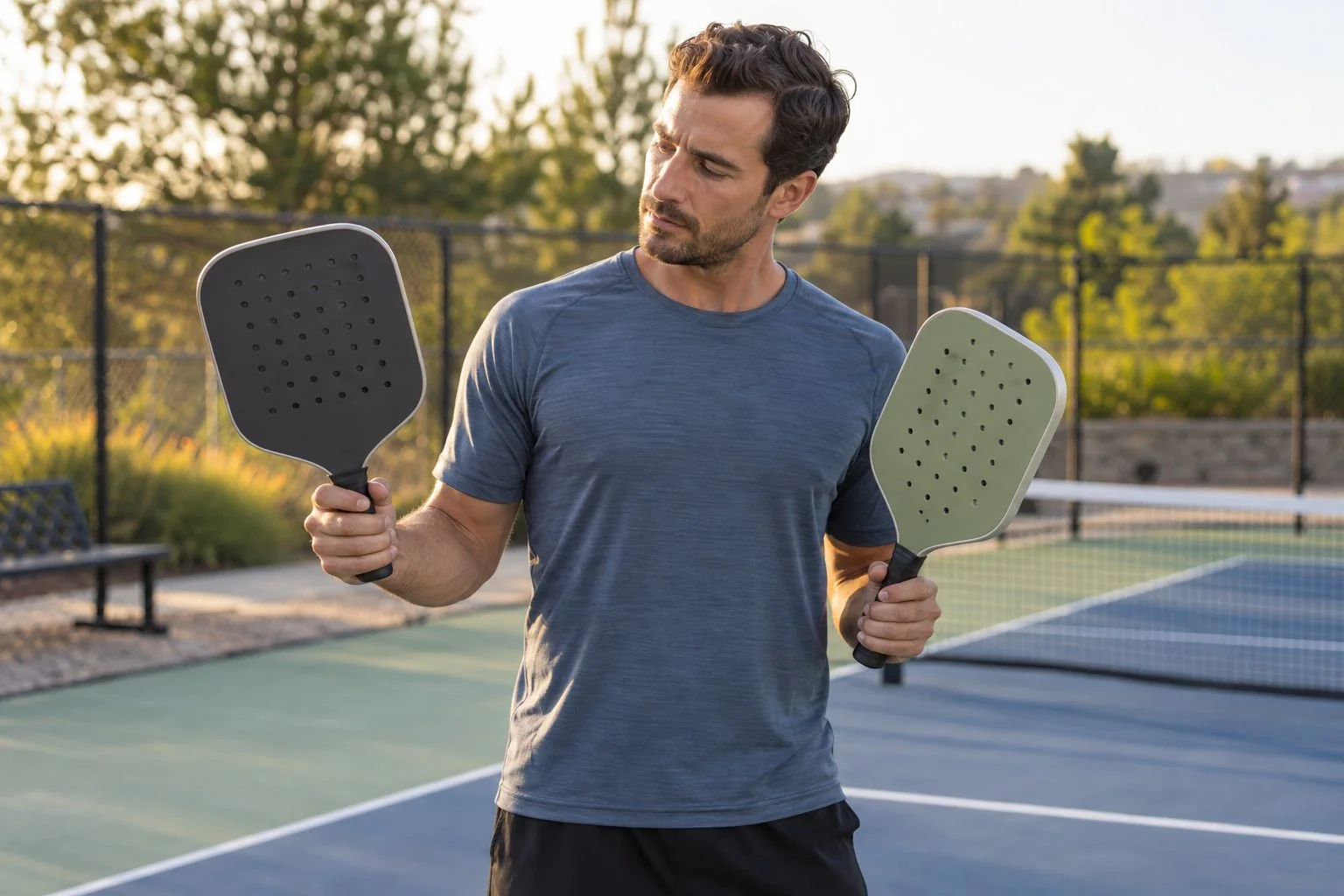
The listed weight of a pickleball paddle tells only part of the story. Two paddles with similar static weight can feel very different when you move them because their mass is distributed differently. Pickleball paddle weight balance changes how quickly the head starts, how stable the face feels at contact, and how much effort your arm uses during a long session.
What head, neutral, and handle balance mean
A head-heavy paddle concentrates more mass toward the upper face. It can feel solid when blocking or driving, but it may ask for more effort during quick resets and repeated exchanges. A handle-heavy paddle keeps more of the mass closer to your hand, which often feels quicker to reposition. A neutral balance sits between those sensations and can be easier to adapt to across different shots.
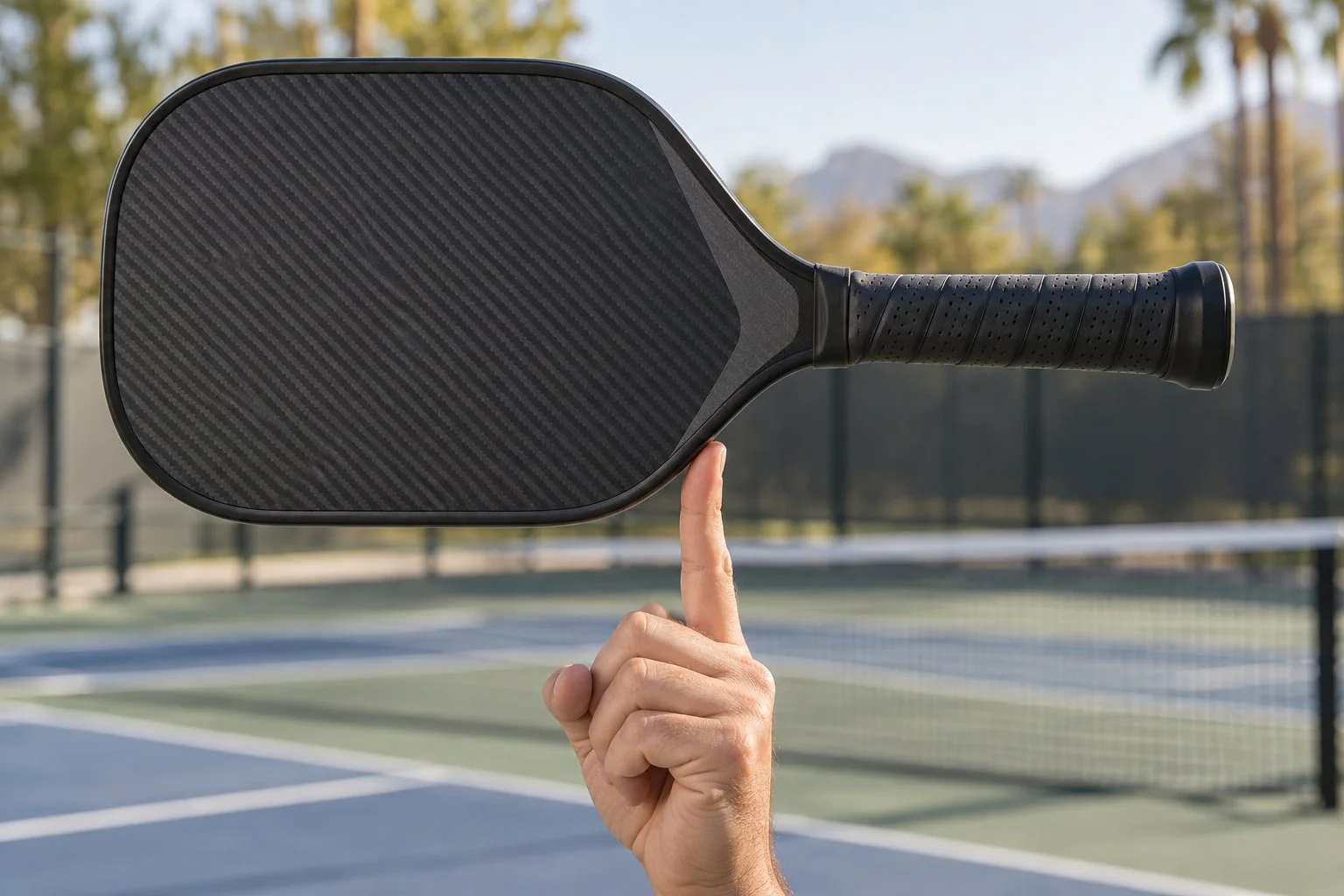
These labels are useful descriptions, not universal standards. Manufacturers do not always measure balance in the same way, and grip size, overgrip, edge guard, and paddle shape all change the final feel. Treat the category as a starting point, then test the actual paddle in your normal grip.
Match balance to your shots and movement
If you rely on compact hand battles, quick counters, and frequent resets, a faster-feeling balance may reduce the time needed to move the face into position. Keep the swing short and notice whether the paddle returns to neutral without extra wrist effort. That can matter more than chasing maximum power.
Players who drive from the baseline or value a stable block may prefer a more substantial head sensation. The trade-off is fatigue: a paddle that feels powerful on the first few points can become difficult to control when your shoulder and forearm tire. A neutral option is often a sensible middle ground for a mixed game.
A safe test before you buy
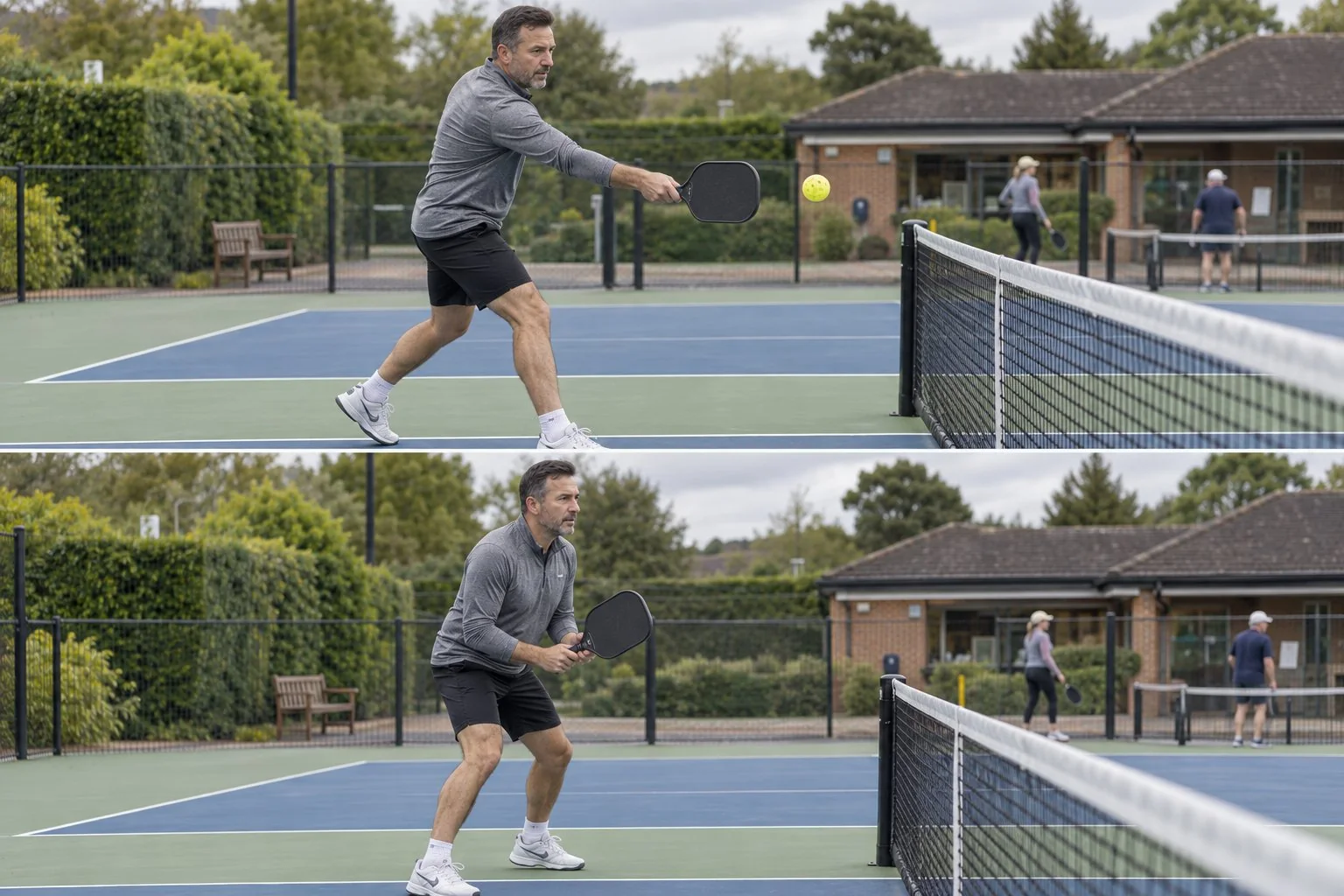
Hold the paddle with your usual grip and make ten relaxed forehands, ten backhands, and several soft resets. Do not swing as hard as possible. Ask whether the face arrives on time, whether the handle twists on off-center contact, and whether your wrist begins compensating. Repeat after a few minutes rather than deciding from one dramatic hit.
Also compare the paddle with the accessories you will actually use. A thicker replacement grip or an overgrip adds mass near the handle and can make the same frame feel quicker. A different grip circumference changes comfort and control, so record what was fitted when you compare two models.
Choose repeatability over a label
Balance is working for you when ordinary shots feel predictable late in a session. If the head drifts behind your hand, the paddle feels tiring, or your resets arrive inconsistently, choose a quicker or lighter-feeling setup. If blocks flutter and drives lack stability, test a more head-substantial option while keeping comfort in view.
There is no best balance for every player. Start with the movements you use most, test on both soft and firm shots, and judge the paddle after enough swings to reveal fatigue. The right choice is the one that lets you prepare early, contact the ball cleanly, and finish a session without protecting your arm.