Pickleball Partner Spacing Check: Close the Middle After a Wide Ball
A practical doubles drill for moving as a connected pair, protecting the middle, and recovering together after every cue or feed.
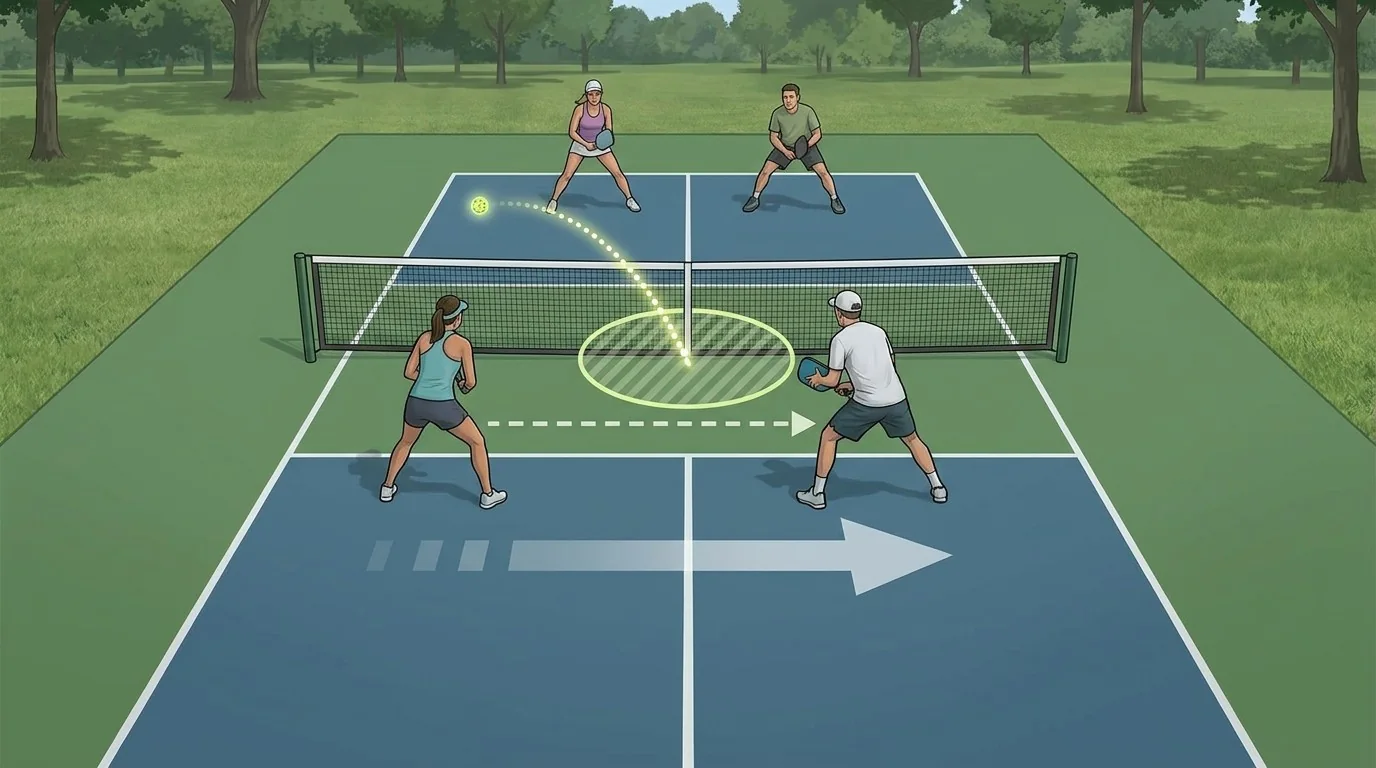
Doubles partners do not need to stand on fixed spots to cover the court well. They need to shift as a connected pair. When one player moves toward the ball and the other stays frozen, the middle or the open angle appears immediately. A partner shadow drill makes that spacing visible before you add live hitting.
Set up the partner shadow drill
Use four players on one court, with two partners on each side. Start the working pair in a normal doubles formation near the non-volley-zone line. Leave enough room between groups for safe lateral movement and controlled swings. You can use two cones as visual reference points, but do not connect players with a real rope or any object that could become a trip hazard.
The feeder stands on the opposite side and first gives visual cues rather than hitting. Point to the left, middle, right, short, or deep area of the court. The pair should respond by shifting together while keeping practical spacing. The player nearest the sideline protects that line; the other player shades toward the middle. The exact distance changes with the ball, so the goal is a useful shape rather than two players standing on marks.
Run the movement sequence
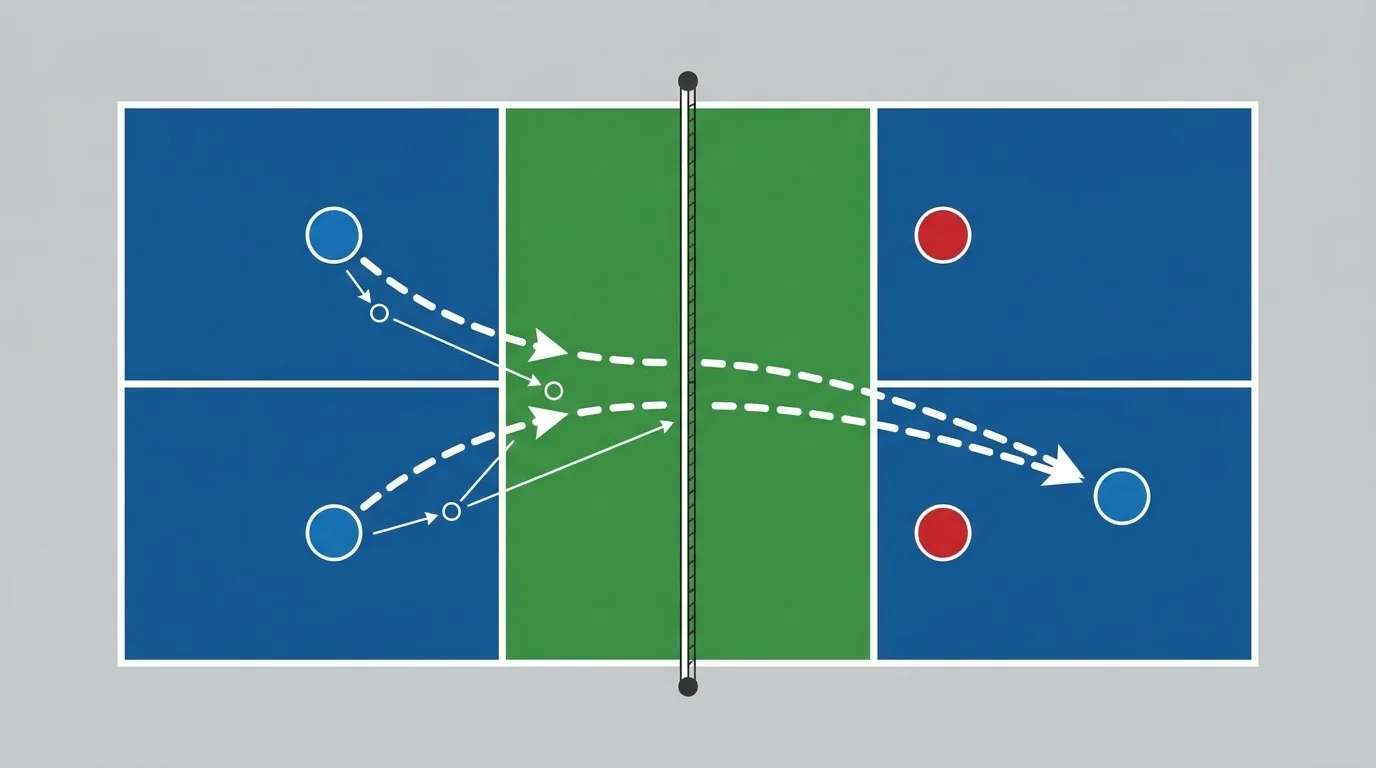
- Show one court location. The feeder points left, middle, right, short, or deep. Both partners move their feet instead of reaching with the paddle.
- Freeze and inspect the shape. Check whether the pair has left a large middle gap, opened the sideline, or moved so close that one player blocks the other’s swing.
- Add a ready position. After the shift, both players face the net with the paddle in front and the feet ready for the next direction.
- Add shadow volleys. The feeder gives a cue, the pair shifts, and each player makes a small practice motion without hitting a ball. Recover to a balanced stance immediately.
- Progress to gentle feeds. Send controlled balls to different areas. The player closest to the ball calls “mine” or “yours,” while the partner covers the next likely space rather than chasing the same ball.
- Finish with recovery. After each feed, both players return to a connected shape. Do not stop after the first contact; the recovery is part of the drill.
What the pair should feel
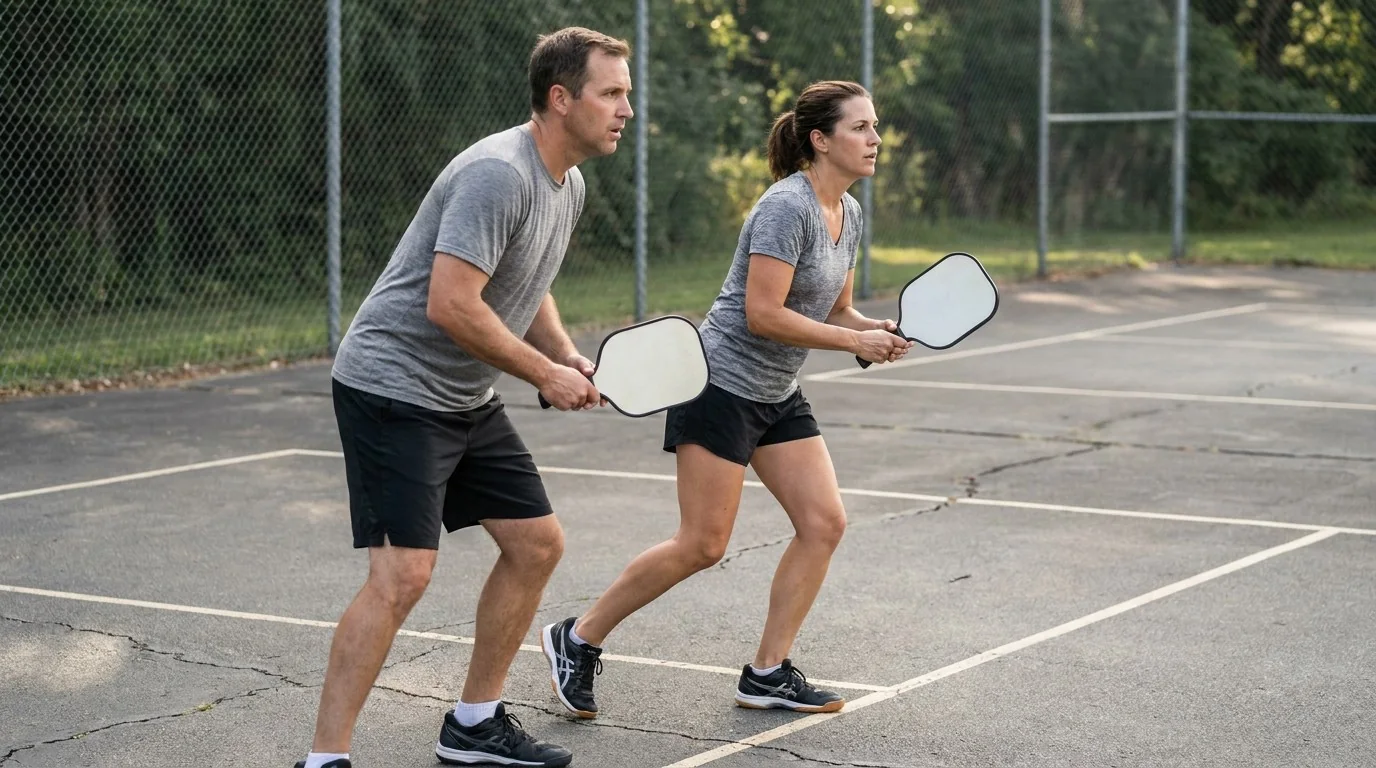
The movement should be short, balanced, and shared. Shuffle laterally when possible so both players keep their hips and eyes oriented toward the net. If a ball pulls one player wide, the partner shades with them instead of standing in the original position. When the ball comes back toward the middle, the pair adjusts again. Think of an invisible flexible line between the partners: it can stretch, but it should not snap.
Use clear, brief calls. “Mine,” “yours,” “switch,” and “stay” are enough when they are early and understood. The call does not replace footwork. It tells the partner what to expect so both players can prepare for the next ball. A late call, two players swinging at one ball, or a long explanation during the rally defeats the purpose of the exercise.
Common mistakes and progressions
The first mistake is chasing the ball as an individual. The second is protecting the middle so aggressively that the sideline becomes open. Another common error is crossing paths while both players try to correct at once. Slow the feed down, freeze the pair after each cue, and inspect the gaps before adding pace.
Once the basic movement is reliable, vary the cue order and add gentle live rallies. Keep one process goal for the round, such as recovering together after every wide ball or making one early middle call. Judge the drill by connected spacing and the quality of the next ready position, not only by whether the pair wins the rally.