Pickleball Practice Progression: Choose the Next Skill to Train
Use a simple progression to select one pickleball skill, train it with purpose, and confirm that it holds up when rallies speed up.
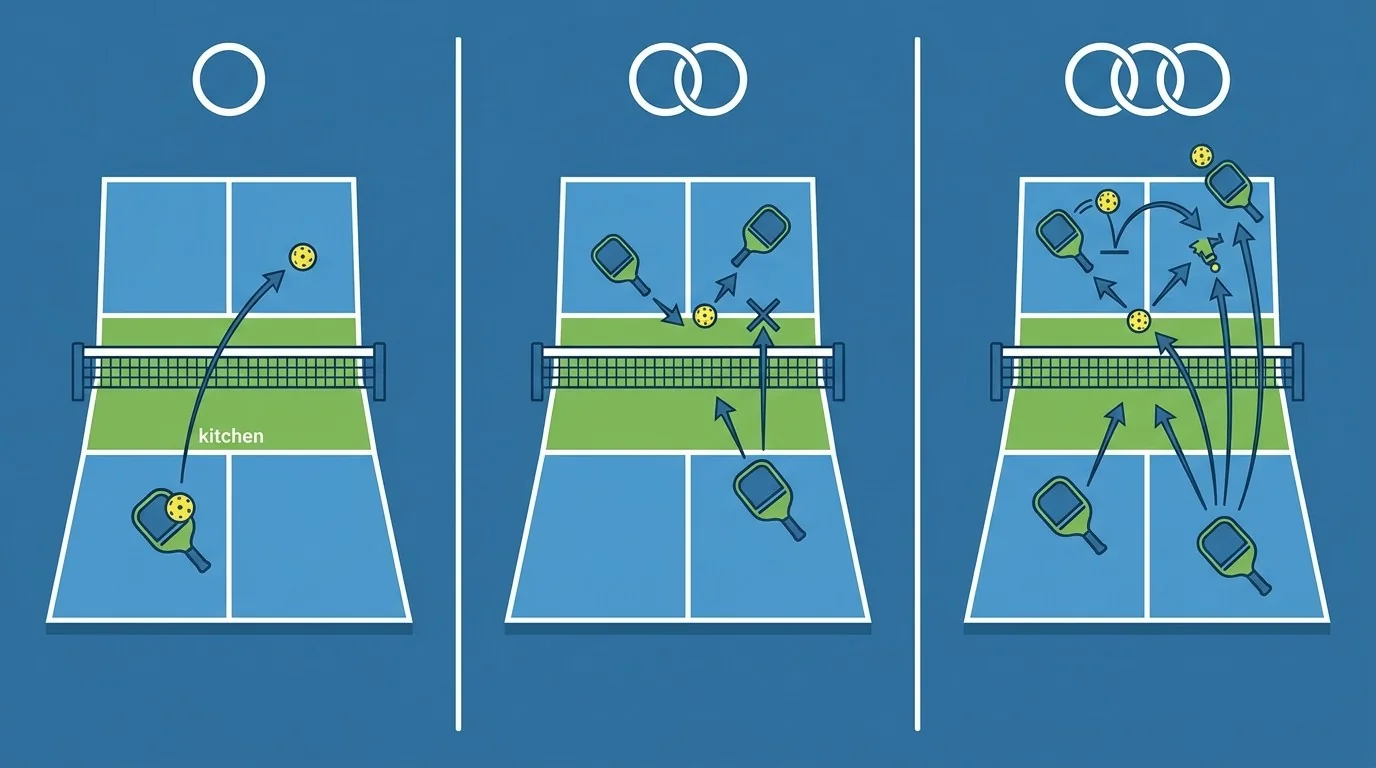
Pickleball practice improves faster when you choose the next skill from what is actually breaking down. Do not add a new drill just because it looks useful. Watch the ball, your movement, and the quality of the next shot, then train the smallest skill that explains the recurring error.
Start with the repeatable problem
Play a few ordinary points or cooperative feeds before choosing a focus. Note whether the error begins with preparation, contact, footwork, decision-making, or recovery. A ball that goes into the net may come from a closed paddle face, late contact, or poor spacing. Fixing the visible miss without finding its cause can make practice noisy rather than useful.
Choose one main question for the session: Can you meet the ball in front? Can you clear the net with margin? Can you stop balanced before the next shot? Keep the question narrow enough that you can recognize the answer on the next repetition.
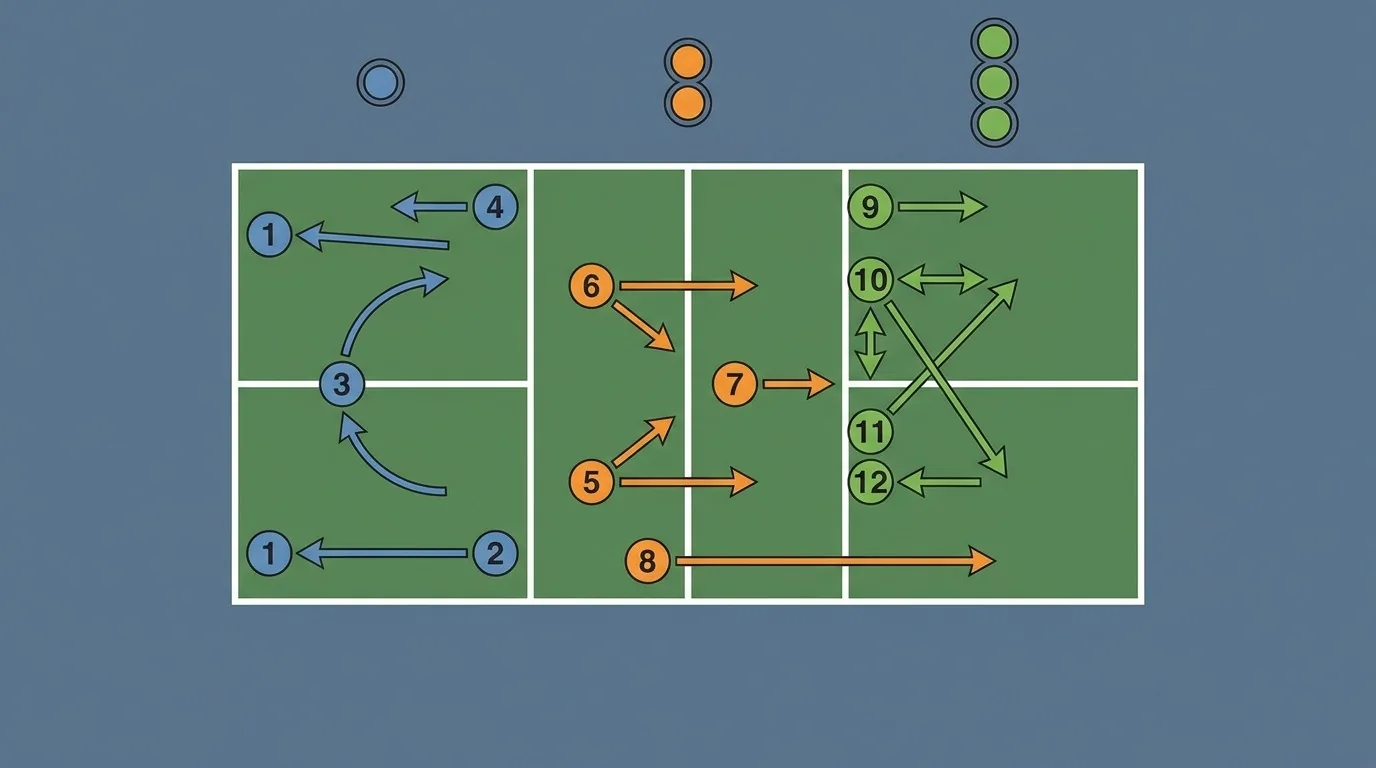
Progress from simple feeds to movement
Begin with a cooperative feed at a comfortable pace. Repeat the stroke from a stable base and watch the contact point. Once the ball is predictable, vary the width or depth slightly. Move before reaching, prepare the paddle early, and keep the same technical cue while the feet do more work.
Only then add a live decision. Ask the player to choose between a drive, drop, reset, or safer neutral ball based on height, depth, and balance. The point is not to force the trained shot. It is to see whether the skill survives when the incoming ball changes.
Know when to move on
A drill has done its job when the player can repeat the action without constant reminders and can use it during a controlled rally. Do not wait for perfection. Move to the next layer when the basic contact is reliable enough to support movement, then return to the earlier version if the new demand exposes the original weakness.
Keep the practice measurable in simple terms: count clean contacts, note whether the ball clears safely, and record how often the player recovers ready for the next shot. Avoid judging progress only by winners. A controlled ball that keeps the rally playable may be the better result at this stage.
Finish with a game-like test
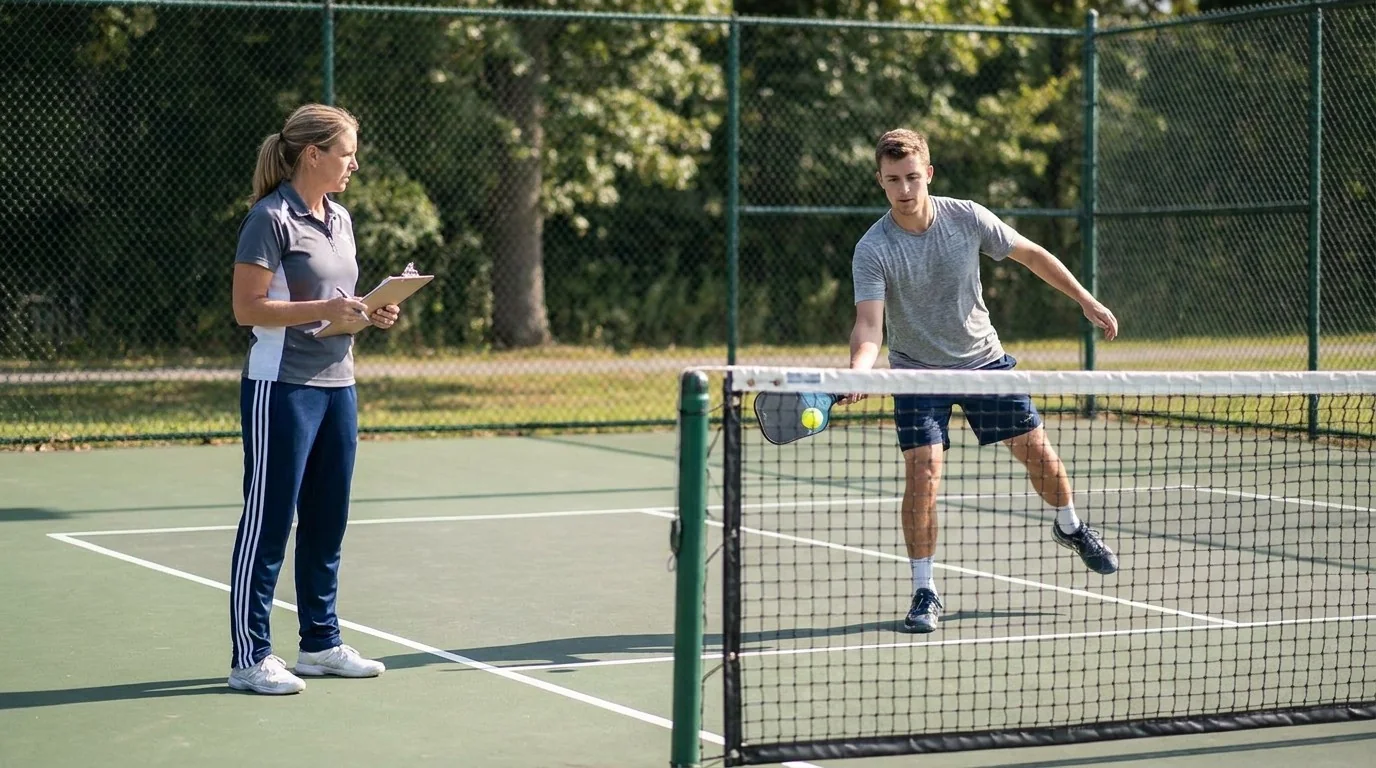
End with a short constrained game that requires the trained skill. If the focus was contact in front, play points where the player must recover the paddle before the opponent’s next contact. If the focus was placement, call the intended zone before the feed and check whether the ball reached it with margin. If the focus was recovery, score the next position rather than the first shot alone.
Write down one cue that helped and one situation that still caused trouble. Use that note to choose the next session’s starting feed. A useful progression is simple: observe the repeated error, isolate its cause, add movement, then test the decision under pressure.
Keep the final test short enough to preserve quality. If the player becomes tired, return to a slower feed instead of adding more repetitions with a broken pattern. Good practice leaves a clear next step, not just a large number of swings.