Pickleball Practice Session Structure: Warm Up, Train, and Transfer
A practical pickleball practice structure that moves from warm-up and isolated technique to patterns, game transfer, and useful progress checks.
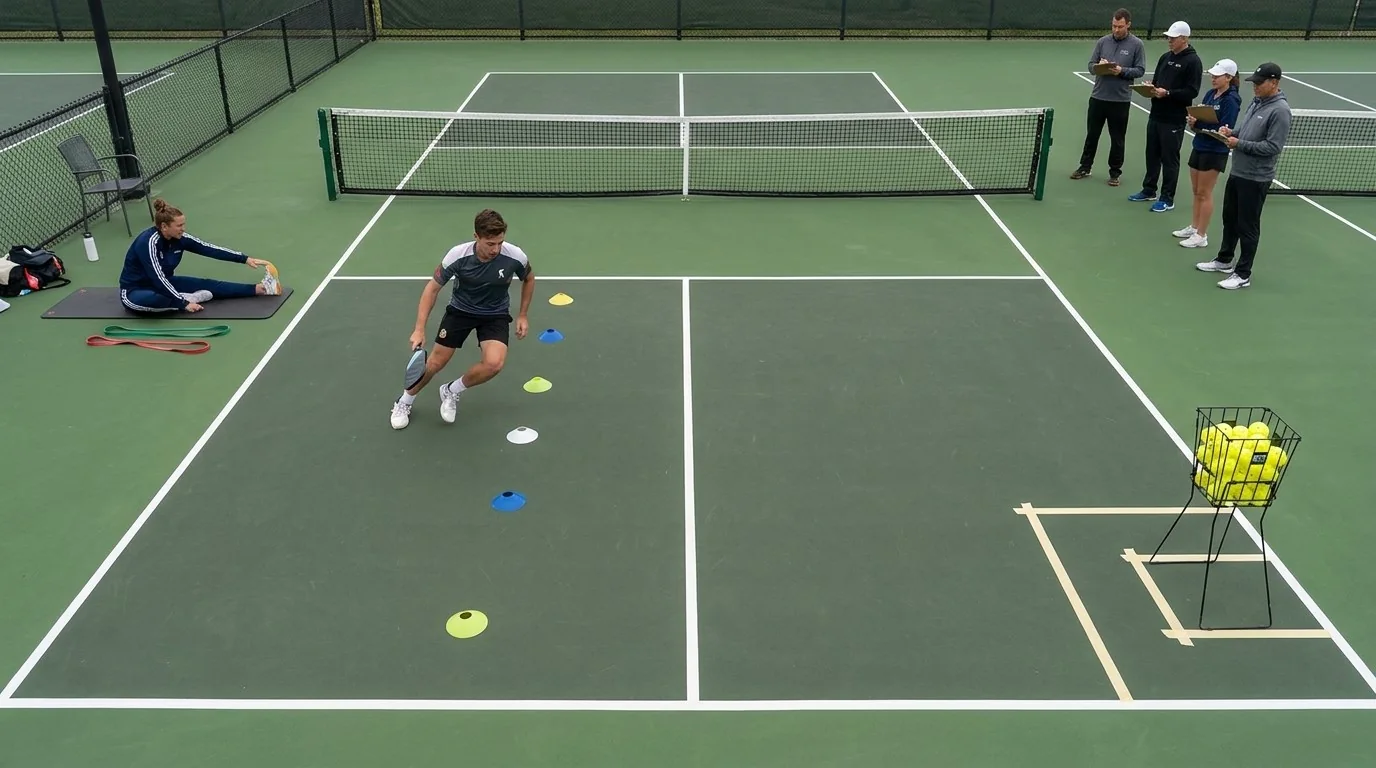
A useful pickleball practice session gives each phase a clear job. Rather than rallying until the time is gone, decide what you are preparing, what you need to repeat, and how you will test it when the ball becomes less predictable. A simple session moves from warm-up to focused technique, then to patterns and game-like decisions.
Start with a purposeful warm-up
Begin with easy movement and controlled contact. Use light court movement, gentle dinks, and simple volleys to raise your temperature and find your timing. This is not the time to prove how hard you can hit. Prepare your legs, shoulders, and hands for the work that follows.
Divide the session into clear phases
A practical session can have five blocks: warm-up, isolated technique, pattern drilling, competitive transfer, and a short review. The clock does not have to be identical every time, but each block should serve a different purpose. Technique work gives you clean repetitions. Pattern work connects shots and movement. Transfer work asks you to make decisions while the ball is less predictable.
Isolated technique
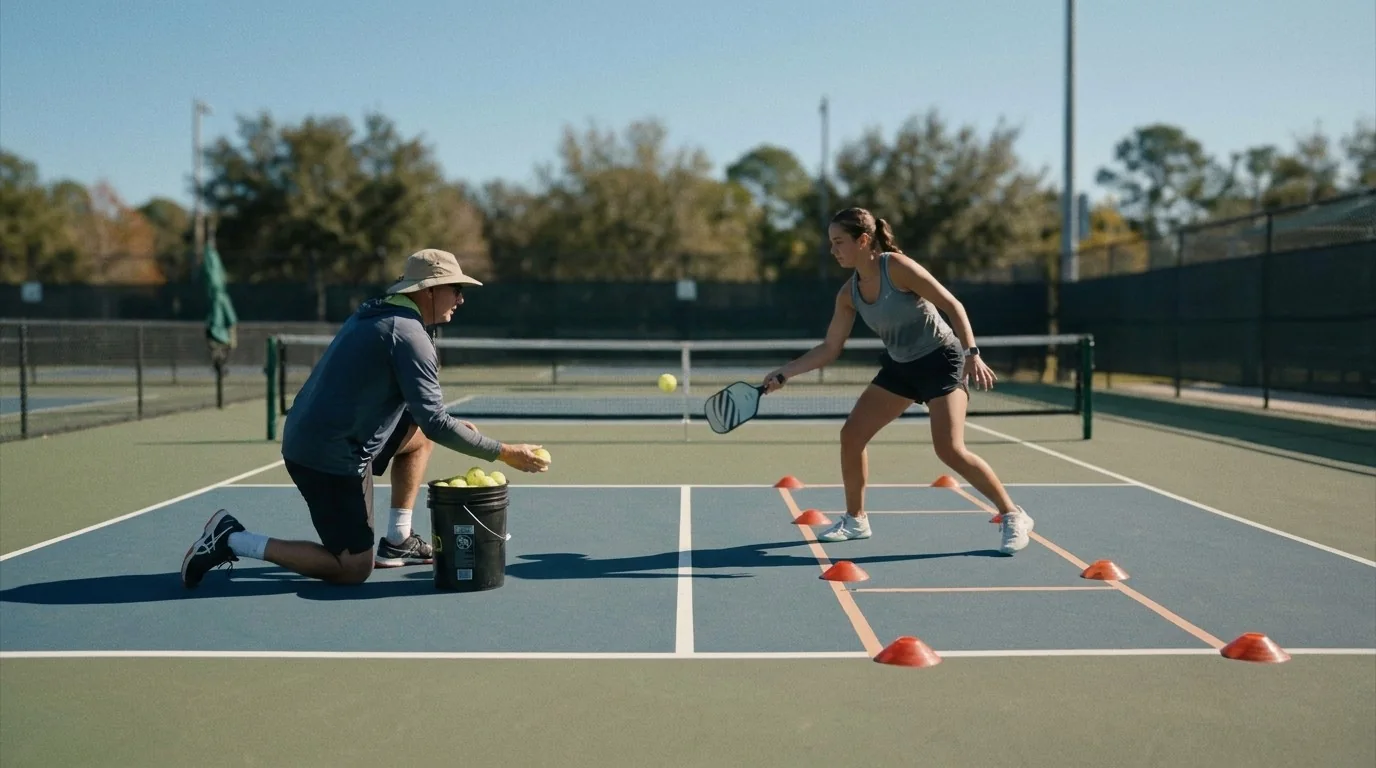
Choose one skill instead of trying to fix everything in one session. For a dink, repeat a compact motion with a relaxed grip and a target in the opponent’s kitchen. For a serve, work on a repeatable starting position and placement. For a third-shot drop, focus first on a safe arc and a dependable landing window. Keep the feed predictable enough to notice your contact, balance, and paddle control.
Pattern drilling
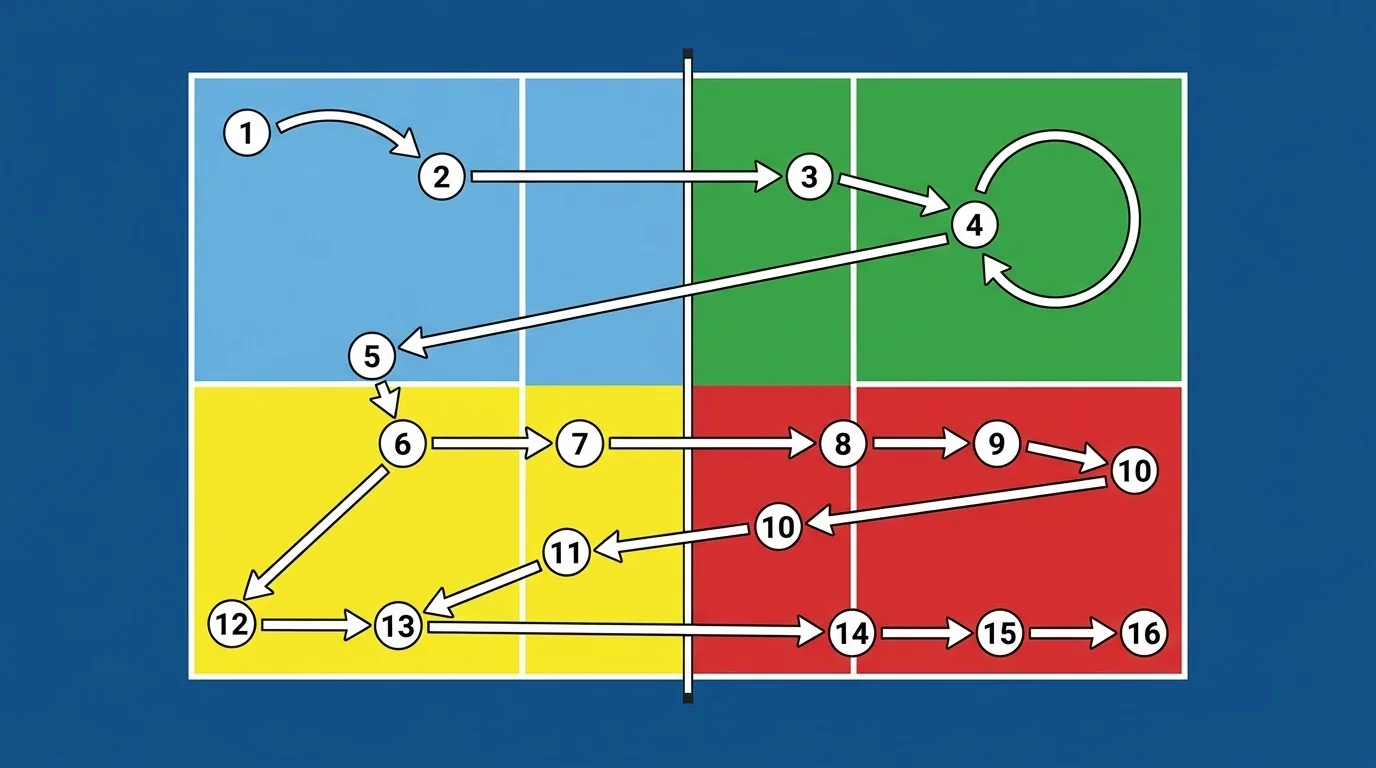
Next, connect two or three actions. Follow a return with forward movement and a split step. Follow a drop with recovery toward the kitchen. Follow a volley with a reset to ready position. Start cooperatively, then vary the feed. The point is to learn what your feet and paddle need to do after the first shot, not simply to collect successful contacts.
Competitive transfer
Finish with a constraint that makes the trained skill matter. You might allow a player to advance only after a low drop, require a crosscourt target before changing direction, or award the point for a clean reset instead of a winner. Keep the rule simple enough that players can still read the ball and choose a shot. This phase shows whether the technique holds up with movement and pressure.
Track useful feedback
Record one observable measure, such as successful serves into a chosen area, consecutive controlled dinks, or drops that clear the net and descend safely. Add one quality cue, such as balanced contact, early preparation, or recovery after the shot. Do not change the target every few minutes. A stable measure makes the next session easier to plan.
Common practice mistakes
- Only playing games: Games reveal weaknesses, but they may not give you enough clean repetitions to change them.
- Changing skills too often: A short block on one priority is easier to evaluate than a scattered list of goals.
- Chasing power: Speed is not a substitute for placement, margin, or balance.
- Ignoring recovery: The first shot is incomplete if your feet are unavailable for the next one.
- Using pressure too early: Build the movement cooperatively before adding unpredictable feeds or scoring.
A repeatable weekly approach
Across several sessions, keep the same broad phase order while rotating the skill focus. One session can emphasize serve and return depth. Another can emphasize kitchen movement and dinking. A third can connect a third-shot option to transition movement. End each session by writing down the next small question to test. That keeps practice specific without making it rigid.
The best practice plan is not the one with the most drills. It gives you clear repetitions, connects them to court movement, and checks whether the decision still works when the rally becomes real.