Pickleball Ready Position at the Kitchen: Paddle, Stance, and Reaction
Learn where to hold your paddle, how to stay balanced at the kitchen, and which drills build faster, calmer pickleball reactions.
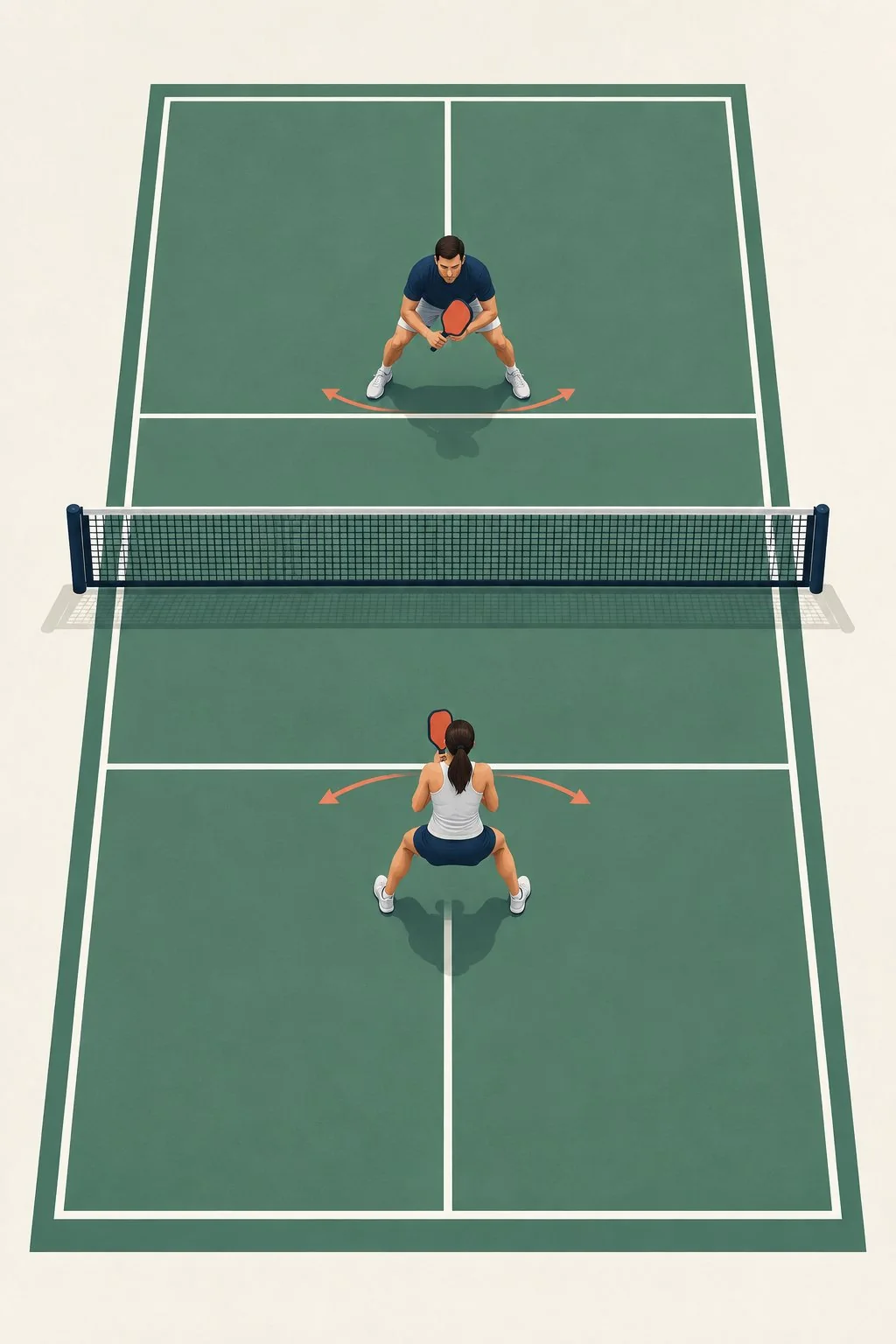
A strong pickleball ready position at the kitchen is less about freezing in one pose and more about being prepared for the next contact. Your paddle should be available in front of your torso, your feet should be light enough to adjust, and your body should stay balanced rather than leaning toward the ball. That preparation gives you options for a dink, block, punch volley, or emergency reach without a needless backswing.
Build the position from the ground up
Stand with your feet roughly shoulder-width apart and your weight distributed over the balls of your feet. Bend the knees enough to lower your center of gravity, but do not squat so deeply that your first step becomes slow. Keep the chest relaxed and the head quiet. The goal is a posture that can move in any direction, not a pose that looks athletic while making you rigid.
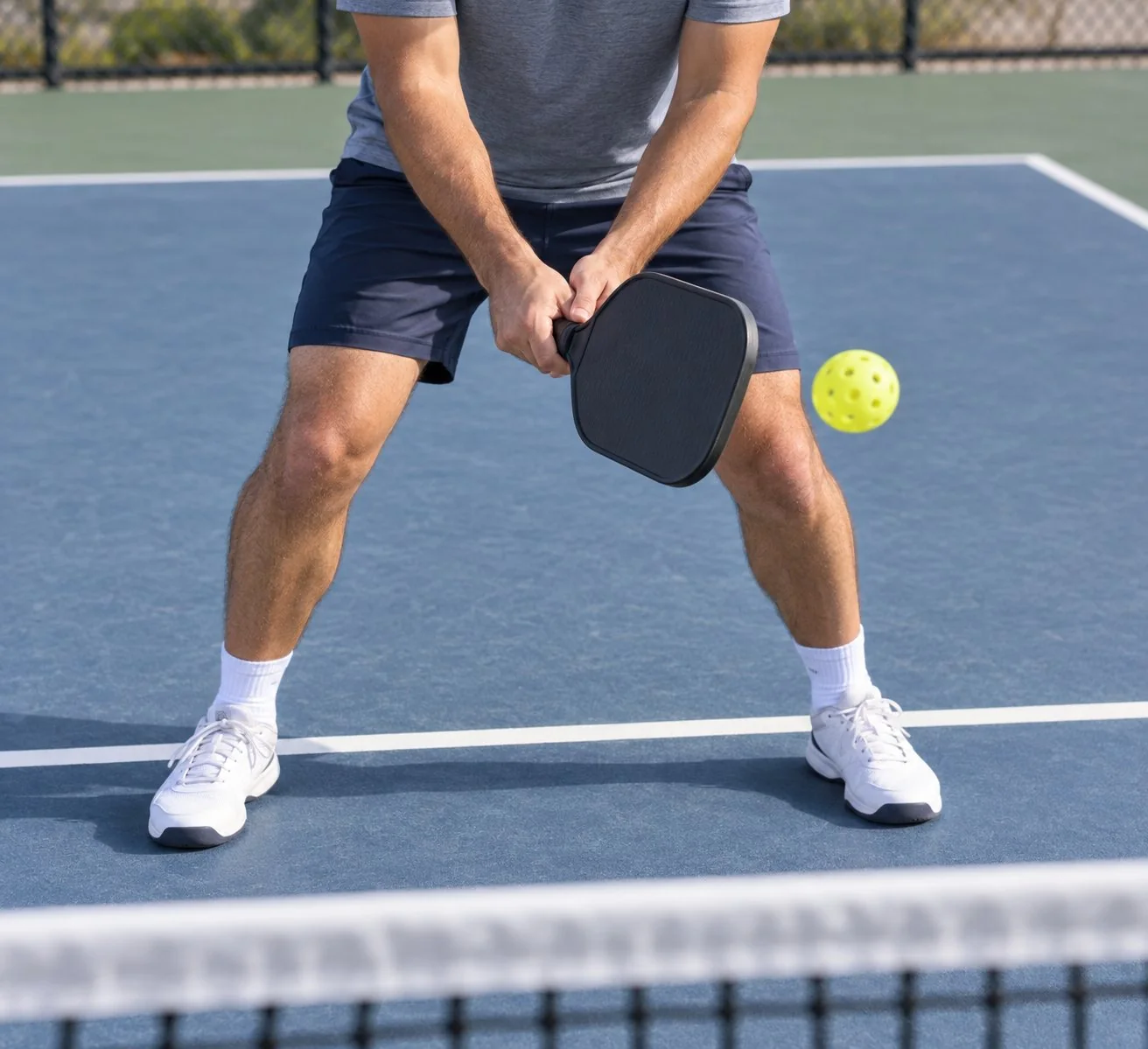
Place the paddle in front of the body, around the upper-chest to shoulder area, with the hitting face generally neutral. The exact height can change with the rally: a little higher helps against fast exchanges, while a slightly lower position may feel more natural during a soft dink. What matters most is that the paddle is not hanging beside the thigh or hidden behind the shoulder. A compact starting point reduces the distance your hand must travel to the ball.
Use a relaxed but secure grip. Excess pressure stiffens the forearm and makes small angle changes harder. A useful check is whether you can still wiggle the fingers of the non-dominant hand or breathe normally while waiting. If the hand tightens before every opponent contact, shake it out between points and return to the same neutral setup.
Match the paddle to the threat
Ready position is a reading skill as much as a mechanical one. When the opponents are exchanging soft dinks, keep the paddle quiet and avoid guessing a swing too early. Make small foot adjustments so the contact point remains in front of you. Reaching across the body or leaning over the kitchen line often takes away the balance needed for the next ball.
When an opponent has a ball above net height, expect a possible speed-up. Bring the paddle slightly more directly in front of the chest, soften the knees, and be ready to absorb pace. The first response does not have to be a winner. A stable block that lands low can return the rally to a manageable tempo. If the incoming ball is low, resist the urge to attack from below the net. Keep the face controlled and choose a soft ball or defensive block instead.
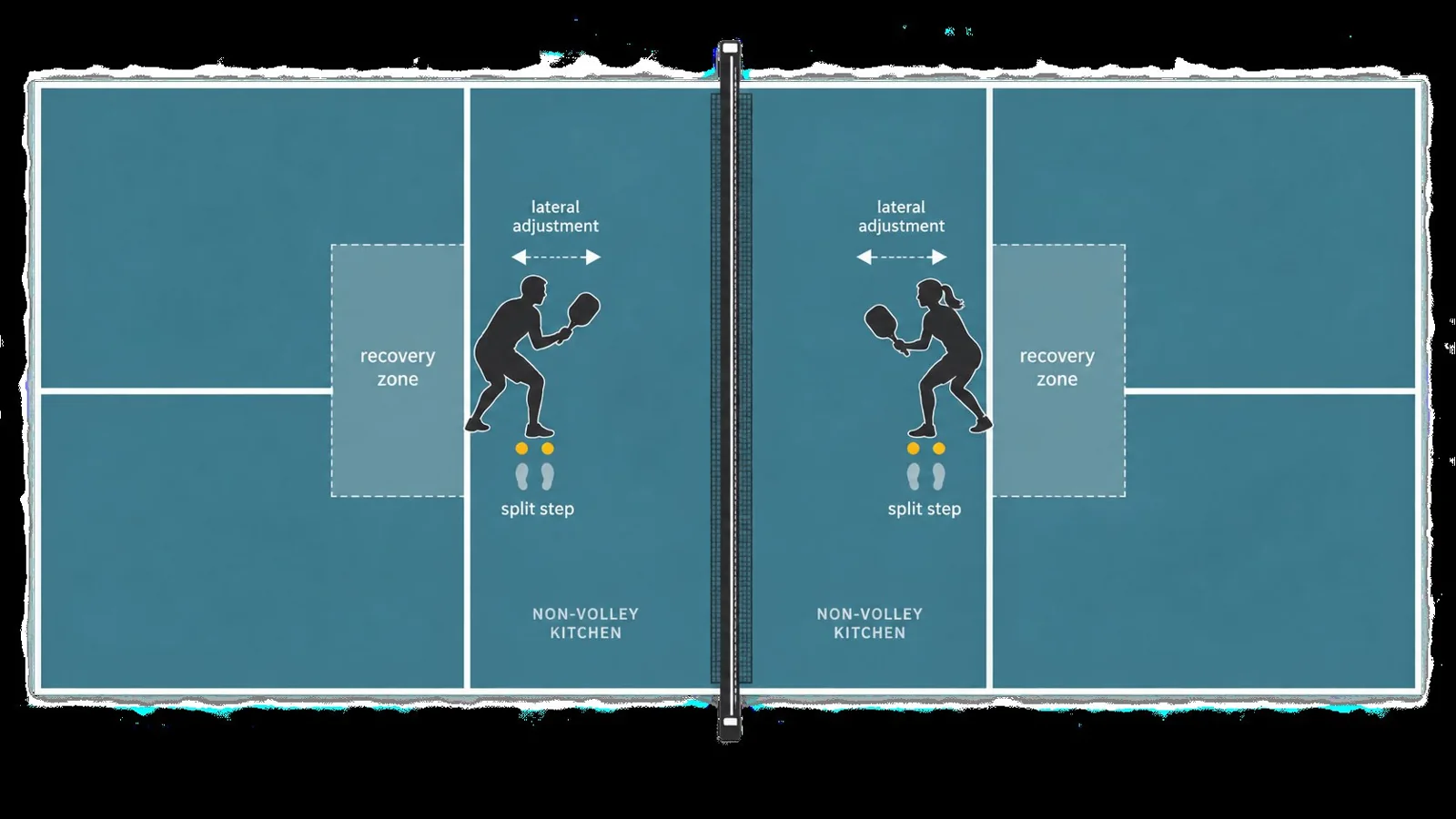
In doubles, keep your body position connected to your partner. Move laterally in small steps rather than crossing into the partner's lane for every ball. If one player is pulled wide, the other can shade toward the middle without abandoning the open side completely. After each shot, return the paddle to the ready window and recover your feet before watching the result.
Train the reaction, not just the pose
Start with a simple shadow routine. Hold the paddle in front, make a small split step as an imaginary opponent contacts the ball, then move one step left or right and return to neutral. Keep the movement quiet and repeatable. Ten controlled repetitions on each side are more useful than racing through a long sequence with the paddle dropping after every step.
Next, ask a partner to feed gentle balls to the forehand, backhand, and center. The feeder should vary direction without trying to hit winners. The receiver’s job is to begin in the ready position, adjust the feet first, and choose a compact block or soft response. Reset the paddle after every contact. Add pace only after the receiver can stay balanced through the slower version.
A useful decision drill mixes three feeds: a low ball, a comfortable ball near net height, and a higher ball that may be attacked. Call “soft,” “punch,” or “attack” before the swing. The call forces you to read height and body position instead of making the same stroke every time. If the call is wrong, keep the rally alive and review the cue after the point.
Fix the habits that slow reactions
The most common mistake is holding the paddle too low because it feels relaxed. Relaxation should come from the grip and shoulders, not from removing the paddle from the play. Another error is standing tall with straight knees. You do not need a deep squat, but locked legs delay the first adjustment. Finally, avoid lunging at the ball and admiring the shot. Hit, recover the feet, and rebuild the ready position before the next contact.
Use the ready position as a repeatable checkpoint: paddle available, knees unlocked, eyes on the opponent’s contact, and weight balanced. With that routine, the kitchen exchange becomes less frantic. You are not trying to predict every ball; you are preparing to respond to several likely balls with the smallest movement necessary.