Pickleball Ready Position Reset: Rebuild Your Base Between Exchanges
A practical pickleball ready position reset for rebuilding balance, paddle preparation, and court awareness between exchanges.
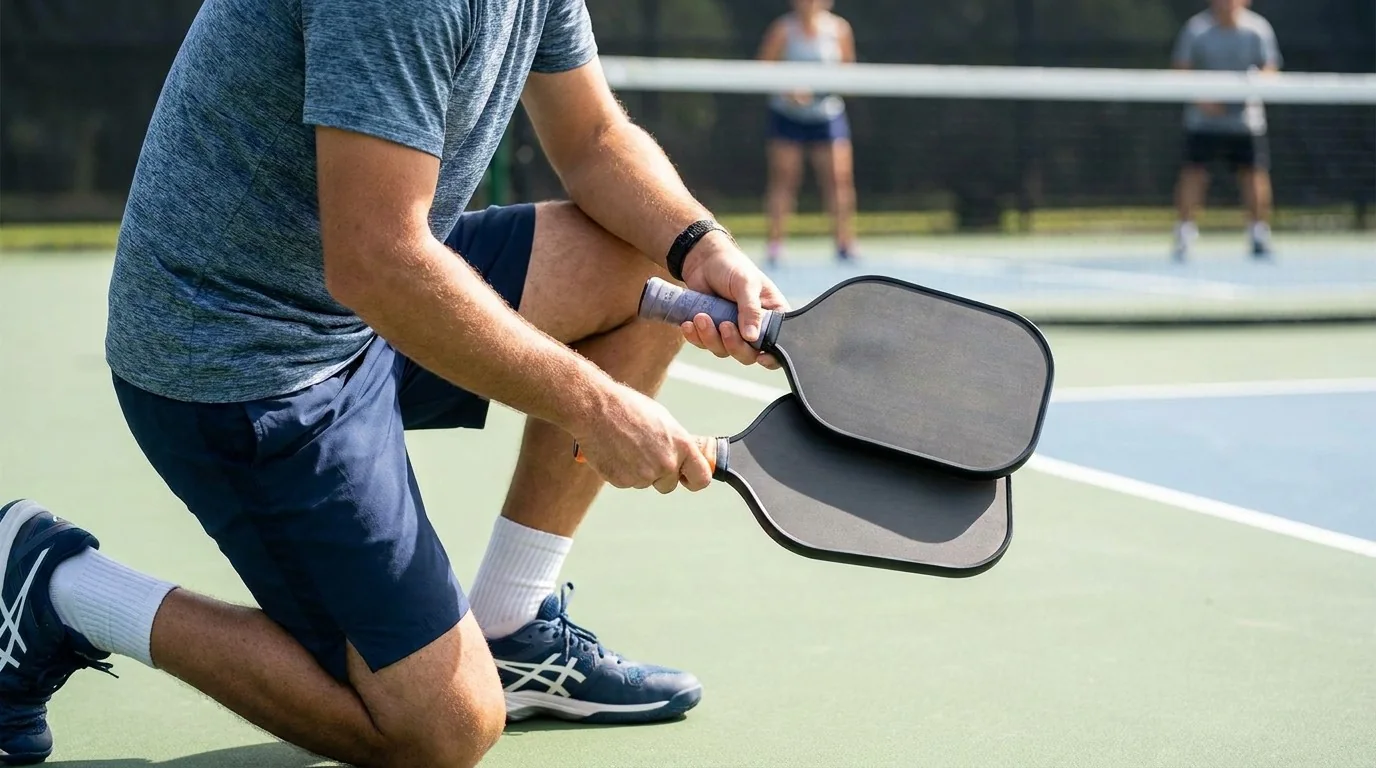
A pickleball ready-position reset is the recovery you make after each contact: bring the paddle back in front, settle your feet, and get your eyes onto the opponent. It is not a pose you hold. It is a base you can leave in any direction without first standing upright or untangling your feet.
Reset as soon as the ball leaves your paddle
Recovery starts before you know whether the next ball will be a dink, drive, or lob. Complete the stroke, then return the paddle to a neutral spot in front of your torso. Keep the head slightly above your hands and let the elbows stay loose. That compact position protects the middle of the body and shortens the preparation for the next contact.
Do not pause in the finish just because the shot looked good. A well-placed ball can still come back quickly. The point of the reset is not to look motionless; it is to be ready for the next choice.
Use small steps to rebuild your base
Recover with short adjustment steps instead of one large step. Keep the feet about shoulder-width apart and stay on the balls of your feet without lifting the heels so much that you lose stability. Constant bouncing wastes time. A quiet, athletic base lets you push toward the ball without having to correct your balance first.
When moving sideways, shuffle when the space allows. A crossover can help on a very wide ball, but it can also turn the torso and paddle away from the next contact. Once you arrive, take one final settling step. Do not try to hit while your weight is still sliding sideways.
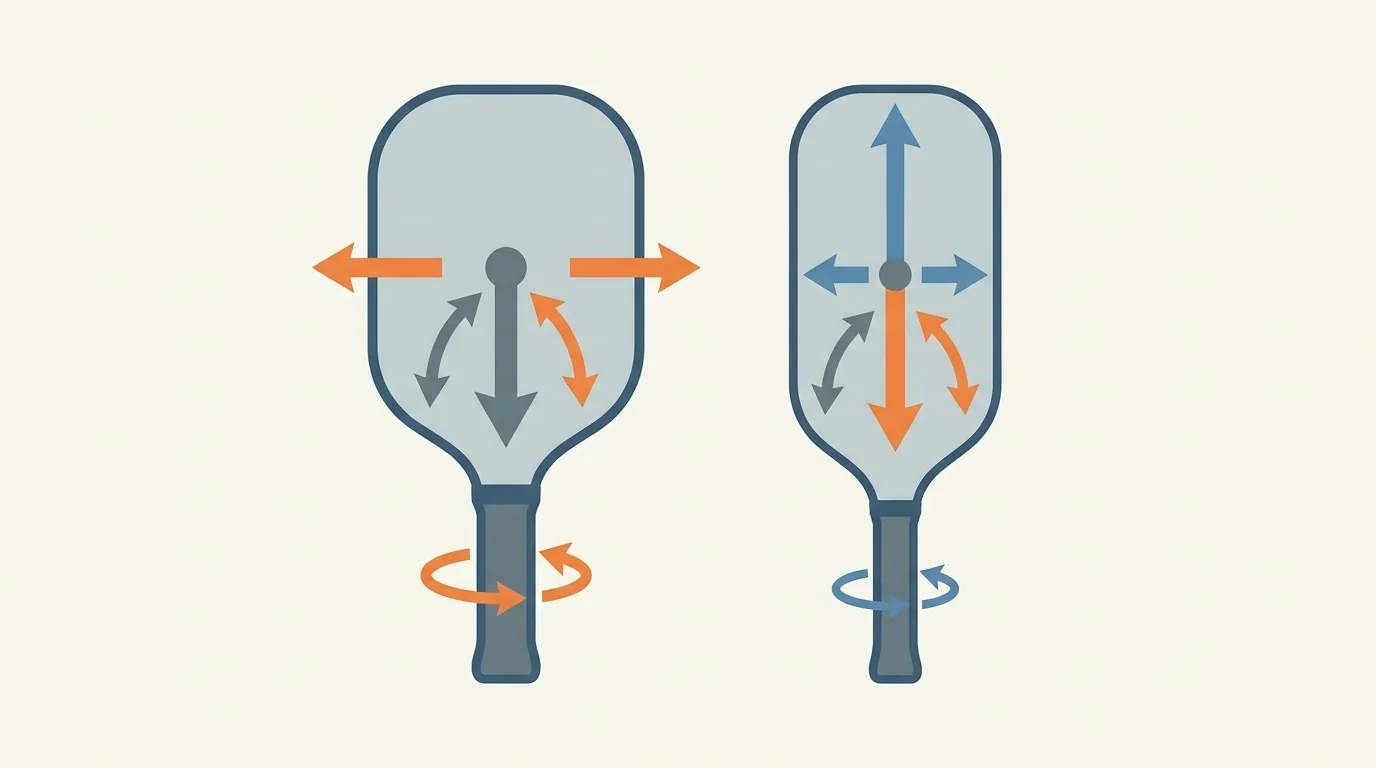
Adjust the reset to your position on court
At the kitchen line, keep the reset tight because the reaction time is short. The paddle should protect the body and be available on either side. In the transition zone, allow more room and expect the ball to change height. Split step as the opponent contacts, then move forward if the ball is neutral or prepare an emergency block if it is attacking.
At the baseline, finishing a shot is not an automatic signal to run forward. Recover your balance and read the reply first. A deep, controlled ball may give you a reason to advance. A short or attackable ball may force another defensive contact. Earn court position with the quality of the next ball rather than with automatic movement.
Read the opponent before moving again
A reset works only when the paddle and eyes are ready to read. Watch the opponent’s contact point and paddle face. A higher contact can produce a drive or speed-up; a lower contact often gives you more time to move forward. Stop watching your own shot once it has crossed the net and shift attention to the opponent.
In doubles, communicate while recovering. A quick “middle,” “yours,” or “switch” is more useful than a long explanation after the point. Both partners should rebuild their shape instead of chasing the ball separately.
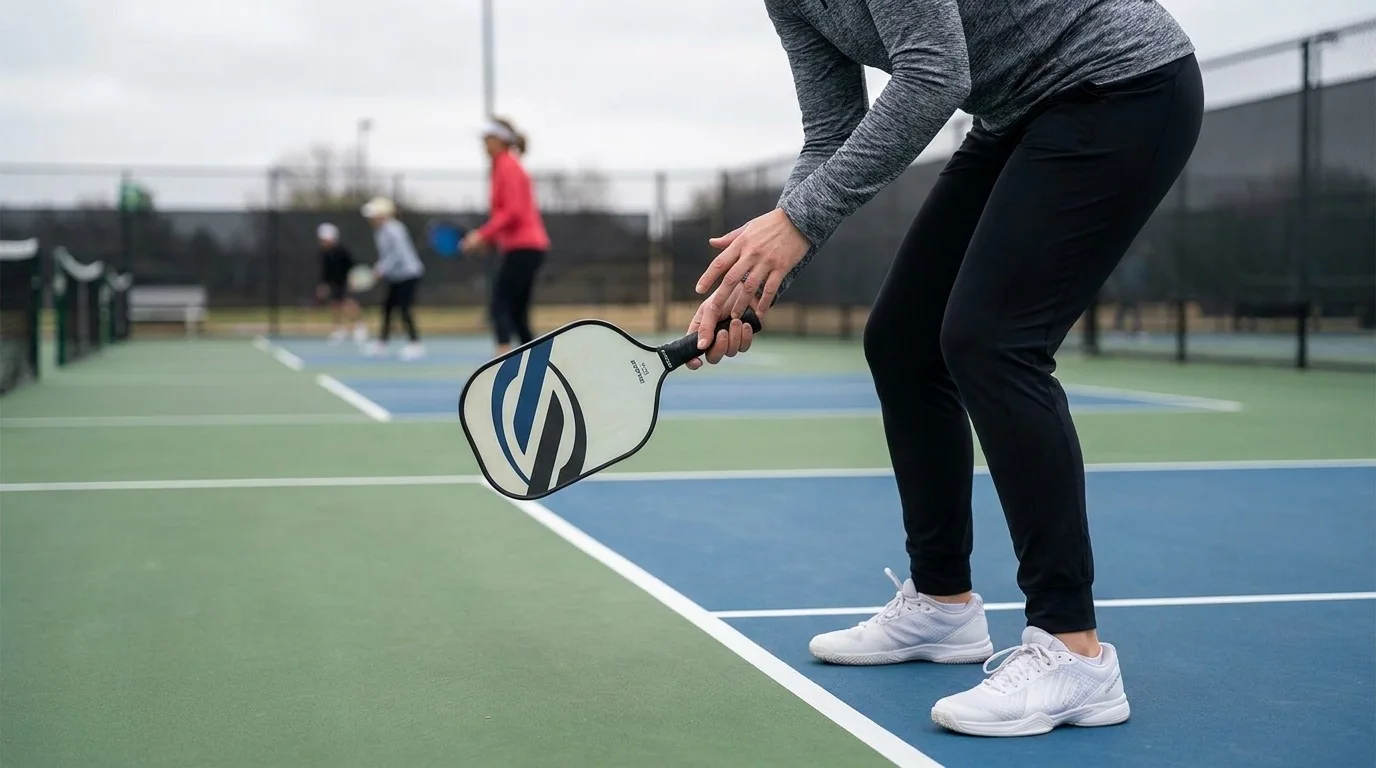
Practise the reset under pressure
Begin with cooperative dinks. After every contact, freeze for one second and check the paddle height, foot spacing, and balance. Then remove the freeze while keeping the same checklist. Next, have a feeder alternate between a dink and a moderate drive. The hitter resets after every ball and calls the response before moving.
Finish with a live drill where a repetition counts only if the player recovers before the opponent’s next contact. Track the quality of the position: balanced feet, paddle in front, clear communication, and a base that can move. The goal is not extra speed. It is to make the reset dependable enough that you can spend more attention on the point.
A reliable pickleball ready-position reset links one shot to the next. Finish the contact, rebuild the base, read the opponent, and move when the ball gives you a reason.