Pickleball Reset Contact: Quiet Paddle, Low Kitchen Target
A practical pickleball reset contact guide for absorbing pace, keeping defensive balls low, and recovering into a balanced position.
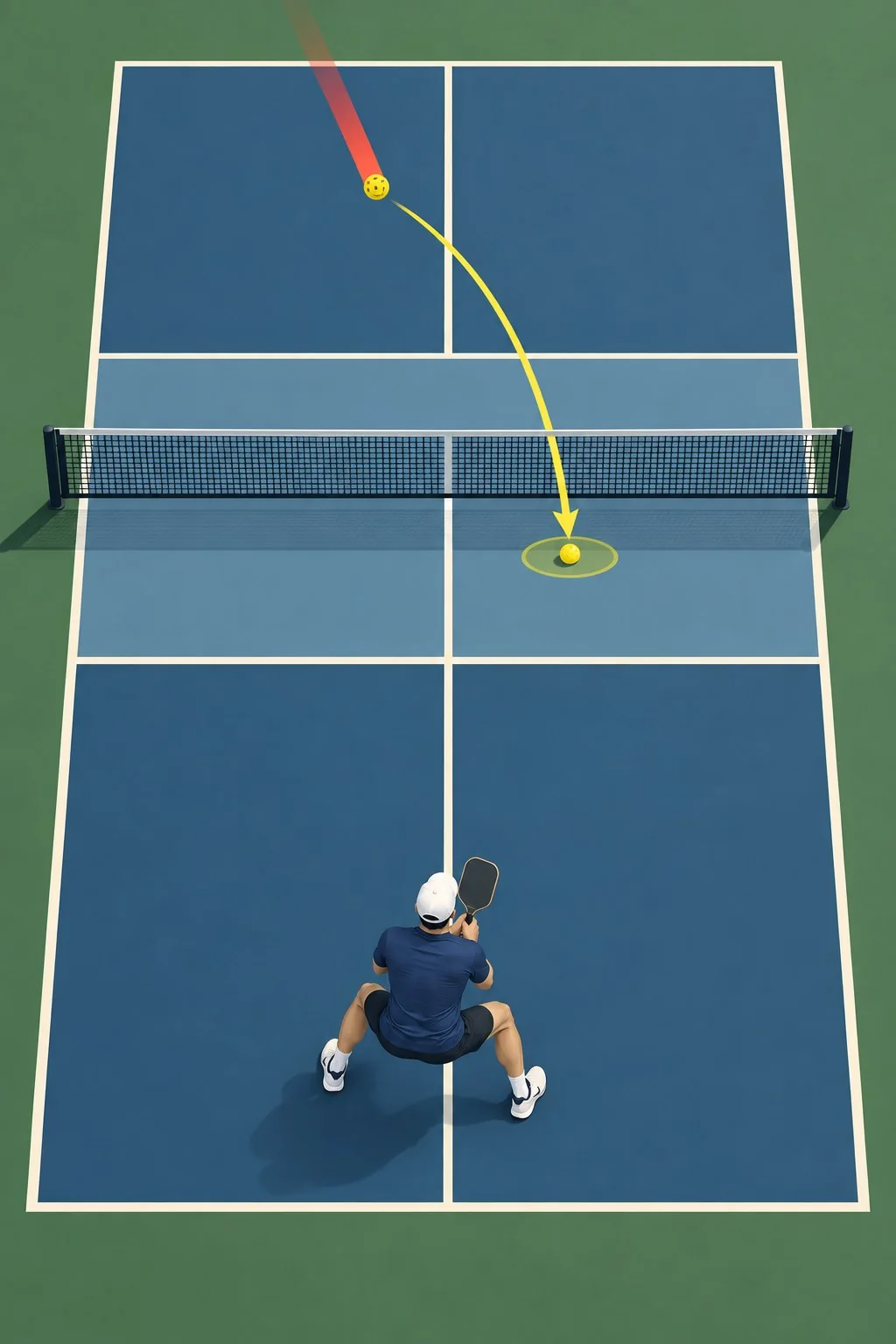
A quiet pickleball reset contact turns an opponent’s attack into a neutral ball. The aim is not to win the exchange immediately. The aim is not to win the exchange immediately. It is to absorb pace, send the ball low into the kitchen, and give yourself time to rebuild a balanced position. The technique becomes much more reliable when your grip, feet, and contact point work together.
Use a soft grip to absorb pace
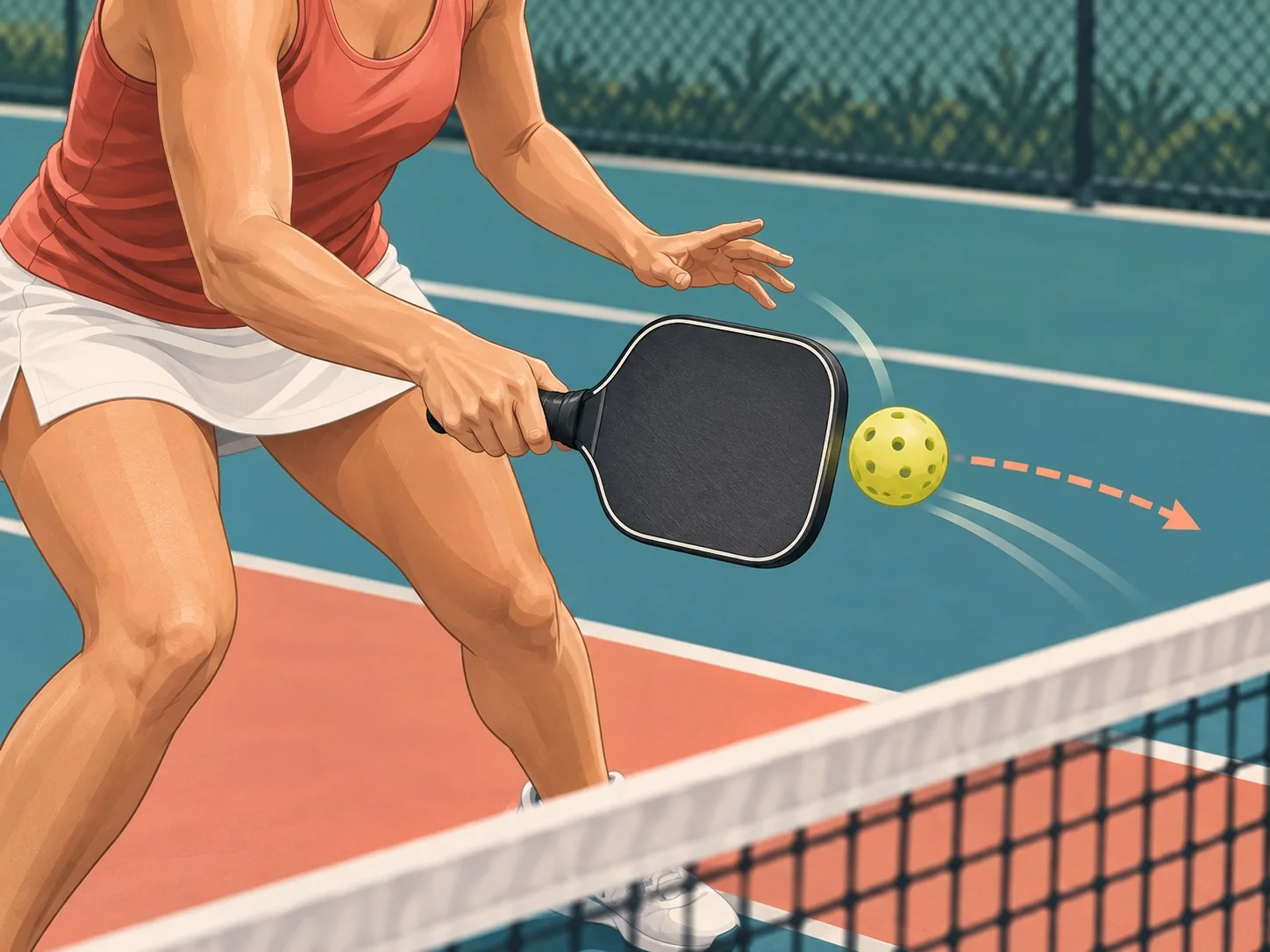
When a fast ball arrives, the natural reaction is to squeeze the handle. That usually makes the paddle rebound the ball too quickly and sends a defensive shot high. For a reset, use a relaxed grip—roughly a two or three on a ten-point tension scale. Keep the paddle in front of your body and let the incoming pace do most of the work.
A loose hand does not mean a floppy wrist. Keep the face stable and guide the ball with a small, quiet motion. Think of the reset as similar to a dink: the hand stays calm, the swing stays compact, and the ball travels on a controlled path rather than being struck aggressively.
Stop before contact and build a balanced base
Balance is the second half of the shot. Resets are easiest when your weight is evenly distributed, your feet are a little wider than shoulder width, and your body is still at contact. Reaching while leaning or trying to reset while drifting sideways often makes the ball pop up.
As the ball approaches, move your feet early enough to get behind it. Then stop in a low athletic stance before the paddle meets the ball. Bend the knees, keep your chest quiet, and let the paddle meet the ball in front of you. If you cannot stop completely, choose a higher-margin defensive response rather than forcing a delicate reset from a stretched position.
The best contact is usually in front of the body, with the paddle face directed toward the kitchen target. Avoid a large backswing. A compact motion gives you a better chance of controlling both height and direction when the incoming ball is fast.
Aim low and recover after the reset
Your practical target is the opponent’s kitchen, with enough height to clear the net and enough softness to make an immediate attack difficult. Do not judge the shot only by whether it lands. Notice whether it stays low after the bounce and whether you can move into a better position before the next ball.
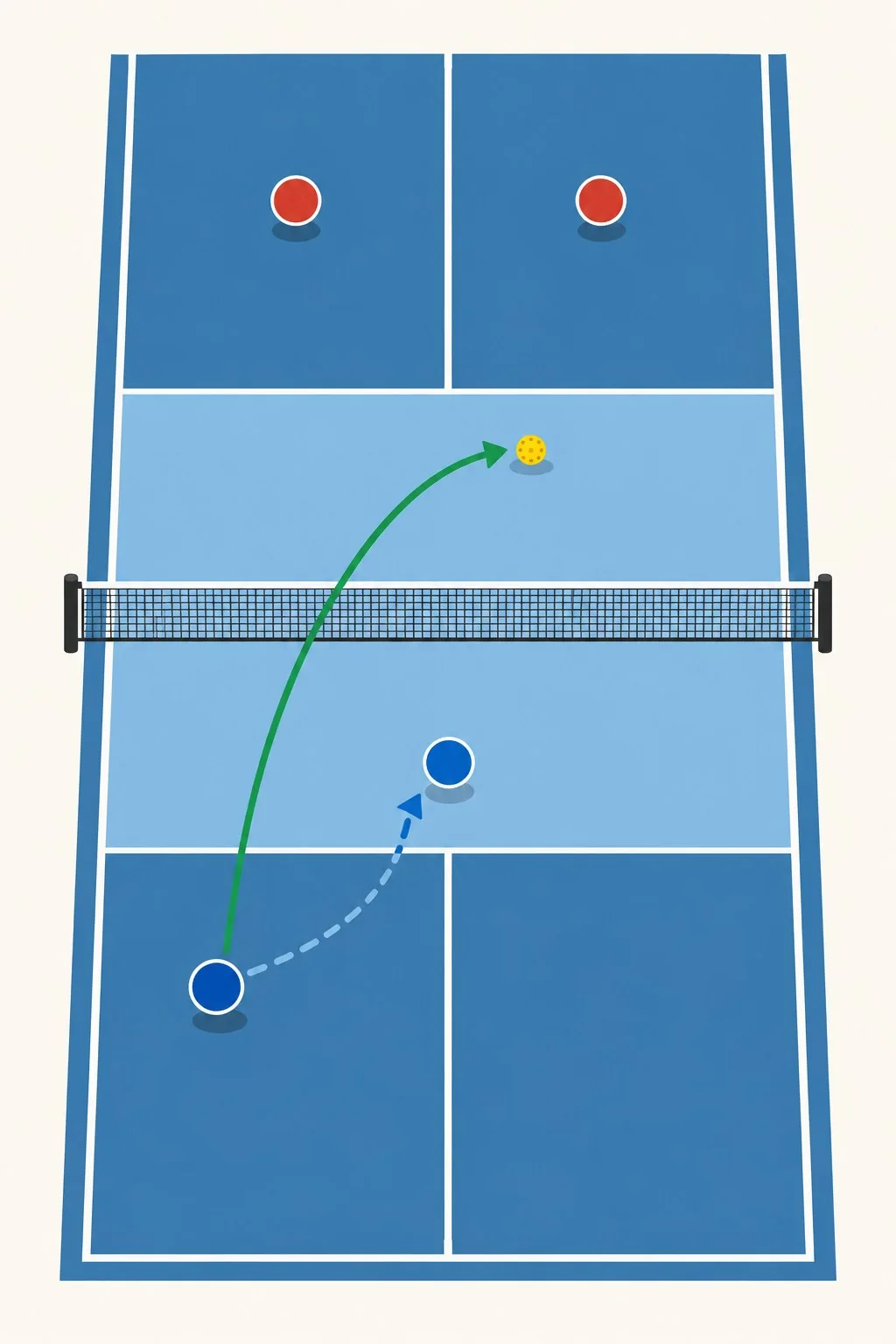
A reset is successful when it buys the next decision. After contact, recover your ready position instead of watching the ball. If the ball rises, be prepared to defend again. If it travels low and gives you time, take the next controlled step forward. The shot and the recovery belong to the same sequence.
Fix the habits that make resets pop up
Squeezing the grip, swinging too big, contacting while moving, and standing too tall all make a reset harder. So does trying to hit through a ball that should be absorbed. Start with slow feeds and exaggerate the feeling of a quiet paddle. Then increase the pace while keeping the same compact motion.
A useful practice routine is simple: have a partner feed attacks from a manageable distance, reset ten balls to the kitchen, pause to check your balance, and repeat from a slightly faster feed. Track how many balls stay low rather than chasing a perfect winner. Finish each repetition with the paddle in front and the feet ready for the next shot.
The reset is not a surrender. It is a way to remove your opponent’s advantage. Relax the hand, stop the feet, keep the ball low, and recover before the next exchange begins.