Pickleball Reset Footwork: Set the Base Before Contact
Pickleball reset footwork helps you set the base before contact, control pace, and recover ready for the next exchange.
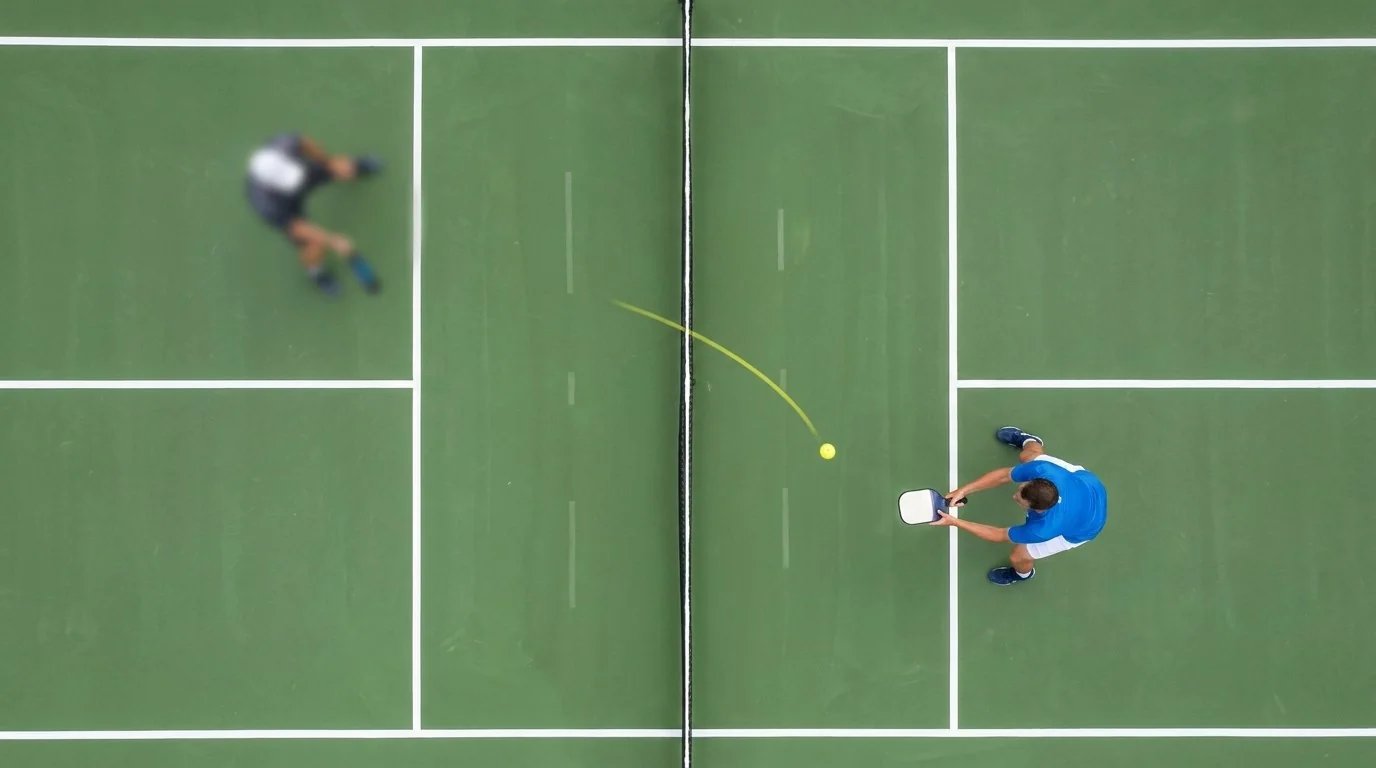
A reliable pickleball reset starts with the feet. Set a balanced base before contact, keep the paddle in front, and absorb the incoming pace instead of trying to hit through it. When the ball is low, the goal is not a spectacular reply. It is a controlled ball that clears the net, lands safely, and gives you time for the next decision.
Start with a stable kitchen base
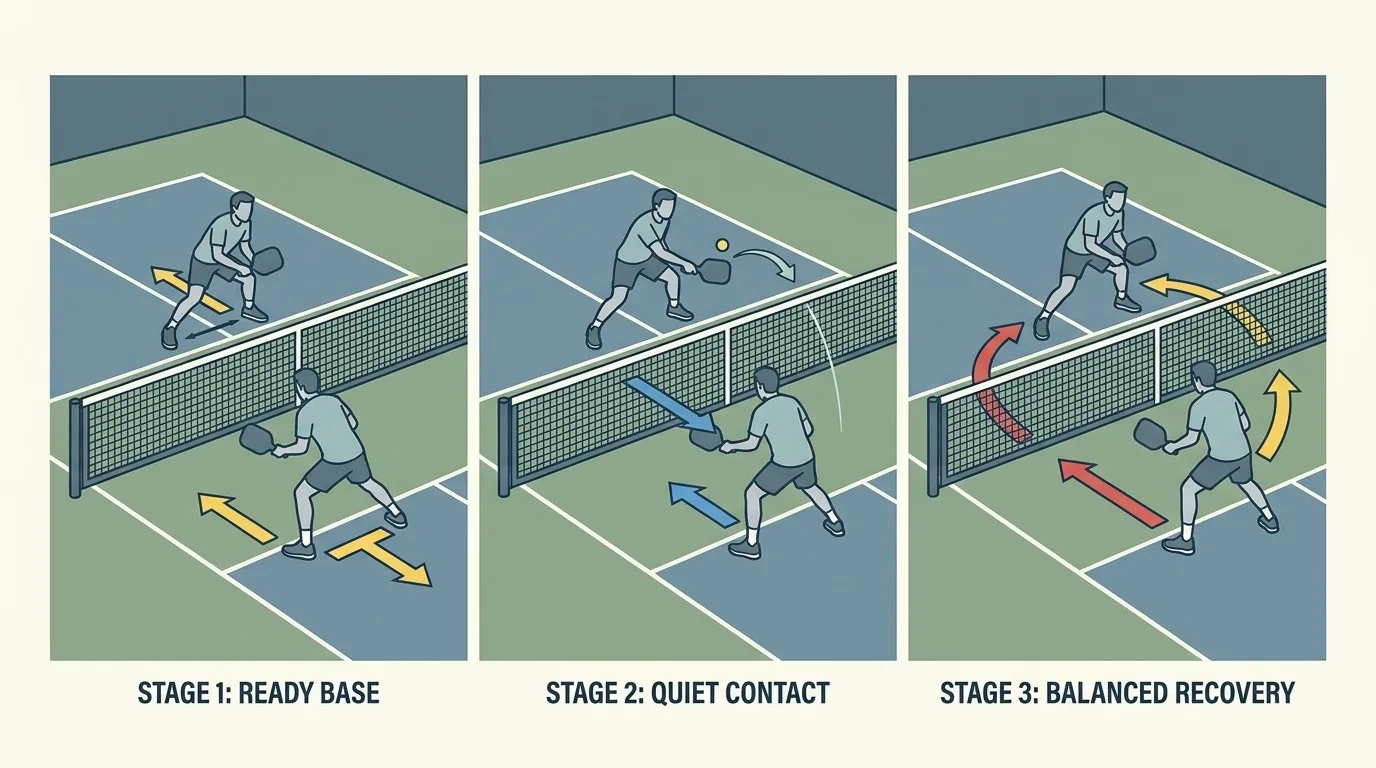
Stand with your feet comfortably apart, knees soft, and weight available in both directions. Keep your head level and the paddle in front of your body. As the opponent makes contact, use a small adjustment step so the ball arrives in front of you rather than beside your hip. That base gives the paddle a predictable path and makes a block or soft reset easier to repeat.
Absorb pace with quiet contact
Use a short preparation instead of a large backswing. Relax the grip enough to keep the ball from springing off the paddle, but keep the wrist stable through contact. Meet the ball in front of the body. A slightly open paddle face can provide the lift needed to clear the net when the ball is low.
This is not a passive reach. Move the feet to the ball, keep the shoulders generally facing the net, and finish balanced. Let the incoming pace do most of the work. If the ball arrives high enough to attack, a controlled counter may be available. If it is dipping, choose height and margin rather than forcing speed.
Choose a safe landing window
A reset should clear the net and descend into the opponent's kitchen. Too little lift clips the net; too much height gives the opponent a comfortable volley. A crosscourt reset offers more distance when the angle is open. A middle reset can reduce the opponent's angle and simplify your recovery. Choose after reading the ball's height and your own balance.
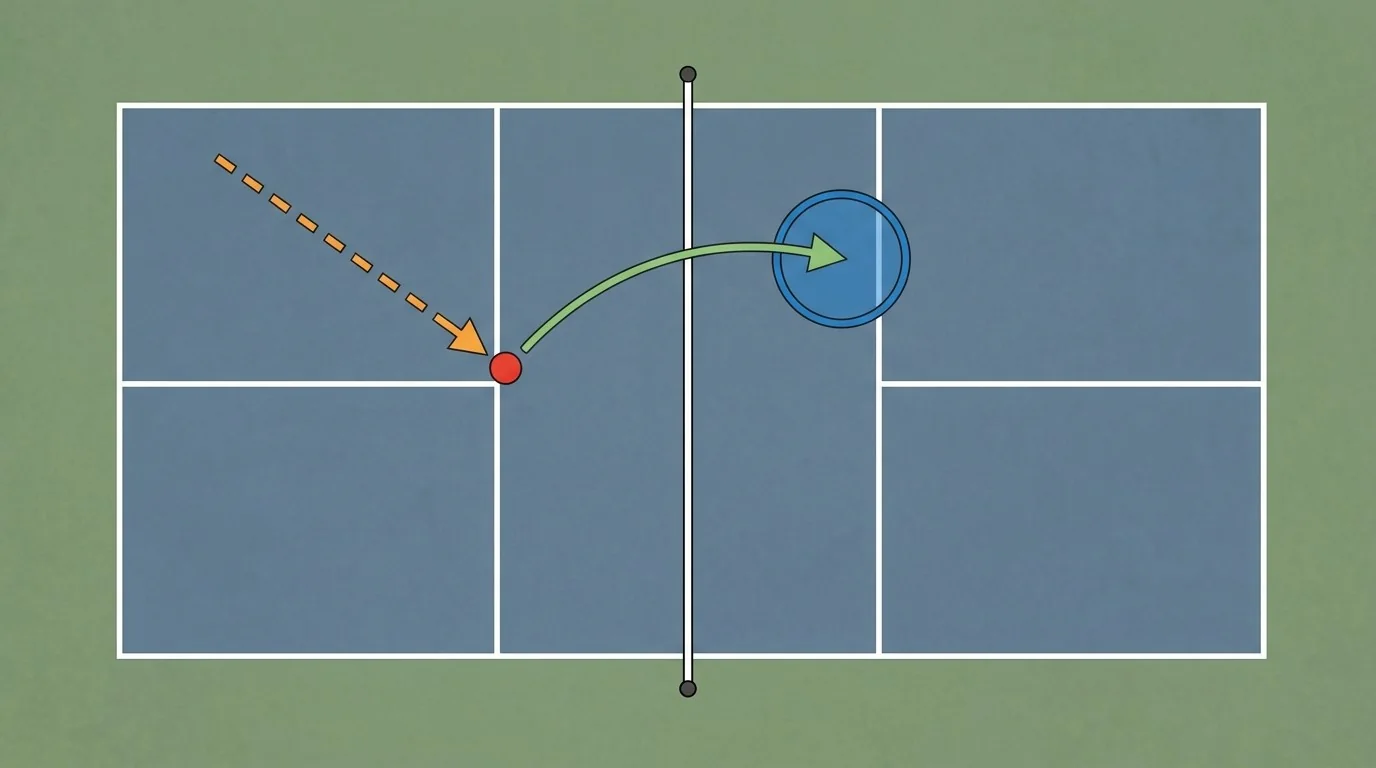
Recover after the reset
Do not stop moving after contact. Return the paddle to a ready position and rebuild a quiet base. If the ball stays low, be prepared for another soft exchange. If the opponent lifts the ball, move forward only when the ball and your balance allow it. A reset has done its job when it improves the next decision, not merely when it crosses the net.
Practise the pattern under pressure
Begin with cooperative feeds from the kitchen line. Have a partner vary the pace while you focus on moving the feet, meeting the ball in front, and using a short motion. Score each attempt for three checks: safe net clearance, a landing inside the kitchen, and a balanced recovery.
Then alternate forehand and backhand feeds and add balls to the body. Finish with a constrained rally in which the reset player may counter only when the ball is clearly attackable. Watch for the familiar leaks: a long backswing, a loose wrist, reaching without adjustment steps, and moving forward before the opponent's contact. Correct one problem at a time. Keep the paddle quiet, let the feet create position, and choose margin when the ball is low.