Pickleball Reset Margin: Lift Low Balls Without Popping Up
A practical guide to the pickleball reset angle: lift low balls, avoid pop-ups, absorb pace, and recover ready.
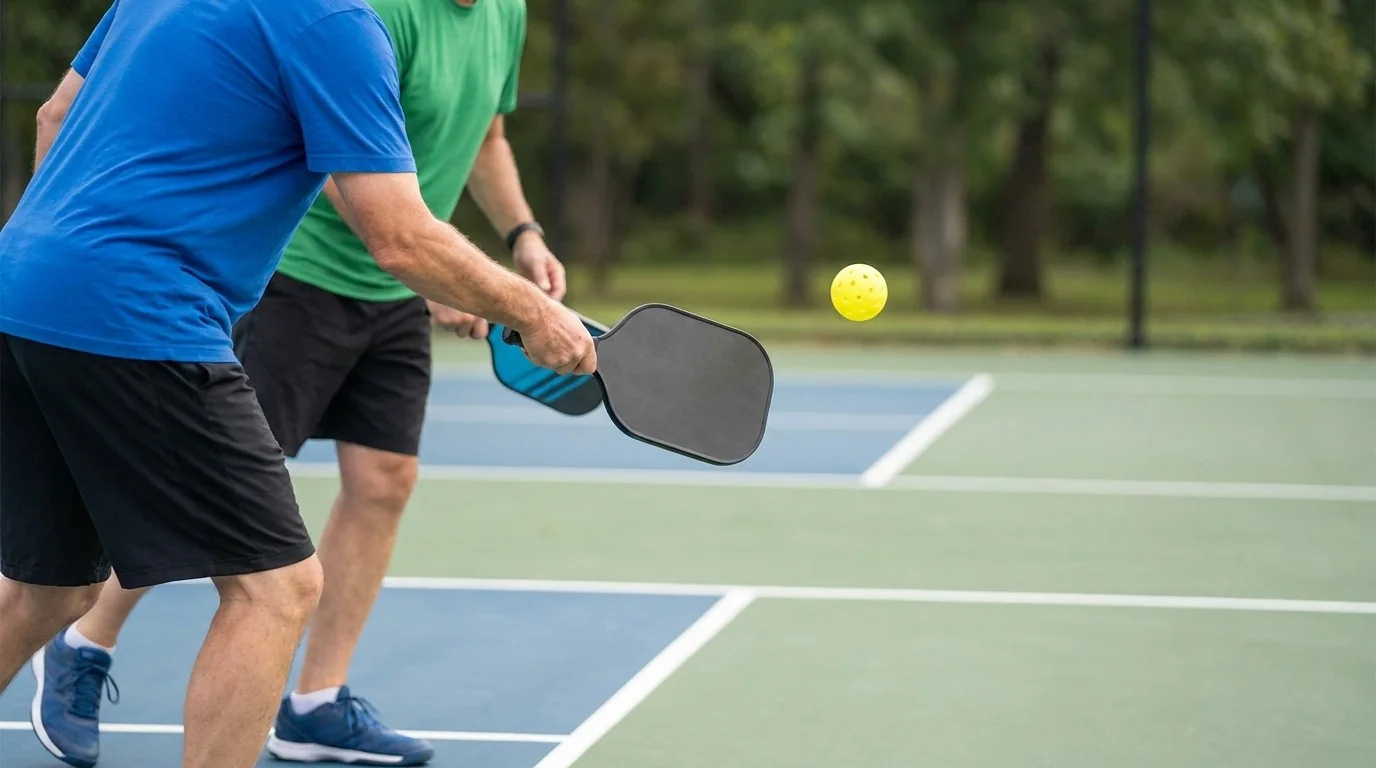
A reliable pickleball dink counter starts with recognition, not a big swing. When an opponent sends a firm ball toward your body or into a comfortable contact window, your job is to absorb the pace, keep the reply low, and recover to a balanced kitchen position. A counter is a compact answer to an attack. It is not a reason to trade harder just because the ball is close.
Read the ball before you counter
Watch the opponent’s paddle and the speed of the ball. A ball rising into your strike zone may be suitable for a counter. A ball below your knees, or one that is already dropping sharply, usually calls for a reset or a softer block. Keep the paddle in front of your body, use small adjustment steps, and make the decision early.
Being near the kitchen is not enough by itself. If your contact point is too low, forcing a counter usually sends the ball upward and gives the opponent another attack. Let the ball’s height and pace determine the shot.
Absorb pace with a short stroke
Prepare with a small takeback and quiet hands. Hold the paddle firmly enough to keep the face stable, but do not squeeze so hard that the ball springs away. Meet the ball in front of your lead hip. When the ball is low, a slightly open paddle face can help you lift it over the net without adding a large upward swing.
The contact can be a brief forward punch or a small redirection. Avoid a long backswing, a wrist roll, or a pronounced lift. Those movements add height and make the counter easier to attack. Think of the paddle as receiving the incoming pace and sending it back on a lower path.
Pick a target with margin
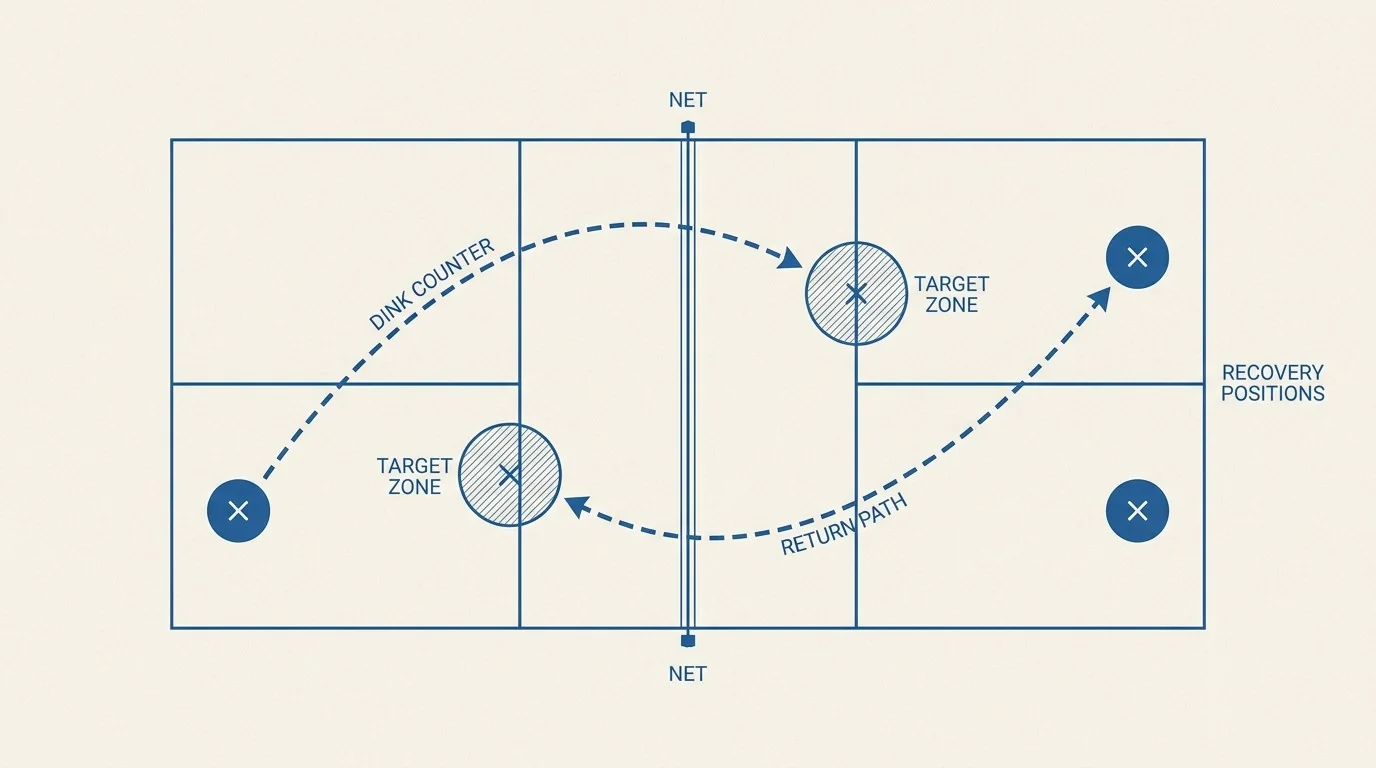
A crosscourt counter gives you more distance and often more room over the net. The opponent’s outside hip can also be a useful target because it makes the next contact less comfortable. A controlled ball through the middle may create hesitation, but only when you and your partner know who will cover the next shot.
Against an opponent who is stable at the line, a low ball at the feet or a safe angle is usually a better choice than a pass through a tiny gap. You do not need to win the exchange immediately. Make the next contact harder and keep the rally playable.
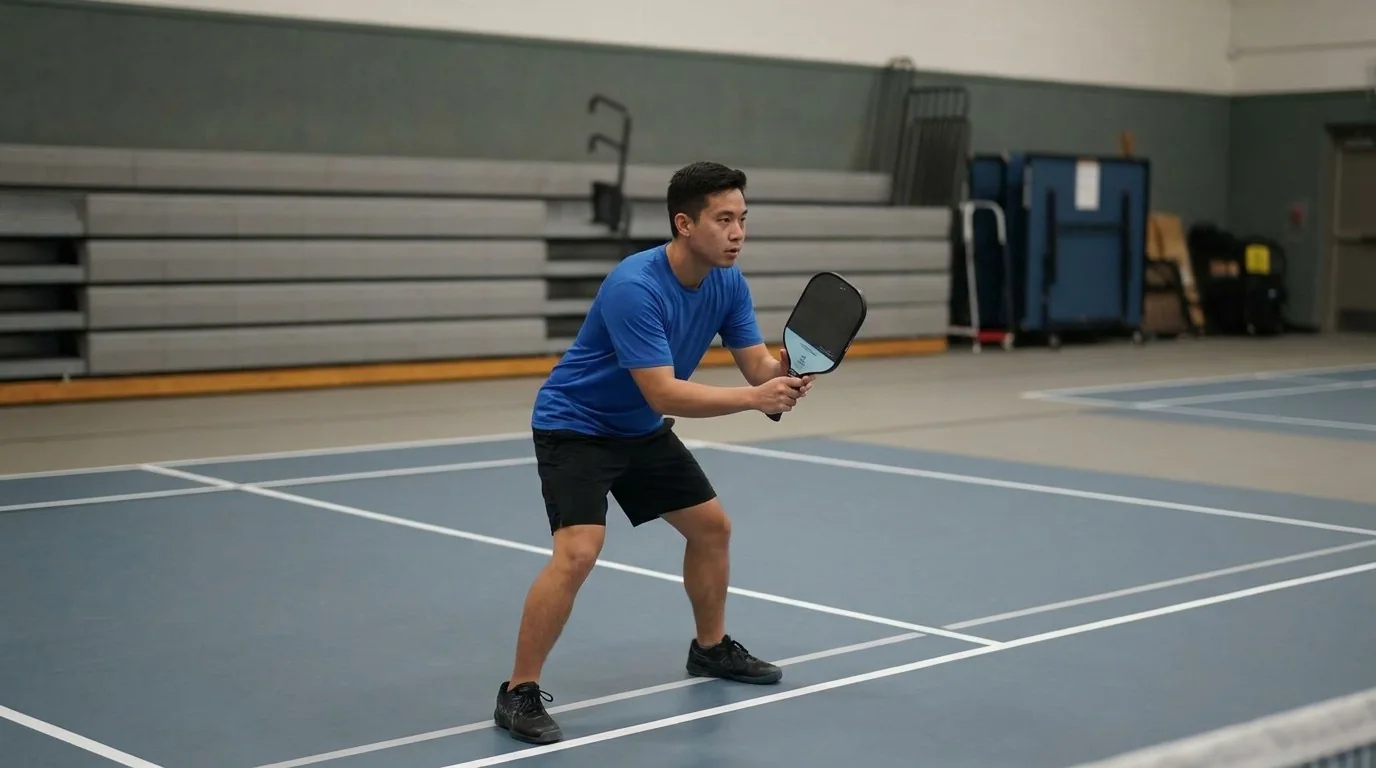
Recover as soon as the ball leaves your paddle. Finish with the paddle up, return to your ready stance, and stay aware of your partner’s position. If the counter travels high, expect another attack and hold your ground instead of drifting forward. If it lands low, move in only after the opponent’s contact is compromised.
Correct the common misses
- The ball pops up: reduce the lift and keep the paddle face quieter through contact.
- The counter goes long: soften the grip, shorten the follow-through, and aim crosscourt.
- The ball misses wide: create space with your feet before turning the paddle.
- You counter from below the net: choose a reset and recover instead of forcing pace.
- You get jammed: move the paddle and torso together. Use the backhand block when there is no room for a forehand.
These fixes are easier to apply when you identify the error after the ball, rather than changing several parts of the stroke at once.
Practise the decision, not only the swing
Begin with cooperative kitchen feeds at three speeds. First, block every ball crosscourt and count the replies that land below net height. Next, alternate forehand and backhand counters while taking one adjustment step. Keep the preparation compact and return to a ready position after each contact.
For the final progression, play a constrained rally. The feeder may attack, but the counter player scores only after a low reply followed by a balanced recovery. Track the percentage of counters that stay low and in, not just the number of winners. Repeat the set from both sides of the court.
Finish each sequence by naming the intended target before the next feed. That connects the technical cue to a match decision. The aim is to recognise an attackable ball, choose a target with margin, and stay ready for the next contact rather than chasing a spectacular counter.