Pickleball Reset Shot: How to Slow the Rally
Learn the pickleball reset shot from the transition zone: choose contact height, paddle angle, landing targets, footwork, and drills for safer control.

A pickleball reset shot from the transition zone sends a softer, lower ball into the kitchen so the opponent has less room to attack. It is not an automatic winner. The useful result is time: you absorb pace, regain balance, and move forward before the next exchange.
When should you use a pickleball reset?
The transition zone leaves you farther from the net than your opponent. Driving every ball from there can give the other team a comfortable block or counterattack. A reset changes the speed of the rally and can produce a ball that must be lifted rather than smashed.
Read the opponent first. If they are already near the kitchen, a soft landing in front of them may be safer than a hard shot. If they are deep, a deep ball may buy more time. Reset describes a decision and a trajectory, not every gentle swing.
How do you hit a reset from transition?
Lower your center of gravity, keep the paddle in front, and use a compact preparation. Contact the ball in front of your body; let the shoulder and trunk guide the motion instead of snapping the wrist. A slightly open face can lift the ball over the net, but too much angle produces a high attackable ball.
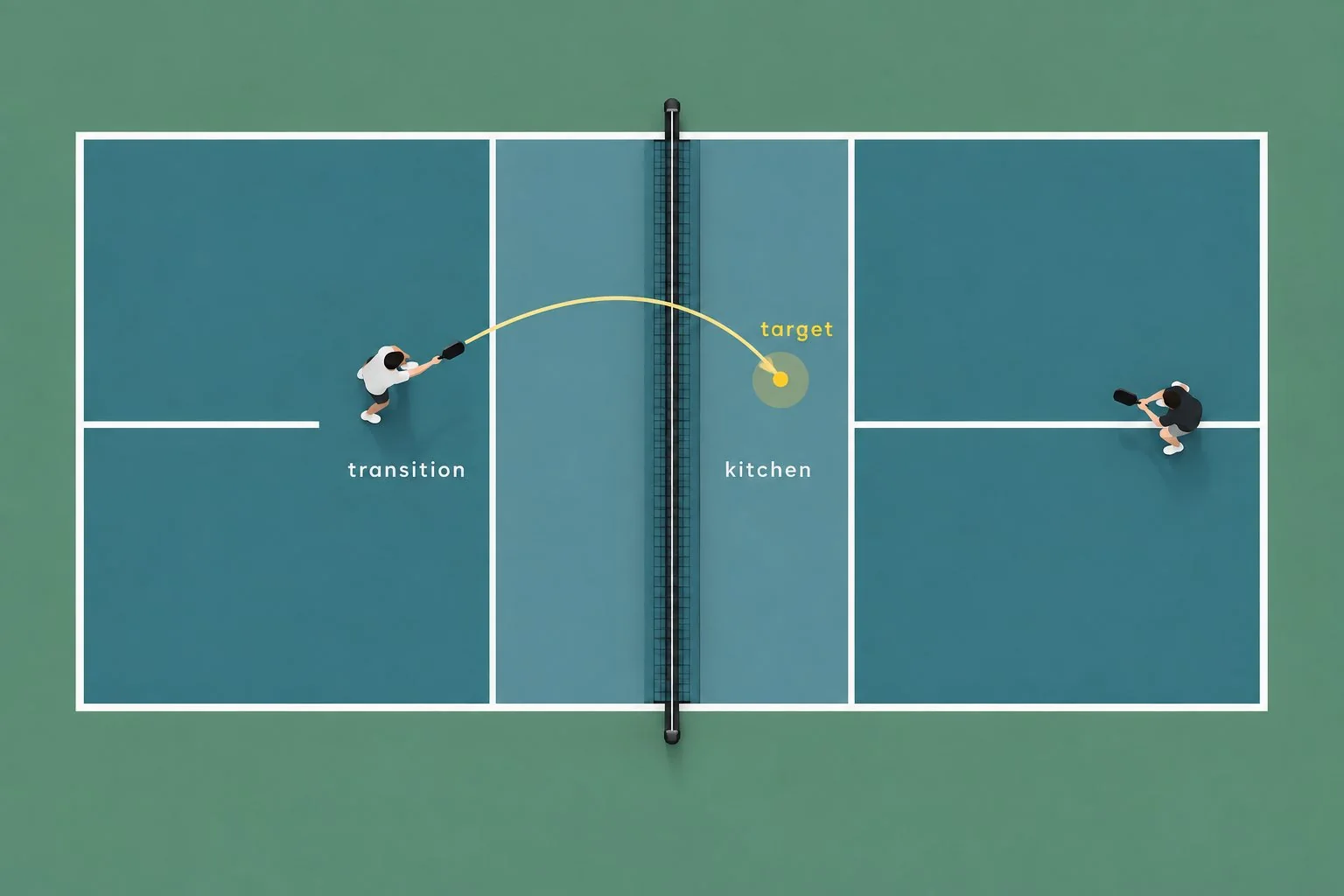
Choose a landing area with margin from the net and sidelines. As a training example, mark a 2-foot-wide target near the kitchen, hit 20 balls, and count 13 that land inside. That is 13 ÷ 20 = 65%. The number describes that session, not a match guarantee; also record balls into the net, balls that float high, and balls that travel long.
How can you avoid the counterattack?
Do not stand upright after contact. Keep the paddle in front of your chest, take small steps, and prepare for the next ball. If your reset floats high, the opponent may attack, so covering the likely angle can be wiser than rushing forward blindly.
A common mistake is aiming too close to the tape. A tiny margin raises net errors. Start with a slightly higher target, then reduce the height as control improves. Wind changes the ball’s speed and direction, so practice resets in both court directions when possible.
Which reset drills build control?
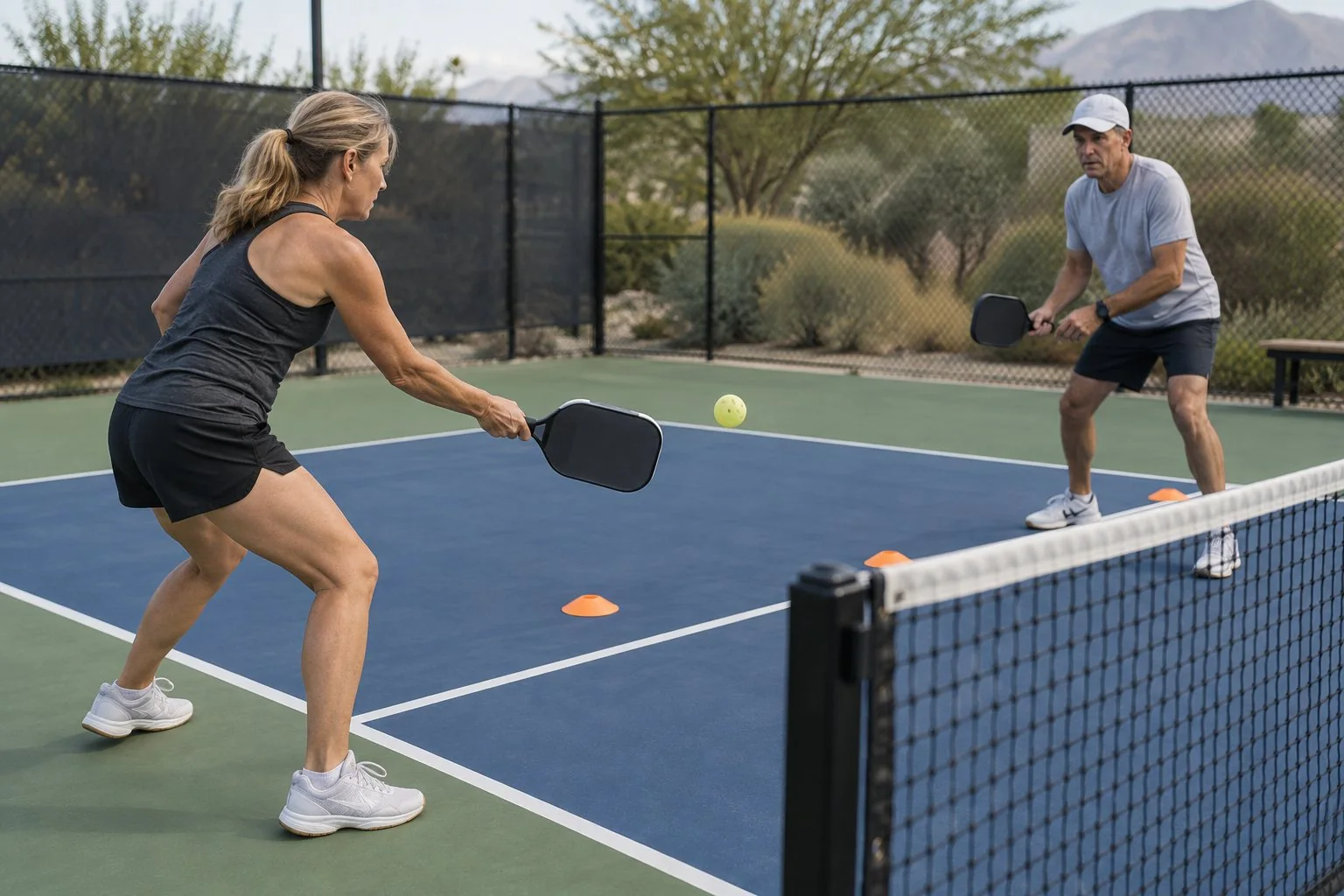
Place two target zones near the kitchen. Have a partner feed moderate-paced balls while you hit 10 forehand resets and 10 backhand resets. If 7 forehands and 5 backhands reach the targets, compare 70% with 50%. Change one variable next, such as contact point, so you can tell whether the adjustment helped.
Then start from three positions in the transition zone. Hit the reset, take one controlled step forward, and stop in a balanced stance. This connects the stroke to recovery instead of rehearsing a perfect stationary feed.
Reset checklist
Lower your stance, shorten the swing, stabilize the face, and choose a target with margin. Watch the ball after contact, then advance. Stop if pain changes your mechanics.