Pickleball Return-and-Run: Reach the Kitchen on Time
Turn a deep pickleball return into court position with immediate forward movement, controlled transition steps, split-step timing, and a balanced kitchen arrival.
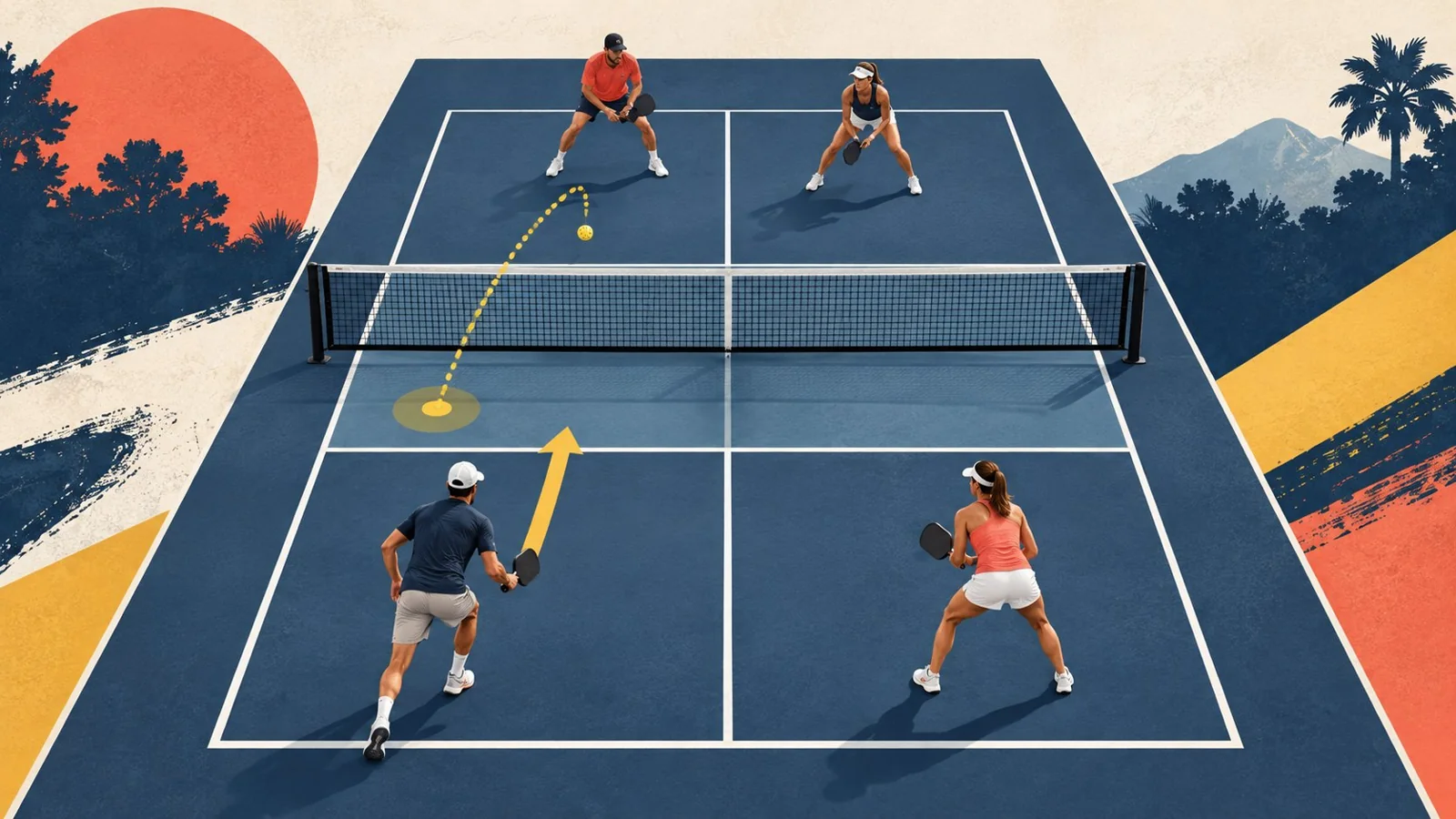
A reliable pickleball return and run is more than hitting the ball back. The return should create time, and your feet should use that time immediately. When the return is deep and you start forward without hesitation, you can cross the vulnerable middle of the court and arrive at the kitchen line ready for the next exchange.
Make the return the start of your movement
Begin behind the baseline in a balanced ready position. As the server contacts the ball, use a small split step so you can react to the serve and prepare the return. Aim for a deep, controlled return that travels high enough to clear the net safely and pushes the serving team away from the kitchen. Depth matters because it gives you time to move forward after contact.
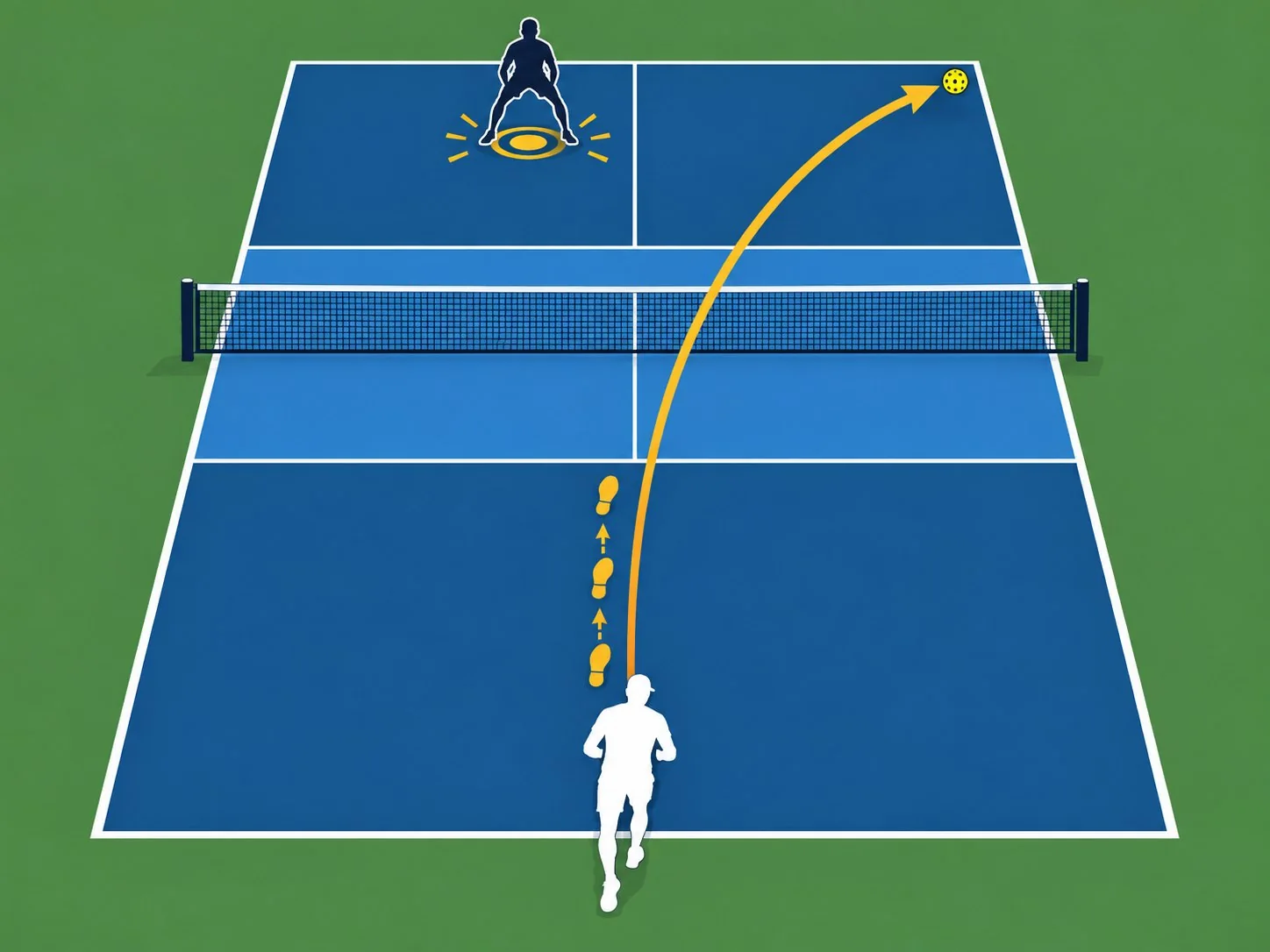
Do not admire the return. As soon as you have struck it, take your first steps toward the kitchen line. Keep the paddle in front, the head level, and the stride controlled. The best first step is usually quiet and direct rather than a frantic sprint. Your objective is to cover ground while preserving the balance needed for the next ball.
A short or floating return changes the calculation. You may need to slow down, split step earlier, and prepare for a drive instead of running blindly. Forward movement remains useful, but it should match the time your ball has created. Move with the return, not with a fixed promise that you must reach the line before the opponent hits.
Cross the transition zone in stages
The strip between the baseline and the kitchen line is difficult because opponents can send balls toward your feet. Do not stop there after the return. Continue through it in two or three controlled steps, then pause in a ready stance when the opponent is about to make contact.
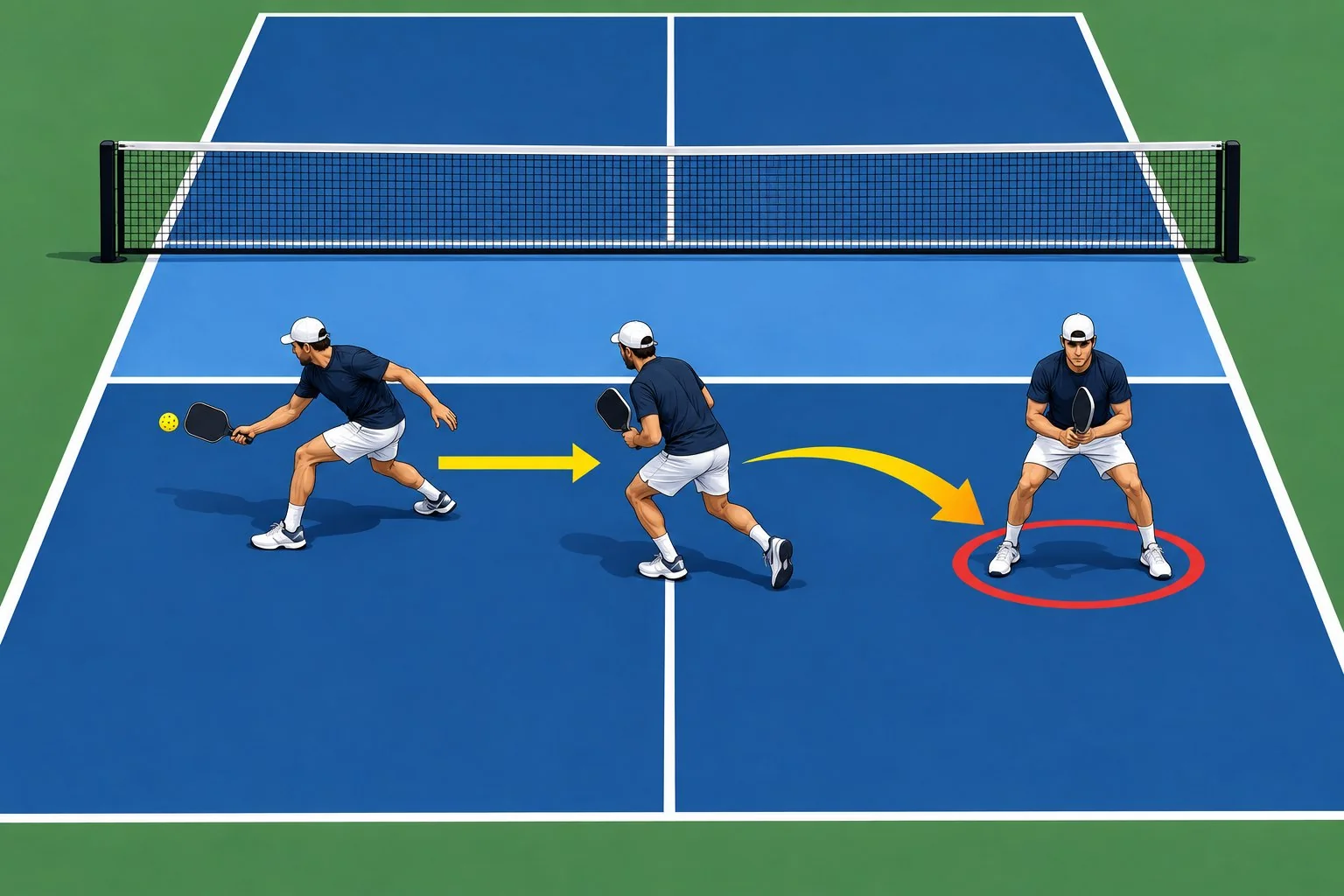
The pattern is move, stop, read, and move again. If the ball reaches you before you arrive, soften the reply with a reset rather than forcing a hard swing while running. A low reset can buy the next step. Once the ball is safely away, advance again and prepare to split step as the opponent contacts the next shot.
Avoid taking one enormous stride to escape the transition zone. Large steps make it difficult to brake and leave the upper body leaning. Shorter steps keep the feet adjustable, especially when the ball changes direction. You want to arrive with both feet available, not merely touch the kitchen line and hope the next ball is kind.
Arrive balanced and hold your position
When you reach the kitchen, settle with your toes just behind the line, knees comfortably bent, and paddle centered in front of your chest. Land your split step as the opponent strikes. This small timing habit keeps you from drifting early and makes the next push-off faster.
The kitchen line is a home position, not a place to charge past after every ball. Step in to attack when the ball allows it, then recover to a balanced stance immediately. If a dink moves wide, use small lateral adjustments instead of reaching with the arm. If a lob goes overhead, turn safely with a drop step rather than backpedaling, then recover toward the line after the reply.
Practise the sequence without rushing
Start with shadow repetitions. Stand behind the baseline, split step, rehearse a deep return, and take three controlled steps toward the kitchen. Stop, split step again, and hold the ready position for a count. Repeat from both sides so the movement does not become tied to one return direction.
Next, add a partner feed. The partner sends a comfortable deep serve, you return with height and depth, then move forward. The partner blocks a ball toward the transition zone. Reset softly, take another step, and repeat the split step at contact. Increase speed only when your feet can stop without a stumble.
Use a short checklist: deep return, first step immediately, no lingering in the transition zone, split step at contact, paddle up, and recover after every shot. The return-and-run habit is not about sprinting blindly. It is about turning a controlled return into useful court position before the next ball arrives.