Pickleball Return Arc: Give Yourself Time to Reach the Kitchen
A practical guide to the pickleball return arc: add safe net margin, land deep, adjust to serve depth, and move forward ready for the next ball.
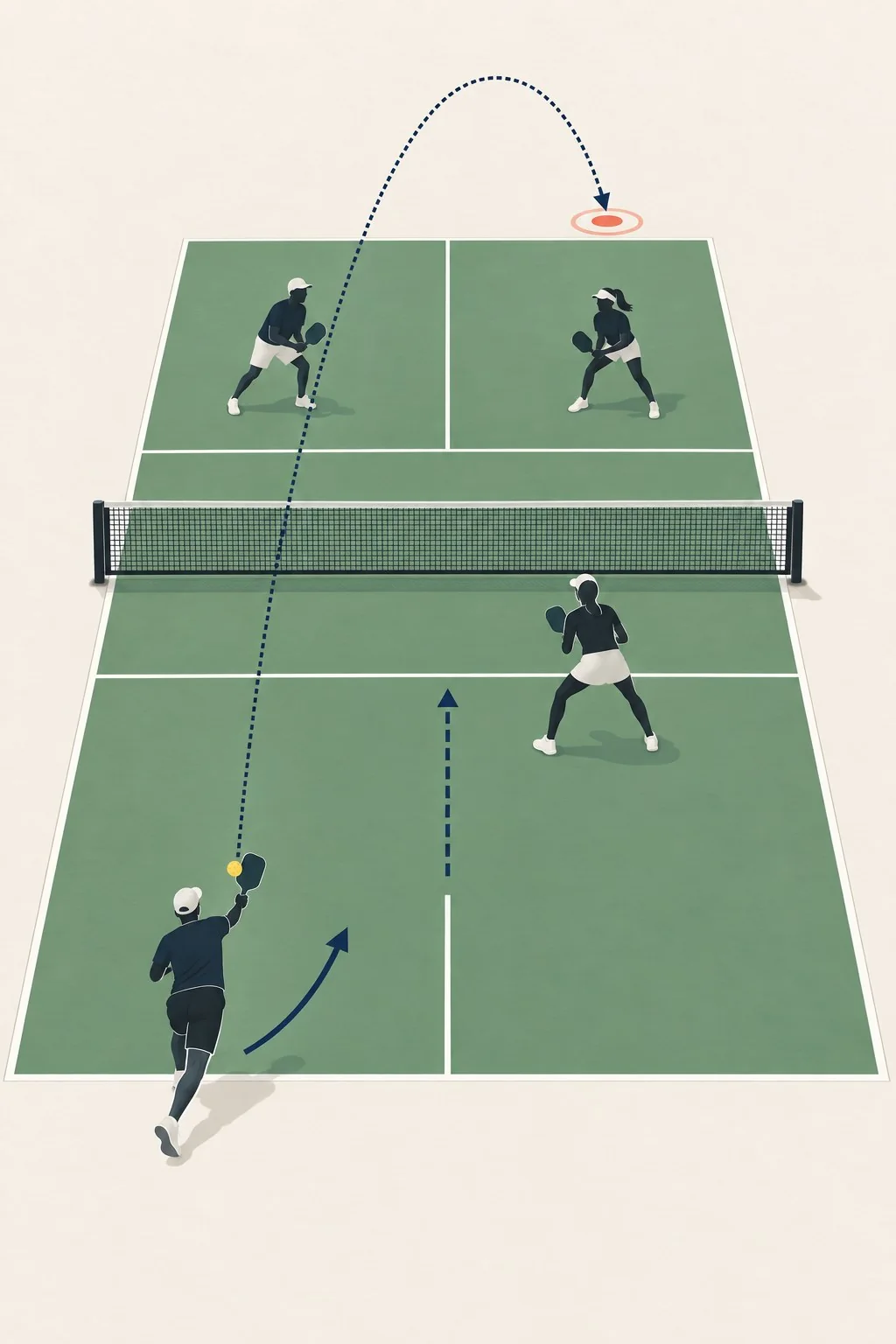
The return of serve is where a pickleball point starts to tilt. Your job is not to win immediately; it is to send a controllable ball deep enough, with enough air time, that you can reach the kitchen before the serving team can threaten you. The right return gives you margin without turning into a short, attackable gift.
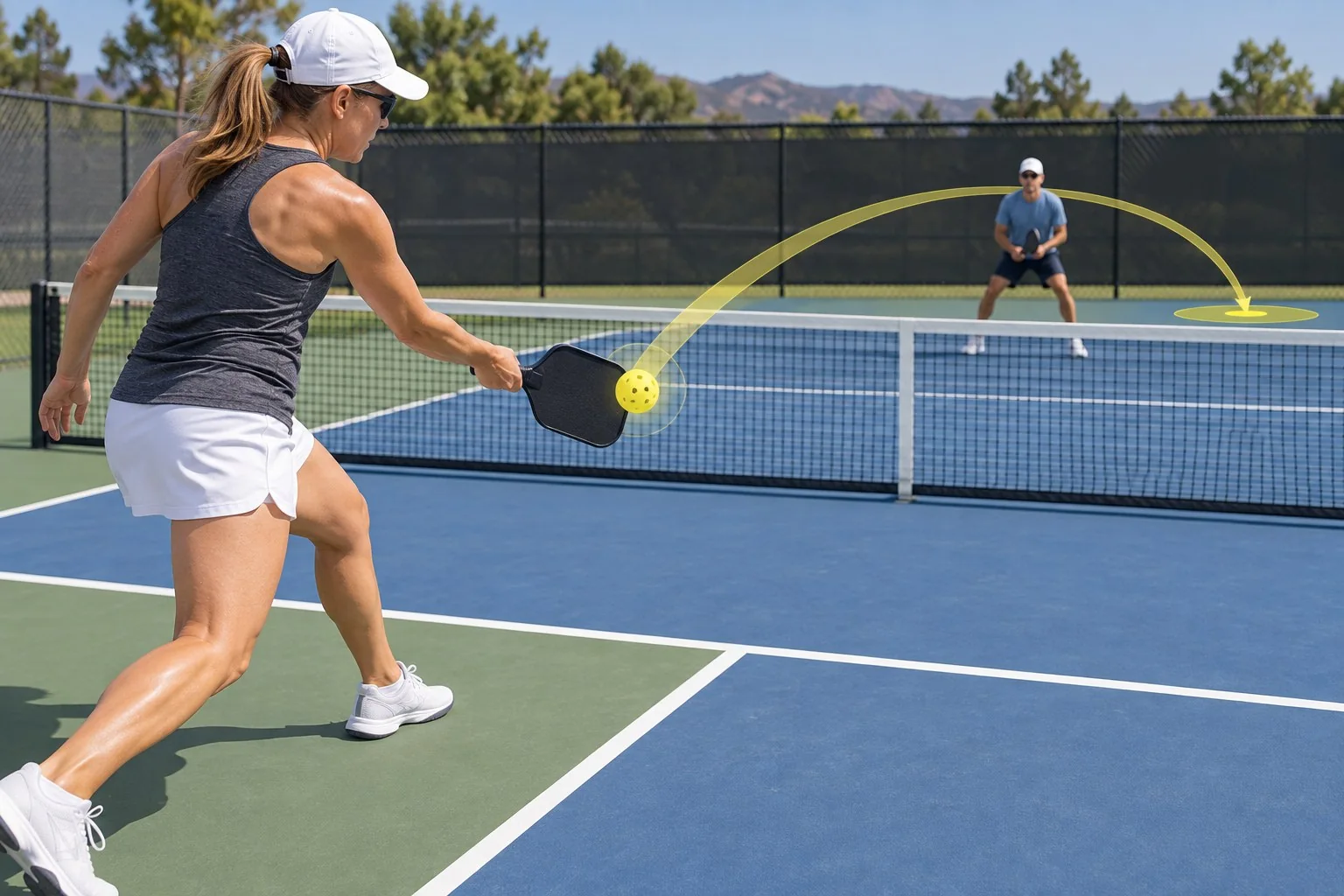
Build height and depth together
Begin a few feet behind the baseline when the serve is deep or fast. That extra space lets the ball finish its bounce instead of forcing you to catch it behind your body. Keep the paddle ready, soften your knees, and move forward as you swing. Contact in front of your body is usually easier to control than reaching from the side.
Aim for a deep landing zone in the back third of the service court, not the sideline. A modest lift over the net creates a useful safety margin. The ball should travel high enough to give you time to move, but not so high that it floats short or becomes an obvious lob. Think “deep with time,” rather than “hard at all costs.”
When the serve is short, step in and take it at a comfortable height. When it is deep, allow yourself room and use a slightly higher shape. The adjustment is practical: change your feet first, then your swing. Trying to solve every serve with the same contact point often leaves you jammed or late.
Choose the return shape from the ball
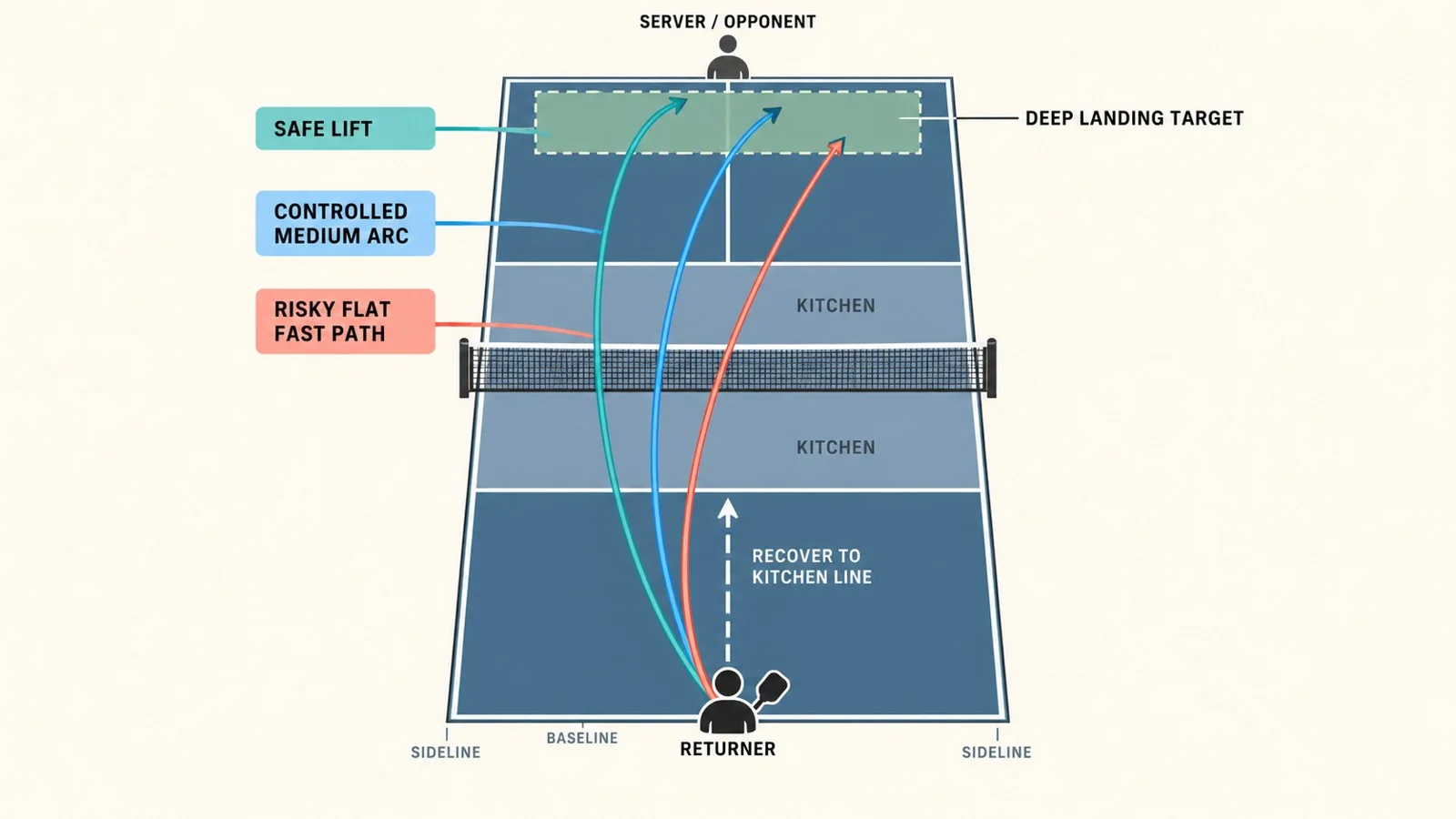
A safe return has three parts: a stable base, a contact point in front, and a finish that sends the ball forward through a selected window. If the ball is low, lift with your legs and shoulder turn rather than scooping wildly with the wrist. If the bounce reaches a comfortable height, you can drive more firmly, but preserve clearance and depth.
Do not confuse speed with pressure. A flat return that arrives quickly may give the server less time to move back, even if it lands deep. A higher, deeper ball can be more useful because it buys you time to advance. Against a difficult serve, choose the trajectory you can repeat. Consistency turns the return into a tactical advantage.
After contact, run forward with control. Do not admire the shot at the baseline, but do not sprint past your balance either. As the serving team prepares its next ball, make a small split step so you land ready to react. If their shot is short, continue toward the kitchen; if it is deep or driven, stabilize in the transition zone and reset before advancing.
Practice the return as a movement pattern
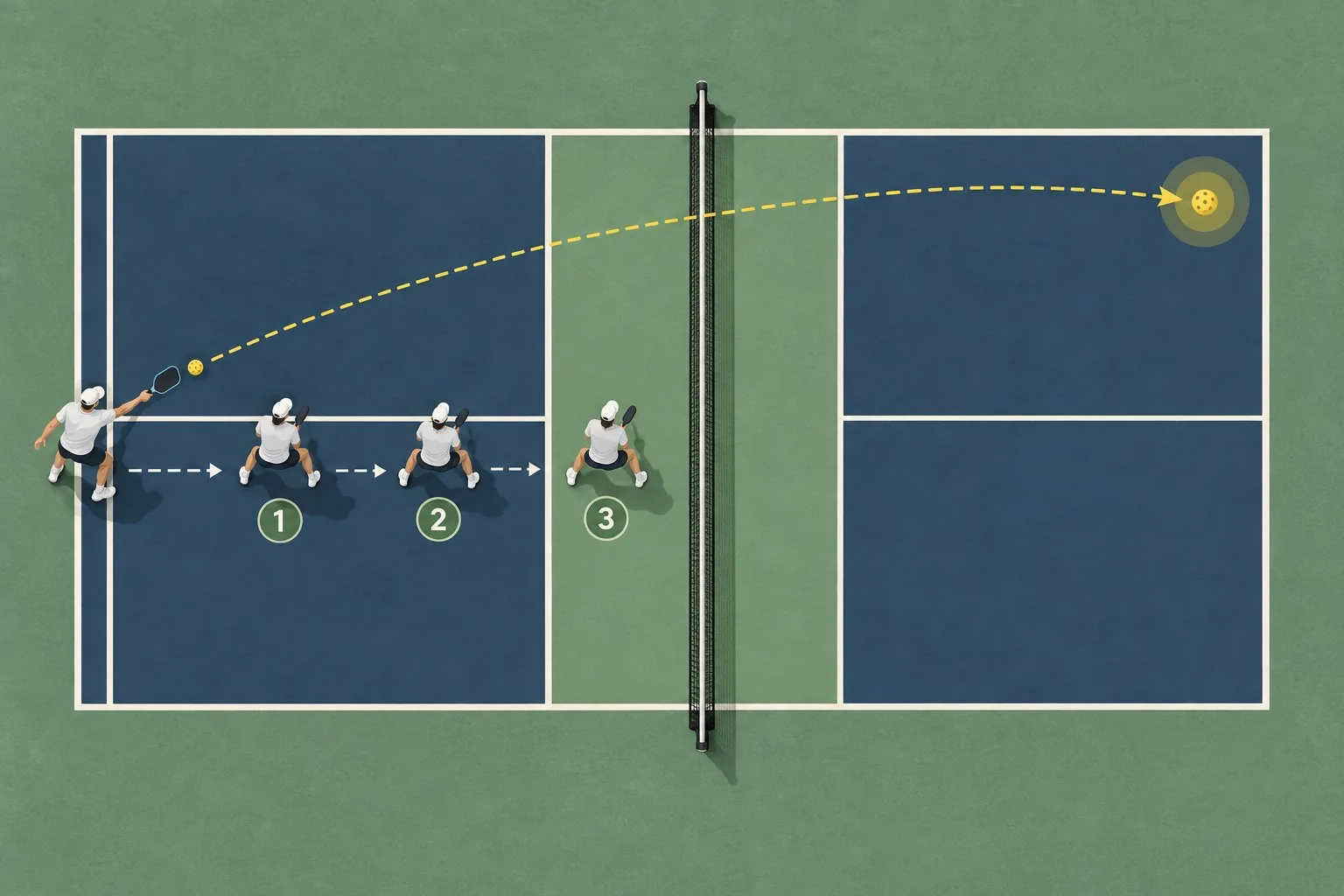
Use a simple three-stage drill. First, have a partner serve repeatedly while you send every return to one deep target. Count only balls that land deep and allow a balanced move forward. Second, keep the target but vary the serve depth, adjusting your starting position rather than forcing the same swing. Third, let the server play a controlled third shot. Your task is to arrive, split step, and respond without losing your paddle-ready posture.
Review each repetition with three questions: Did I contact in front? Did the ball clear the net with useful margin? Was I balanced when the opponent hit the next shot? Those questions reveal whether a miss came from technique, spacing, or a rushed decision.
Common errors are standing too close to the baseline, contacting behind the body, hitting a fast ball with no height, and walking forward after the return instead of moving with purpose. Fix one variable at a time. A deep, repeatable return with sensible height is a better foundation than an occasional spectacular shot. Once that foundation is reliable, change direction or pace only when the serve and your position make the choice comfortable.