Pickleball Return of Serve: Depth, Height, and the First Three Steps
Build a dependable return of serve with better spacing, useful depth, controlled height, forward movement, and progressive practice drills.
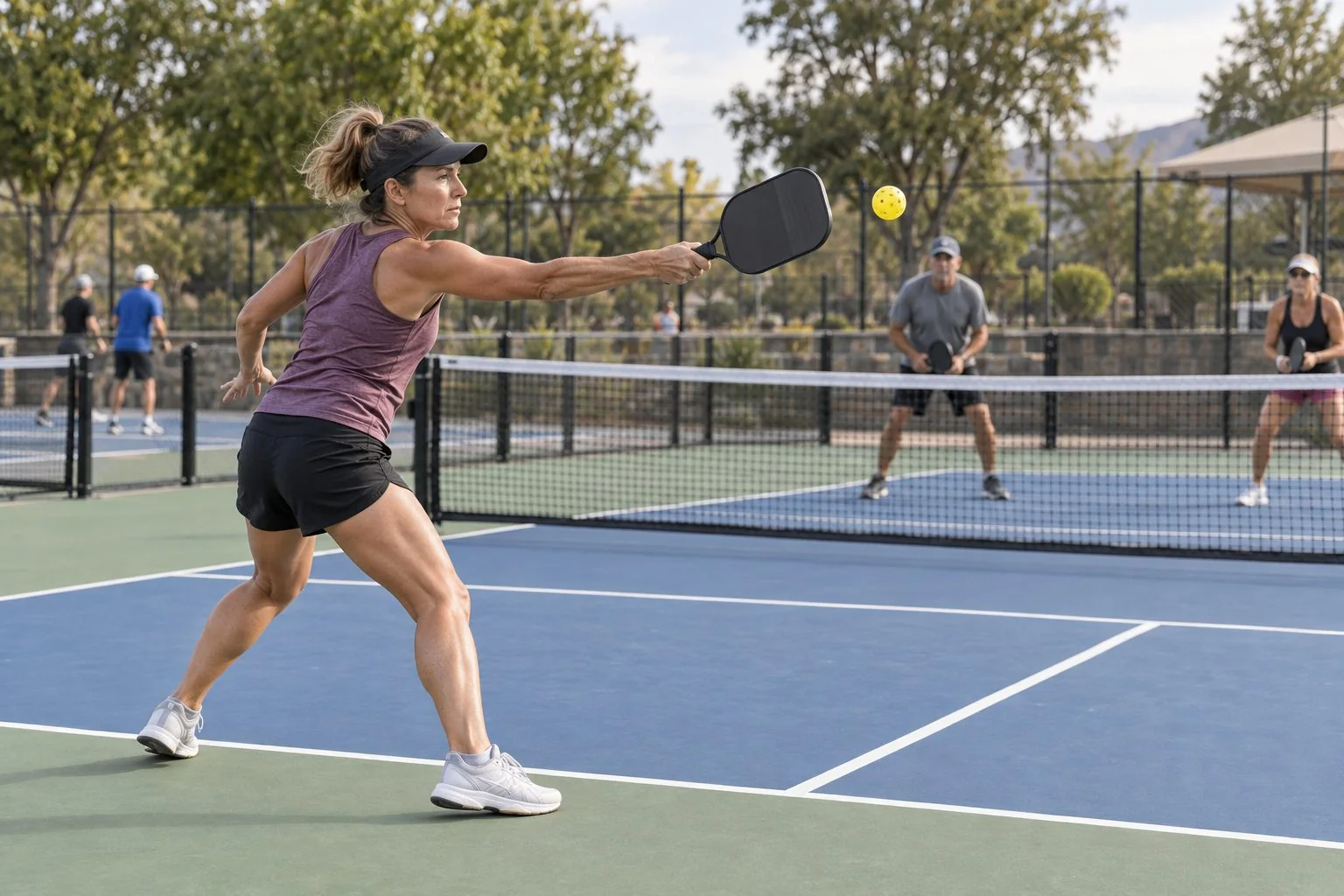
A dependable pickleball return of serve is not a contest to hit the hardest ball. Its job is to keep the ball in play with useful depth, give you time to move forward, and make the serving team earn its third shot. When the return, the footwork, and the next ready position work as one sequence, the opening exchange becomes much easier to repeat.
Start with space and a clear contact
Begin a little behind the baseline rather than standing with your toes on it. The exact distance depends on the server, the bounce, and the room behind the court. A deep server may require more space; a short server may let you step in. The principle is simple: give yourself room to move toward the ball so a deep serve does not force you to retreat through contact.
Stay athletic with the paddle in front and your weight balanced. Watch the server’s contact and the early flight of the ball, then use your feet to create comfortable spacing. If the serve is wide, move early instead of reaching. If it is deep, let the bounce finish enough that the ball remains in front of your body. A compact preparation is usually more reliable than a large backswing, particularly when the serve has pace.
Meet the ball in front with a stable paddle face and a controlled follow-through. You do not need to add maximum speed. A modest lift can provide net clearance and more flight time, while a flat return can work when you are balanced and already seeing the ball well. Choose the trajectory you can repeat. A return that lands in is more valuable than a brilliant attempt that gives away the rally.
Use depth and height to buy your transition
Aim for a broad target in the back portion of the service court, not a tiny strip beside the baseline. Depth keeps the serving team farther from the kitchen and makes their third shot more demanding. Leave enough margin inside the lines that you can repeat the pattern under pressure. If your return keeps landing short, look first at contact, spacing, and trajectory before trying to swing harder.
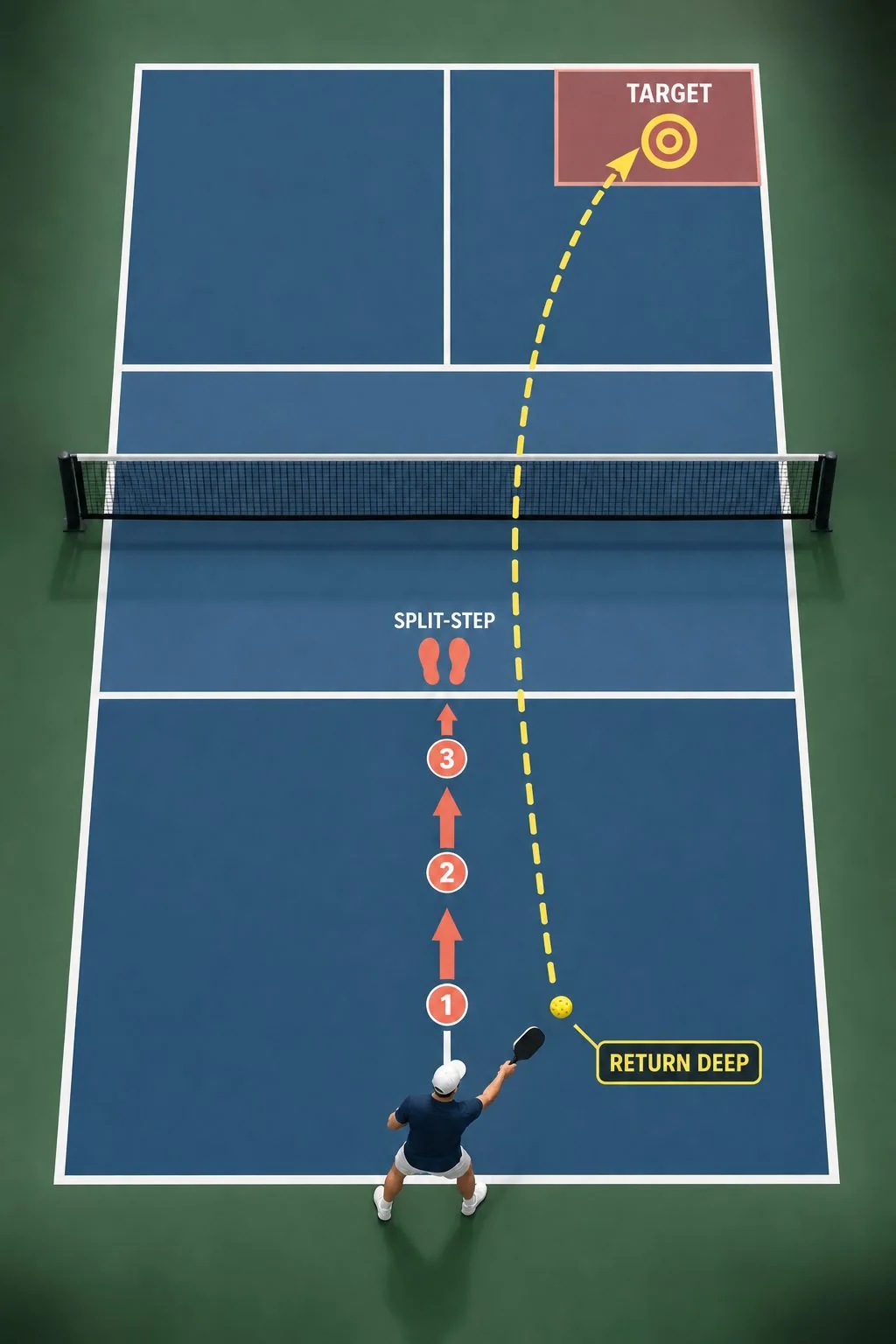
Crosscourt is often a comfortable default because the diagonal gives you more distance and margin. A middle return can reduce angles and create hesitation in doubles. Down the line is a situational choice when you have a specific read, such as an opponent leaving the alley open. Direction matters, but it comes after keeping the ball deep and giving your team time to establish position.
As soon as the ball leaves your paddle, move forward with purpose. Think of the return as the first step of your transition, not the end of the play. Take a few controlled steps toward the kitchen, then slow down and split-step as the serving team prepares to strike the third shot. You want to be balanced when the next ball arrives. Running through contact with the next shot is a common way to lose control, even after an excellent return.
Build the pattern with progressive practice
Start with a large target zone in the back third of the court. Have a partner serve twenty balls while you count only returns that land in, reach the target area, and let you begin moving forward under control. Do not shrink the target until the larger pattern is stable. The score belongs to this drill; it is not a prediction of match performance.
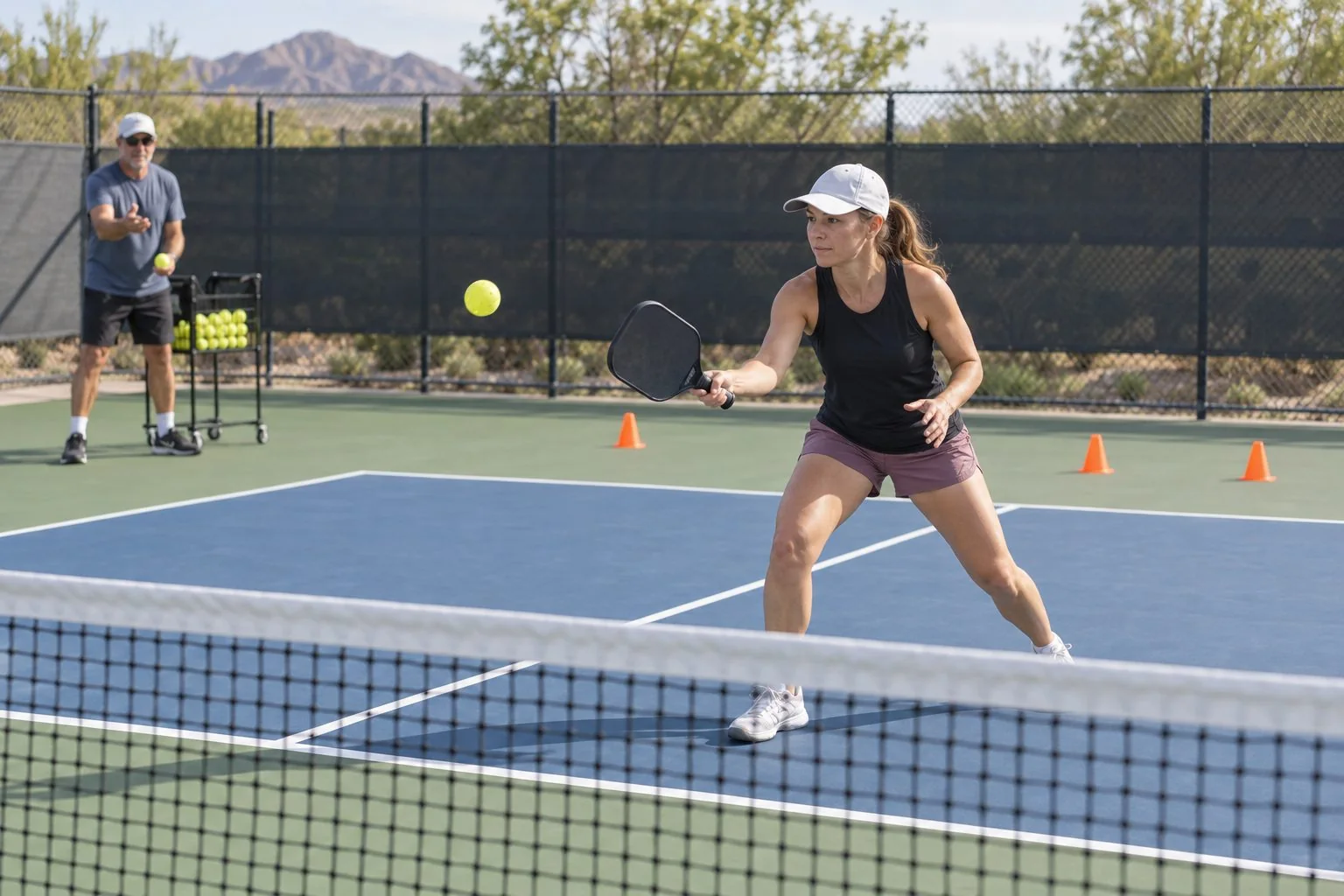
Next, add a transition cue. After each return, take your first steps immediately, then freeze in a balanced split-step when the feeder makes contact. Have the feeder vary the third shot so you must read rather than run automatically. If the return is short, stop earlier and prepare for a drive. If it is deep and your body is organized, continue toward the kitchen.
Keep a short error log after the session: late preparation, poor spacing, a short landing, a rushed swing, or a split-step that came too late. Work on the most frequent cause for the next practice. The best return of serve is usually quiet and repeatable: read early, make clean contact, send the ball deep with margin, and arrive ready for the next shot.