Pickleball Return-to-Kitchen Timing: Split on Contact, Not on the Bounce
Use the opponent’s contact as your movement cue: a timing-focused guide to advancing after the return, stabilizing before the kitchen, and choosing when to reset.
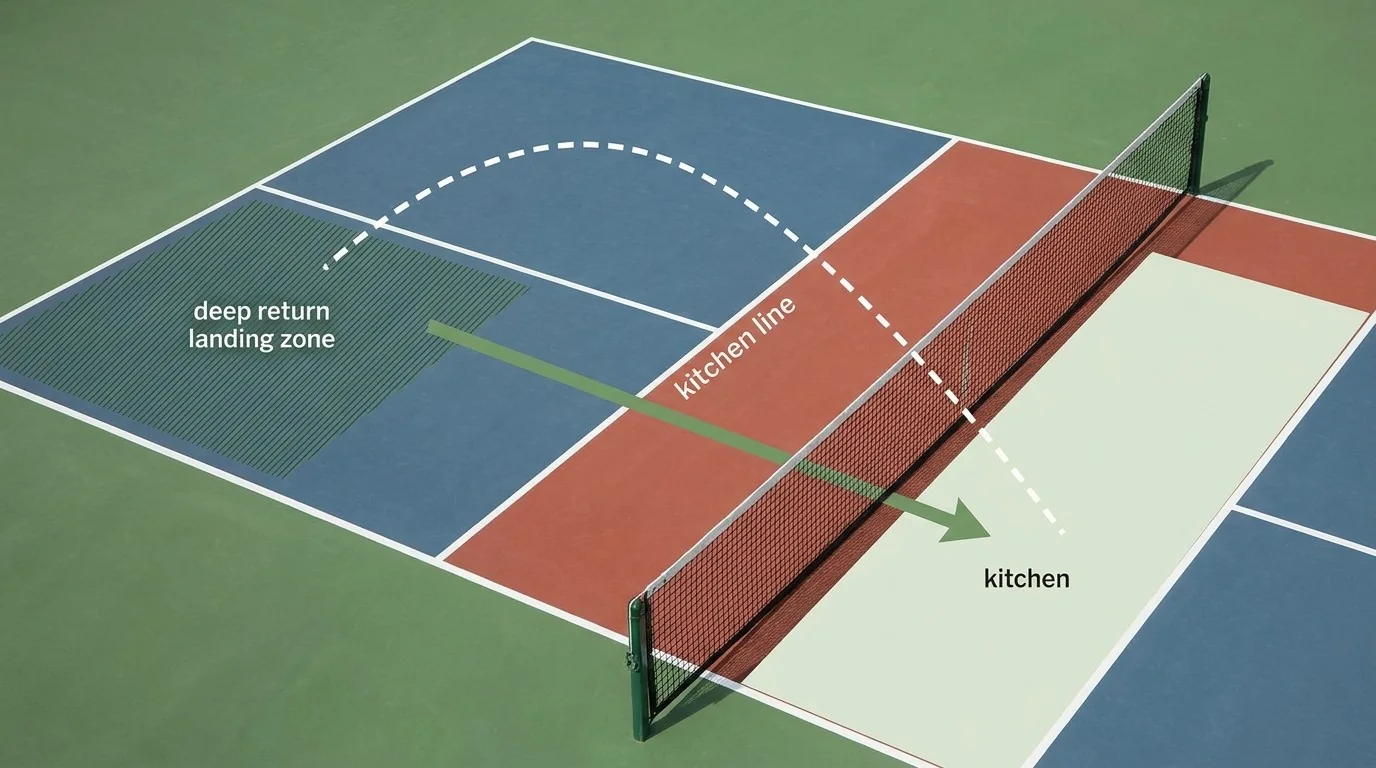
Your return is only half the job. After you send it deep, you still have to get from the baseline toward the kitchen without arriving late, over-running the ball, or leaving your partner alone in the middle. Treat the return and the recovery as one pattern: hit with margin, read the opponent’s contact, split as the ball is struck, and then cover the space that the next shot can actually reach.
Use depth to buy time
A deep return keeps the serving team farther from the kitchen and gives you more time to move forward. Aim inside the baseline instead of trying to catch the paint. A repeatable return with room for error is more useful than a perfect-looking ball that lands out.
Keep your preparation compact so you can move as soon as the ball is away. Finish in balance, watch the opponents, and take your first steps when you know the return is safe. Do not stop to admire the shot, but do not sprint blindly either. The return starts the recovery; it does not finish it.
Split on the opponent’s contact
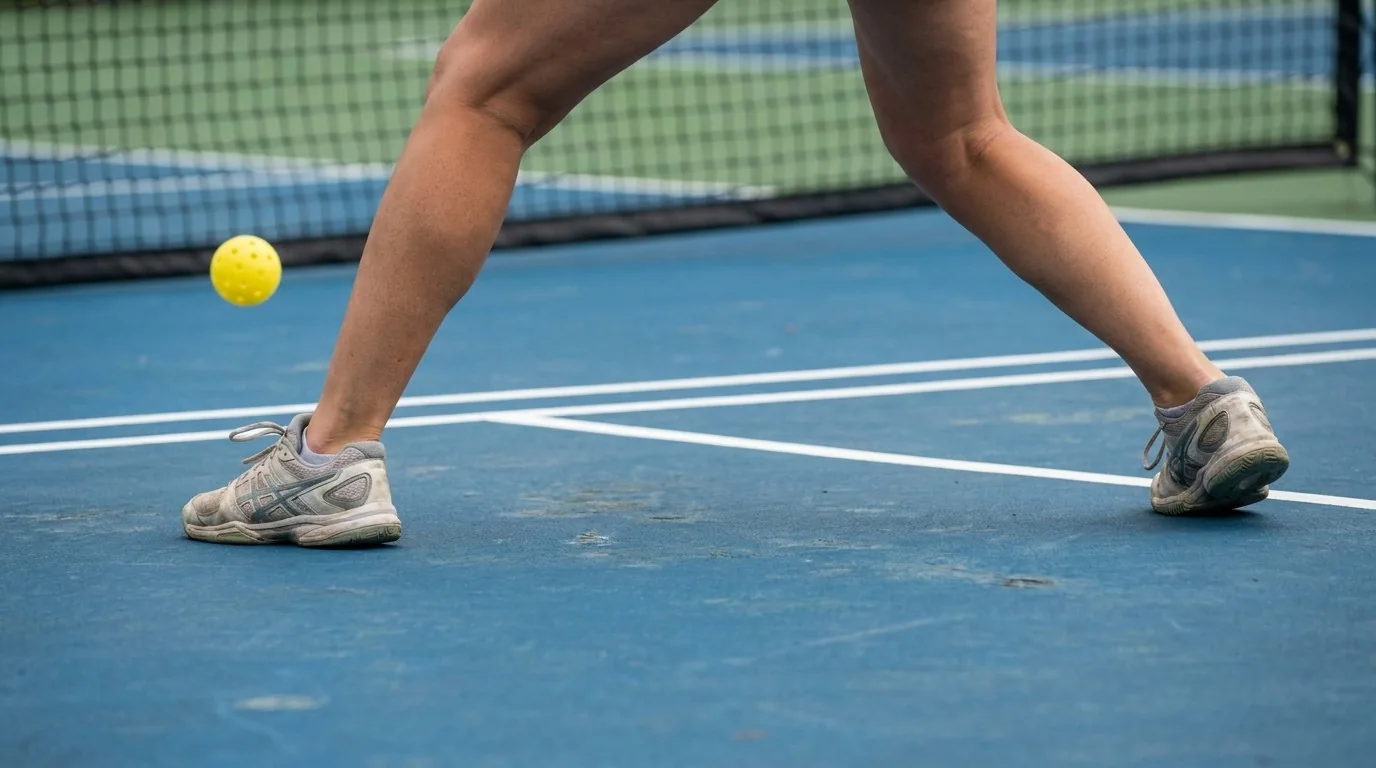
The split step is a small, balanced landing that leaves both legs ready to move. Time your feet so they are settling as the opponent contacts the ball. If you land too soon, you are stuck while the ball is still traveling. If you are still running through contact, your next change of direction will be late.
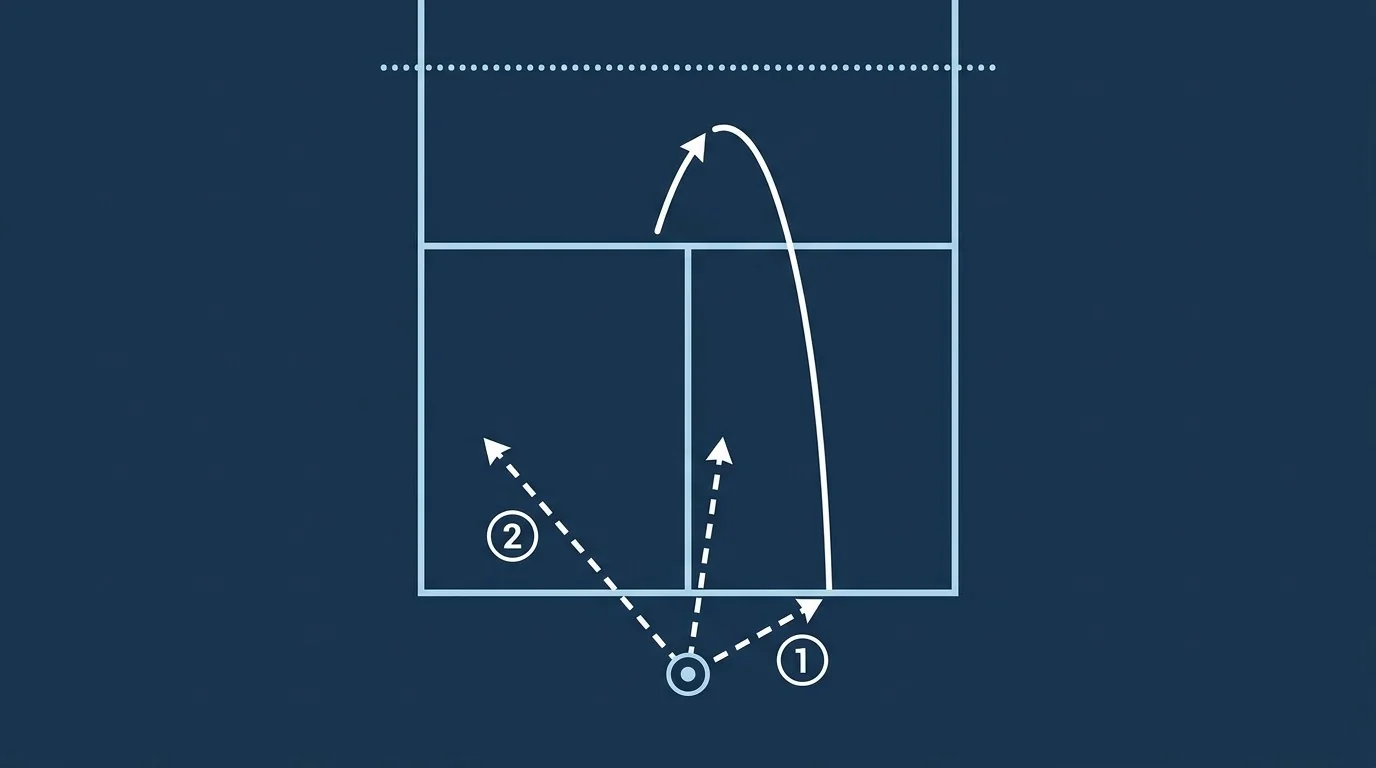
Once you land, read the ball before choosing your next step. A drive at your feet may call for a block or reset rather than a full run forward. A high, slower ball may give you time to advance. A wide ball can pull you away from the middle, so recover toward the angles the opponent can actually use instead of chasing a fixed center mark.
Move with your partner
In doubles, the returner should not race so far forward that a short ball leaves a large gap behind. Your partner should adjust with you, protect the middle, and cover the most dangerous open lane. Call early when a ball is clearly yours, and agree before the point who takes a ball between you.
As you approach the kitchen, shorten your steps. Stop and split before the next contact rather than running through the line. Balanced spacing gives each player room to handle the ball without a collision or an open center.
Correct the usual recovery errors
- Running without reading: use the opponent’s contact as the trigger for the split and the next direction change.
- Stopping too far back: move forward in stages after a deep return, then stabilize before the next shot.
- Forcing the kitchen approach: choose a reset when the ball is low or fast instead of forcing a difficult attack.
- Opening the middle: communicate and shade toward the highest-value gap with your partner.
- Arriving upright: lower your center of mass, use short adjustment steps, and finish ready for either side.
Practise the whole sequence
Start with cooperative feeds. Hit a deep return, take two or three controlled steps, and make the split as the feeder contacts the next ball. The feeder can send that ball wide, toward the middle, or at your feet. Score the quality of the decision and the balance of the recovery, not only the depth of the first return.
Then progress to live returns with one simple rule: advance only while the ball and your body position support the move. If the next ball is low, reset and recover. If it is high enough, keep moving forward. End every repetition in a ready stance so the drill teaches the complete pattern: return, read, split, cover, and recover.