Pickleball Returner Split Step: Brake Before the Kitchen Line
A practical guide to the pickleball returner split step: choose deep return targets, make balanced contact, move forward safely, and practise under pressure.
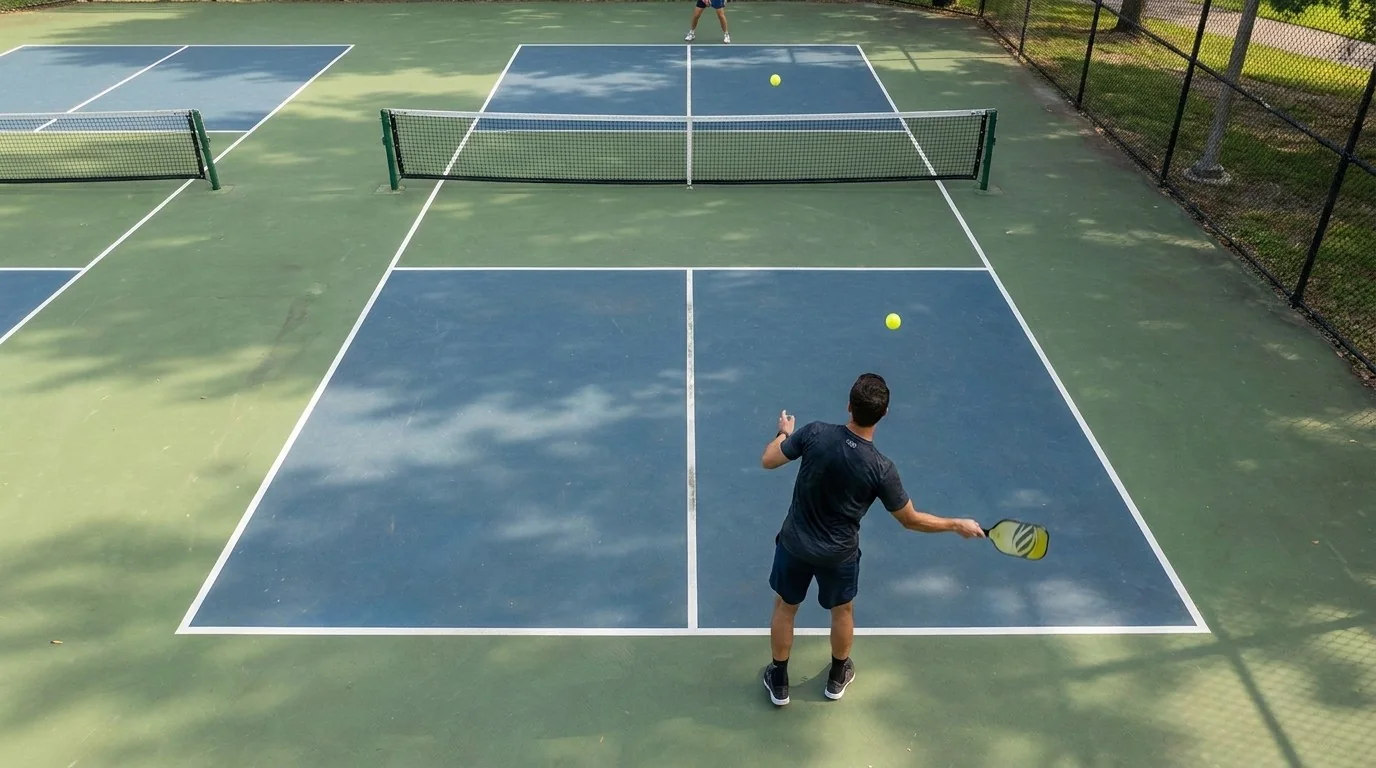
A deep return can give the receiving team time to move forward, but the advance only works if you can stop before the next contact. The split step is that brake. After you send the return, move in under control, then land with your weight available in both directions before the serving team hits the ball. The objective is not to run to the kitchen line at any cost. It is to arrive balanced enough to handle the shot that comes back.
Start with a target that leaves room
Choose a broad landing area before the serve arrives. The deep middle is often a practical choice because it reduces the opponent's angle and may force a communication decision. A deep backhand-side return can also work when that side is less comfortable for the opponent. Neither target is worth aiming at the line if the extra precision makes the return unreliable.
Leave several feet of space inside the baseline and give the ball enough height to clear the net safely. A return that lands deep consistently is more useful than one that occasionally reaches the back line and often misses. Use a wider angle only when your contact and balance support it.
Build depth with an early, stable contact
Prepare with the paddle in front and turn the shoulders early enough to meet the ball without reaching behind your body. Let the ball enter a comfortable contact window. A compact swing, a steady paddle face, and a balanced base usually create better depth than a rushed attempt to hit as hard as possible.
Drive the stroke with the legs and rotation, then finish toward the chosen target. If the return floats high, check whether the paddle face opened or contact came late. If it lands short repeatedly, check whether you are falling backward or slowing the swing before contact. Small adjustments are easier to repeat than simply telling yourself to add power.
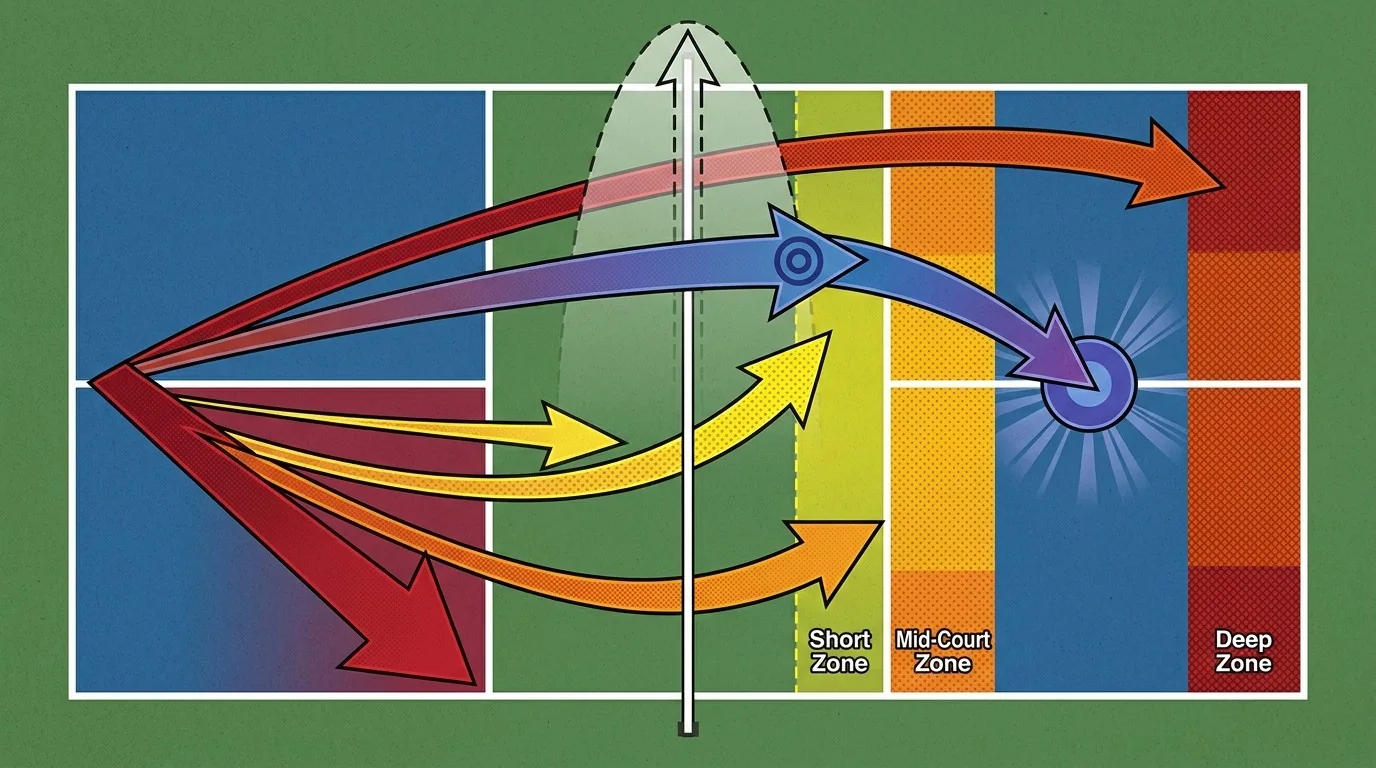
Let the serve change the decision
Deep is a reliable default, not a rule for every ball. When the serve is short, step in and take it early while keeping your base underneath you. When the serve pulls you wide, a higher-margin crosscourt return may give you more distance and time. If you are late or stretched, choose a ball that clears the net safely and buys enough time to recover.
Also watch the server after contact. A server who stays deep may be vulnerable to a return that makes the next movement longer. A server already moving forward may be better challenged by a lower, deeper ball that limits an easy third-shot attack. Keep your eyes available for the opponents as you recover instead of staring only at your own return.
Use the split step as a brake
After contact, move forward with short, controlled steps. Do not sprint through the kitchen line or continue moving just because the return was deep. As the opponents approach their likely contact, make the split step: widen the base slightly, soften the knees, and land balanced. Your paddle should be in front and ready for either side.
The timing matters more than the size of the hop. Land before the opponent's contact, not after the ball is already on its way to you. If you are still running when the opponent strikes, you cannot change direction efficiently. If you stop too early, you may leave yourself too far from the kitchen line. Use the ball and the opponent's preparation to decide when to settle.
In doubles, communicate with your partner and advance together when the situation allows. Keep useful spacing so the middle is not left open, but do not force both players forward when one of you is stretched or the ball is attackable. The split step gives each player a stable moment to read the next shot.
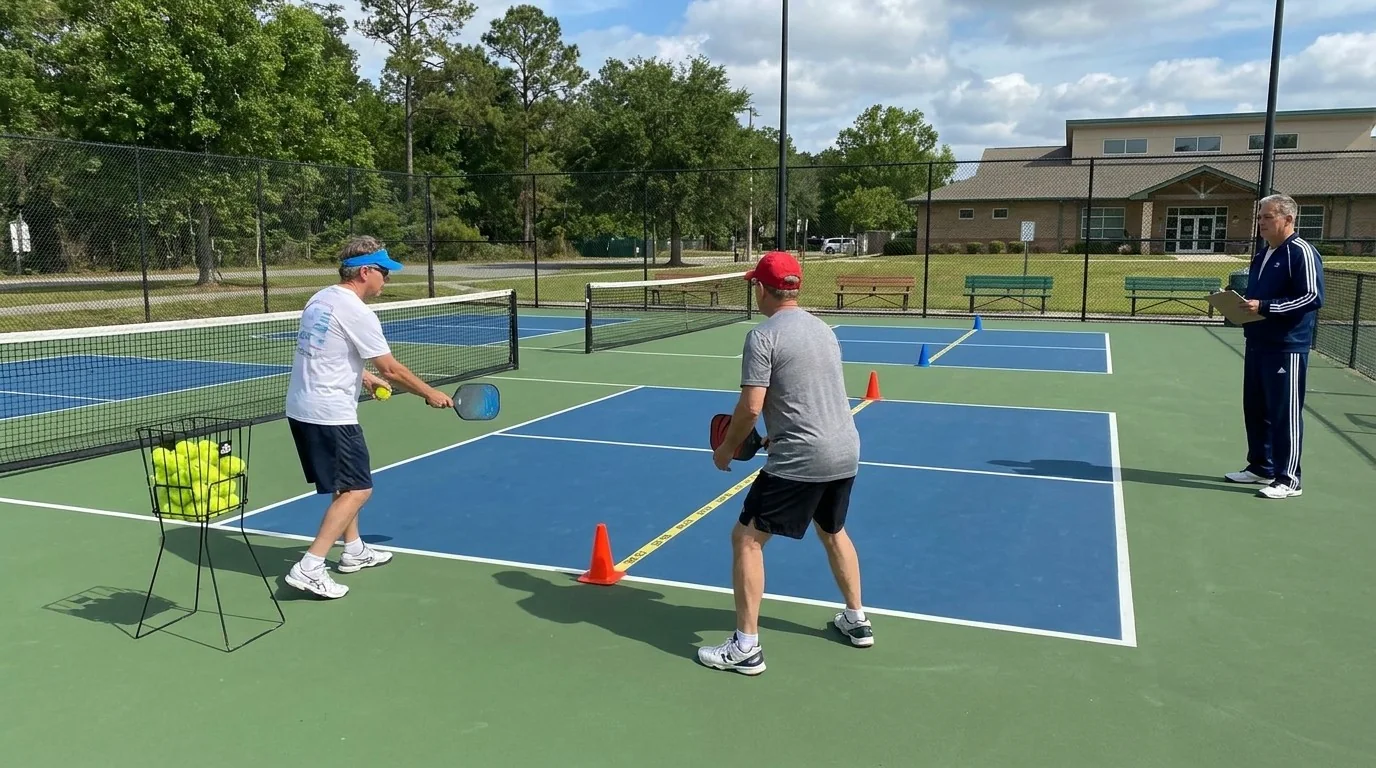
Practise the return and the stop together
Place a broad target between the service line and baseline on the opposite side. Have a partner serve cooperatively and hit ten returns. Score one point for landing in the target, another for a low enough trajectory to limit an attack, and another for reaching a ready position before the feeder's next contact. Keep the scores separate so a deep ball does not hide poor recovery.
Next, vary the serve between the body, forehand, and backhand. Keep the same large target choices, but allow a safer crosscourt return when the ball pulls you wide. Before each feed, start from a neutral receiving stance. After each return, move forward and make the split step before the partner's contact.
Finish with a cooperative point. The receiving team must return deep, advance under control, and settle before playing the rally normally. If the ball is short, stretched, or clearly attackable, use the safer decision rather than following the drill mechanically.
A good return pattern has four parts: a target with margin, balanced contact, controlled movement, and a split step timed to the opponent's contact. The return is not finished when the ball crosses the net. It is finished when you are ready for what comes next.