Pickleball Roll Volley: Add Topspin to Low Kitchen Attacks
Learn when to choose the roll volley, how to create topspin from a compact kitchen-line swing, and how to target opponents’ feet without forcing the shot.
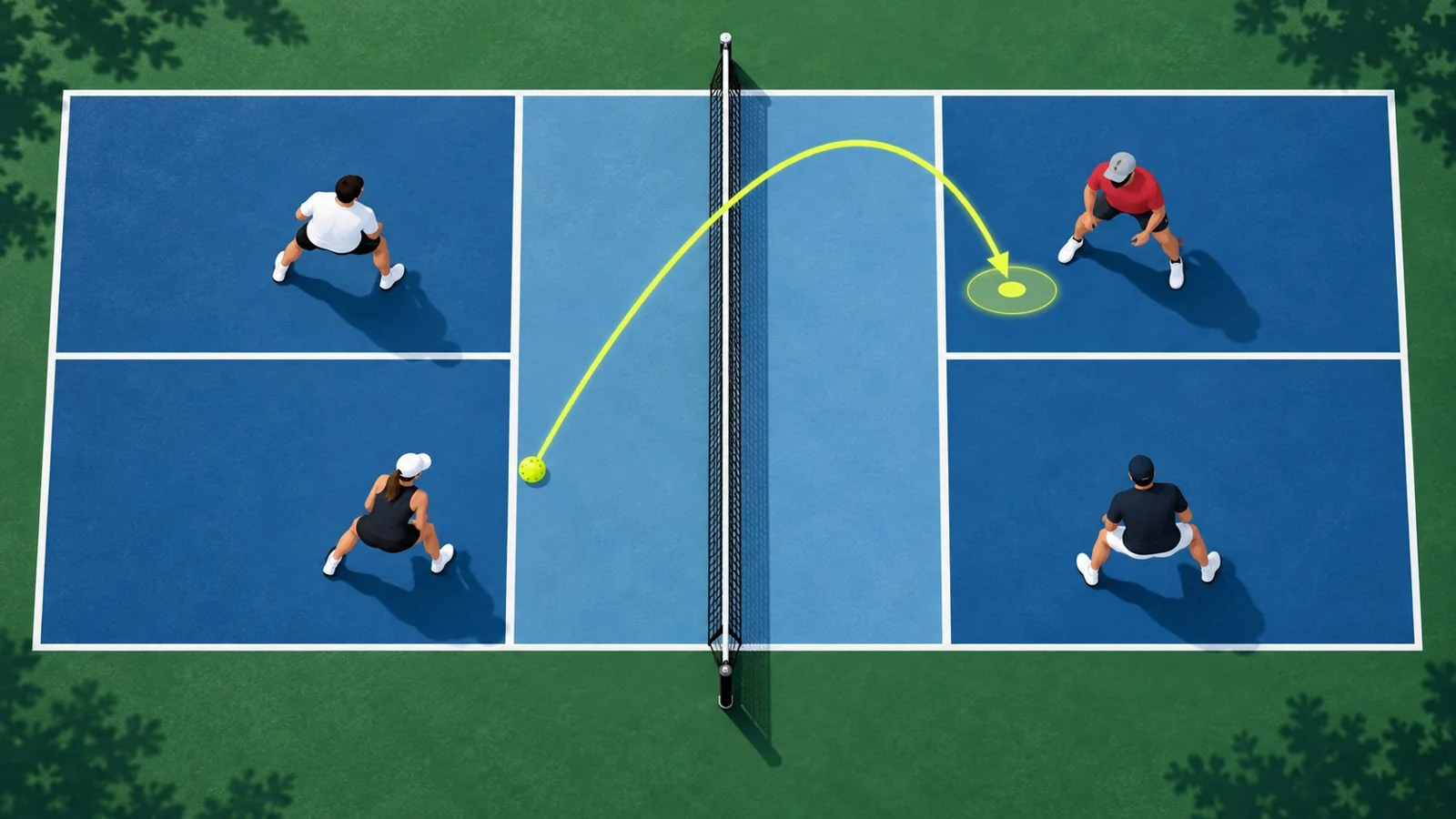
The pickleball roll volley gives you an attacking option when a kitchen-line ball is too low for a comfortable flat punch but still high enough to clear the net. Instead of simply blocking, you brush up and forward to create topspin. The ball travels with a useful arc, drops sooner, and can arrive at an opponent’s feet with a lower, less comfortable bounce.
Know when the roll is the right choice
Think of the roll volley as a specific tool, not a replacement for every volley. A ball above net height may be easier to punch or snap. A ball between the top of the net and roughly hip height can suit a compact roll when you are near the non-volley zone. A ball well below the knee is usually better handled with a reset or drop, because forcing a large upward swing leaves too much room for a net error.
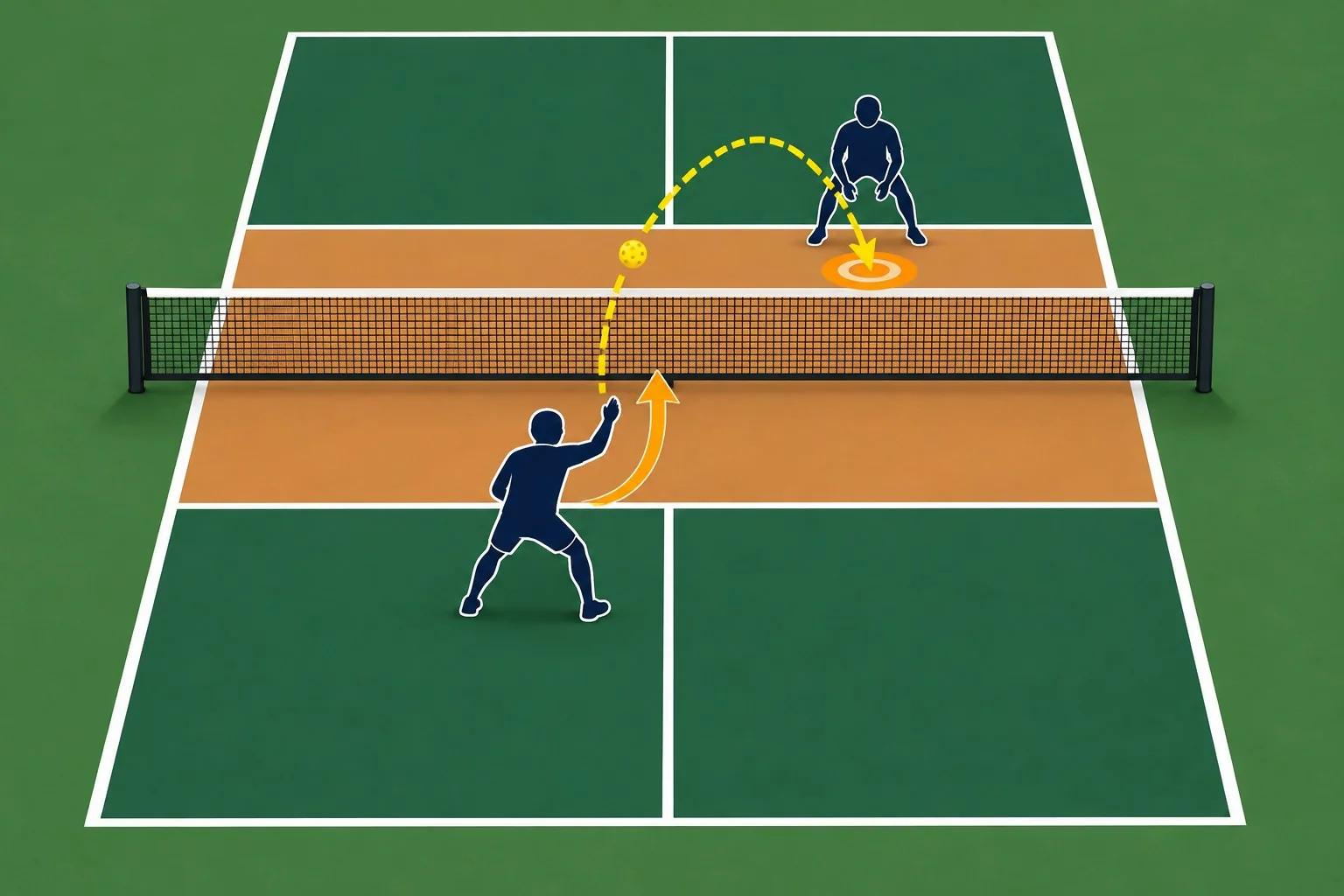
The opponents’ position matters as well. A roll is especially useful when they are deep or moving through the transition area: the dipping, skidding ball can keep them back and make a low contact harder. If they are already settled at the kitchen, a flat speed-up or a controlled angle may create a better problem. Read height and court position before committing.
Build the forehand roll
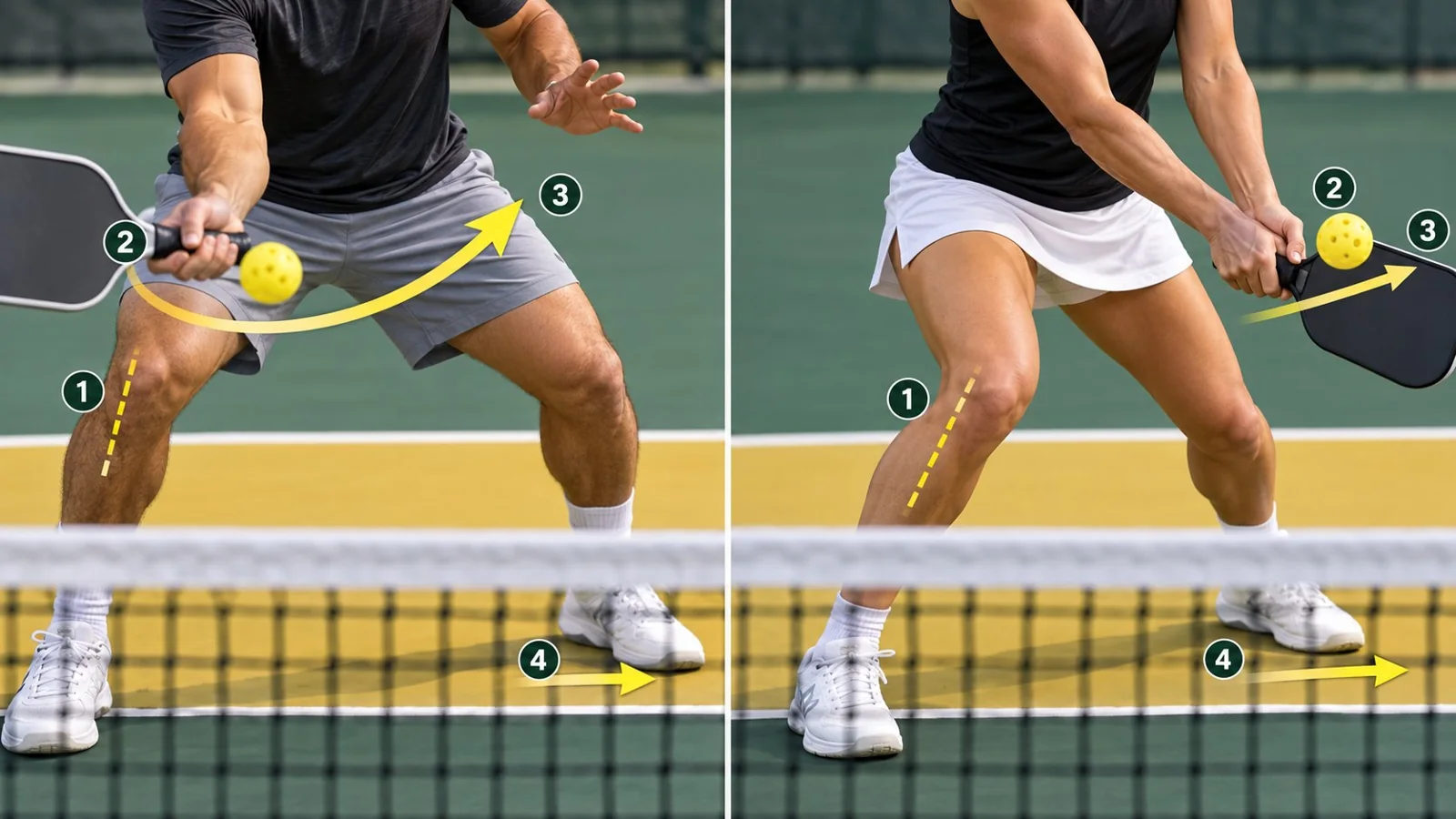
Use a comfortable continental or slightly forehand-oriented grip and keep the preparation compact. Let the paddle head begin below the incoming ball, then drive forward and upward. The shoulder and upper arm start the motion; the forearm rotation adds the finishing roll. Avoid trying to manufacture all the spin with a sudden wrist snap.
Make contact in front of your body, not beside your hip or behind it. Keep your knees flexed and your head steady while the paddle rises through the ball. Finish toward the target at a controlled height rather than wrapping into a large loop. Aim a few feet beyond the net and toward the opponent’s feet, where the dipping flight can force a defensive lift.
Add the backhand and fix common errors
The backhand uses the same low-to-high principle, but the hitting shoulder drives across the body. Keep the elbow relatively close rather than letting it flare wide. The arm and shoulder provide the main movement; a small forearm rotation completes the topspin. Contact remains in front, and the follow-through should stay compact enough for you to recover quickly.
Three errors are especially common. First, a wrist-led swing may look lively but loses stability when the ball arrives fast or away from the body. Lead with the shoulder and arm instead. Second, an oversized backswing costs time and balance; the roll needs a short preparation, not a groundstroke loop. Third, players often roll the wrong ball. Use a punch or snap for a comfortable high ball, and reset when the ball is too low to lift safely.
Start with shadow swings, keeping the paddle path short and the contact point in front. Then have a partner feed balls at mixed heights. Call “punch,” “roll,” or “reset” before each contact so the drill trains both recognition and mechanics. Finish with controlled kitchen exchanges and focus on a low landing near the feet rather than maximum pace. The reliable roll volley is compact, selective, and balanced through recovery.