Pickleball Serve Placement: Choose Targets That Set Up the Third Shot
A practical guide to pickleball serve placement: build a deep default, choose targets by receiver, practise with zones, and connect each serve to the third shot.
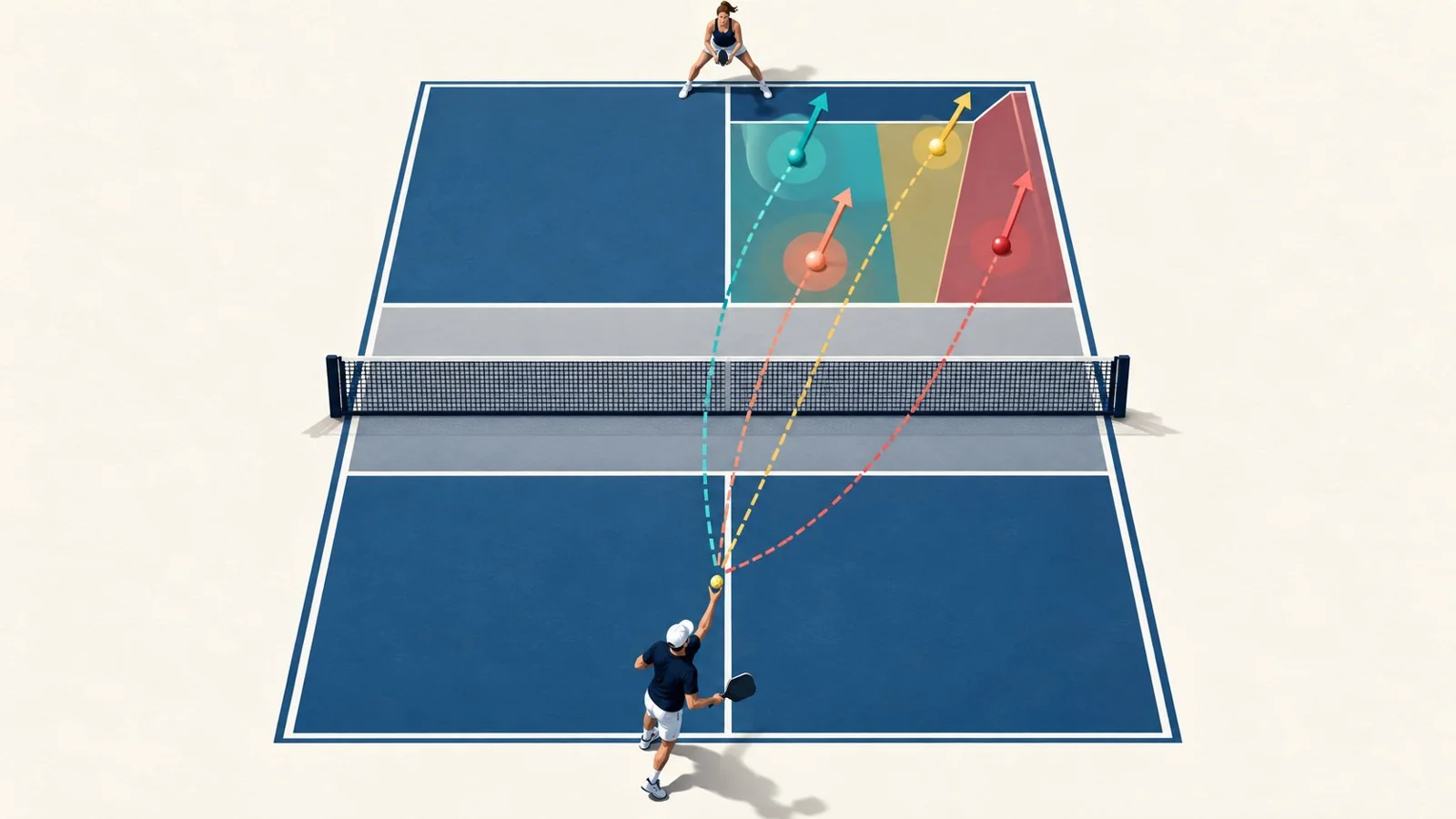
The pickleball serve placement is less about chasing an ace than about shaping the return you want. A good serve gives the receiver a difficult starting position, protects your margin, and leaves you with a clearer plan for the third shot. Start with depth, choose a useful lateral target, and keep your preparation calm enough to repeat.
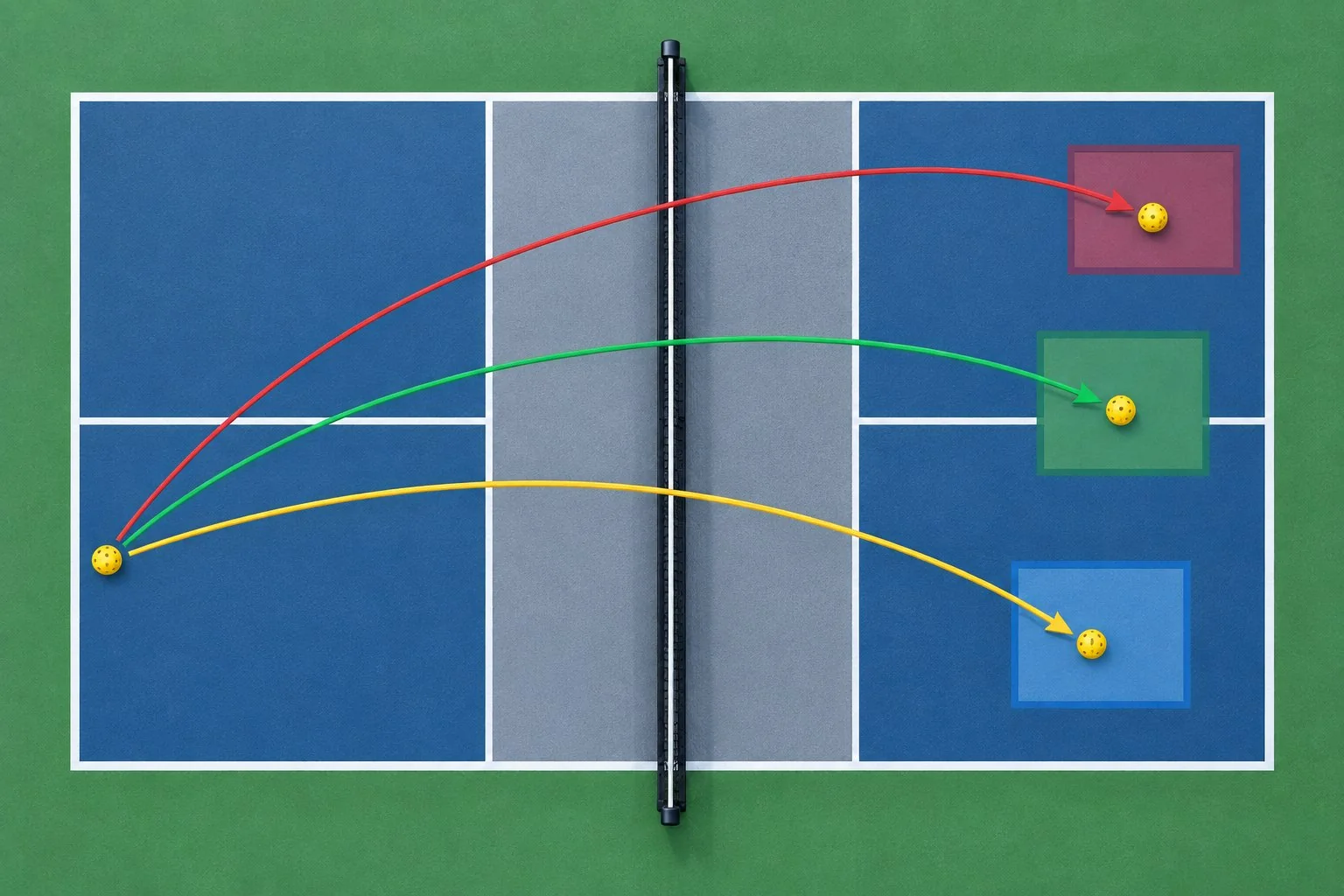
Put depth before decoration
Aim for the back third of the diagonal service box, leaving a practical cushion from the baseline and sideline. A deep ball pushes the receiver back and makes it harder to step forward into a comfortable return. If you are deciding between a spectacular angle and a reliable deep serve, choose the deep ball first. Placement only matters when the serve remains playable.
The deep middle or T area is a strong default because it gives you room on both sides and can create hesitation in doubles. A deep backhand target is another useful option when the receiver shows a less dependable backhand. Do not aim at the paint itself. Pick a zone inside the lines so a small miss still produces depth.
Match the target to the receiver
Watch the receiver before beginning your motion. Note which side they protect, whether their paddle is already prepared for a forehand, and whether they stand deep or close to the baseline. A body serve can jam a player who likes a large swing. A wide serve can pull a stationary receiver off court, but it needs more precision and should be a change-up rather than your only pattern.
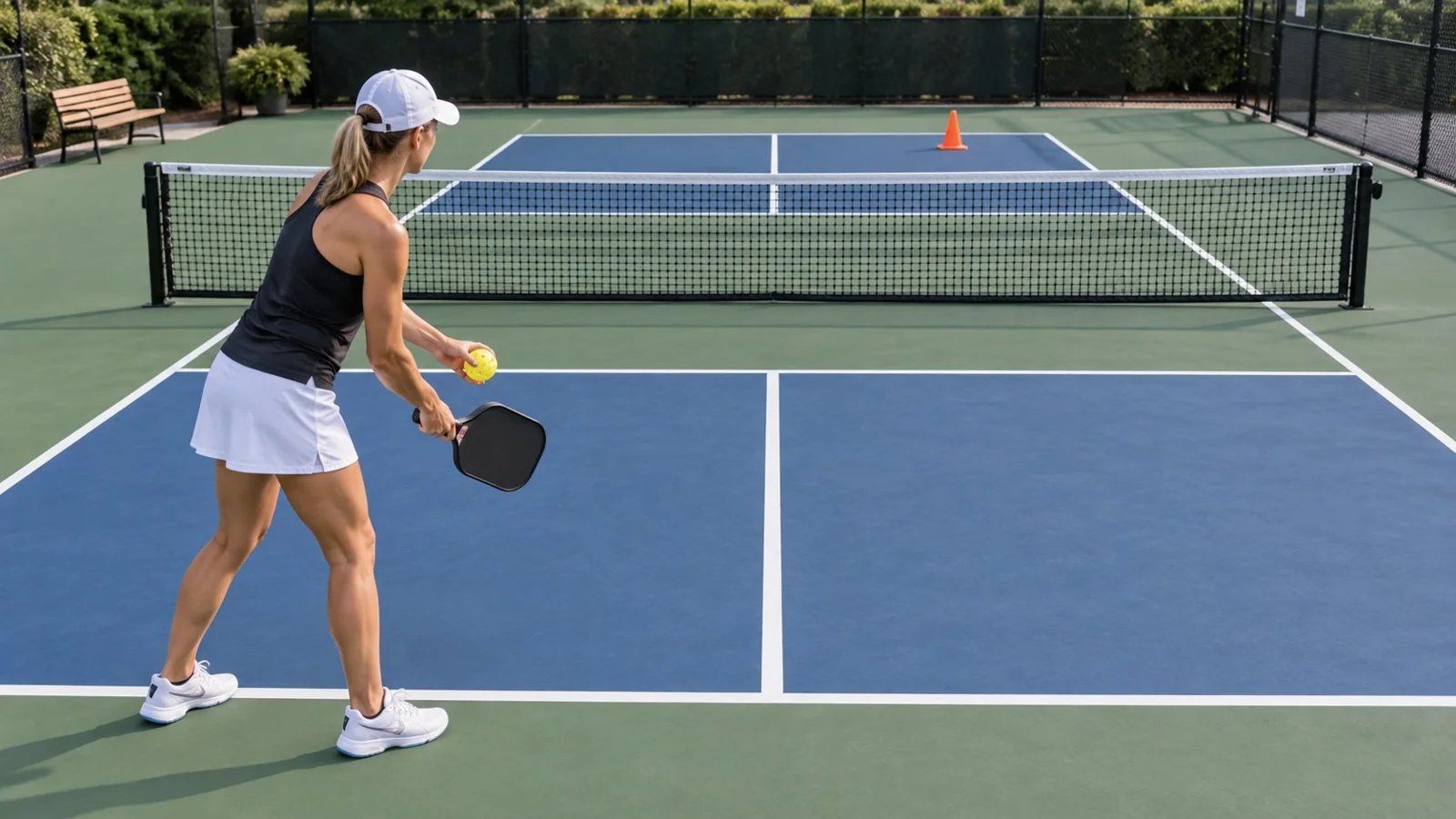
Your target should also connect to your next ball. A deep serve to the backhand may invite a shorter return that you can attack or drop. A wide serve may open a crosscourt lane but can also leave you covering more court. Decide where you expect the return before serving, then adjust when the actual ball tells you something different.
Keep the same visible setup for different targets. If your stance, toss, or swing changes dramatically when you go wide, the receiver can lean early. Deception here is simple: look the same, change the target with controlled contact, and do not sacrifice legality or balance for disguise.
Train placement with feedback
Use cones, towels, or court-safe markers to create generous target zones. Begin with ten serves to the deep middle, then ten to the backhand area, and finish with ten alternating between middle and wide. Record serves in, target hits, and faults. The number is useful only if the target remains realistic; shrink the zone gradually as your control improves.
Practise the complete routine, not just the arm motion. Start from the same position, settle your feet, visualize the zone, serve, and finish balanced. Add a partner who returns every ball, because a placement is meaningful only when it changes the next exchange. Call your intended target before serving, then check whether the return matched your plan.
Common mistakes include serving short while chasing speed, aiming at corners with no margin, changing the setup for every direction, and watching the ball instead of preparing for the return. Correct them in that order: recover depth, widen the target, repeat the motion, and move into your third-shot position.
A reliable serve is a decision-making tool. Build one deep default, add a body or wide variation when the receiver gives you a reason, and connect every target to the next position. With structured repetitions, pickleball serve placement becomes less guesswork and more point construction.