Pickleball Serve Spin: How to Control the Bounce
Learn pickleball serve spin: control the paddle path, choose a safe target, read the bounce, and measure practice without chasing risky rotation.
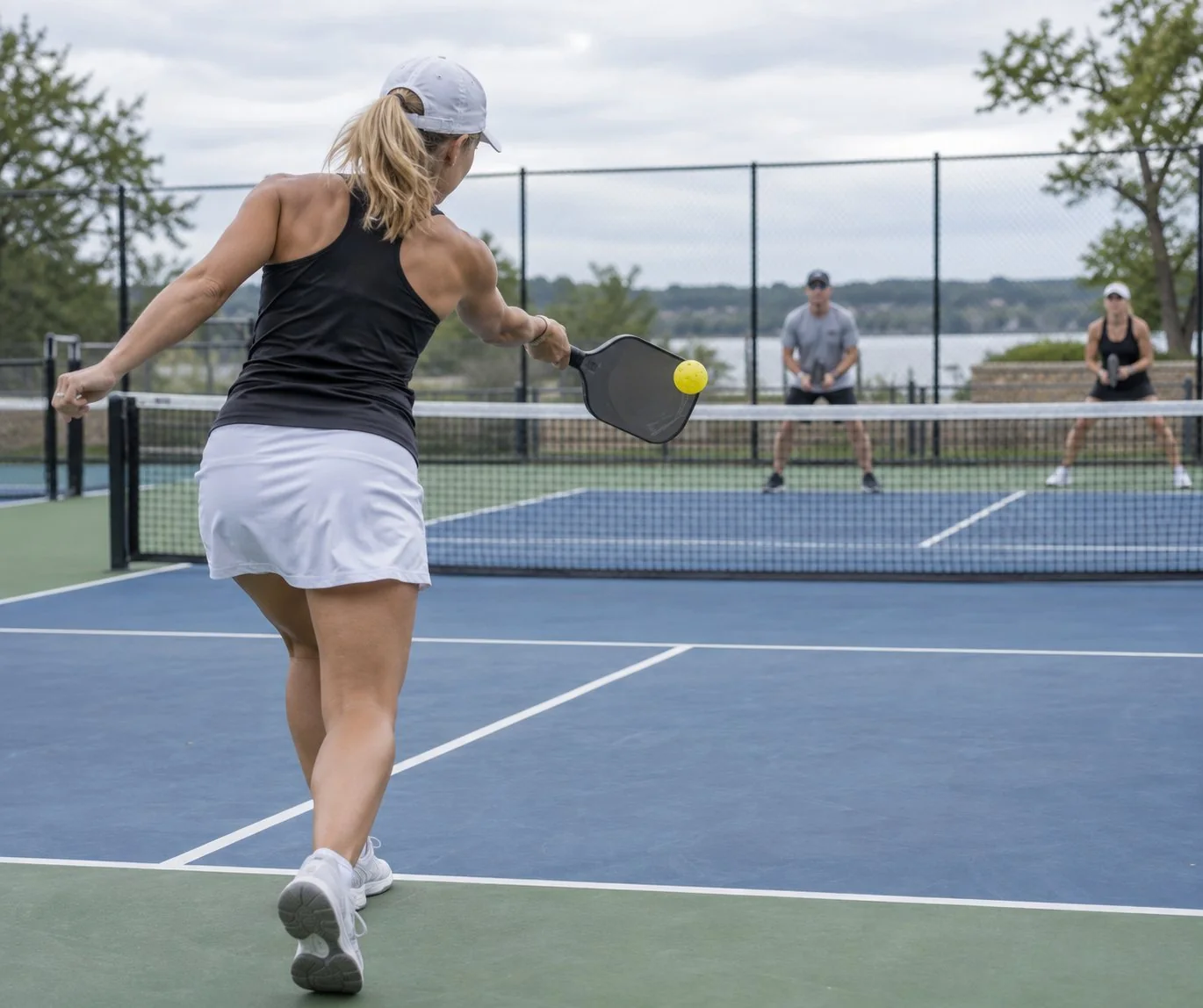
pickleball serve spin is easier to control when the paddle path stays compact and the contact point remains predictable. Spin can change the bounce, but a repeatable serve with margin is more useful than a dramatic rotation you cannot place.
What does serve spin change?
A spinning serve can make the bounce move or stay less comfortable for the receiver, depending on contact, surface, and conditions. Treat that as a tactical possibility, not a guaranteed effect. Your first job is still to clear the net and land the serve in the correct diagonal court.
Keep the release visible and use a stable stance behind the baseline. The paddle should travel through the ball rather than cutting across it wildly. A small adjustment in face angle can change height more than extra wrist action.
How do you control the bounce?
Contact in front of the body and finish toward a generous target. If the ball leaves high, reduce the upward path before adding more spin. If it lands short, improve body support and direction before squeezing the handle. Recovery starts as soon as the ball is struck.
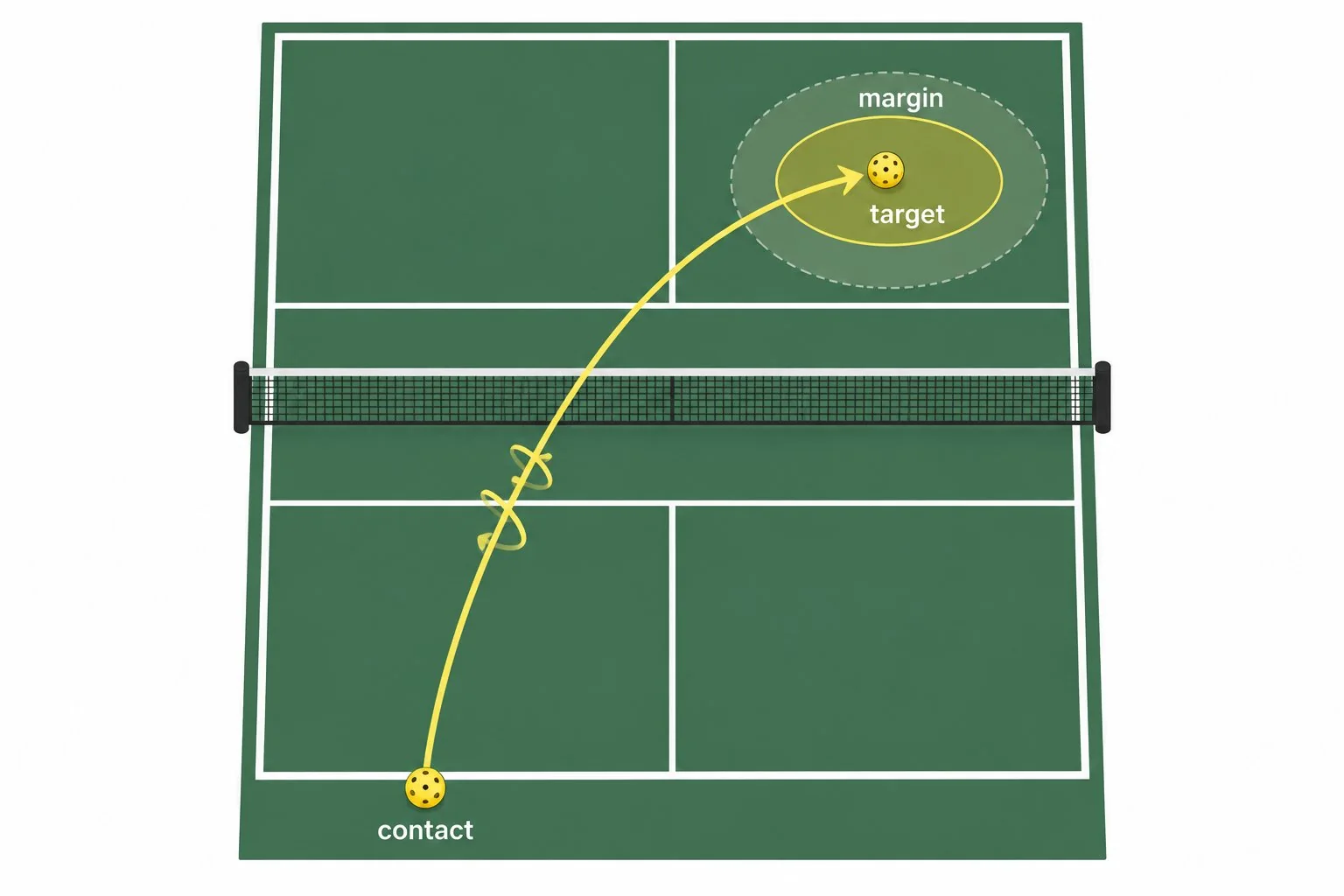
Run a measured block of 20 serves. Count balls that clear the net, land in the chosen deep zone, and leave you balanced. If 14 qualify, the practice result is 14 ÷ 20 = 70%. Record net faults, short serves, and long serves separately because each points to a different adjustment.
When should you use less spin?
Use a simpler serve when wind makes the bounce unpredictable, when your contact is late, or when the receiver is already uncomfortable with pace. Spin is not a requirement for a legal or effective serve. In doubles, agree on a target call before serving so the partner can anticipate the next position.
Which drills build consistency?
Serve 10 balls to each diagonal target, then repeat with a partner calling the target late. If your first set produces 8 and 6 valid serves and the second produces 7 and 7, compare 80%, 60%, 70%, and 70%. Change one cue at a time. Stop if pain changes the motion.
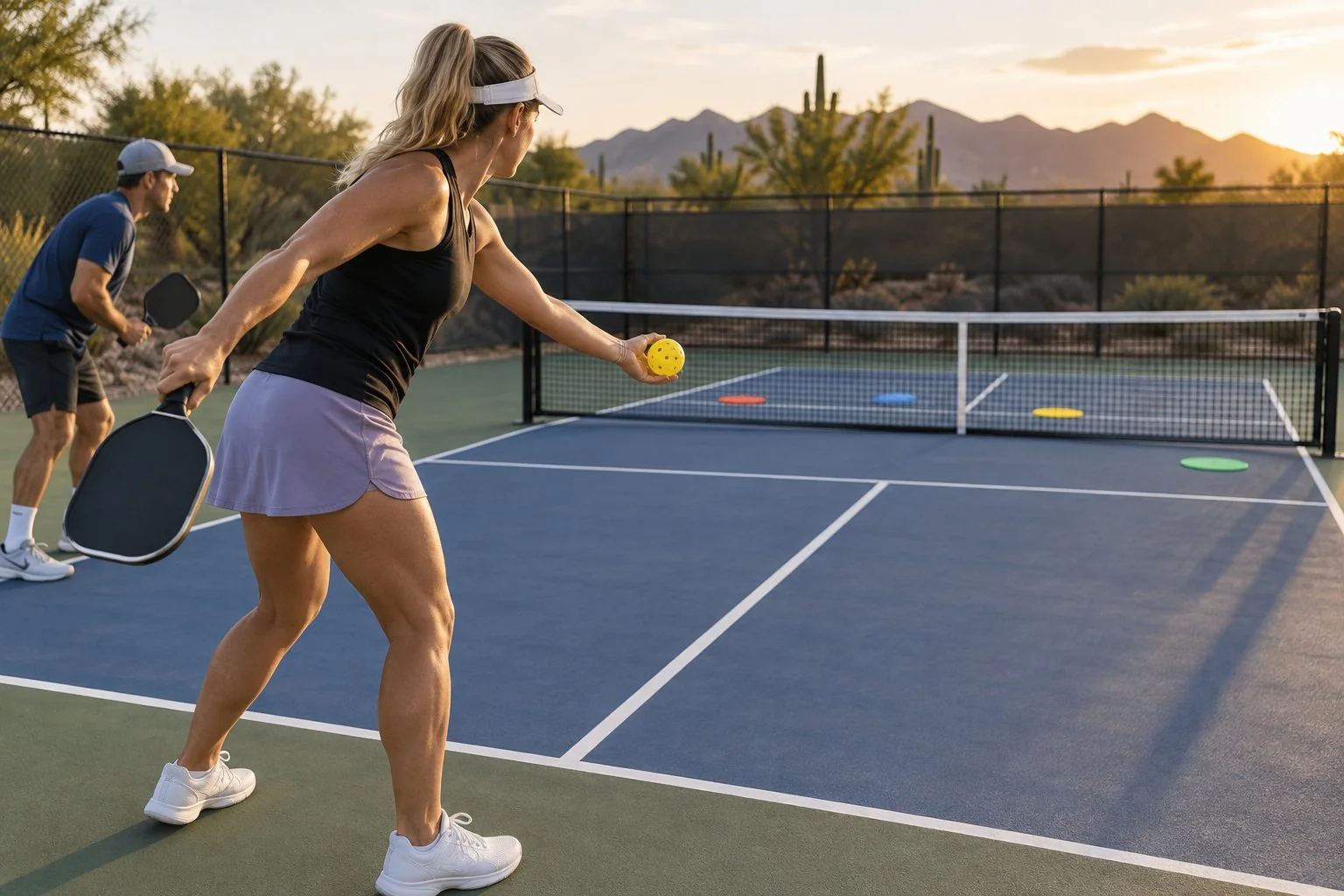
Quick checklist
Show the release. Contact in front. Clear the net. Keep margin. Recover after contact. Track the session, not a promise about every match.
After each block, review preparation, contact, and recovery. Keep a simple record of valid balls and the main error. For example, 13, 15, 14, and 16 successful balls out of 20 across four sessions show a useful trend. Increase pace only when the movement remains repeatable.
Use the same routine at different speeds. Start with a cooperative feed, then add movement, and finally ask the partner to vary the direction. Keep the target generous while learning. A practice result is useful only when the conditions are recorded: distance, ball height, direction, and whether the player finished balanced. Change one condition at a time. This prevents a good session from hiding a recurring technical error. Between repetitions, return to a ready position and check the next likely ball. Stop the drill if pain changes the stroke, and resume only when normal movement is comfortable.