Pickleball Serve Toss Consistency: Build a Repeatable Starting Point
A practical guide to pickleball serve toss consistency: release position, contact timing, footwork corrections, target control, and drills.
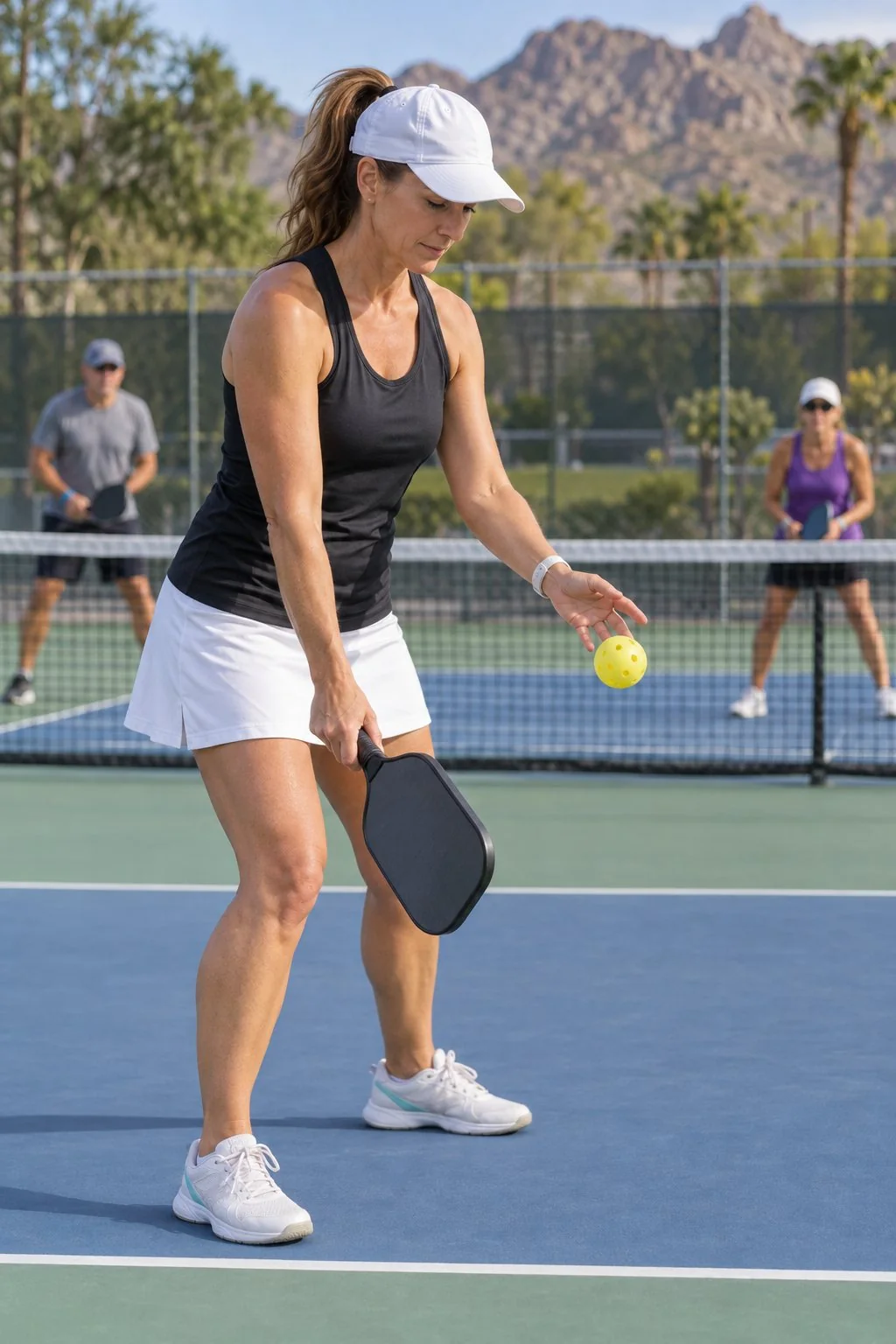
A reliable pickleball serve begins before the paddle moves. If the ball leaves your hand at a different height or drifts across your body each time, the contact point changes and the serve becomes harder to repeat. A consistent toss is not about throwing the ball high; it is about creating the same starting picture often enough that your feet, paddle, and target can work together.
Build the same release picture
Start in a balanced stance behind the baseline with the non-paddle hand holding the ball comfortably in front of the lead hip. Keep the shoulders relaxed and let the arm hang rather than reaching forward. Release the ball from the same small window each time: in front of the body, slightly to the paddle side, and high enough to give the paddle a clean path without turning the serve into a timing test.
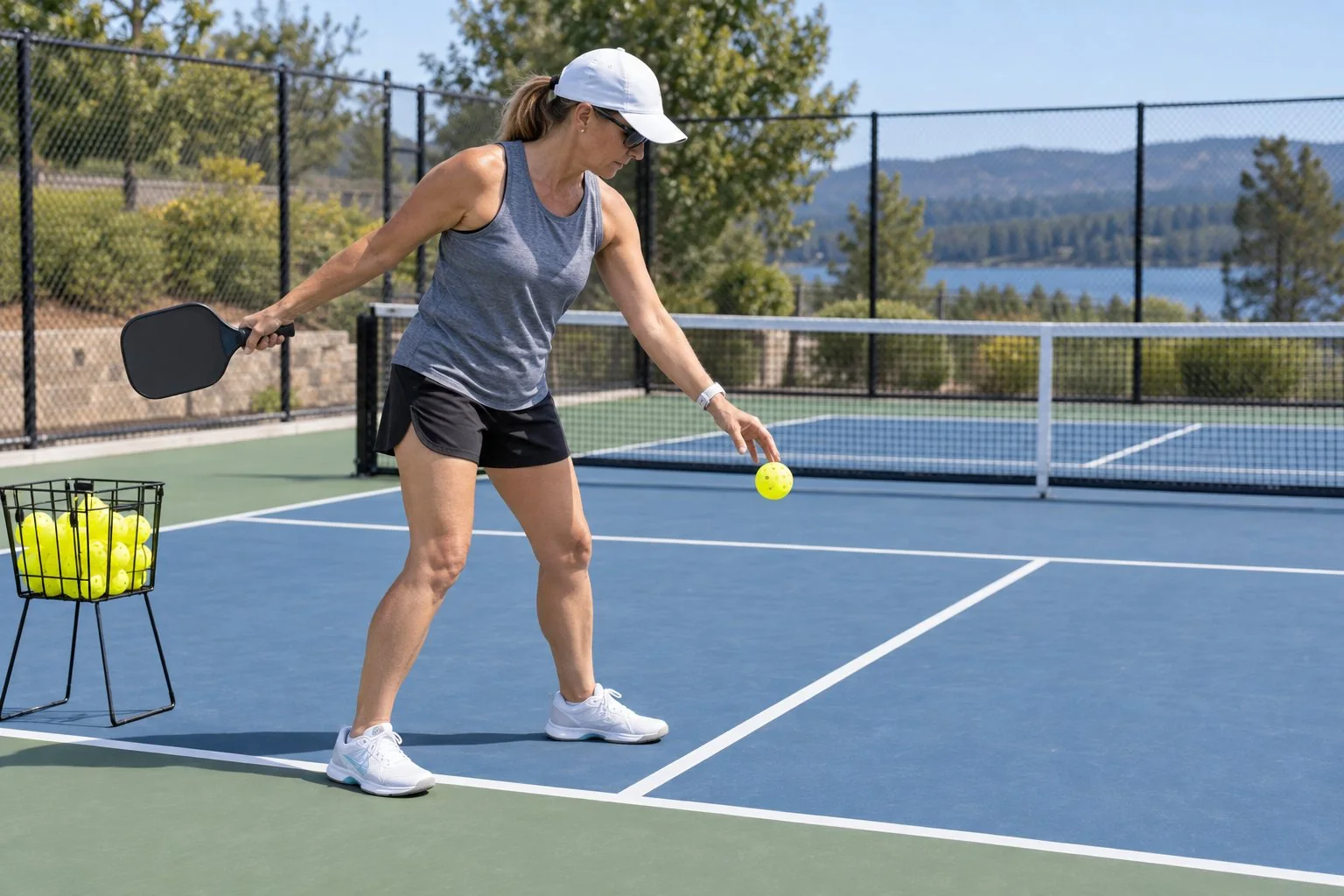
Watch the ball, not your hand, after release. It should fall into the contact window without requiring a lunge, sideways lean, or last-second reach. If it travels behind you, let it go and reset instead of rescuing it with a rushed swing. Repeating a poor toss teaches a compensating motion.
Match contact to the release
The serve is underhand, but the ball still needs a stable contact point. Let it descend into a comfortable zone below the waist, then swing smoothly from the shoulder and arm with the paddle face controlled through contact. Do not chase extra height by lifting the toss or extra speed by snatching at the ball. A modest release that meets the same contact window is more useful than a dramatic one that changes from serve to serve.
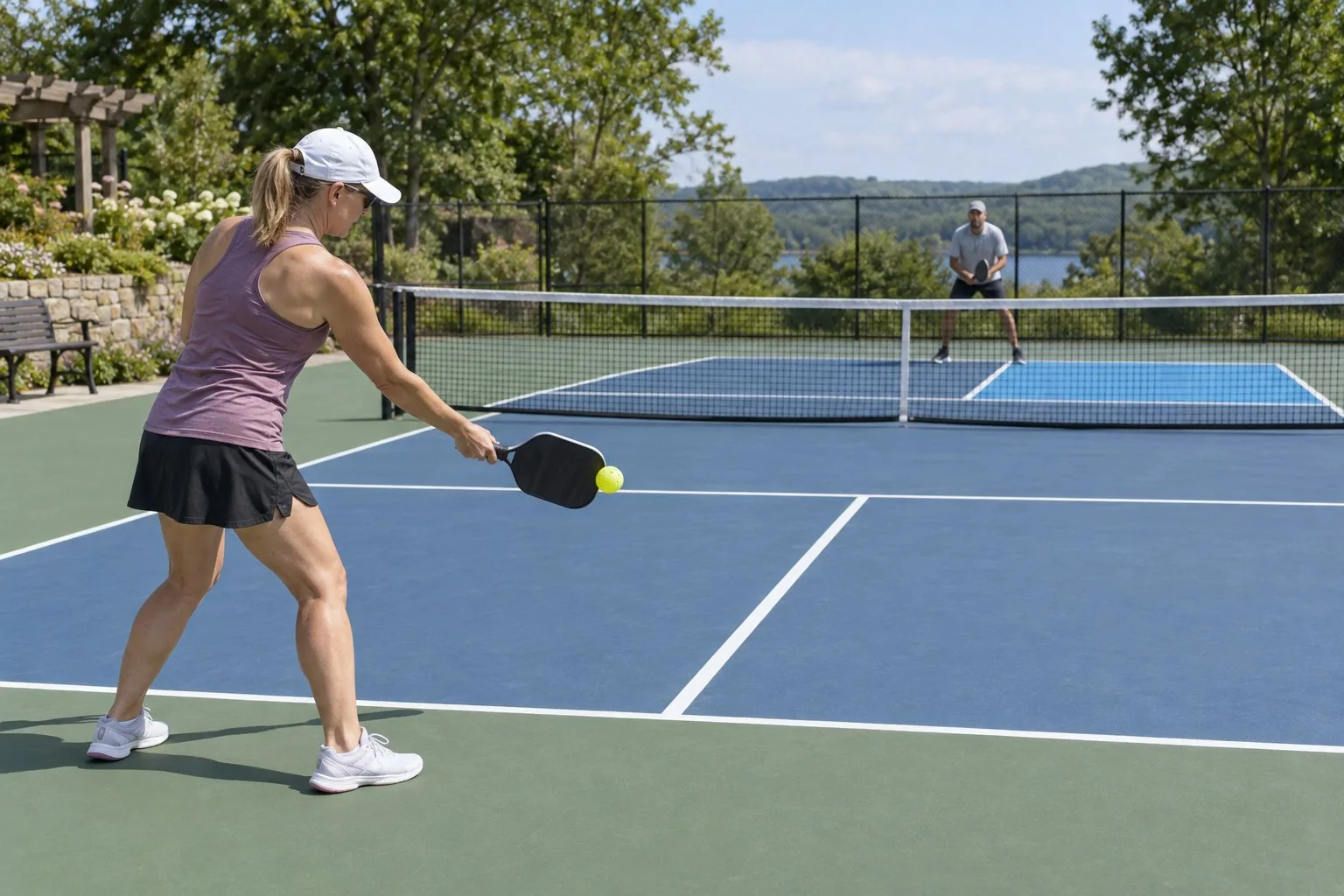
Use your feet to solve small errors. If the ball is too far away, move before release rather than stretching after it. Keep the head quiet and finish toward the intended service box. A repeatable release makes it easier to manage direction, depth, and recovery.
Practice the toss before adding pressure
Begin with a simple release drill. Stand in your serving stance and let the ball fall ten times without swinging. Note whether it lands in the same area in front of your lead foot. Then add the paddle but make a gentle serve to a large target. The goal is to connect the release, contact, and finish, not to test maximum pace.
Next, make three sets of ten serves. In the first set, judge only whether the release and contact felt calm. In the second, choose a generous deep target and keep the same release window. In the third, alternate targets while preserving the routine. If the ball drifts, identify whether the release, feet, paddle face, or finish changed before trying to swing harder.
The most useful cue is simple: set the feet, present the ball in front, release from the same window, and let it fall into a comfortable contact. A repeatable pickleball serve toss gives you a calmer start to every point and leaves more attention for the target and the first recovery step.