Pickleball Short Hop Decision: Take It Early or Let It Rise
Decide when to take a pickleball short hop early and when to let the ball rise, then build a stable low reply.
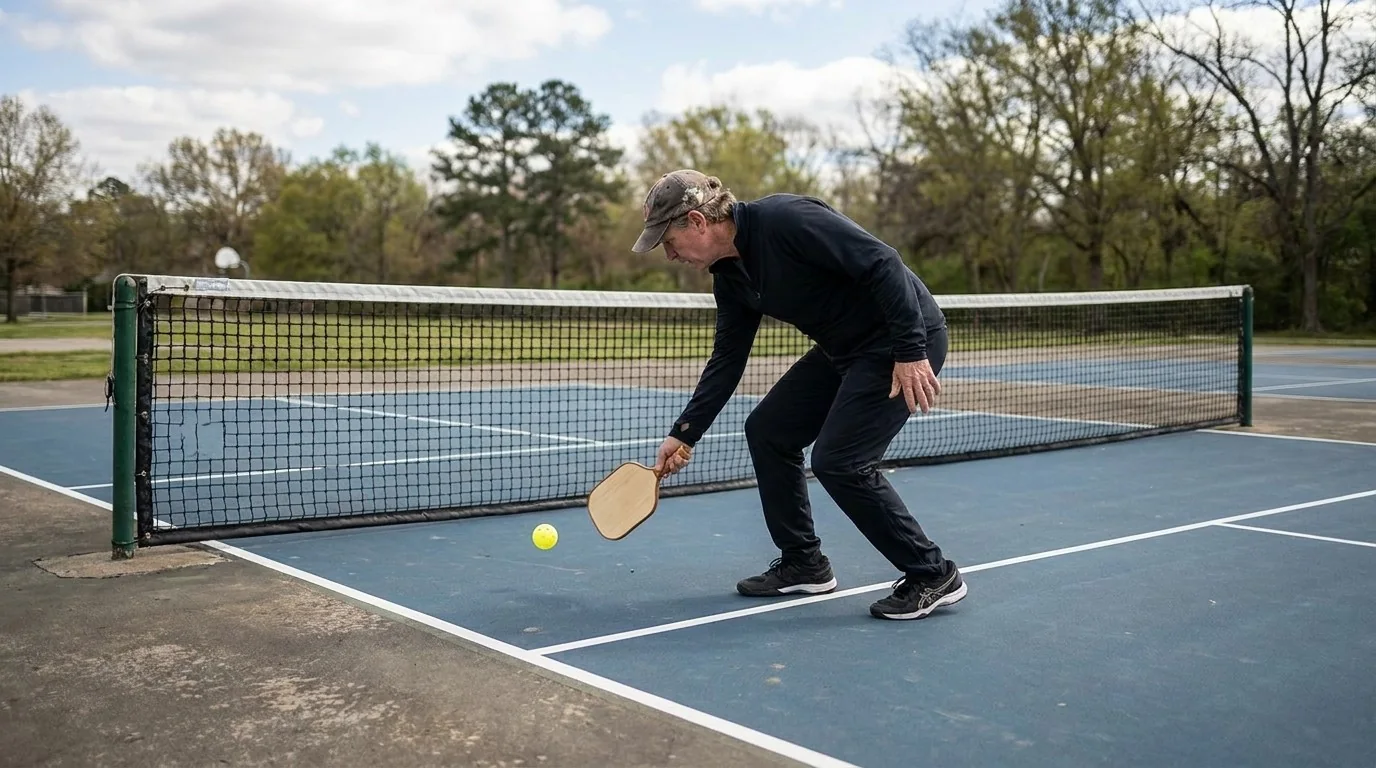
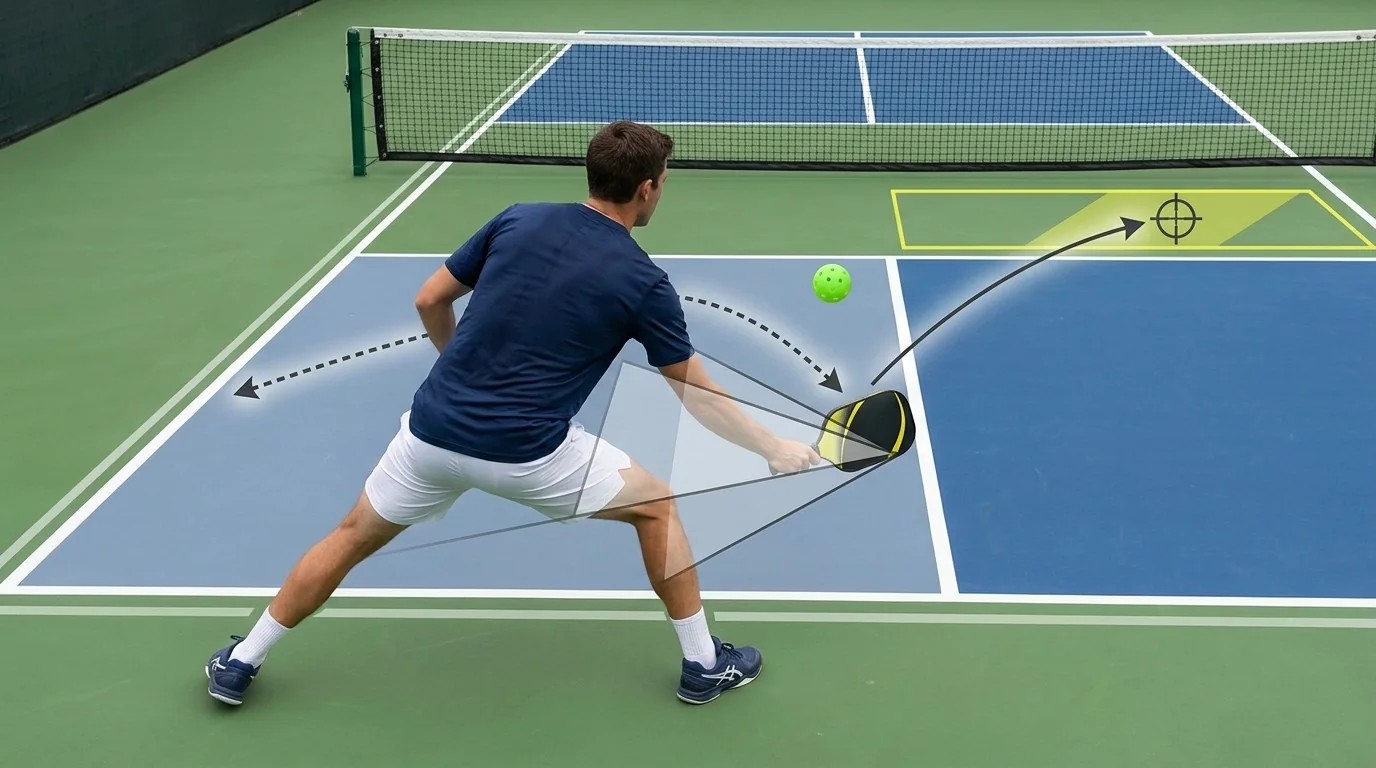
A pickleball short hop is a decision, not a panic swing. When the ball lands near your feet in the transition zone, choose between taking it just after the bounce and letting it rise into a cleaner contact window. Pace, distance, balance, and the target you can protect should decide the timing.
Decide whether to take it early
Take the short hop when the ball has medium or heavy pace, lands within reach, and you can lower your body enough to contact it in front. The bounce has taken some speed off the ball. A compact block or push can keep the reply low while you continue moving forward.
Let the ball rise when the shot is soft, floats, lands too close to your shoes, or catches you stretched and late. A little extra height can give you time to organize the paddle and feet. Do not wait until the ball has fallen below a controllable contact point. The choice is to let it rise slightly, not to rescue it from the floor.
Build a stable short-hop reply
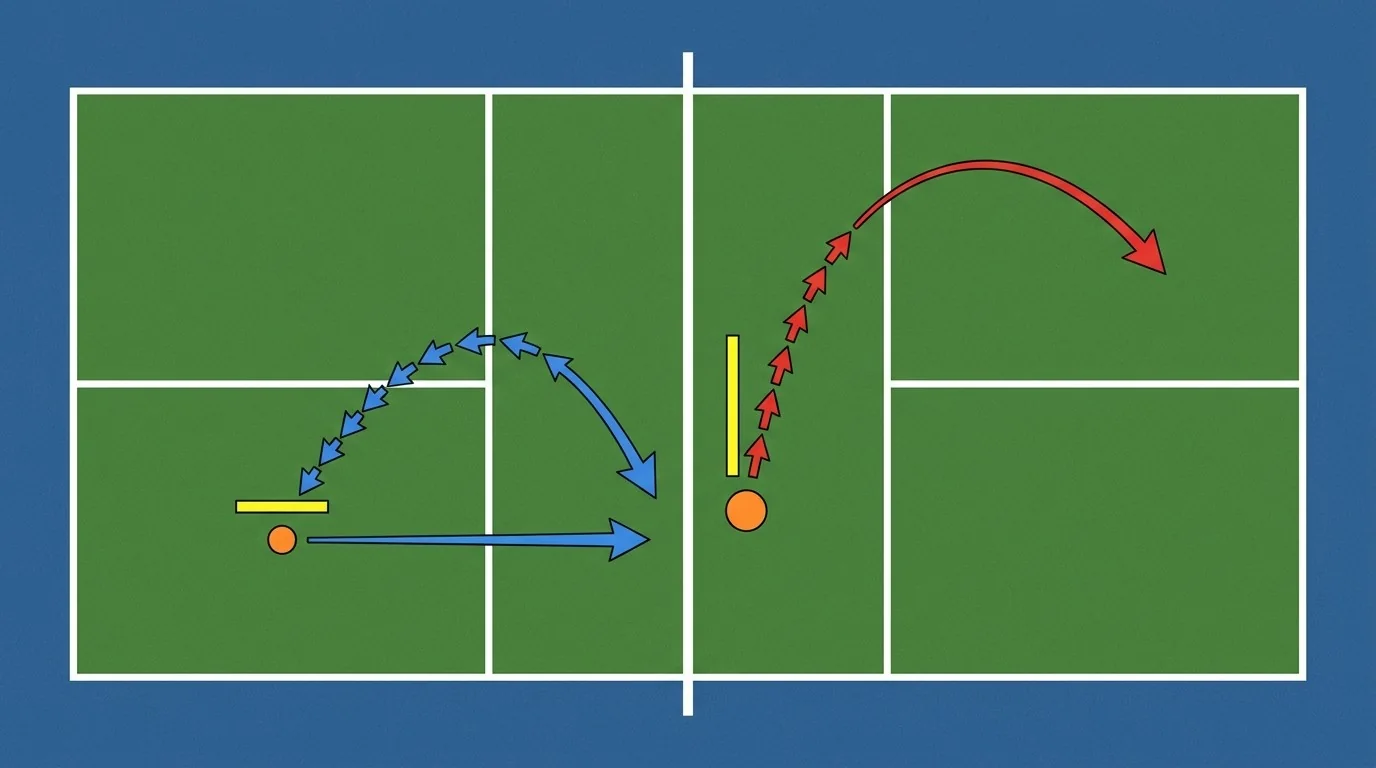
Lower your hips before the bounce and keep the paddle near the court. Set the wrist angle before the shoulder moves. Against pace, use a quiet block; against a slower ball, add only a small push. The aim is not to create speed. Borrow the ball's pace and send back a low shot that buys your next step.
On a wide ball, resist opening the paddle face and changing direction sharply. A controlled diagonal target usually gives you more margin than a tight line. Keep the reply in front of the opponent and make them handle it low.
Use the bounce to earn time
The short hop is useful while moving from the baseline toward the kitchen. Keep moving after contact only when the ball is low and controlled. If your reply floats, stop and prepare for the next ball instead of running forward automatically. Your first priority is a stable base for the following contact.
When the ball arrives at an awkward height, lower the body rather than reaching down with the arm. Keep the swing compact and watch the ball through contact. A rushed reach often opens the face and sends the reply high. If you are late, a safer ball with extra net margin is better than a forced change of direction.
Train the decision with a partner
Have a partner feed short balls into the transition zone. Before each feed, begin in a balanced ready position. Call "early" when the ball can be taken in front after the bounce and "rise" when a slower or crowded bounce needs more space. Then play the simplest controlled reply.
Start with predictable feeds so you can notice the difference between a ball that gives you room and one that crowds your feet. Vary the pace and width only after the decision feels clear. Judge each repetition by four things: contact in front, balance, a low target, and a recovery position that leaves the next shot available.
The common mistake is treating every short hop as a chance to attack. A ball taken early while you are reaching may stay in play but still give the opponent an easy ball. The better rule is simple: take it early when the bounce leaves you balanced and in front; let it rise when that creates the space you need.