Pickleball Singles Positioning: Recover to the Center After Each Shot
Build better pickleball singles positioning by recovering toward the center, timing the split step, choosing shots with margin, and training the movement pattern.
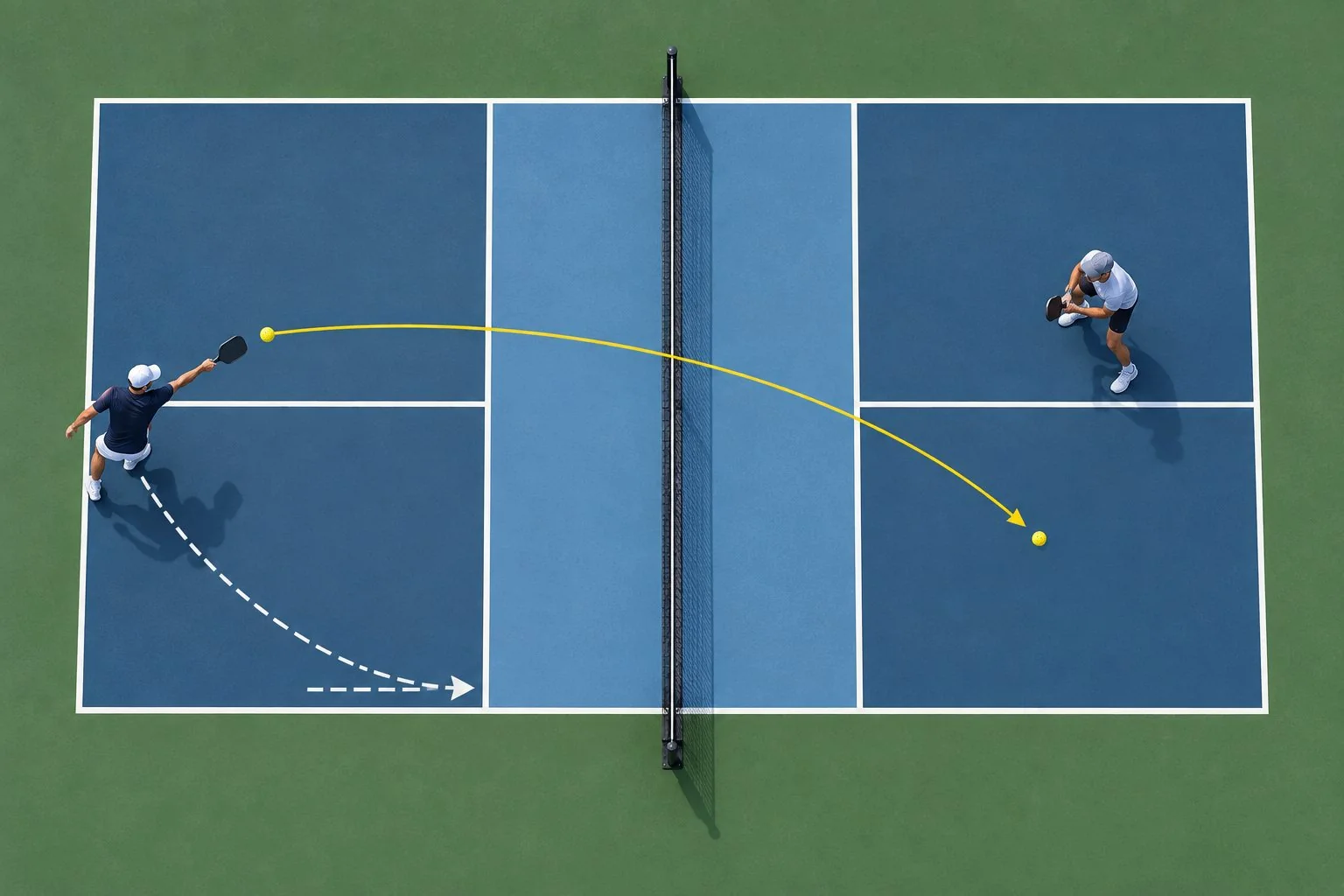
Singles rewards the player who makes the court feel smaller. You do not need to chase every ball at full speed; you need to hit with enough margin, recover toward the middle of your opponent’s likely replies, and arrive balanced for the next contact. The core habit is simple: hit, recover, split step.
Make the center your default, not a rigid spot
After a shot to either side, begin moving back toward the center as soon as your swing is under control. From the center baseline, you can cover a down-the-line ball and a crosscourt ball without giving away a large open lane. Standing where you hit leaves the opposite side exposed and asks your next movement to cover too much ground.
Center does not mean planting both feet on the exact midpoint. If your shot has pulled the opponent wide, shade your recovery slightly toward that side while still protecting the line. The useful question is not “Am I standing in the middle?” but “Where is the middle of the opponent’s realistic options?”
Use short shuffle steps for a ball only a few steps away. They let you brake, redirect, and keep your chest facing the court. A crossover step is useful when the ball has pulled you farther away and speed matters more than fine adjustment. As you close the distance, return to smaller steps so the final contact is not rushed.
Time the split step with the opponent’s contact
Recovery is incomplete until you are balanced as the opponent strikes. Finish your movement with a small split step: land lightly with both feet loaded, knees flexed, and the paddle in front. Landing too early leaves you flat-footed; landing after the ball is moving means you have already surrendered the first step.
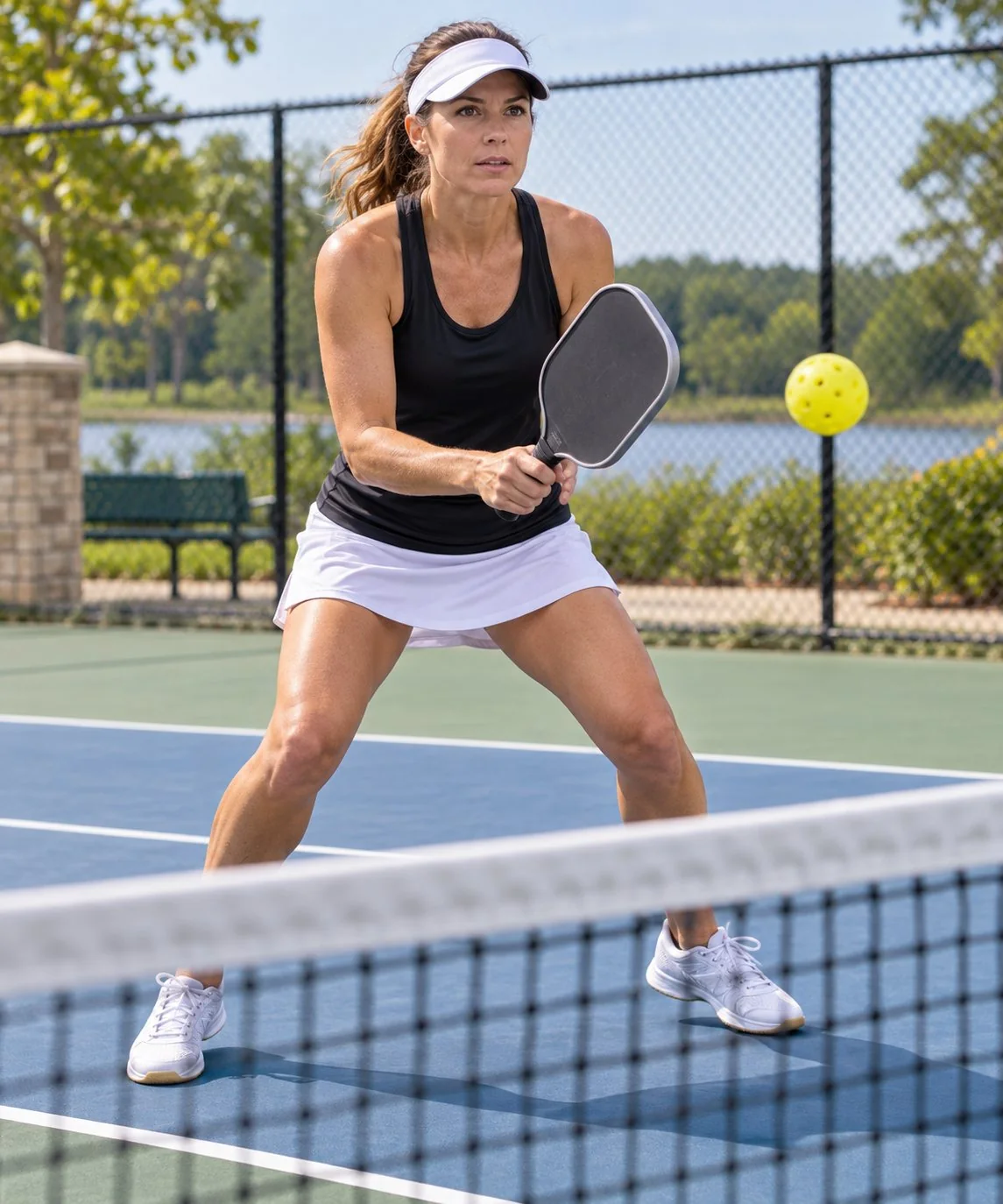
Watch the opponent’s body and paddle rather than staring at your own shot. A closed paddle face often sends a dipping ball, while a more open face can produce a higher, flatter reply. You are not guessing the direction; you are using the contact cue to prepare without locking into one side. If the read changes, a balanced split step lets you redirect.
When you are pulled wide, do not run directly toward the center while forgetting the ball. Recover on a diagonal that protects the most dangerous lane, then adjust after the opponent’s contact. If your shot was crosscourt and deep, you may have more time. If it was short or floated, expect the reply sooner and recover with less ambition.
Choose shots that help your recovery
Shot selection and positioning are one problem. A deep crosscourt ball usually gives you more net clearance and more time to return toward center. A down-the-line ball can be valuable when it keeps the opponent’s reply predictable, but it leaves less margin and may expose the opposite angle if you do not recover immediately.
From the baseline, favor depth and a target that makes the opponent hit from an uncomfortable position. Aim inside the lines rather than chasing the corner. When you receive a short ball, advance only behind a shot that creates pressure: depth, a low trajectory, a body target, or a clear angle. Do not drift through the transition zone on a neutral ball. Move through it decisively, or use a controlled reset to buy time and rebuild your position.
If you are off balance, the best shot is often the one that gives you time to recover. A higher-margin crosscourt reset is more useful than a low-percentage winner attempted while running. Once the opponent is stretched or forced into a weak contact, you can step forward and look for the finish.
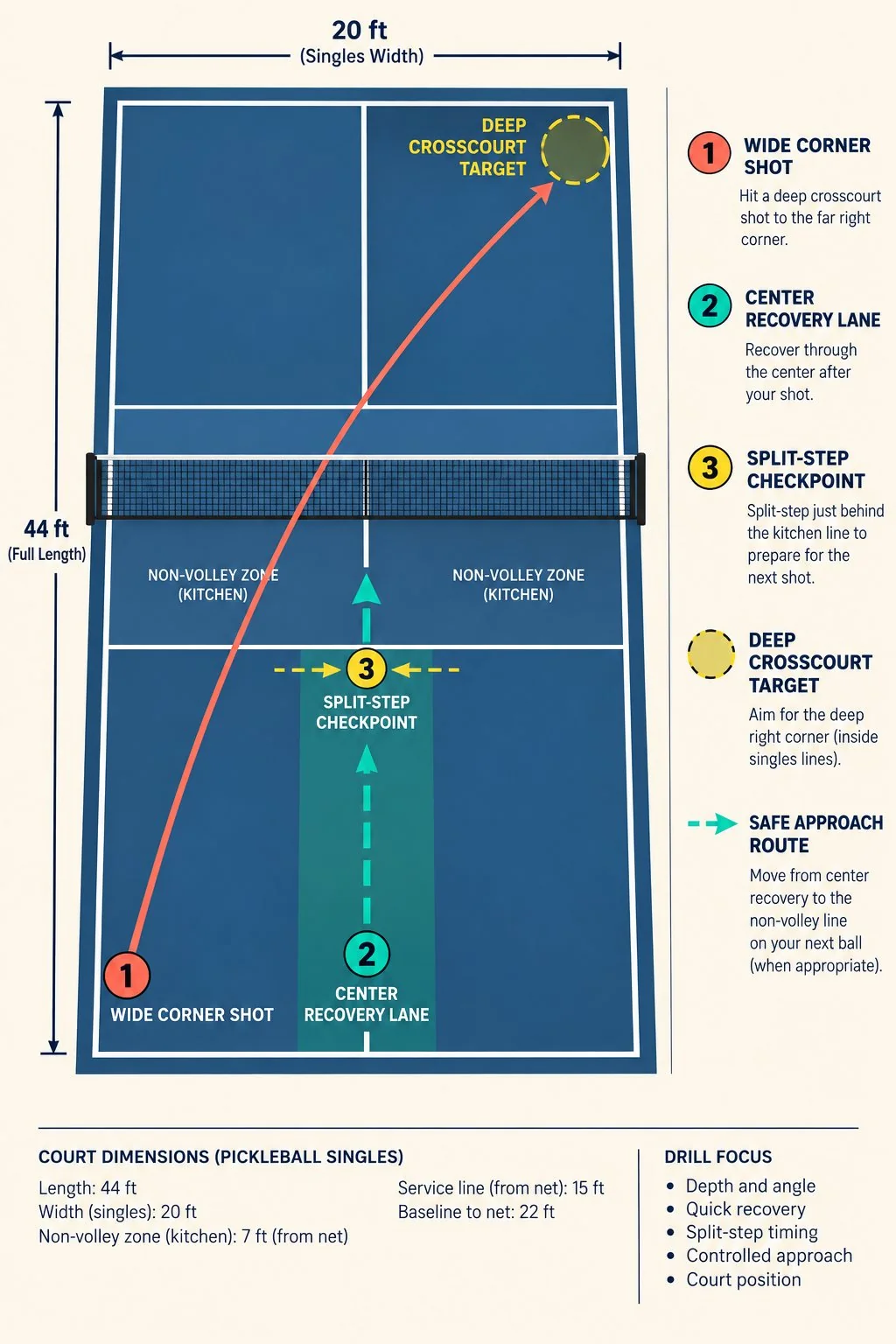
Three drills for reliable singles movement
Hit, recover, split
Start at the center baseline. Feed or rally to one corner, play a controlled crosscourt ball, then take recovery steps toward your center checkpoint. Split step as the partner contacts the next ball. Repeat on both sides, focusing on arriving under control rather than winning the rally.
Wide-ball recovery
Have a partner alternate feeds to the forehand and backhand corners. Use a shuffle for the closer feed and a crossover for the wider one. The goal is to get one foot back toward the center before the next contact, even if you cannot reach the exact midpoint. Add a random direction only after the pattern feels stable.
Approach or hold
Begin behind the baseline. The feeder sends either a deep ball, a short ball, or a ball that pulls you wide. Approach only behind the short or uncomfortable feed; hold or reset on the deep one. After every shot, call out your recovery route and finish in a split step. This connects decision-making to movement instead of treating footwork as a separate exercise.
The most useful singles cue is still “hit, recover, split.” Build the habit with generous targets, efficient steps, and a willingness to reset when your position is poor. When the center becomes your moving home base, your opponent must create a real opening instead of simply hitting into the space you left behind.