Pickleball Singles Recovery Position: Cover the Next Passing Lane
A practical guide to pickleball singles positioning: recover toward center, brake with balance, time the split step, and protect the most likely passing lane.
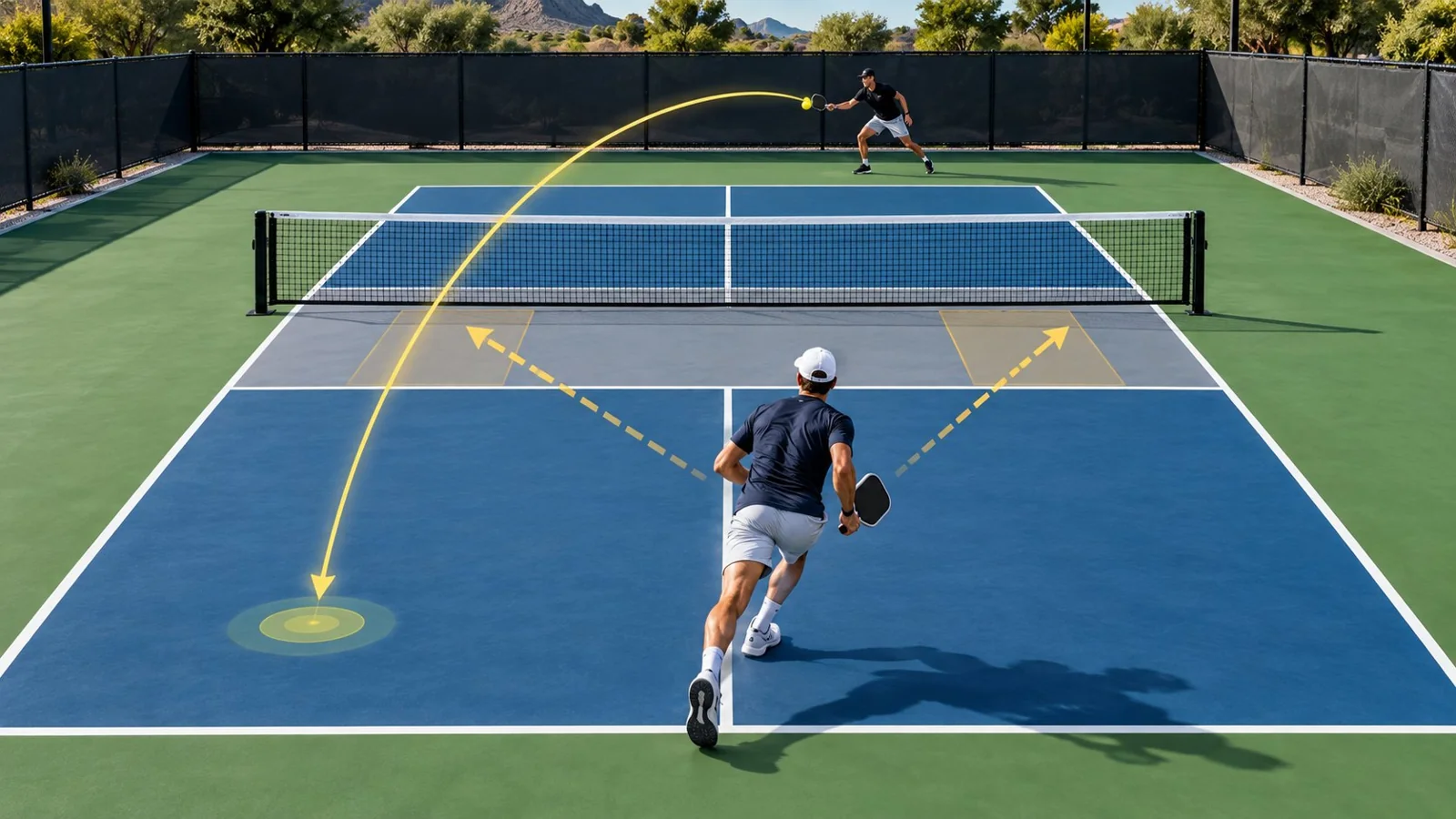
The pickleball singles recovery position is a constant singles decision: where should you recover after your shot so the opponent has the fewest easy passing lanes? Center recovery does not mean standing on a fixed mark. It means moving toward the middle of the opponent's realistic reply options, then adjusting for the angle, depth, and pressure you created. Good positioning saves steps before the next ball is struck.
Read the shot before you recover
Start by judging your own shot and the opponent's likely reply. A deep crosscourt ball usually gives you more time and can pull the opponent wide. A short or central ball gives them more choices, so recover with less commitment to one sideline. If you are off balance, protect the middle first rather than chasing an ambitious position.
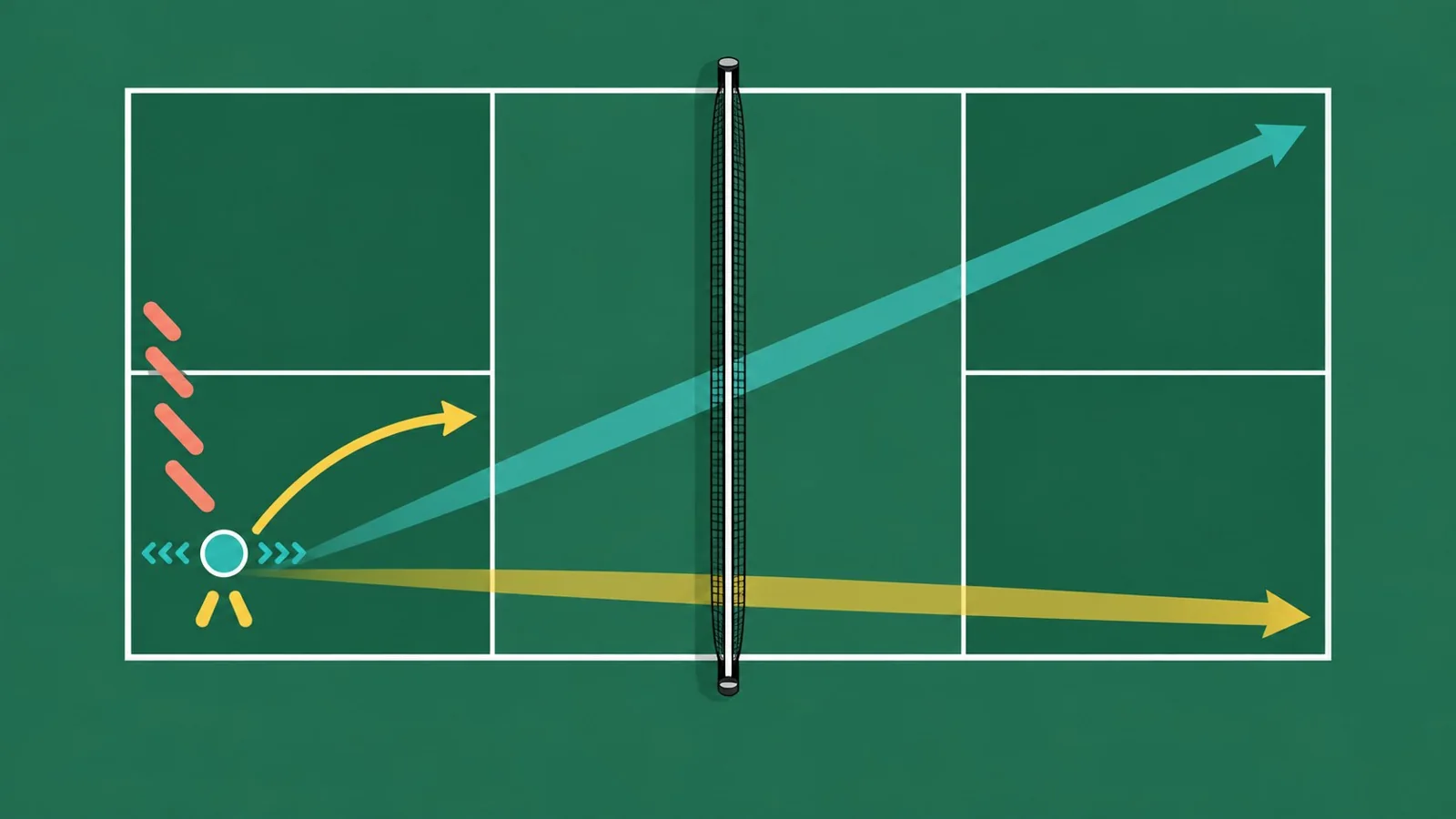
Use shuffle steps for short lateral coverage. They keep your chest facing the net and make braking easier. When the ball pulls you farther than a few quick shuffles can cover, use a crossover step to gain ground, then finish with small steps so you can stop balanced. Do not arrive still leaning; the next shot is often decided by your ability to brake.
Match recovery to the passing lane
Recover toward the center of the opponent's available court, but shade toward the side that best protects the most dangerous reply. A strong crosscourt angle may require you to cover the line more carefully. A weak ball may call for a more conservative center position because the opponent can attack either direction. Keep the paddle in front while your feet make the adjustment.
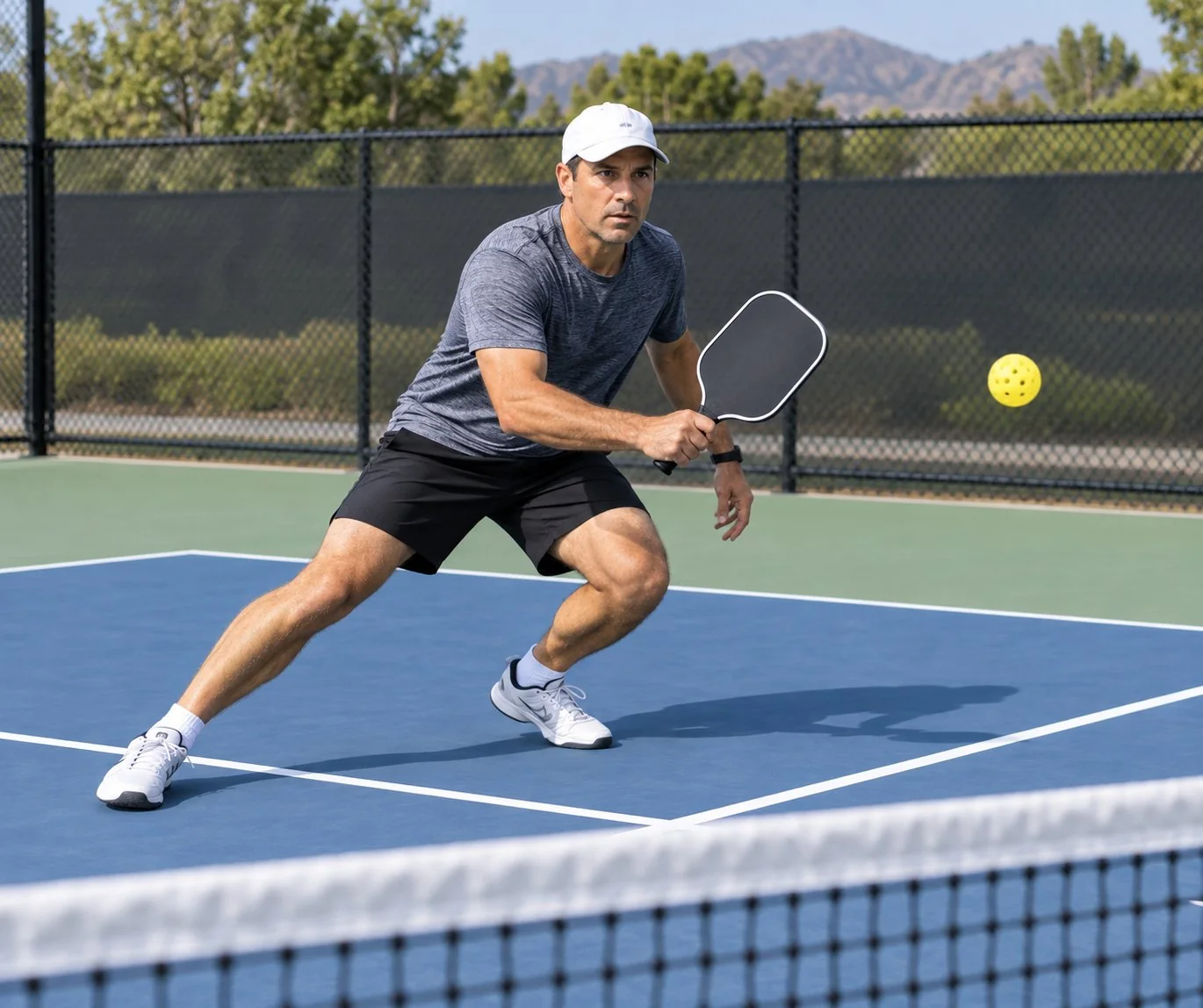
Time your split step to the opponent's contact. Land with soft knees and a stable torso, then push in the direction revealed by the ball. The split step is not a guess about where the ball will go; it is a reset that lets you react either way. If the opponent is pulled wide, recover enough to cover the line and the middle without giving up the obvious passing lane.
Train the decision and the movement together
Begin with shadow repetitions. Start near one sideline, take a simulated wide ball, use a crossover and braking steps, then recover toward center. Freeze in ready position and check that your paddle is in front, knees are soft, and chest faces the net. Add a split step at an imagined opponent contact.
Next, add a partner feed. The feeder alternates deep middle, wide, and short balls. After each shot, recover toward center and split as the feeder contacts the next ball. Count success only when you reach a balanced position that covers the most realistic reply. Increase pace gradually; speed that destroys your stopping ability is not useful practice.
Common errors include recovering to the exact geometric center without reading the shot, crossing too early on a short ball, and arriving wide with locked knees. Correct them one at a time: choose the likely passing lane, use the smallest effective step, and brake before the opponent's contact. Keep the paddle ready while moving.
A useful practice block is three rounds of ten balls: first for footwork, second for split-step timing, and third for choosing the best recovery shade. Singles positioning improves when every shot is connected to the next location. Recover with purpose, stop balanced, and make the opponent earn the open space.