Pickleball Singles Strategy: Build Reliable Points
A practical singles plan for deep serves, disciplined returns, center recovery, selective net attacks, and movement drills.
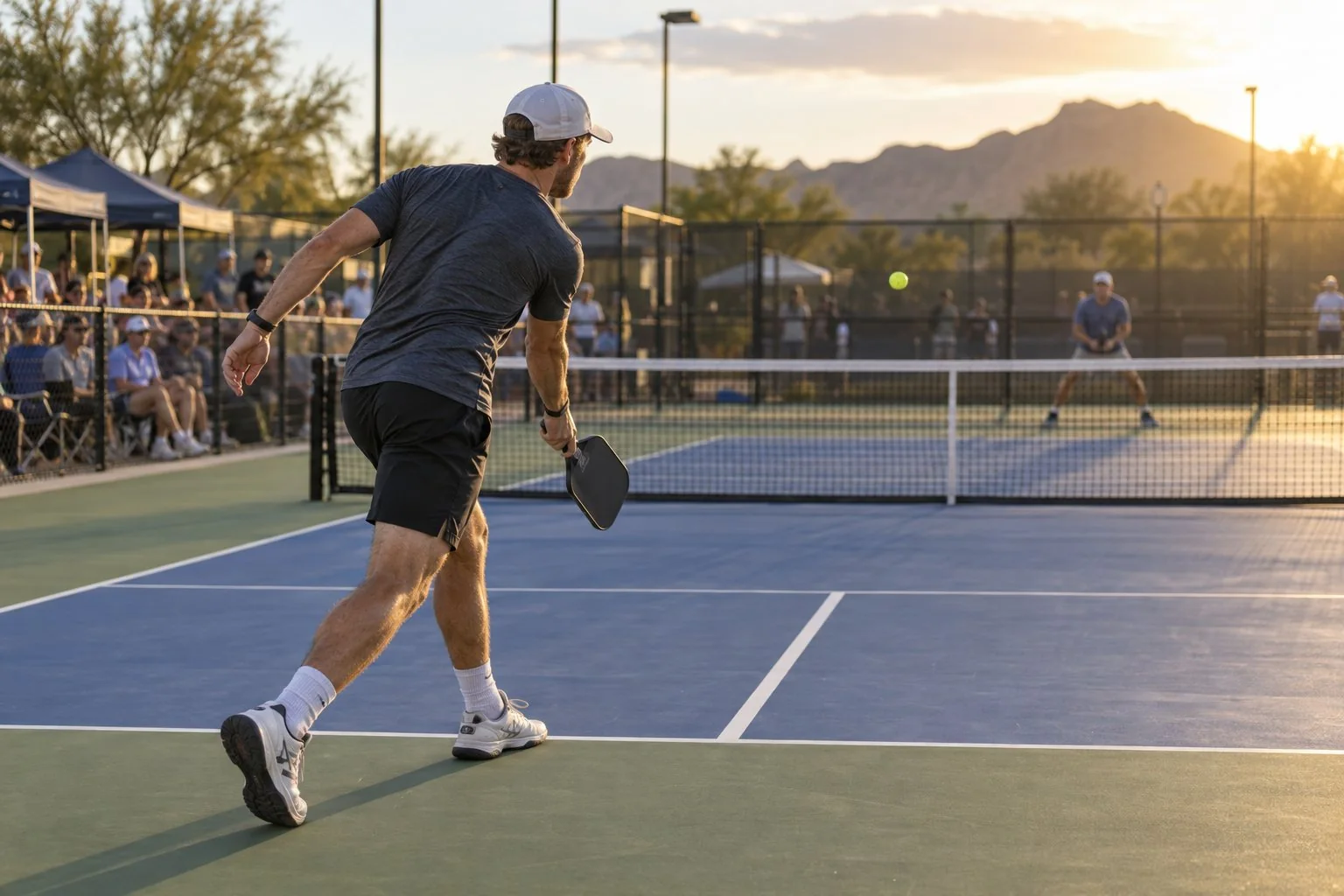
A useful pickleball singles strategy is simple: serve deep, return deep, recover toward the middle, and attack only when the ball gives you room. Singles leaves no partner to cover a sideline, so every shot must protect your next position as well as pressure the opponent. Start with repeatable patterns rather than trying to end every rally early.
What makes pickleball singles strategy different?
You cover the full width alone. That changes the value of depth and recovery: a short ball can pull you forward, while a wide ball can leave the opposite side open. The safest home position is usually near the middle of the baseline, adjusted toward the side from which your opponent is striking.
Use the first four shots as a small plan. Serve to the body or toward the center, recover to the middle, return deep through the middle or to the backhand, then look for a short ball before changing direction. If you win a point with this pattern six times out of ten, that is 6 ÷ 10 = 60%; treat it as a practice record, not a permanent match prediction.
How to serve in pickleball singles
Serve with depth and margin. A deep serve pushes the receiver back and makes the next exchange longer for them, but a serve that misses gives away the point immediately. Aim toward the center “T” when you want to reduce the opponent’s sharp return angles; mix in a body or wide serve once the pattern is established.
Recover as the ball travels. Do not admire the serve from the corner. Take small lateral steps and finish near the center so a crosscourt return does not force a desperate sprint. A practical drill is to serve 20 balls, mark whether each one lands deep and in, and use the count to judge control; 15 successful serves means 15 ÷ 20 = 75% for that session.
Where should a singles return land?
Make depth the default. A deep return through the middle gives you time to move forward while limiting the server’s easiest angles. Target the backhand when you have seen a clear weakness, but keep extra space from both sidelines when your balance is poor.
Your next position depends on contact. If you strike the return while moving forward and stay balanced, advance behind it. If the serve forces you onto your back foot, hit a deep, higher-margin return and remain back until a shorter ball appears. There is no reward for reaching the net before you are ready for the next shot.
How to recover to the center
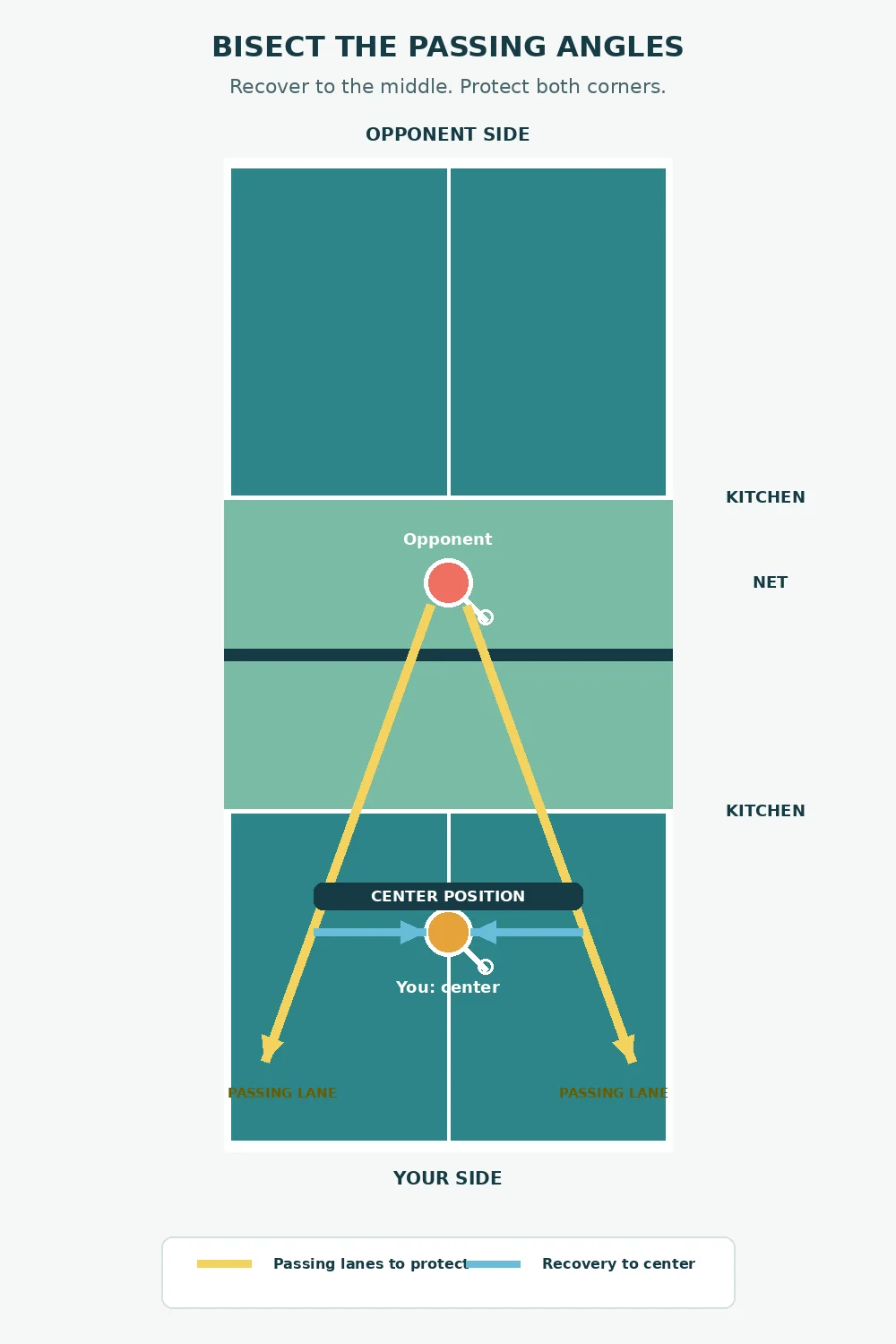
Think of the center as a home base, not a painted dot. After a ball to your forehand side, recover slightly toward that side if your opponent can hit down the line; after a ball to your backhand, make the same adjustment in reverse. Face the opponent with the paddle in front, then use a small split step as they make contact.
The key decision rule is angle control. When your opponent is near their sideline, stand in the middle of the angles they can realistically create, shading toward their hitting side rather than guarding an empty corner. If they are pulled wide, a straight-ahead reply may be more likely than a sharp crosscourt shot, so read the body and paddle instead of running on autopilot.
When should you approach the net?
Approach behind a ball that is deep, low, or difficult to attack. A short ball gives you less time to arrive, so move forward only if your contact stays balanced and your shot does not sit up. Against a player still behind the baseline, a controlled approach through the middle can reduce their passing options.
Once forward, expect the pass. Keep your paddle up and position yourself to bisect the likely angles. If your opponent is stretched wide, protect the line first while staying ready for a crosscourt shot; the exact spot changes with the ball, but the principle remains the same.
Pickleball singles drills for movement and accuracy
1. Center-recovery drill
Start at the middle of the baseline. Feed a ball to one side, hit crosscourt, recover, and repeat to the other side for 20 balls. Count both the balls you keep in play and the recoveries completed before the next feed; 16 clean repetitions out of 20 equals 80% for that round.
2. Deep-return target drill
Place a towel about 3 feet inside the baseline. Return 20 serves toward the middle, aiming beyond the towel without going long. Record depth and balance separately, because a deep ball hit while falling backward may not be a useful match pattern.
3. Two-ball approach decision
Have a partner feed one deep ball and one short ball at random. Stay back after the deep feed, then approach behind the short feed only when you can contact in front. The drill teaches a decision, not a race to the kitchen.
Common singles mistakes
- Serving without recovery: a good serve still leaves the court exposed.
- Returning short: the opponent reaches the net with time.
- Chasing the sideline: the middle opens behind you.
- Attacking every ball: low-percentage winners create free points.
- Using lobs casually: a poor lob can invite an overhead and force a long recovery.
Frequently asked questions about singles strategy
Is the middle always the best target?
No. The middle is a safe default when angles are dangerous, while a clear backhand or open corner can create more pressure when your balance and court position support it.
Should I always come to the net after returning?
No. Advance when the return and your contact point let you move under control. Stay back after a deep serve or awkward return until you earn a better ball.
How can I cover more court?
Recover early, keep the paddle ready, and make your opponent move before you change direction. Positioning saves more distance than frantic running.
Build your pickleball singles strategy around depth, center recovery, and patient shot selection. A reliable point pattern beats a spectacular shot you cannot repeat under pressure.