Pickleball Skill Levels: A Practical Guide to Knowing Your Game
A practical guide to pickleball skill levels: what changes from beginner foundations to advanced shot selection and strategy.
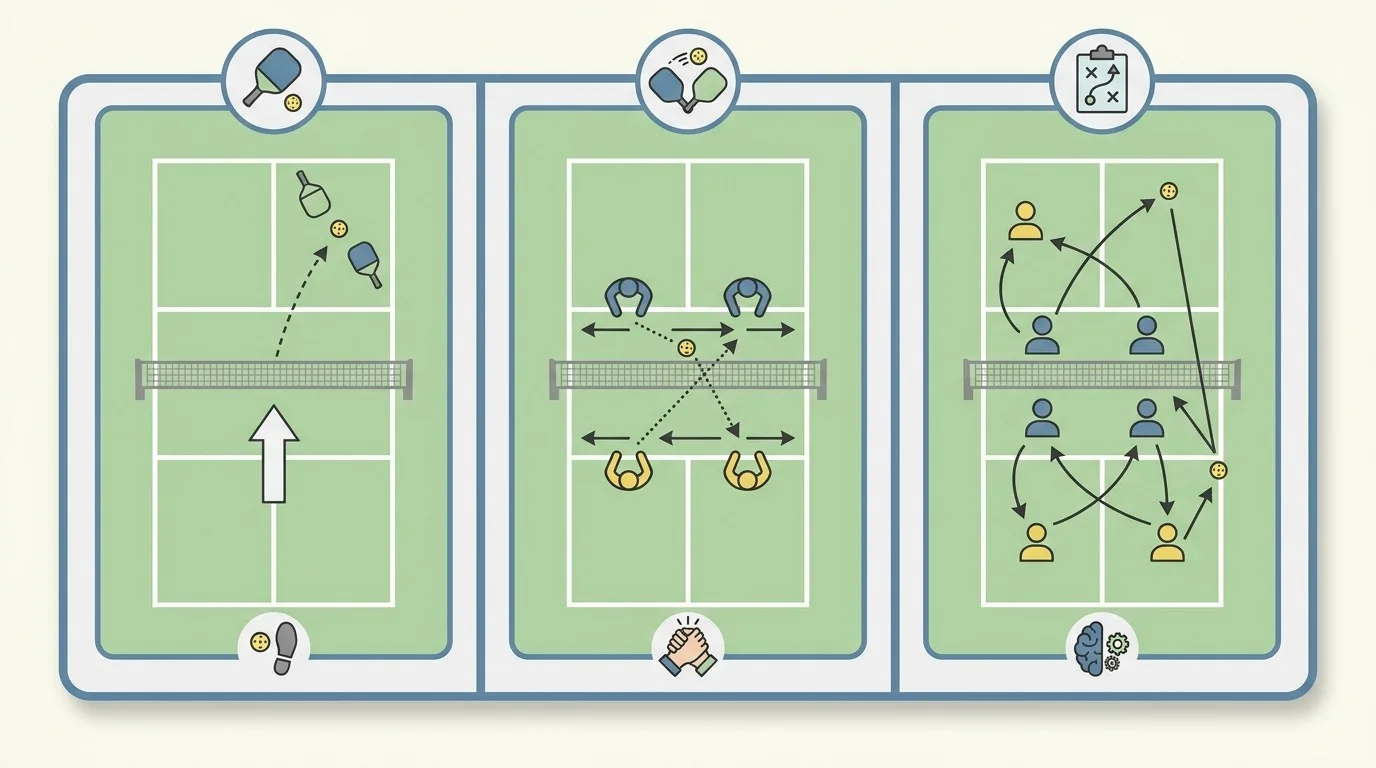
Skill levels are most useful when they describe what you can repeat in an ordinary rally, not the hardest shot you have made once. A rating should help you choose the right practice and opponents. It is a snapshot of execution and decisions, not a permanent label.
What a skill level actually measures
Look beyond forehand power. A useful assessment includes your serve and return, dink control, volley, movement, court position, and understanding of the rules. In doubles, communication and spacing matter as well. Can you follow the ball, recognize an attackable ball, and avoid giving away points with unforced errors? Those habits say more about your level than one impressive winner.
Beginner foundations
New players are still learning the court, scoring, the two-bounce rule, and the non-volley zone. Start with a balanced ready position, a legal serve, a playable return, and basic forehand and backhand control. At this stage, keeping the ball in play matters more than hitting hard. A compact backswing, contact in front of the body, and recovery to a useful position give you habits to build on.
Developing control and positioning
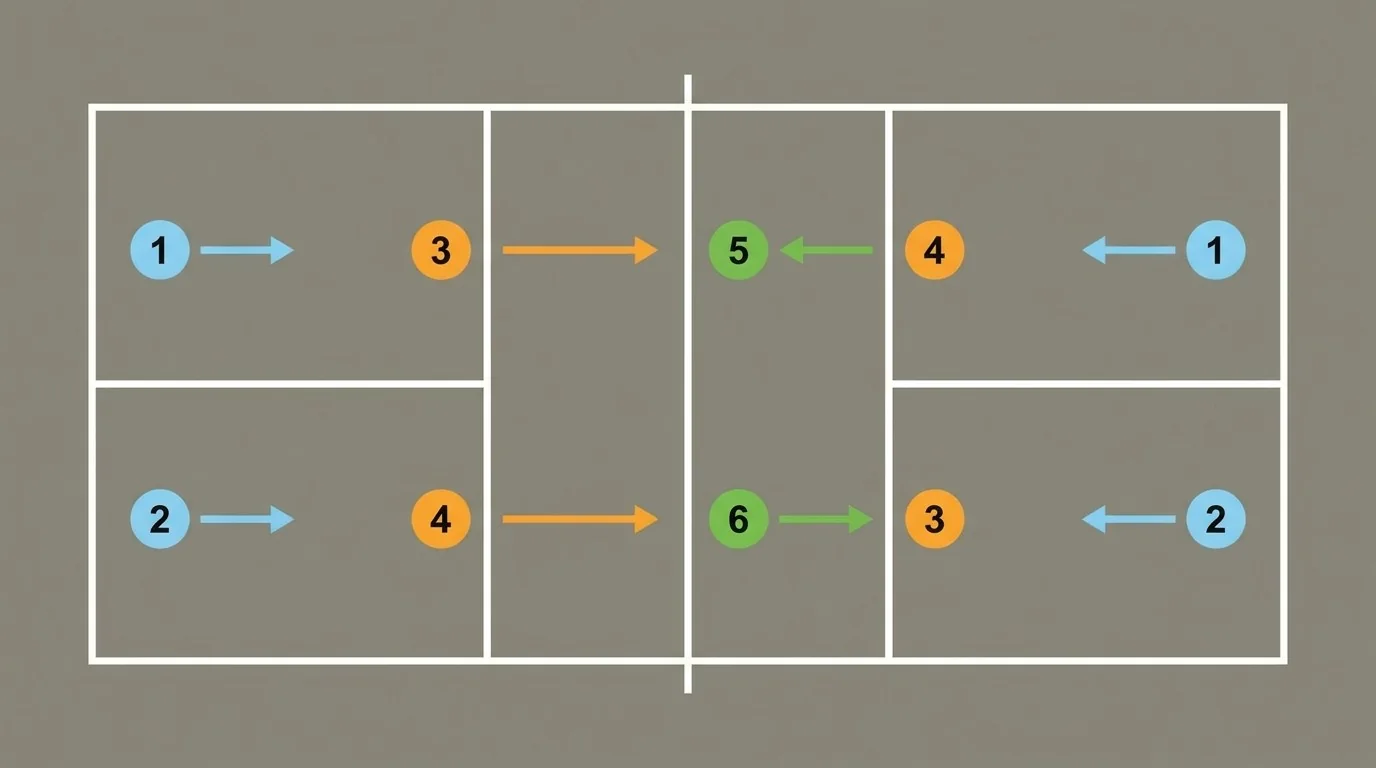
With more reliable rallies, the next challenge is knowing when to move toward the kitchen and how to keep workable spacing with a partner. Players at this stage can vary serve and return depth, choose a third-shot drop or drive for a reason, and keep more balls in play. Their dinks become steadier, and they start learning to absorb different speeds with volleys and resets.
Advanced decisions, not just advanced shots
Stronger players combine touch, spin, pace, and tactical judgment. They read the opponent, change direction without losing balance, protect the middle with a partner, and attack when the ball and position support it. Resets, counters, lobs, ATPs, and Ernes can all have a place, but advanced play does not mean forcing a specialty shot into every rally. The important skill is adjusting to the ball, court position, partner, and opponent.
How to judge your level honestly
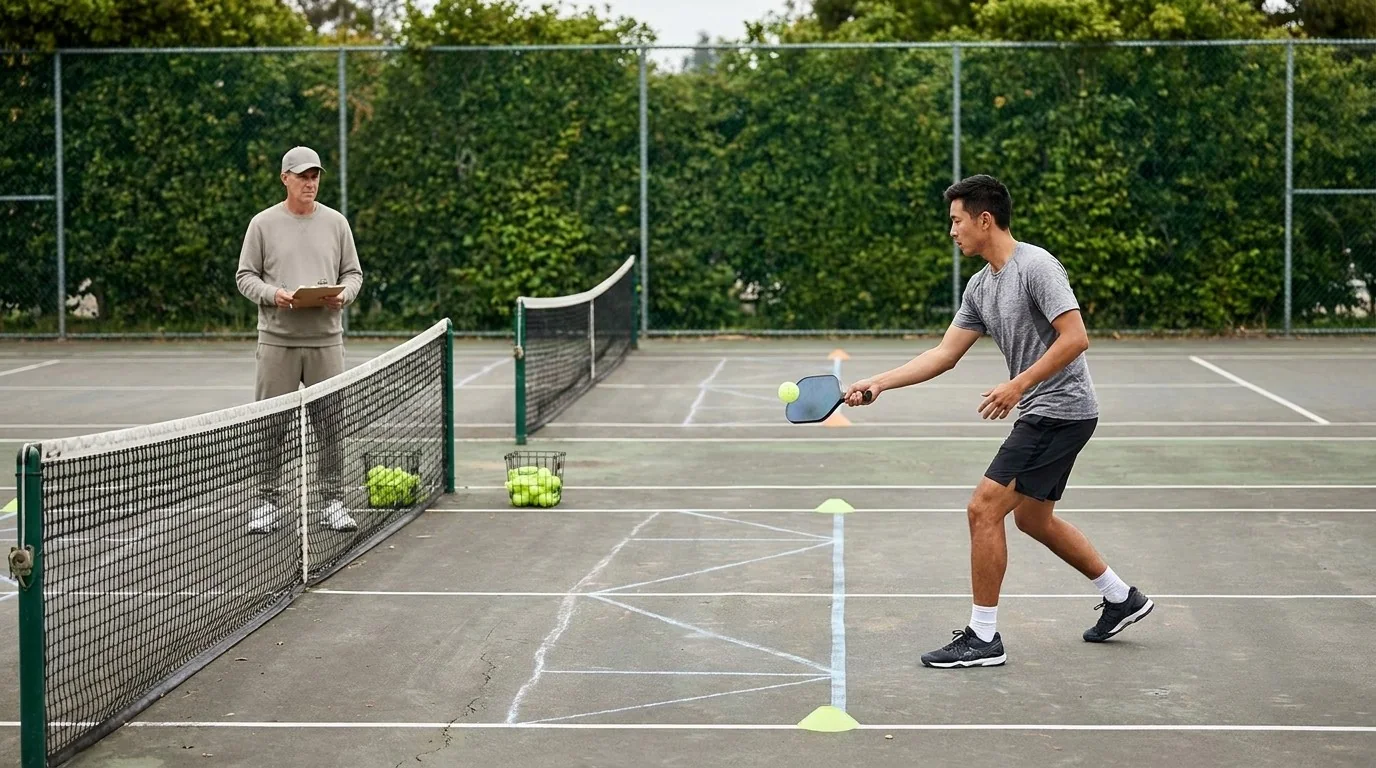
Watch what happens across several games. Can you execute the same shot from both sides? Do you recover after contact? Can you explain why an error happened? A skill that works only in a cooperative drill is still a skill in progress, not yet a dependable match strength. Ask a partner or coach to look at movement, shot selection, and unforced errors along with stroke technique.
Choose the next skill to train
Pick the one weakness that most often limits your current game. A beginner may need work on scoring, contact, and court position. An improving player may benefit from return depth, the third ball, kitchen movement, or reset control. A stronger player may need to sharpen decisions, partner movement, and pressure patterns. Revisit that same skill in practice games and see whether it survives when the rally speeds up.
After each session, write down one pattern you can rely on, one recurring error, and one decision to test next time. That small record turns a broad rating conversation into a practical training plan. The point of a skill level is not to put you in a box. It is to show you what you can repeat now and what deserves the next block of practice.