Pickleball Solo Practice: Seven Drills You Can Do Alone
A focused pickleball solo practice guide with seven drills for touch, placement, hand speed, footwork, movement, and measurable progress.
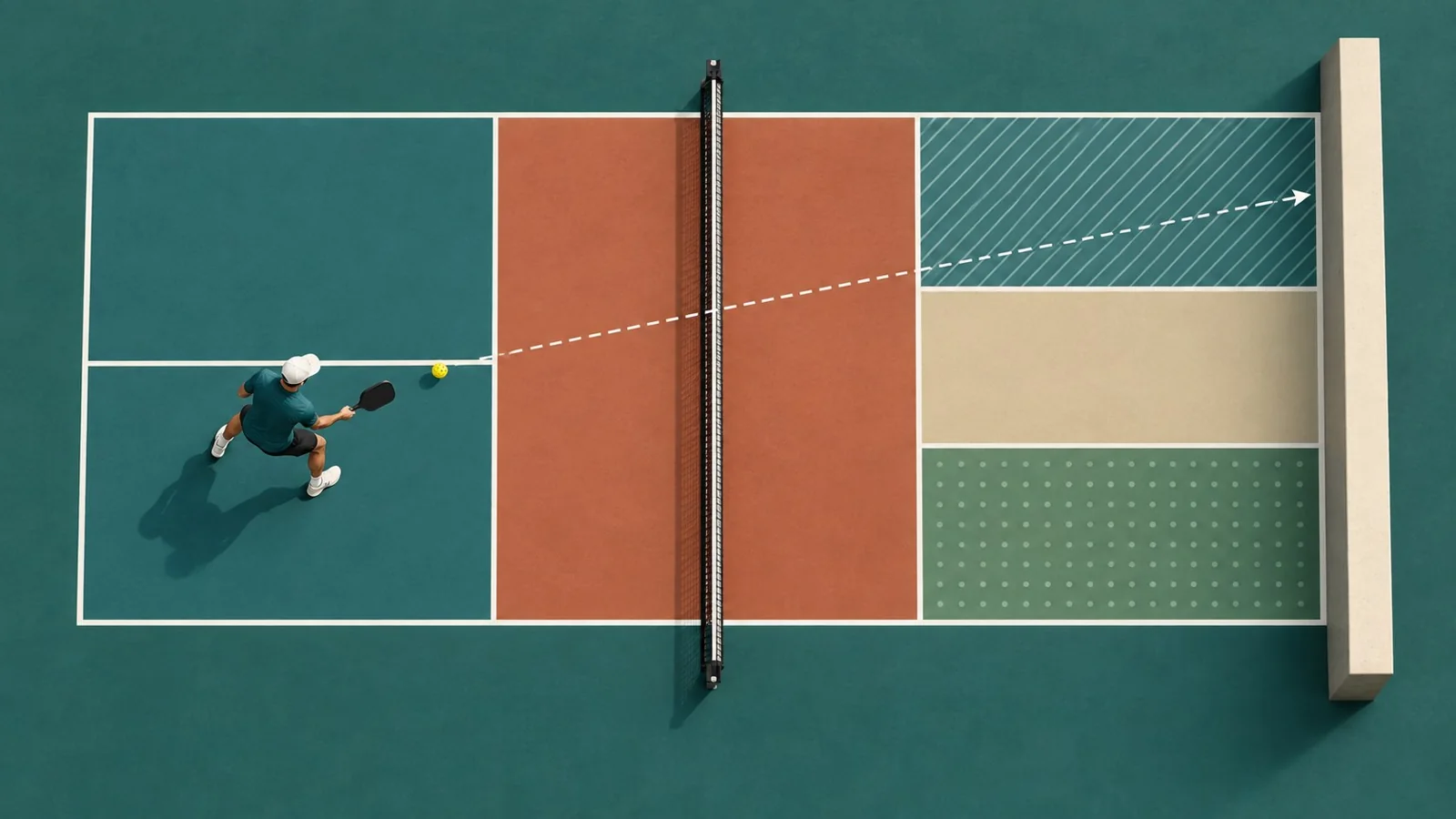
You do not need a partner to make a pickleball practice session useful. With a wall, a few balls, a paddle, and a clear target, you can repeat the movements that often disappear inside casual games. The key is to choose one skill, define what a good repetition looks like, and record enough attempts to see whether your control is improving.
Set up a focused solo session
A flat wall or backboard handles most of the work. Add a few balls and a strip of tape or chalk at net height as a visual reference. Keep the area clear, use a safe surface, and decide your rep target before you begin. A short block with one purpose is more valuable than hitting randomly until you are tired.
Wall dinks for touch
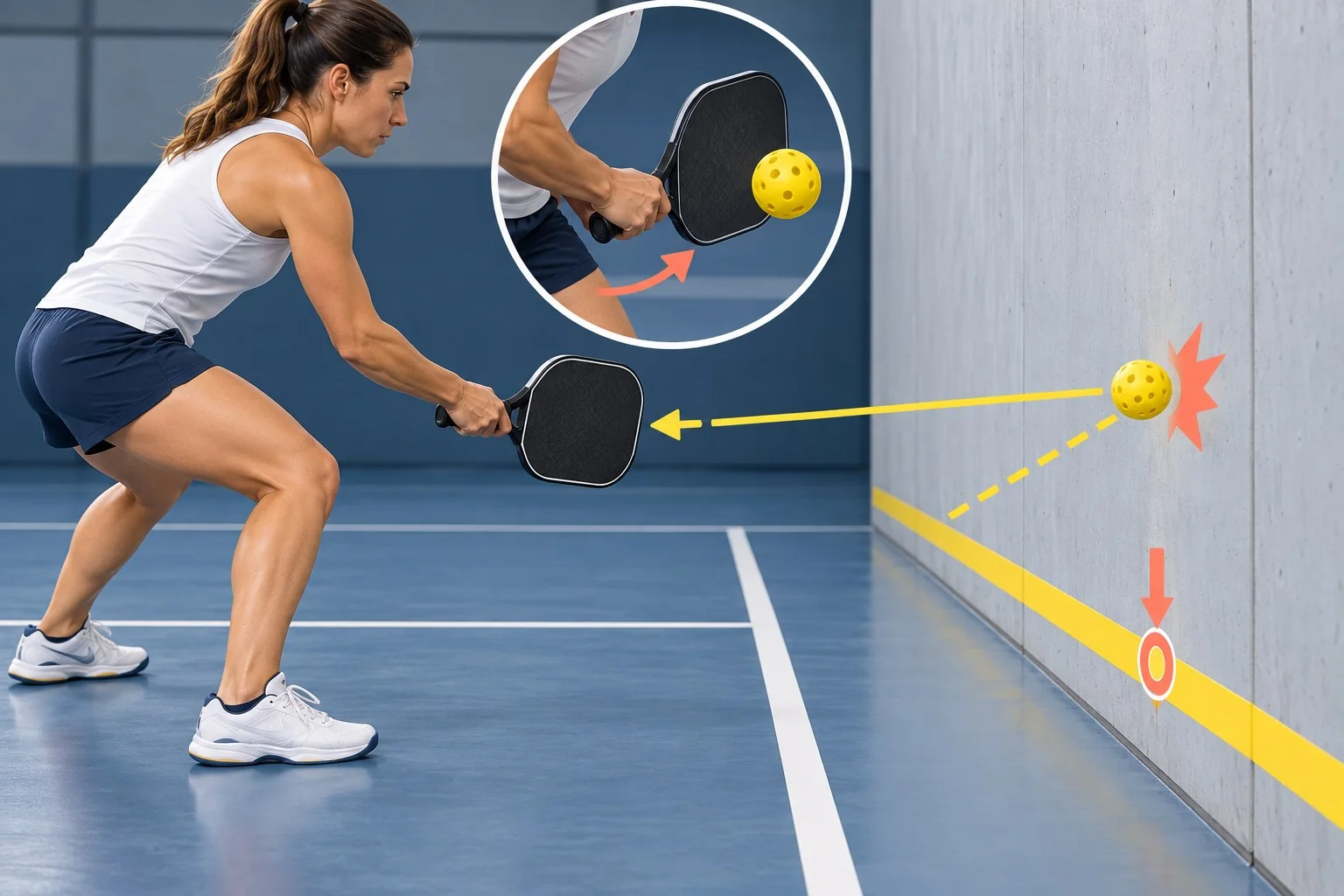
Stand about seven feet from the wall, roughly the distance associated with the kitchen line. Alternate forehand and backhand dinks toward the target line, keeping the ball below net height on each return. Use a short stroke, a stable paddle face, and soft pressure in the hand. Start with sets of 25 consecutive contacts. When that becomes comfortable, step farther back and compare a roll dink with a slice dink, noting which one breaks down first.
Serve repetition for placement
Place a visible target in the back portion of each service box. Hit 20 serves toward your weaker zone, 20 toward the stronger zone, then alternate sides. Count how many land in the intended area. The objective is not simply more speed; it is a repeatable motion and dependable placement that makes the next return easier to handle.
Third-shot drop against a wall
From the baseline, drop-feed the ball and let it rise to about knee height before making a soft third-shot drop toward the net-height reference. Watch the arc. The ball should rise, reach its peak before the target line, and descend as it travels forward. If it reaches the wall above your reference, reduce the height; if it stays below it, examine whether you are contacting too early. Begin with 50 controlled attempts rather than chasing power.
Volley wall work for quick hands
Move six to eight feet from the wall and volley continuously with a compact punch. Keep the paddle in front of the body and aim at one consistent spot. Work for 60 seconds on the forehand, 60 on the backhand, then alternate every ball. As control improves, move closer so the rebound returns sooner. This is a reaction and hand-position drill, not a power contest.
Add movement, decisions, and measurement
Figure-eight footwork
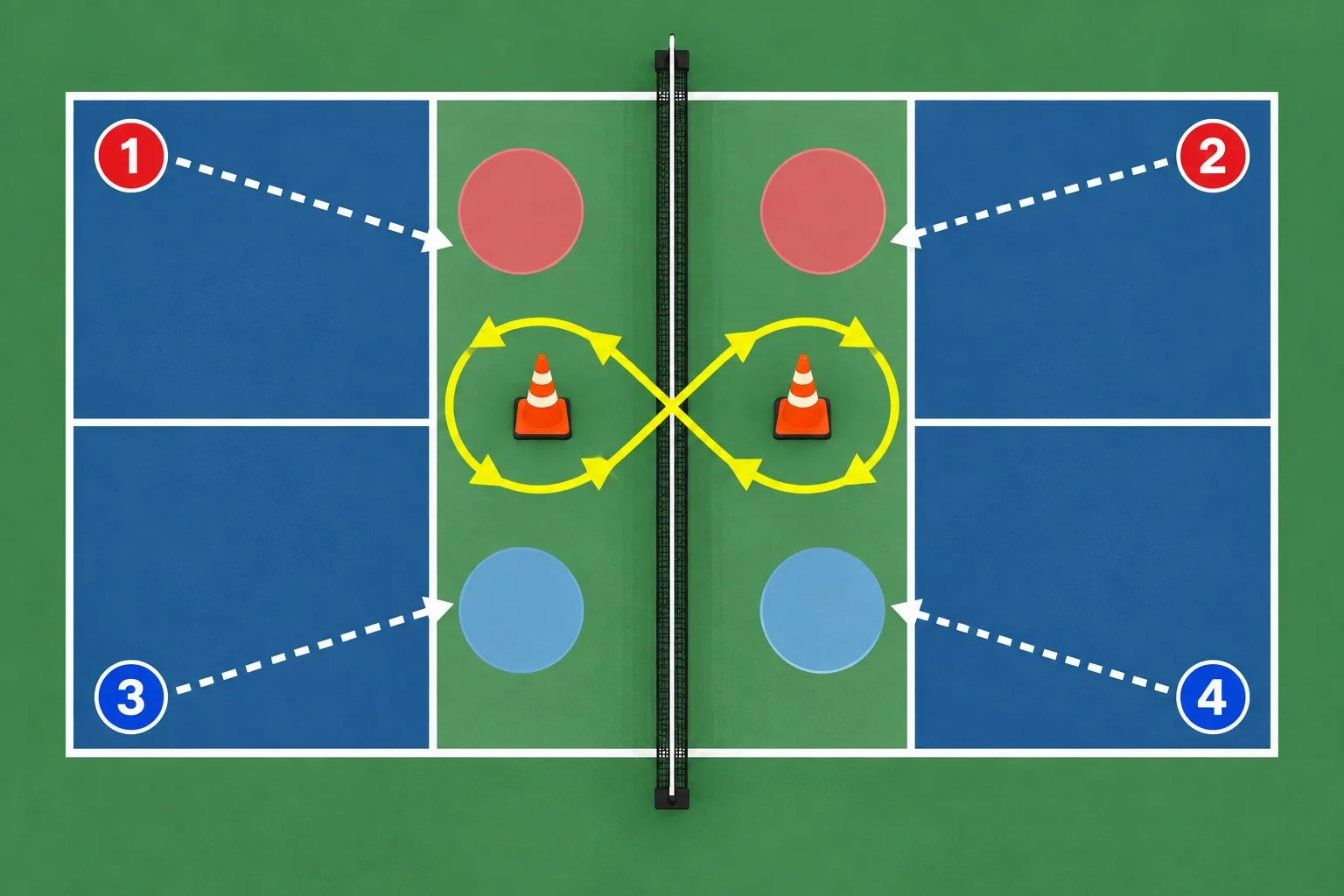
Set two cones or markers about eight feet apart near the kitchen line. Shuffle around them in a figure-eight while keeping your chest oriented toward the net. Each time you pass through the middle, shadow a dink or volley. Stay low, keep weight on the balls of your feet, and return to a neutral position before changing direction. Work for two minutes, rest for one, and repeat three times.
Return-of-serve movement
Start two or three feet behind the baseline. Rehearse a small split step as the imagined serve arrives, then move into the return stance and complete the swing path. Practise an explosive first step toward the backhand side and hip rotation for the forehand side. If you have a safe open court, add self-toss feeds and aim for controlled depth before moving forward.
Target practice
Place two targets near opposite kitchen sidelines. From the kitchen line, send dinks toward each target; from the baseline, send drops toward the same areas. Add a third target in the transition zone near an opponent's feet. Record how many of 50 attempts land within a handspan of the target. That number gives you a clearer training signal than whether one shot felt perfect.
Build a routine you will repeat
A practical 30-minute session can begin with five minutes of figure-eight movement and light volleys. Spend ten minutes on wall dinks, ten on serves or third-shot drops, and five on target practice. Rotate the priority from session to session, and keep a simple note of repetitions, successful streaks, and the first error that appears.
Solo work builds repeatable mechanics and confidence, but it does not replace live play. Once the contact feels stable, return to games to practise reading opponents, choosing shots, and adapting to unpredictable speed. Two or three focused sessions each week can make that live practice more productive because every repetition has a purpose.