Pickleball Speedup Decision: Check Height, Position, and Openings
A practical speedup decision guide: check height, balance, and openings before changing a soft kitchen exchange into offense.
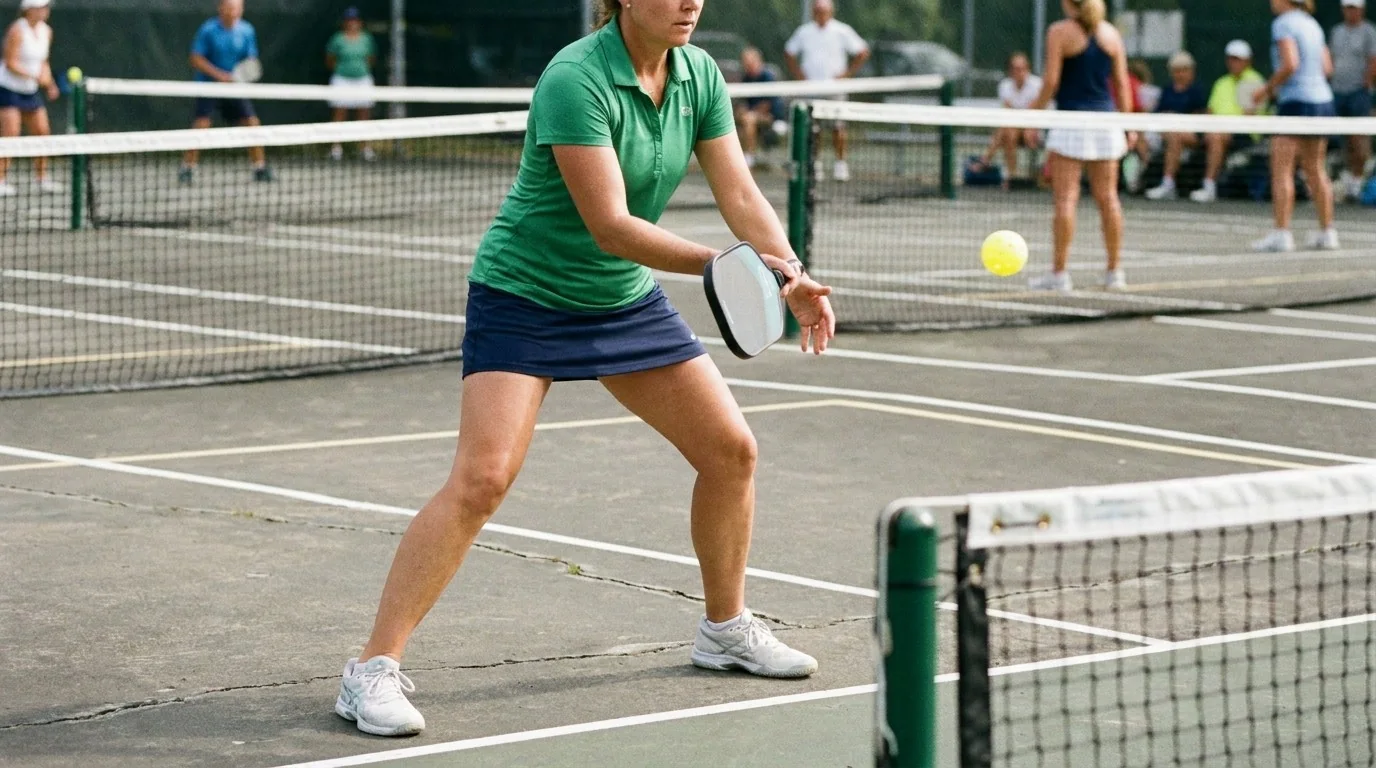
A pickleball speedup is not just a harder swing. It is a choice to turn a soft exchange into offense when the ball, your position, and the open court give you enough margin. If one of those pieces is missing, keep the ball soft and wait.
Start with the ball height
The best speedup ball rises near or above net height. From there, you can move the paddle forward while keeping the ball on a downward path. When the ball peaks well below the net, you have to lift it. Trying to speed up from that contact point adds risk without giving you a useful angle.
Watch what happens after the bounce instead of deciding too early. If the ball keeps climbing into your contact window, prepare a compact acceleration. If it is dropping low, choose a dink, reset, or controlled placement.
Make sure your base is stable
Speed up only when you can contact the ball from a stable base. Your feet do not have to be frozen, but you need enough balance to recover if the opponent blocks the attack. Reaching while moving sideways makes the paddle face less reliable and leaves you vulnerable to the next ball.
Keep the paddle in front, use a short backswing, and create controlled pace with the shoulder and forearm. A full windup costs recovery time. The aim is a repeatable change of speed, not maximum power.
Find space before you accelerate
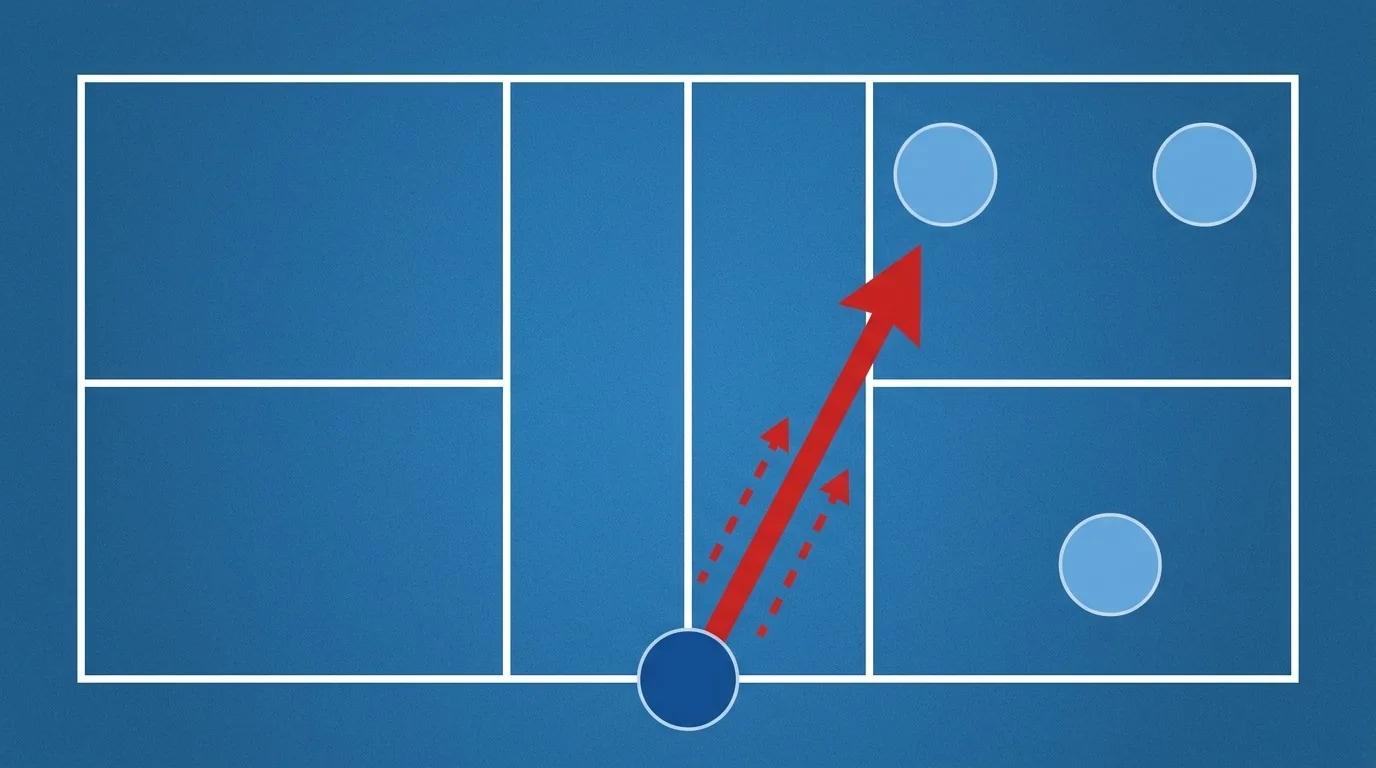
Look for a clear target: the open middle seam, space beside a moving opponent, or the opponent’s weaker side. Do not speed up simply because the ball is high. When both opponents are balanced and ready, a patient dink may open a better lane on the next exchange.
Leave margin inside the lines. A speedup toward the opponent’s body can work because it shortens reaction time, but choose a direction that still lets you recover. If a larger middle target is available, do not force the ball through a tiny sideline gap.
Adjust the choice to your position
From the kitchen line with a stable base, you can accelerate a suitable ball and prepare for the counter. In the transition area, be more selective. A low ball at your feet is usually a reset, not a speedup. From deep court, choose a shot that helps you move forward instead of forcing an attack from a poor contact point.
Recover as soon as the speedup is played. Expect a block or counter and bring the paddle back to ready position. Your partner should know whether you played an attack, a controlled placement, or a setup so the middle does not go uncovered.
Use a three-question check
Ask: Is the ball high enough? Are my feet stable? Is there a real opening? When all three answers are yes, choose a compact speedup with a safe target. When any answer is no, keep the exchange soft, reset the ball, or move into a better position.
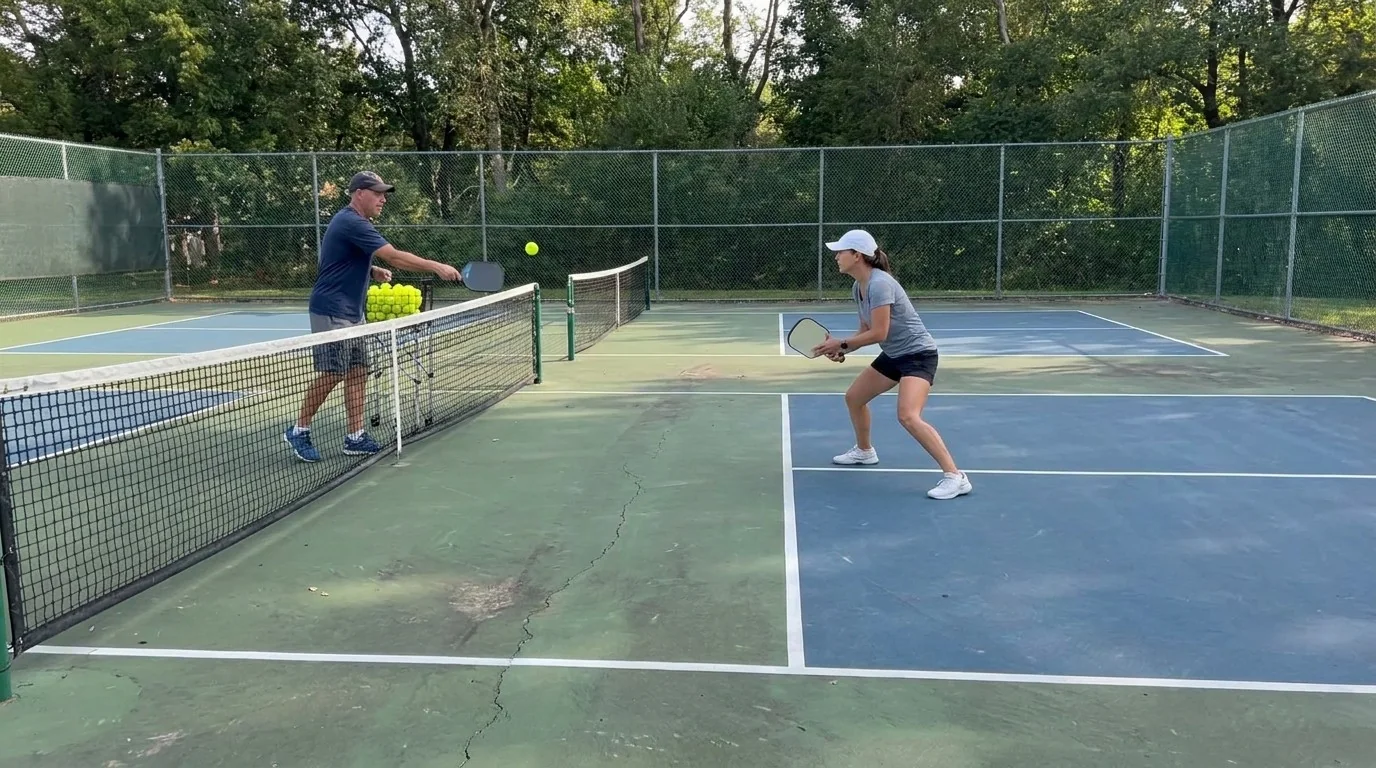
Practise with three feeds: one clearly high, one borderline, and one low. Call “go” or “hold” before contact. Judge the result by the ball’s height, the target, and your recovery, not only by whether the point ended. That links the decision to real rallies.
Reliable speedup offense is disciplined: read the height, confirm your balance, find space, accelerate briefly, and recover for the counter. Waiting for the right combination means fewer spectacular errors and more attacks you can support with the next shot.