Pickleball Spin Shots: When to Use Topspin or Slice
A practical guide to topspin and slice: understand the paddle paths, bounce differences, and rally situations that call for each type of spin.
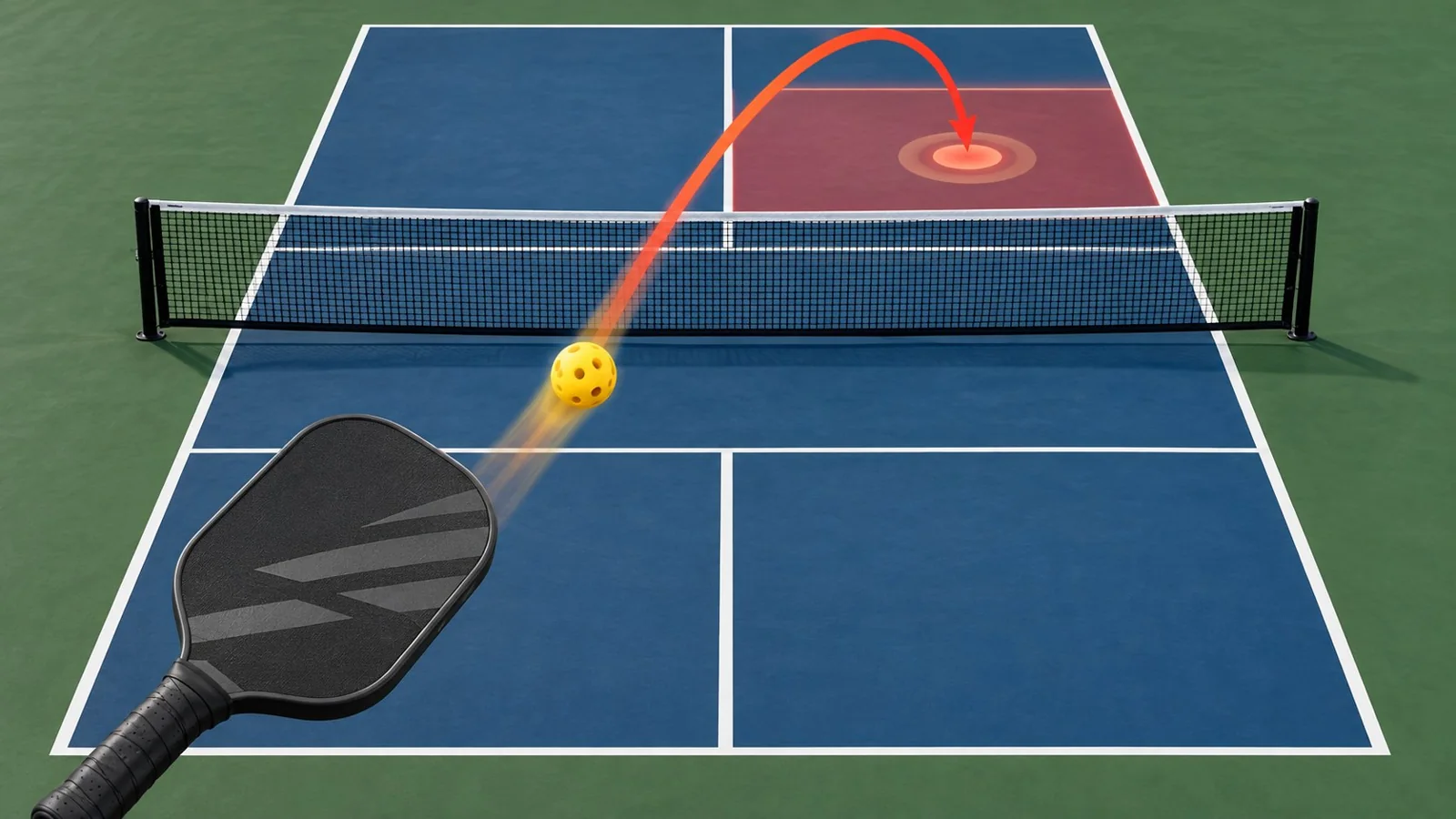
Learning pickleball spin shots adds control and variety to a rally. Spin changes the ball’s flight and bounce, so the same basic stroke can behave differently depending on the paddle path. The two main options are topspin, which rotates forward, and slice, which creates backspin or sideways rotation.
What topspin does
Topspin rotates forward relative to your body. That forward rotation helps pull the ball downward during flight, allowing you to hit with more pace while keeping the shot inside the court. After the bounce, a topspin ball tends to jump forward toward the opponent, making the return more difficult.
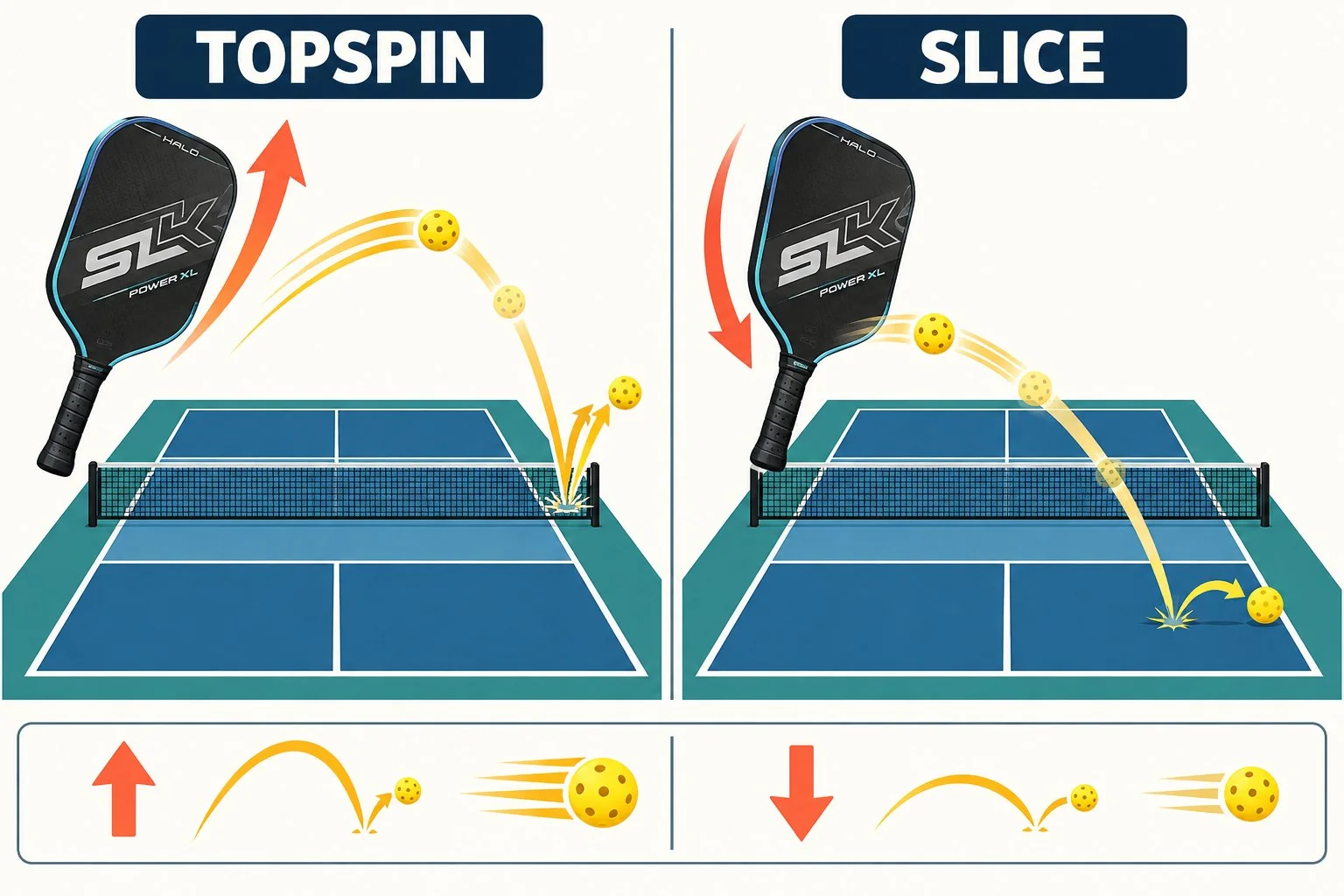
Topspin is generally the more offensive choice. Use it when you want to pressure the opponent, change the pace, or make an aggressive shot safer over the net. The aim is not simply to brush harder; the spin should support a controlled trajectory and a useful landing.
What slice does
Slice produces backspin or sideways spin. Instead of rotating forward, the ball rotates backward relative to your body. This tends to keep the ball in the air slightly longer and produces a lower bounce after it lands.
Slice is usually slower than topspin, which makes it useful when you need extra recovery time or want to reset the rally. A lower, slower bounce can also make an opponent lift the next ball rather than attack comfortably. Treat it as a defensive or control option, not as a weaker version of topspin.
Create spin with the paddle path
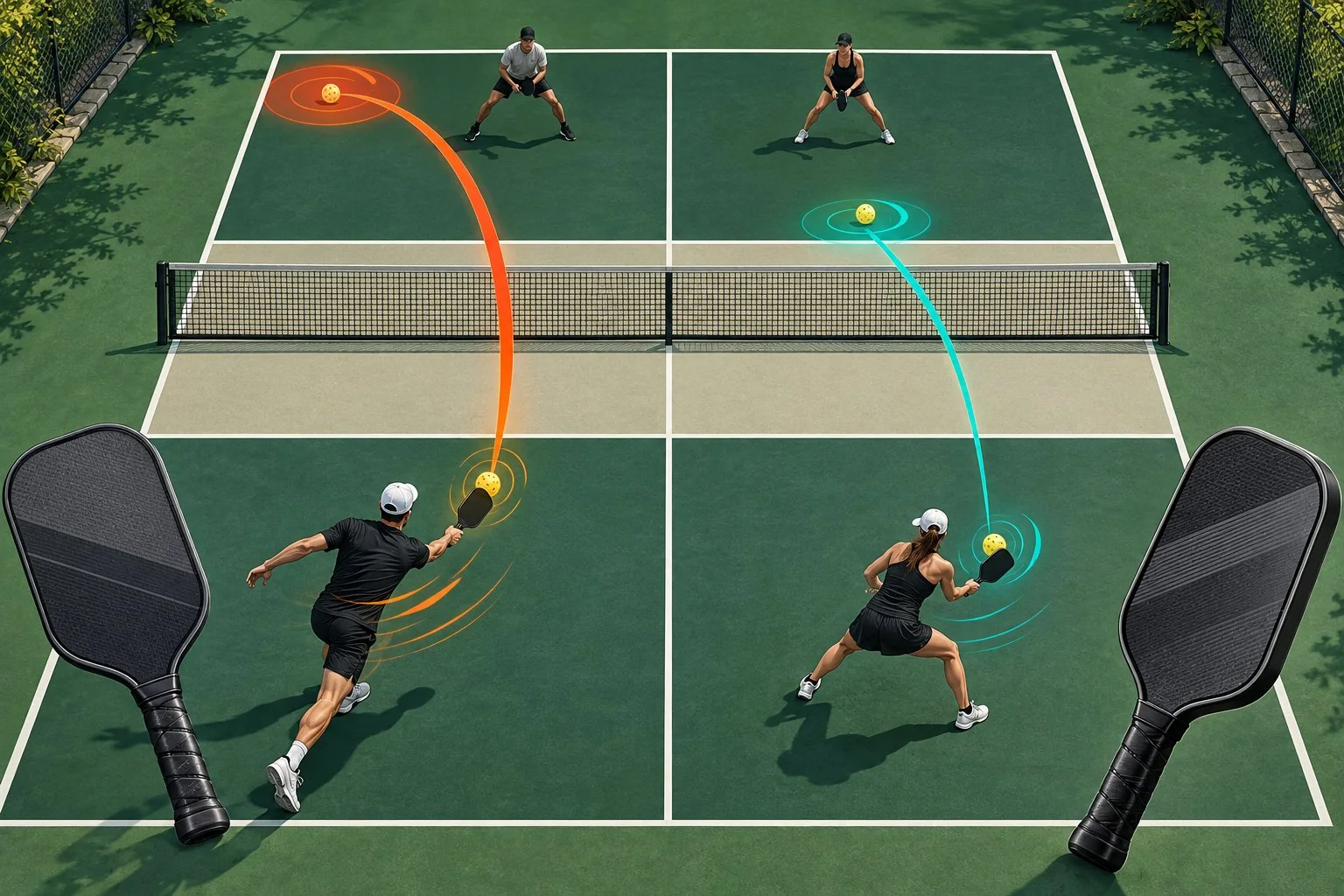
Spin comes from friction between the paddle and the ball. The direction of the paddle’s movement determines the rotation. A low-to-high swing brushes upward across the ball and generates topspin. A high-to-low swing creates slice and helps the ball stay lower after the bounce.
Keep the action compact enough to remain balanced. Do not rely on a sudden wrist snap to manufacture rotation. Start the path with the shoulder and arm, make contact in front, and finish toward the intended target. A stable paddle face and a controlled path are easier to repeat than a frantic swing.
Choose spin by the rally situation
Topspin suits a more aggressive shot when you have enough space and time to move forward through contact. It can help a drive dip back into the court or make an attack harder to counter. Slice is useful when slowing the rally, defending, or buying time to recover your position.
Practise the choices separately first. Hit a series of low-to-high swings and watch the ball’s forward bounce. Then rehearse high-to-low slice swings and observe the lower, slower rebound. In a partner drill, alternate the two paths and call “topspin” or “slice” before contact so the exercise trains recognition as well as mechanics.
The main lesson is to match spin to the moment. Topspin can add pressure and a safer aggressive trajectory; slice can reduce pace, lower the bounce, and create recovery time. By learning how each path changes the ball, you can expand your pickleball spin shots without swinging harder on every point.