Pickleball Split Step Timing: Move Earlier and Stay Balanced
A practical guide to pickleball split step timing: when to hop, how to land balanced, where to use it, and drills that make the movement automatic.
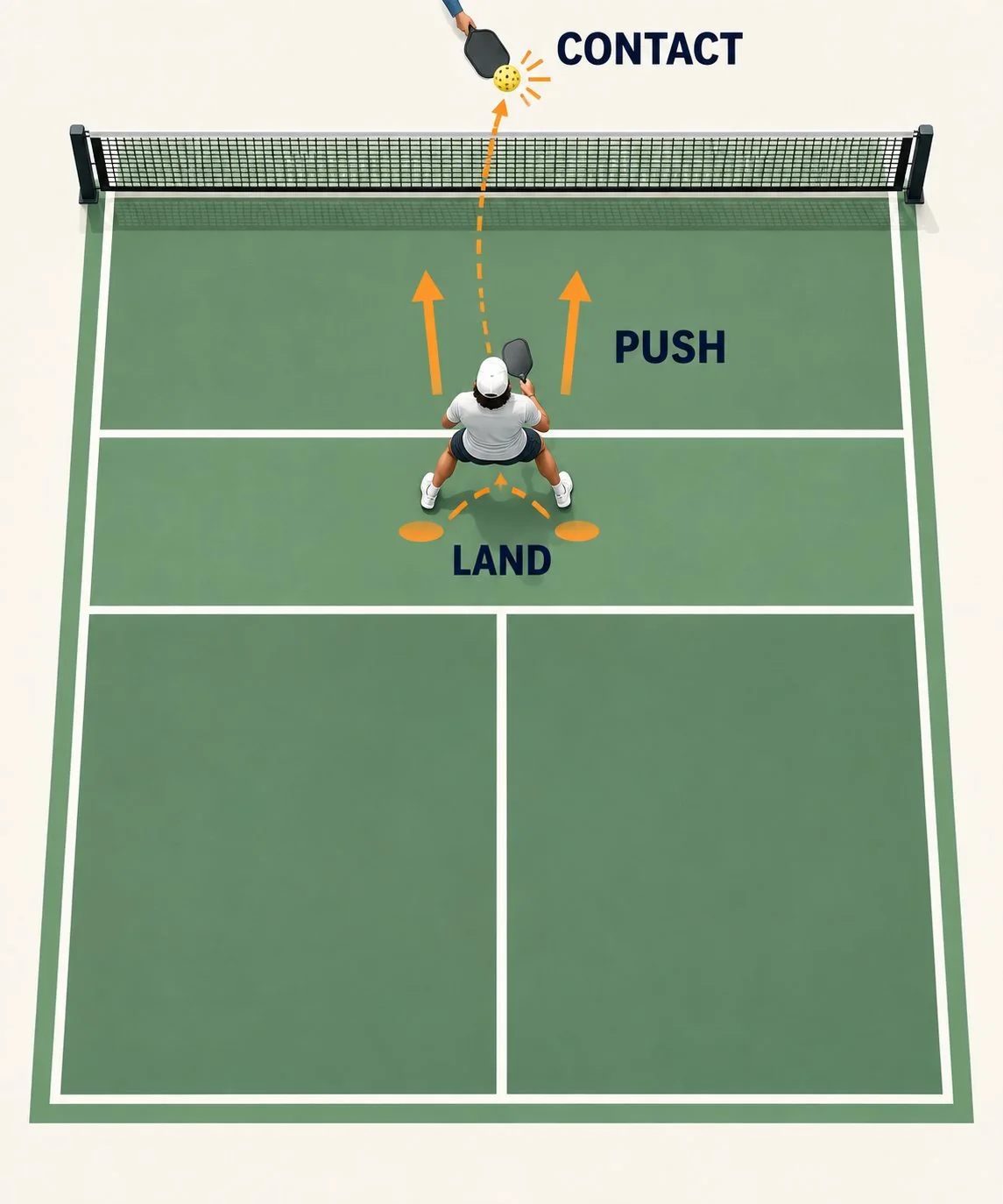
Pickleball split step timing is the small detail that keeps a player from being caught between steps. Instead of waiting for the ball to reveal its direction, you use the opponent’s contact as your cue: make a low, two-foot hop, land balanced, then push toward the shot. It is not a jump for height and it is not a replacement for reading the ball. It is a reset that gives your next movement a better starting point.
What the split step should feel like
Start in a comfortable ready position with your feet roughly shoulder-width apart, knees soft, and the paddle in front of your torso. Keep your weight toward the balls of your feet without leaning so far forward that your heels lift. As the opponent begins the forward part of the swing, unweight both feet. The hop can be barely visible; think of a light bounce rather than a jump.
Your feet should be in the air as contact approaches and land just as the opponent’s ball leaves the paddle. The exact instant will vary with distance and pace, but the principle stays the same: the landing, not the takeoff, puts you in position to move. After you land, read the ball and push off. If it comes wide, take a lateral step. If it comes at your body, create space. If it drops short, move forward with control.
The most useful cue is the opponent’s paddle, not the ball. Watching the ball alone often makes you react after it has already started moving. Watch the swing, begin the small hop, and let the contact tell you which direction to choose.
Where to use it on court
At the kitchen line, use a very small version before each opponent shot. You may not need a visible hop during a fast exchange; a quick weight reset with soft knees can be enough. The goal is to avoid being flat-footed when a speed-up comes toward your hip or shoulder.
In the transition zone, the split step has another job: it helps stop forward momentum. Advance a few controlled steps, split as the opponent contacts the ball, and be ready to reset a ball at your feet. Do not keep running through the contact. A balanced base gives you a better chance to absorb pace and keep the next shot low.
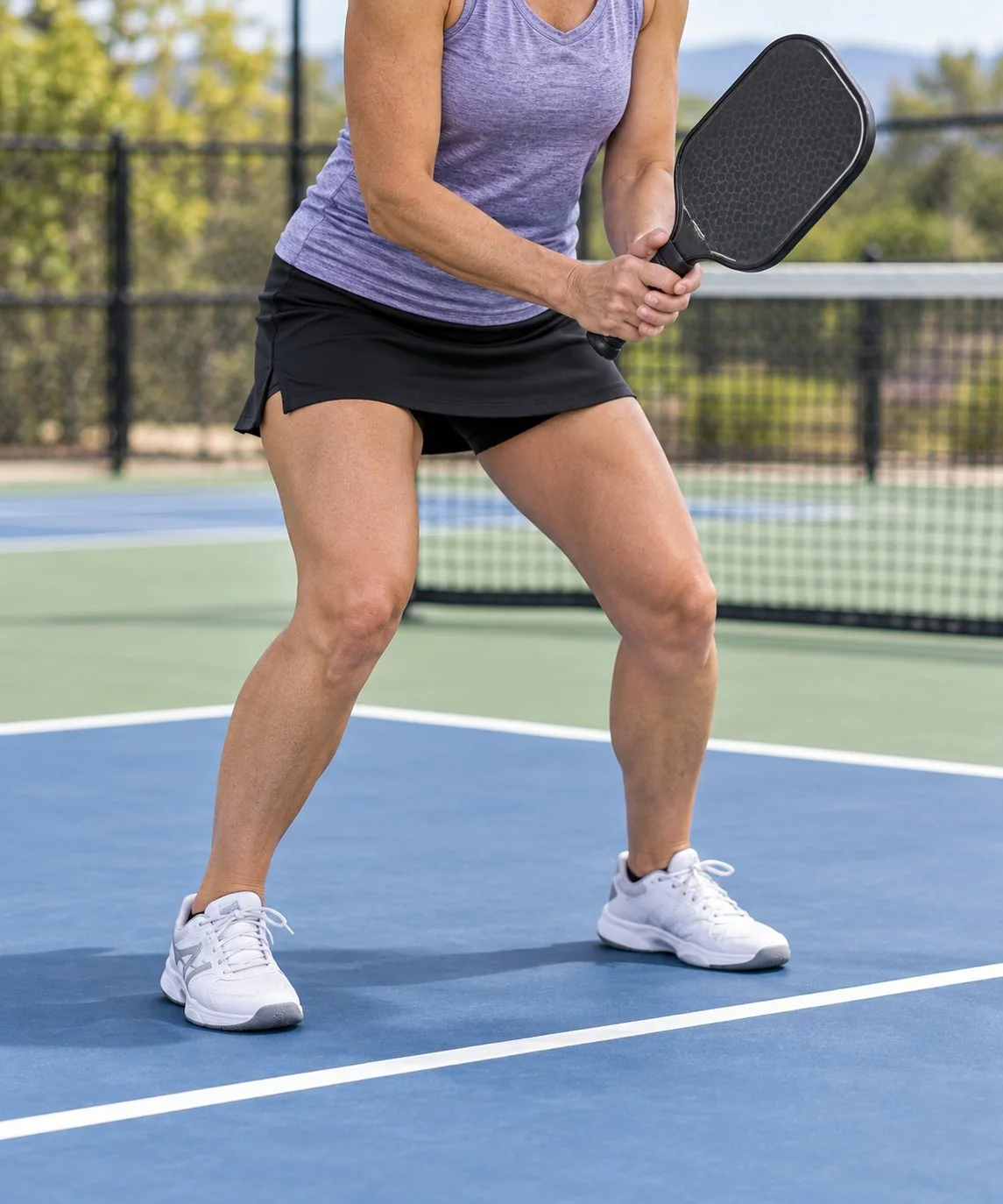
From the baseline, use the same trigger when the opponent is preparing to hit. The hop may be slightly larger because you could need to cover more lateral distance, but it should still be quiet and compact. After the landing, push first and then add a crossover or shuffle step if the ball demands it.
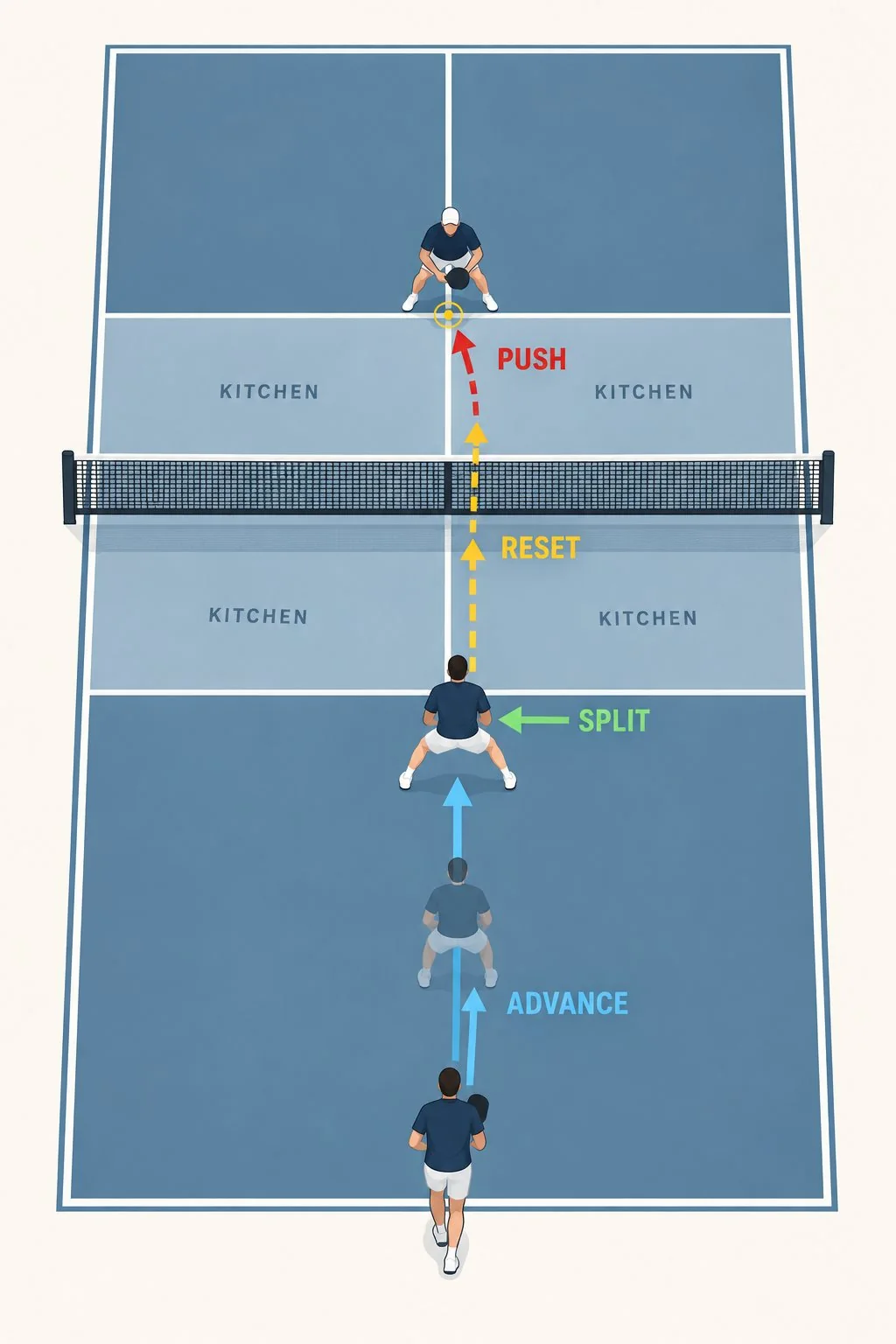
A simple practice progression
1. Shadow rhythm
Without a ball, move forward two or three steps, perform a small split step, freeze your landing, and point your chest toward an imaginary ball. Repeat from both sides. Check that both feet land together, your knees remain relaxed, and your paddle returns to the front. Five rounds of 20 seconds is enough to learn the rhythm without turning it into a jumping workout.
2. Call-and-move feed
Have a partner stand across the net with a few balls. They show a compact backswing, and you split. The moment your feet land, the partner calls left, right, or body. Push in that direction and recover to a ready stance. Begin slowly; timing is more important than speed.
3. One-game constraint
During one recreational game, make split-step timing your only footwork goal. Do not judge success by winning every exchange. Notice whether you arrive at the ball with less lunging and whether your first step feels available in both directions. On the next game, keep the habit but focus on choosing a safer target.
Common errors are easy to spot: jumping too high, splitting after the ball is already moving, landing with straight knees, or letting the paddle drop beside the hip. Lower the hop, watch the contact cue, land quietly, and bring the paddle forward again. With repetition, balanced pickleball footwork becomes less conscious, and split step drills start to support every phase of the rally rather than only obvious fast exchanges.