Pickleball Third-Shot Drop Footwork: Stop, Set, and Swing
A practical guide to pickleball third-shot drop footwork: brake before contact, create space, land the ball safely, and move forward with balance.
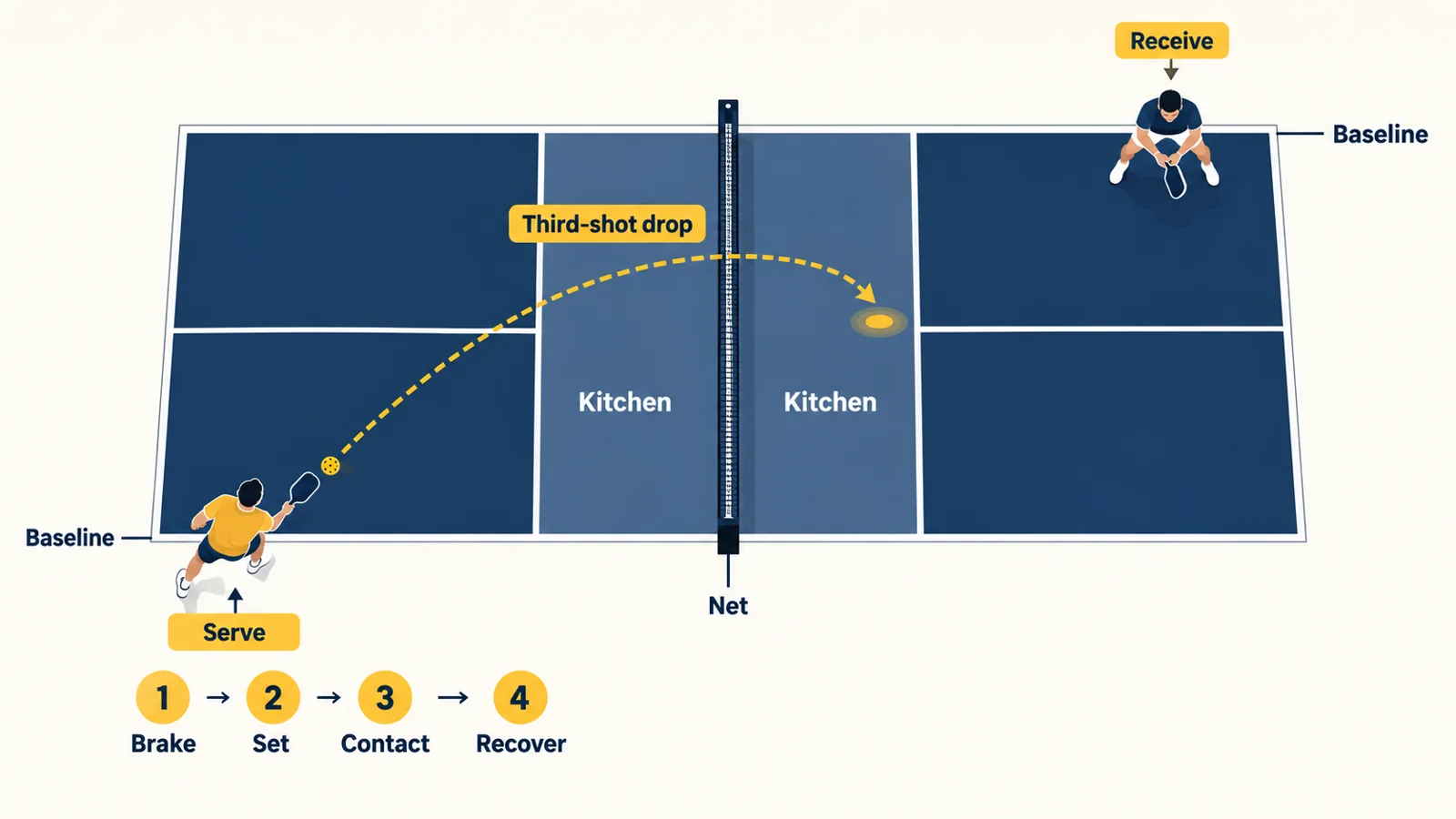
The pickleball third-shot drop footwork is less about a pretty swing than arriving at the ball under control. If your feet keep drifting forward, the paddle path changes, contact gets late, and a shot meant to arc into the kitchen floats up instead. The useful sequence is simple: brake, set your spacing, contact in front, then recover.
Why footwork decides the third-shot drop
After the serve and return, you often have time to move, but not unlimited time. Start behind the baseline with the paddle ready and your eyes on the return. As the ball travels, use small adjustment steps rather than a long sprint. Your goal is to reach a stable hitting window, not a particular painted spot on the court.
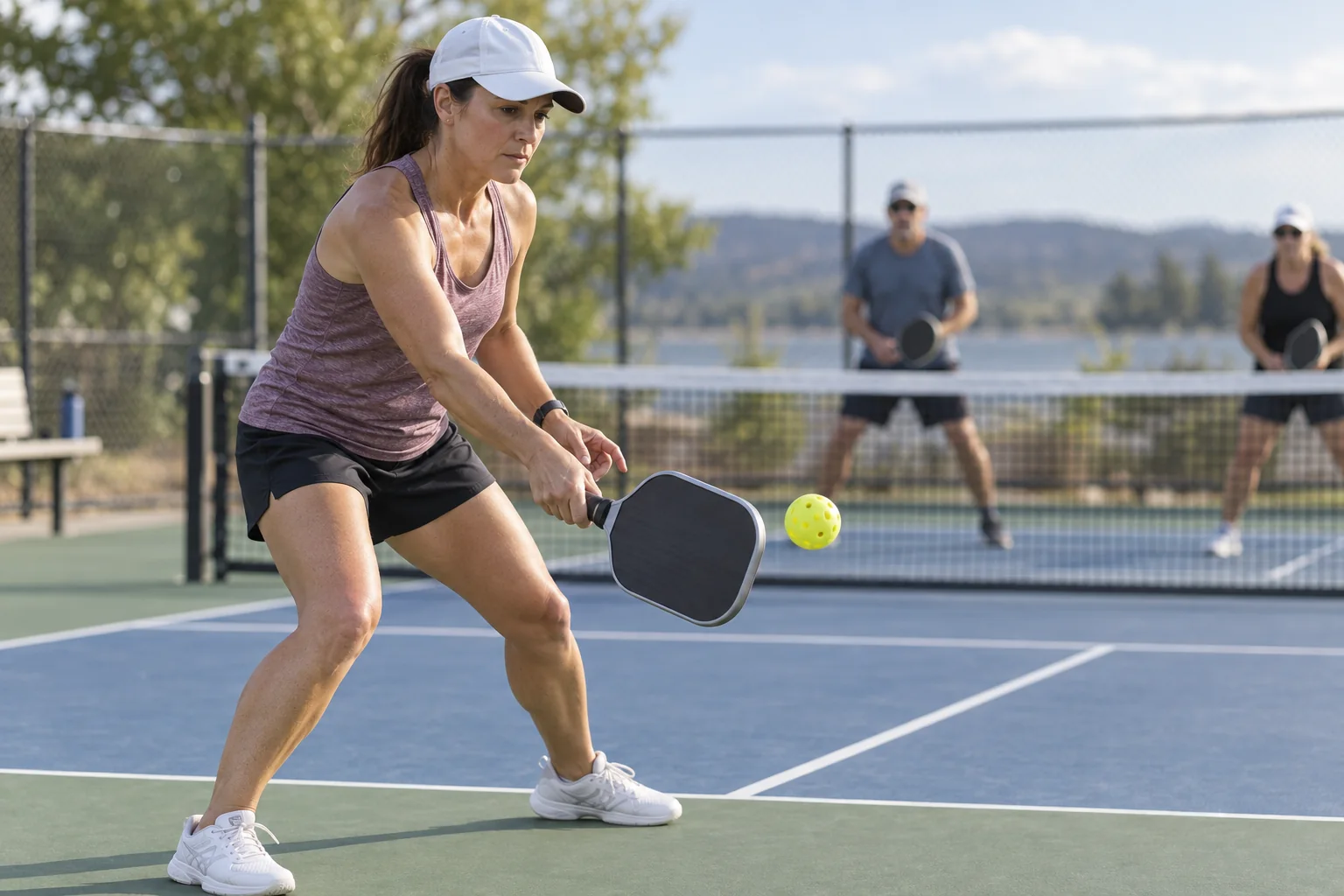
The key braking moment comes before the swing. As you approach the ball, lower your center of gravity, soften both knees, and make a compact stop or split-step. If your body is still falling toward the net at contact, your hand tends to lift the ball or pull it long. A quiet base lets the shoulder and arm make a repeatable low-to-high motion.
Spacing matters too. Leave enough room for the paddle to travel in front of your lead hip. Crowding the ball forces a jammed contact; reaching from too far away makes the face unstable. Adjust with short side steps, then let the ball come into the body’s comfortable window. The drop can be crosscourt or down the line, but the first priority is height and margin over the net.
How to perform the movement step by step
1. Read the return and choose a landing window
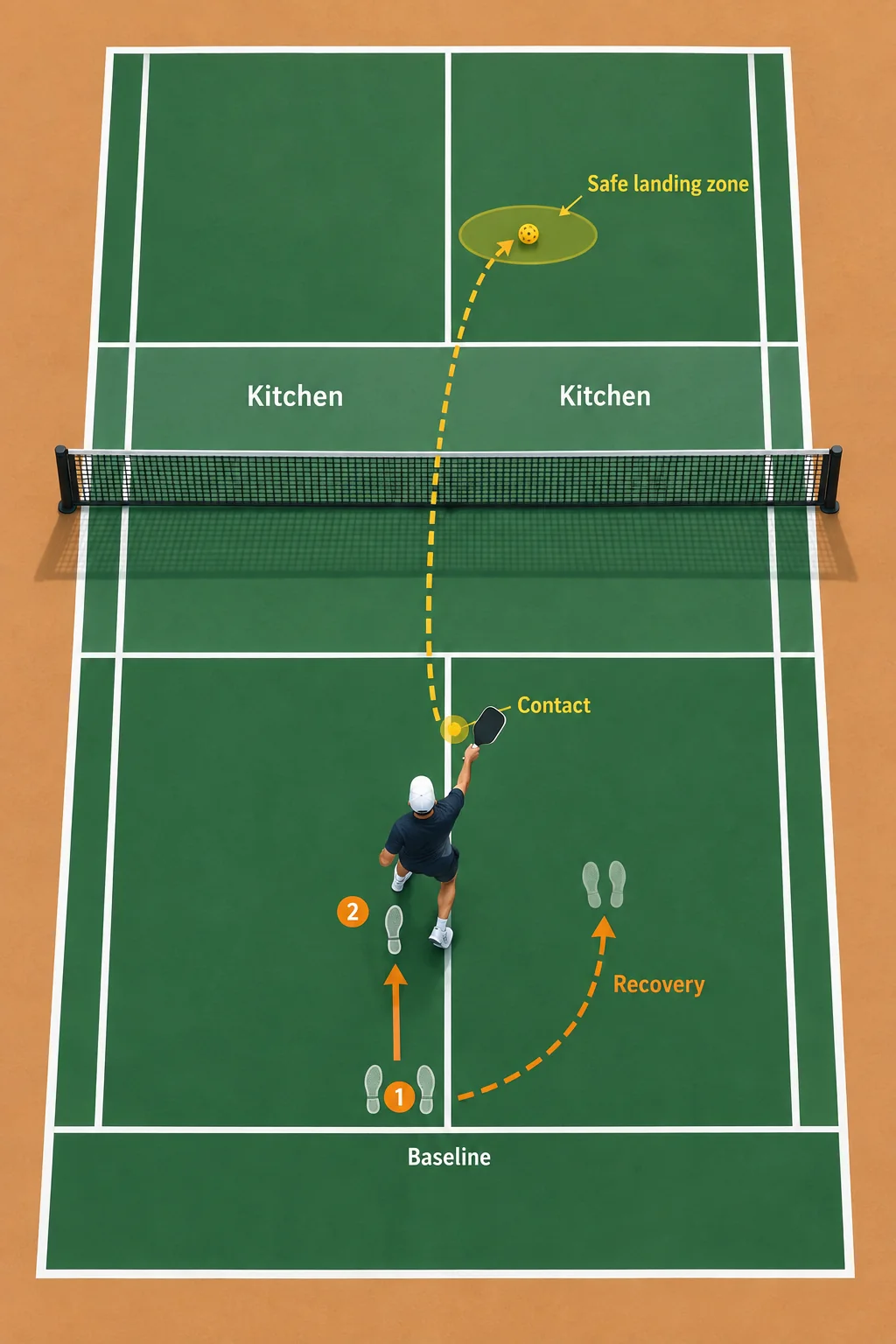
Watch the ball after its bounce. A deep return gives you less time and may call for a higher, safer arc. A shorter return can allow you to move in sooner, but do not rush simply because the ball is available. Pick a broad target in the opponent’s kitchen and aim to make the ball descend before it reaches that zone.
2. Brake with small steps
Move back or sideways first, then decelerate. Keep your chest reasonably upright, paddle in front, and feet separated enough to support balance. Avoid planting one rigid leg while twisting your upper body. The last two or three steps should make the contact distance feel predictable.
3. Set the paddle and contact in front
Use a relaxed grip and a compact backswing. Let the paddle head begin below the ball, then rise through contact without a sudden wrist scoop. Contact in front of the body, with the face slightly open enough to create a controlled arc. The correct amount of lift depends on your speed, ball position, and wind; copy the result, not a fixed swing size.
4. Recover only after the ball is safe
Do not sprint forward before you know whether the drop cleared the net and stayed low. Finish balanced, watch the opponent, and take the next step when the shot gives you time. If the ball is attacked back, stop again in the transition zone rather than charging blindly.
Drills that connect feet to touch
Begin with shadow repetitions: start at the baseline, take adjustment steps, brake, simulate contact, hold the finish for one second, and recover. Complete three sets of eight repetitions, alternating forehand and backhand sides.
Next, ask a partner to feed returns at three depths. Your partner should vary the feed enough that you must decide when to stop. Count a repetition as successful when you are balanced at contact and the imagined ball would travel with safe net clearance; do not count only perfect landings.
For a decision drill, alternate between a drop and a drive. Use the drop when you arrive balanced and can create a controlled arc. Choose a drive or a neutral reset when the ball is too deep, too low, or has pushed you off balance. The point is to connect footwork with shot choice, not to force a drop from every return.
Common fixes are straightforward: shorten the final steps if you crowd the ball, brake earlier if you contact while moving, and raise the arc slightly if your drops repeatedly clip the net. Keep the session short enough that your feet remain precise. Ten focused minutes can teach more than a long block of rushed swings.
Quick checklist before your next game
- Start moving early, but finish the approach with adjustment steps.
- Brake before the paddle accelerates.
- Keep contact in front and the grip relaxed.
- Aim for a generous kitchen landing window.
- Recover after reading the result, not before.
A reliable pickleball third-shot drop footwork gives you time to reach the kitchen and makes the next ball easier. Build the feet first; the softer swing usually follows.