Pickleball Third Shot Drop: Build Height, Depth, and Recovery
Learn how to shape a reliable third-shot drop with enough net clearance, a useful kitchen landing, and balanced movement toward the line.
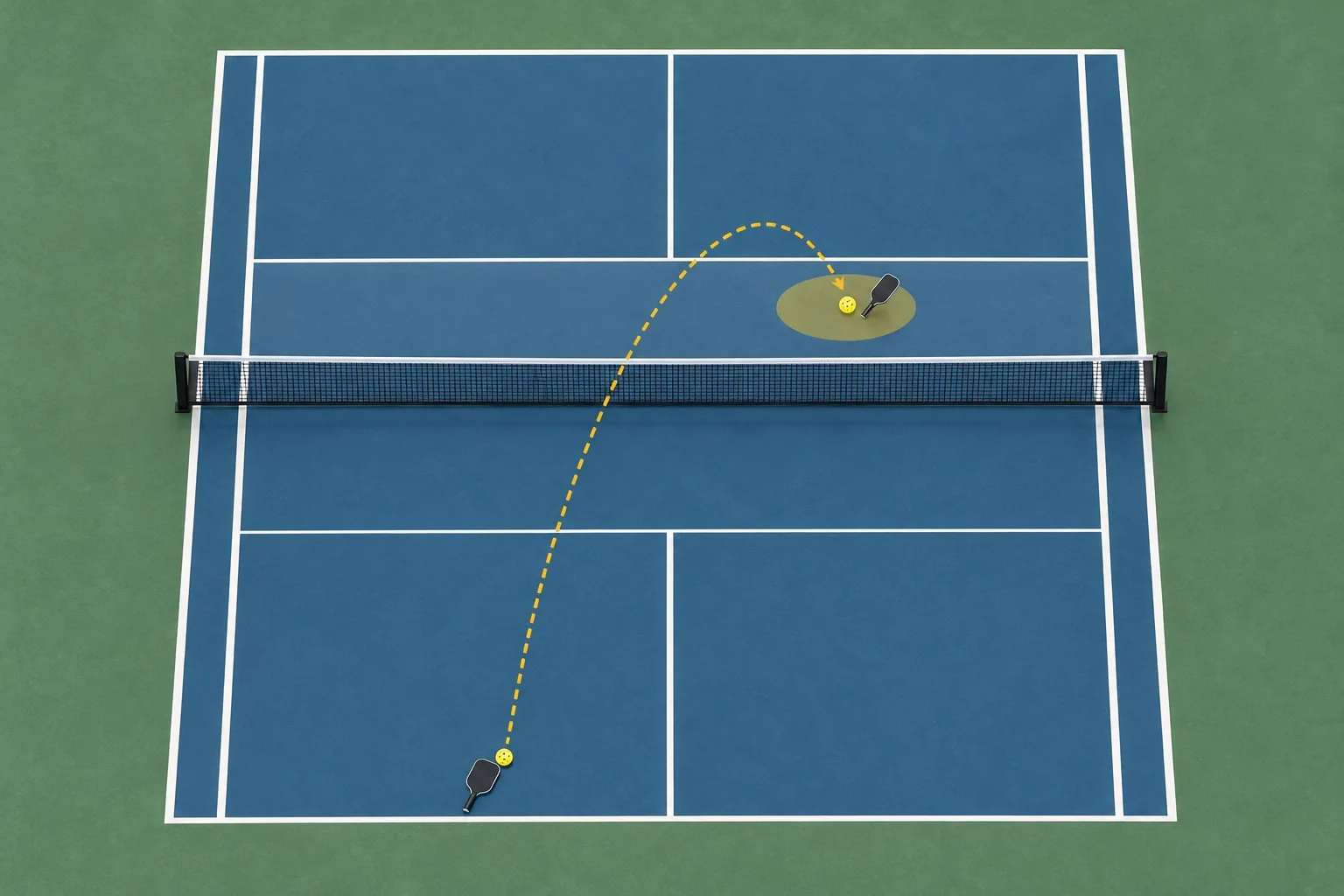
The third-shot drop is a transition shot, not a soft version of a drive. You hit it from deep court and try to make the ball arc over the net, bounce in the opponent’s non-volley zone, and arrive low enough that they cannot attack comfortably. A good drop gives you time to move forward behind it. A forced drop from a poor position usually gives away that time.
Build a repeatable drop from the baseline
Begin with a balanced split step as the return travels toward you. Read the bounce before choosing the swing: a deep, low ball demands more lift, while a higher ball that sits in front of you gives you more control. Use a continental or comfortable neutral grip, keep the paddle head quiet, and prepare without a large backswing.
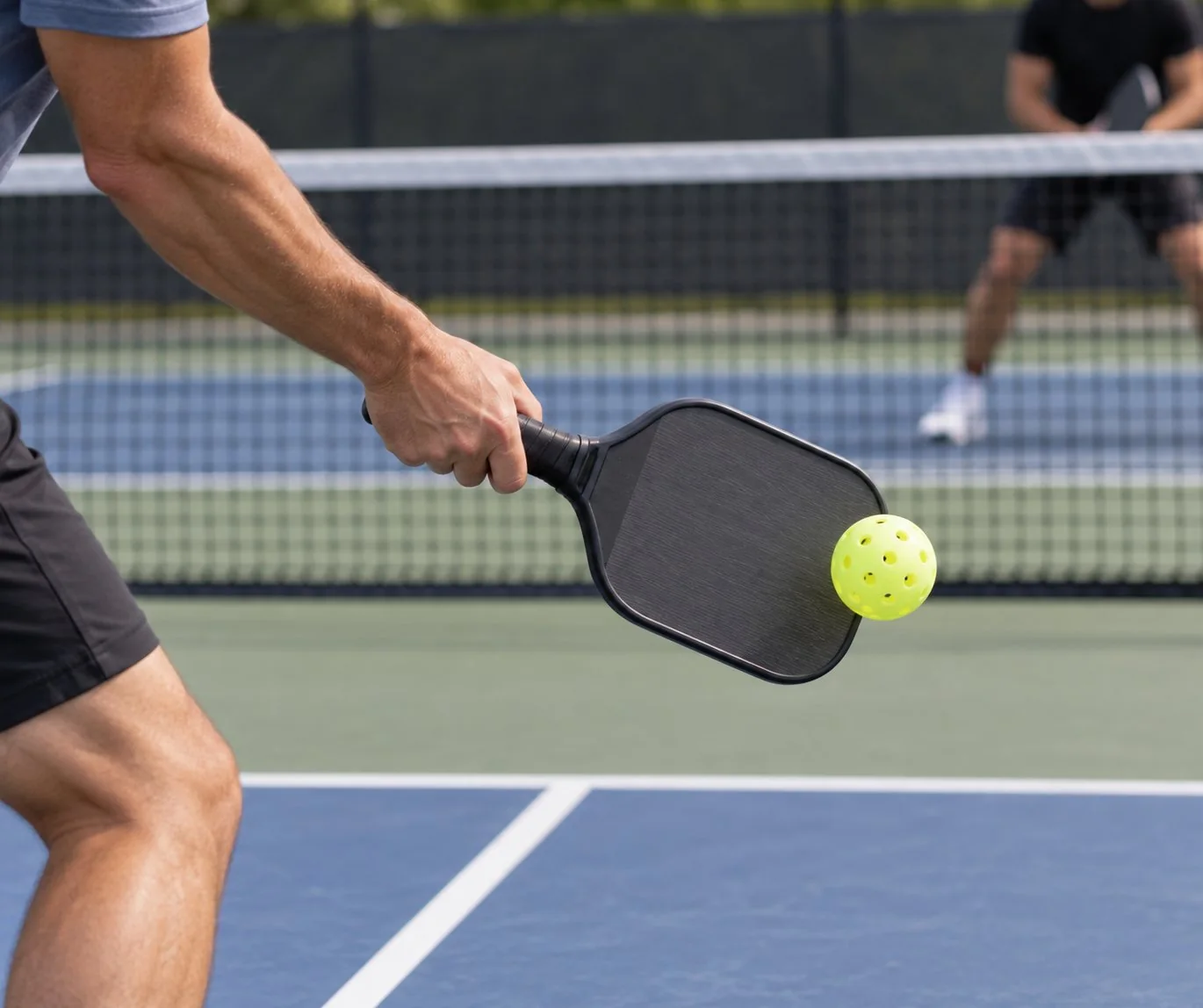
Let the legs and shoulder turn place the paddle behind the ball. The contact should be in front of your lead hip, with a relaxed hand and a smooth low-to-high path. You are guiding the ball upward, not scooping it with the wrist. A slightly open face helps create clearance, but too much face angle sends the ball high and long.
Choose height, depth, and margin
Aim first for a dependable arc that clears the net with room. A ball that barely skims the tape has no tolerance for a small timing error. On the other hand, a very high drop gives the opponent time to move and may bounce at an attackable height. Adjust the arc to the incoming ball: lower contact requires more height, while a comfortable contact can travel on a calmer trajectory.
The landing target is the opponent’s kitchen, preferably away from the player who can attack most easily. The middle of the zone is a useful early target because it provides margin from both sidelines. As consistency improves, choose a corner or the opponent’s backhand side when that target is open. Depth matters too: a ball that lands near the kitchen line and stays low is generally more useful than one that lands short and rises.
Do not judge the shot only by whether it lands in. Ask three questions: did it clear safely, did it bounce low, and did it give you enough time to take the next step? Those answers reveal whether your height and pace are working.
Move forward without rushing
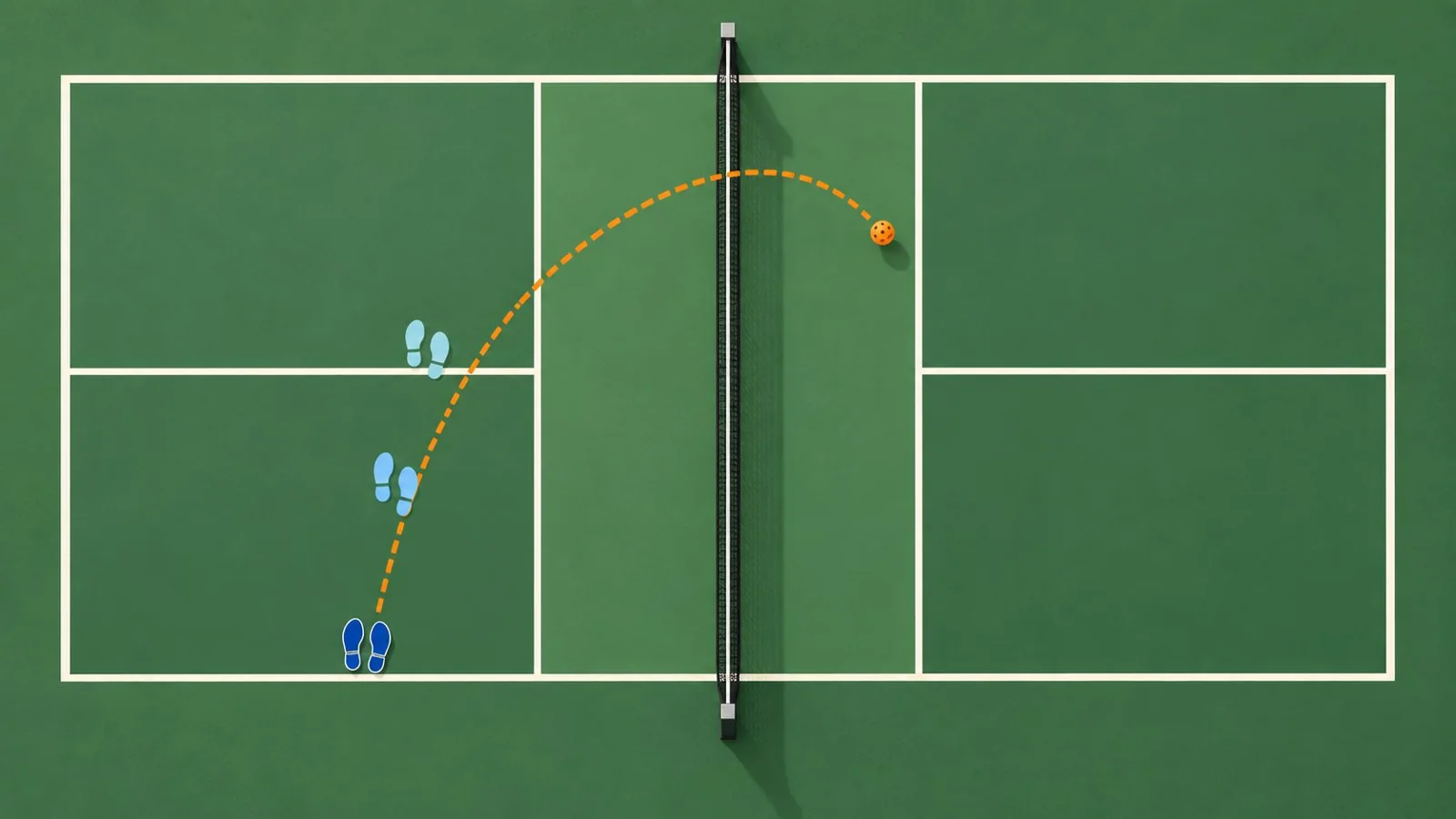
Your feet should begin moving after the ball has left the paddle, not during a desperate swing. Take controlled steps while watching the opponent’s contact. Stop or split step when they are about to strike so you can react to a volley, a dink, or a ball that comes back at your feet. Advancing in a straight sprint leaves you moving through contact and makes the next shot unstable.
If the drop lands short but rises, pause in the transition area rather than charging into an attackable ball. If it lands deep and low, keep moving behind your advantage. If you are pulled wide or forced to hit while falling away, prioritise a higher defensive ball and recover your balance before trying another transition shot.
Fix the most common misses
A drop that flies long often comes from an active wrist, a fast backswing, or contact too far behind the body. Shorten the preparation and soften the grip. A ball that hits the net usually needs a little more clearance or a contact point farther in front; swinging harder is not the first correction. A pop-up can come from an overly open face or too much upward lift, so stabilise the paddle and reduce the arc once your margin is reliable.
Trying to drop every third ball is another mistake. If the return is high and you are balanced, a controlled drive may be the better choice. If the ball is low, deep, or awkward, choose the shot that protects your recovery rather than chasing a perfect landing.
Practise the shot as a sequence
Start with ten feeds from the baseline to one target in the kitchen. Count only balls that clear the net, land in the zone, and leave you balanced enough to move. Next, vary the feed depth and ask the hitter to send the ball slightly left or right. Keep the target generous until the arc is repeatable.
Finish with a transition drill: hit the drop, take two controlled steps, split step as the partner contacts, and play the next ball. The aim is not to win the first drop. It is to connect height, landing, movement, and recovery into one decision. When those pieces work together, the third-shot drop becomes a reliable bridge from the baseline to the kitchen.