Pickleball Third-Shot Drop Slinky Drill: Build Distance One Step at a Time
Build a repeatable third-shot drop by starting near the kitchen, earning two successful balls, moving back two steps, and returning through the same progression.
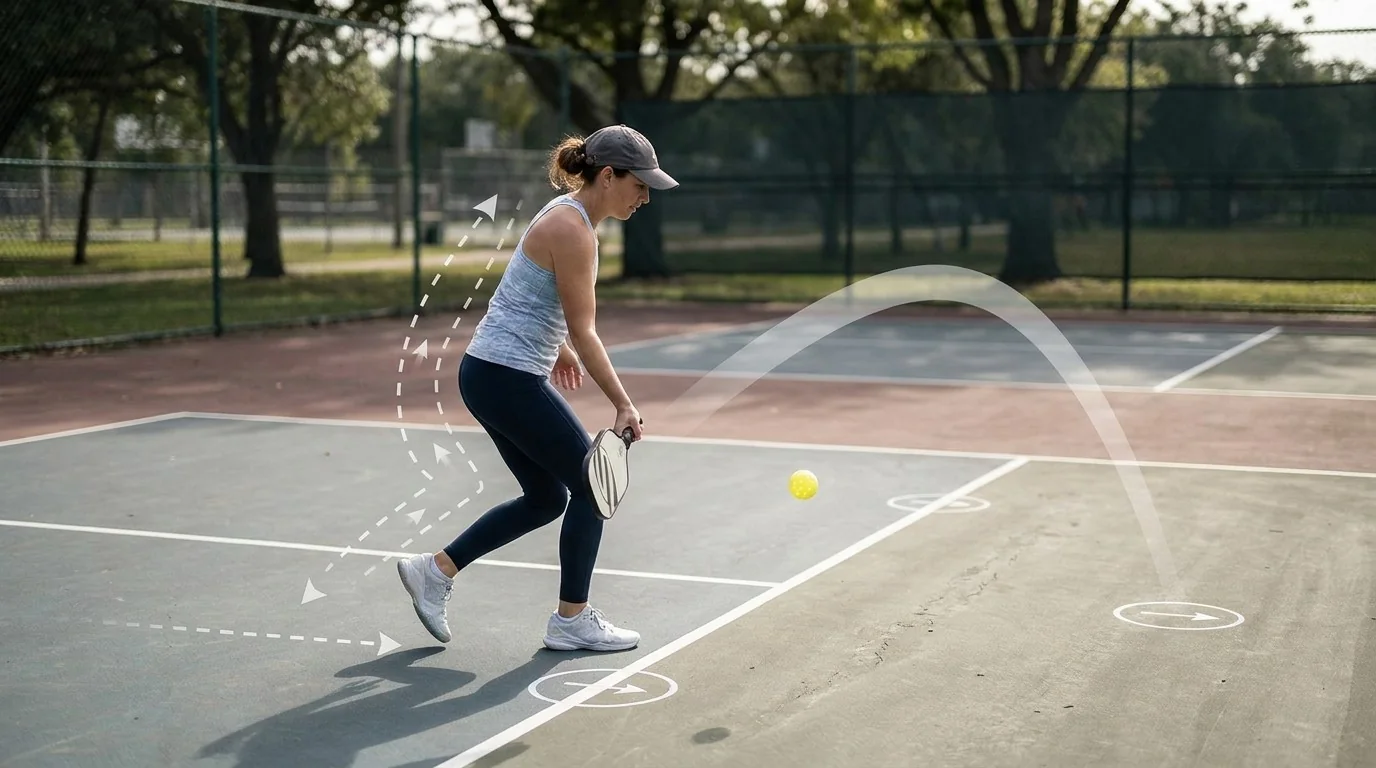
A reliable third-shot drop is easier to build in stages than to force from the baseline on the first attempt. Start close to the kitchen, keep the ball low, and move back only after the same motion produces a useful arc. The progressive drill below gives you a clear checkpoint at every distance.
Start with the motion you can control
Begin near the kitchen line with a partner on the opposite side. Exchange gentle dinks first so both players see the ball and settle their touch. The drop and the dink use a related soft motion, but the drop must travel farther, so the paddle needs to continue toward the target for longer.
Keep the ball in front of your body. Move your feet into position instead of reaching or running through contact. Let the ball descend after the bounce when the situation allows, rather than striking it at the peak of its rise. A calm contact and a clear target matter more than a fast swing.
Use the slinky progression
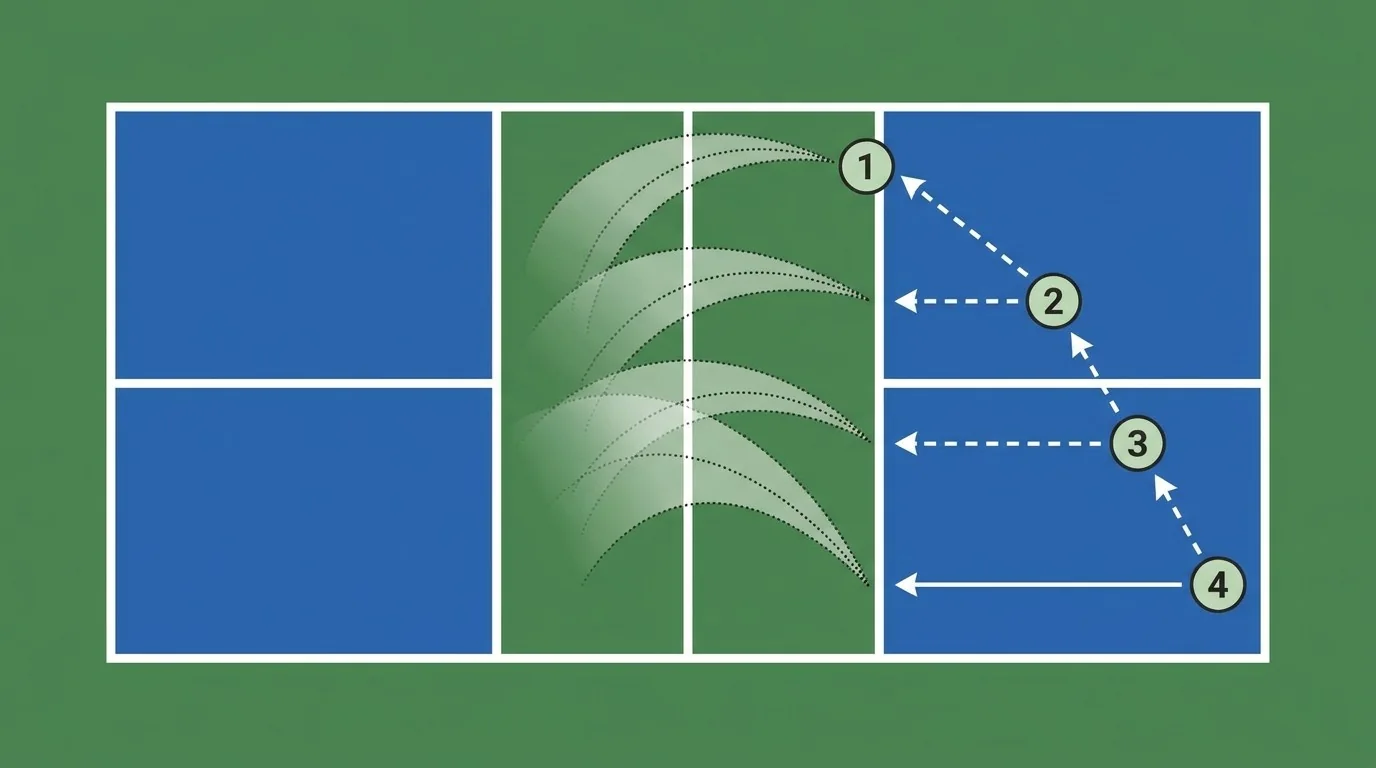
- Make two successful dinks. Stay near the kitchen line and send two balls that give your partner a comfortable contact at or below the knees. The point is to establish control before adding distance.
- Take two steps back. After the two successful balls, move back a small amount. Keep your stance balanced, your contact in front, and your paddle path smooth.
- Make two successful drops. From the new position, send two soft balls into the opponent’s kitchen. If the ball is short, check your contact position and allow the follow-through to travel. If it sails long, reduce swing speed before changing everything else.
- Repeat the checkpoint. Move back two steps only after you have two useful drops from the current spot. Stay at the same distance when the result is inconsistent; do not turn a practice progression into a race to the baseline.
- Reach the baseline gradually. As the distance grows, extend the follow-through while keeping the swing calm. The extra paddle travel helps the ball cover more court without turning the shot into a drive.
- Work forward again. Once you reach the baseline, make a small set of controlled drops, then return toward the kitchen using the same two-ball checkpoint.
The progression can be done in either direction of the court. Your partner can add a modest change in pace or spin after the basic pattern is stable, but do not add several new problems at once.
Keep the contact and recovery connected
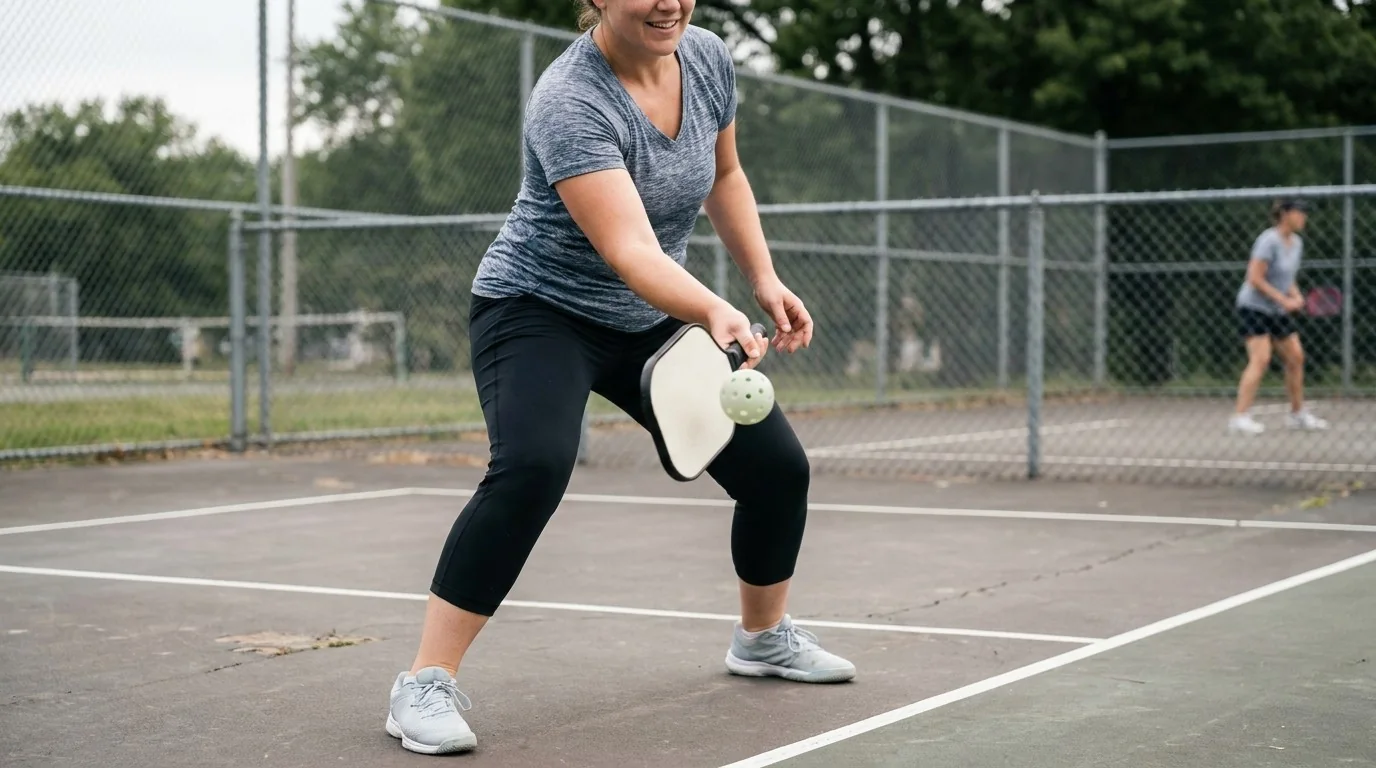
Set the feet before the swing whenever time allows. A closed or slightly turned stance can help you step forward while keeping the ball in front. Keep the wrist quiet enough that the paddle face does not change suddenly. Guide the ball with the shoulder and arm, then let the follow-through extend toward the kitchen.
After contact, do not admire the shot from the baseline. Recover toward the next useful position while reading the opponent’s reply. A drop earns you time, but it does not automatically give permission to sprint forward. Move when the ball and your balance make the next step safe.
Fix the common breakdowns
If the ball goes into the net, first check whether contact was too far behind you or whether the paddle path stopped early. If the ball pops up, check whether you struck it while it was rising, opened the face too much, or used an abrupt wrist motion. If the ball travels deep, keep the same general shape but lower the swing speed and finish with control.
If you cannot produce two successful balls from a distance, move closer again. The drill is doing its job when it shows where control changes, not when it hides that distance by adding force. Finish each round with a few drops in both directions, then note whether your feet, contact point, ball height, and recovery remained consistent.