Third-Shot Drop Troubleshooting: Fix Four Costly Errors
Fix four costly third-shot-drop errors: balls into the net, balls that sit up, drops that travel too deep, and late recovery into the kitchen.
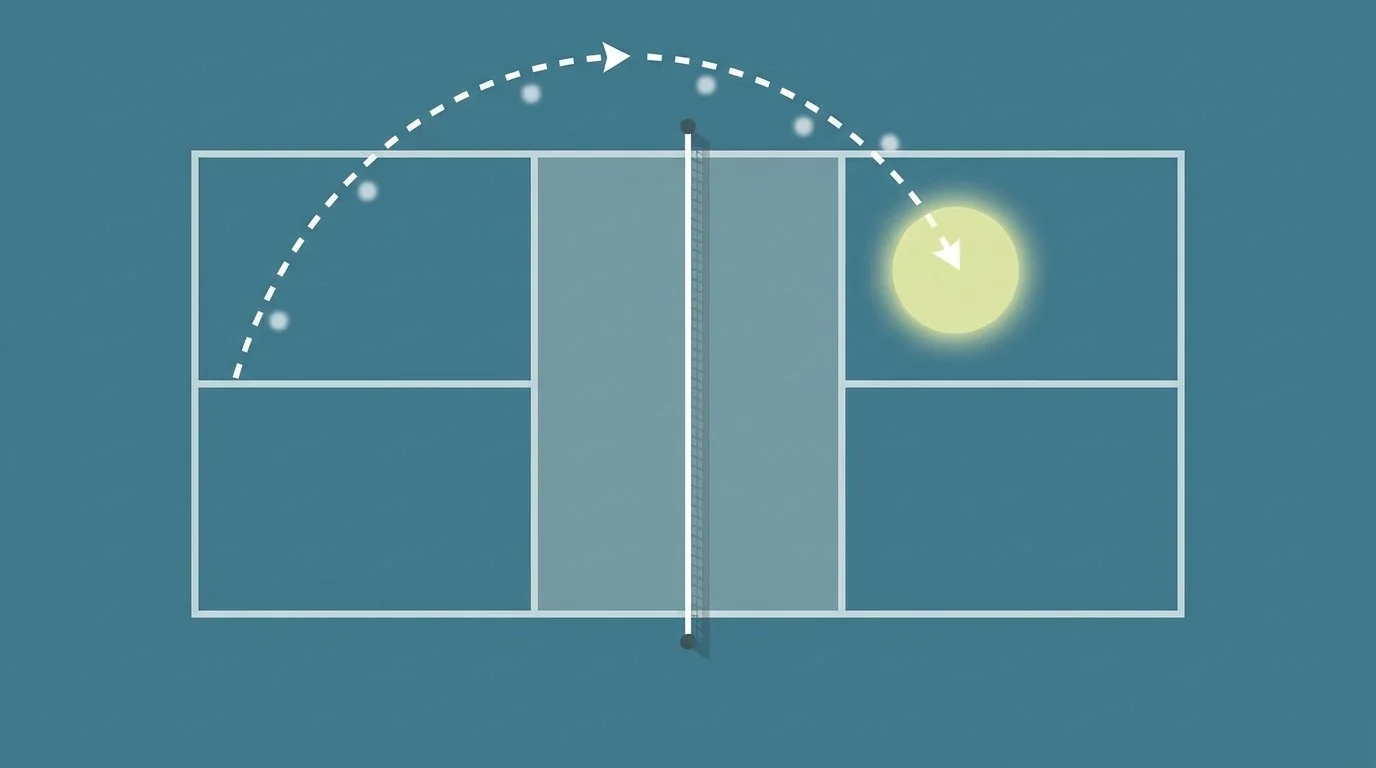
A third-shot drop should slow the rally enough for your team to move forward. When the shot keeps failing, changing the whole swing after every miss only hides the real problem. Check one thing at a time: the ball’s height over the net, the contact point, the landing depth, and the recovery that follows.
What a useful drop needs to do
The ball needs to clear the net with a workable margin, descend into the opponent’s Non-Volley Zone, and leave you enough time to move. It does not have to be perfect or impossible to attack. A repeatable ball that lands short and low is more valuable than a risky attempt aimed at a line.
Read the incoming ball before forcing the shot. A low, fast ball may call for a reset or another defensive reply rather than a textbook drop. When you are reaching or contacting behind your body, improve your footwork first if the rally gives you time.
Error 1: The ball clips the net
A drop into the net usually has too little lift, a contact point that is too low, or a late arrival. Do not fix it by simply swinging harder. Create a modest upward path and let the paddle travel under the ball without a dramatic scoop. Keep the paddle face steady through contact and finish balanced.
If the incoming ball is already low and fast, accept that the best choice may be a safer reset. When you have time, use small steps to get the ball in front of your body. A late contact can turn a sensible swing path into a ball with no net clearance.
Error 2: The ball sits up
A high drop gives the opponents an easy chance to attack. An open paddle face, too much upward lift, or trying to create height with the wrist can all produce a balloon. Keep the stroke compact and let some of the incoming pace do the work. You want a soft arc, not a ball that rises for the opponent.
Start with a comfortable feed and reduce the height gradually. If the ball lands in the kitchen but bounces high, change the face angle or contact before adding forward speed. Judge the shot by the opponent’s contact: landing short is not enough if the ball arrives at a comfortable volley height.
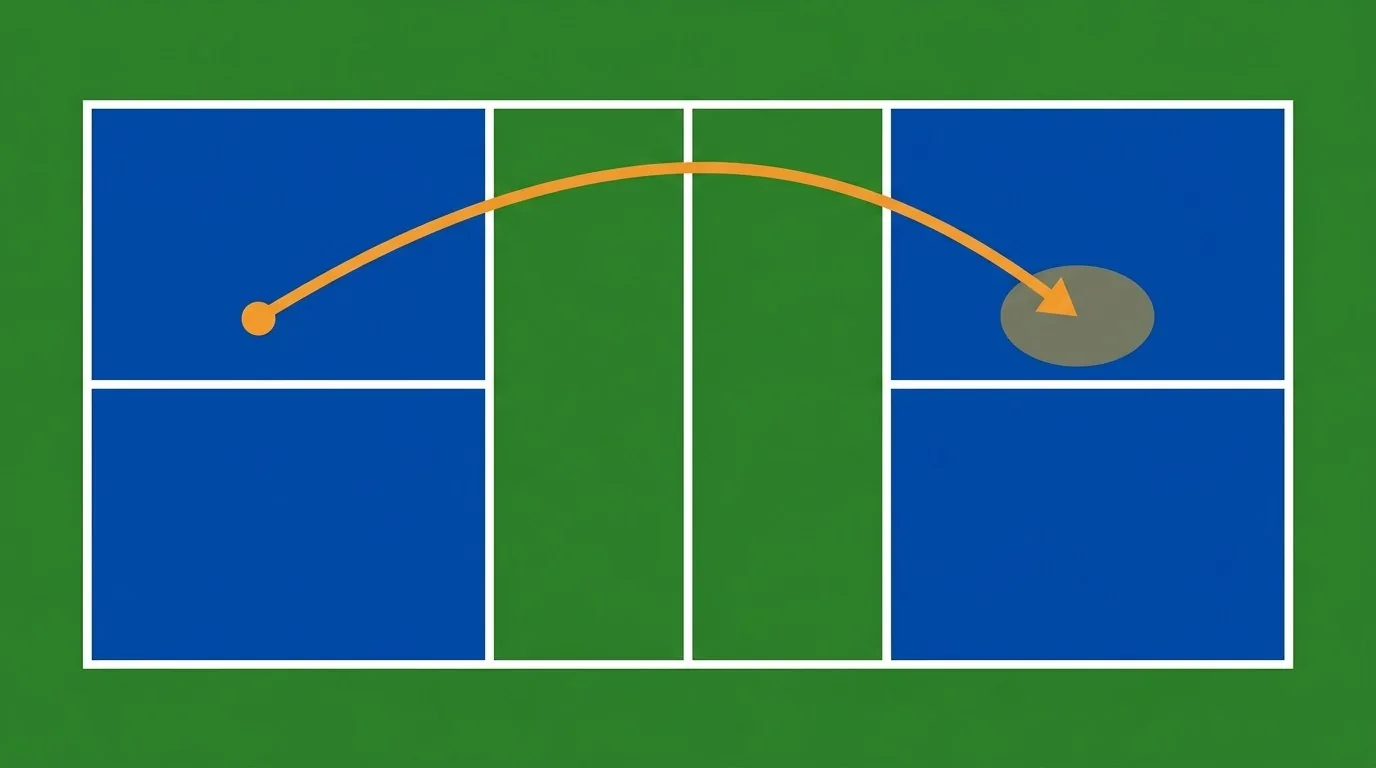
Error 3: The ball travels too deep
A drop that reaches the back of the kitchen or carries beyond it may be too firm, too flat, or pushed too far forward at contact. Shorten the motion and soften your grip. Keep enough lift to clear the net, then let the ball fall instead of driving it toward the baseline.
The incoming ball changes the answer. A hard drive brings more energy into your shot than a slow bounce. Match your motion to that energy rather than repeating one identical swing. When the ball is difficult, choose a playable target with margin and prepare for the next exchange.
Error 4: The shot is good, but recovery is late
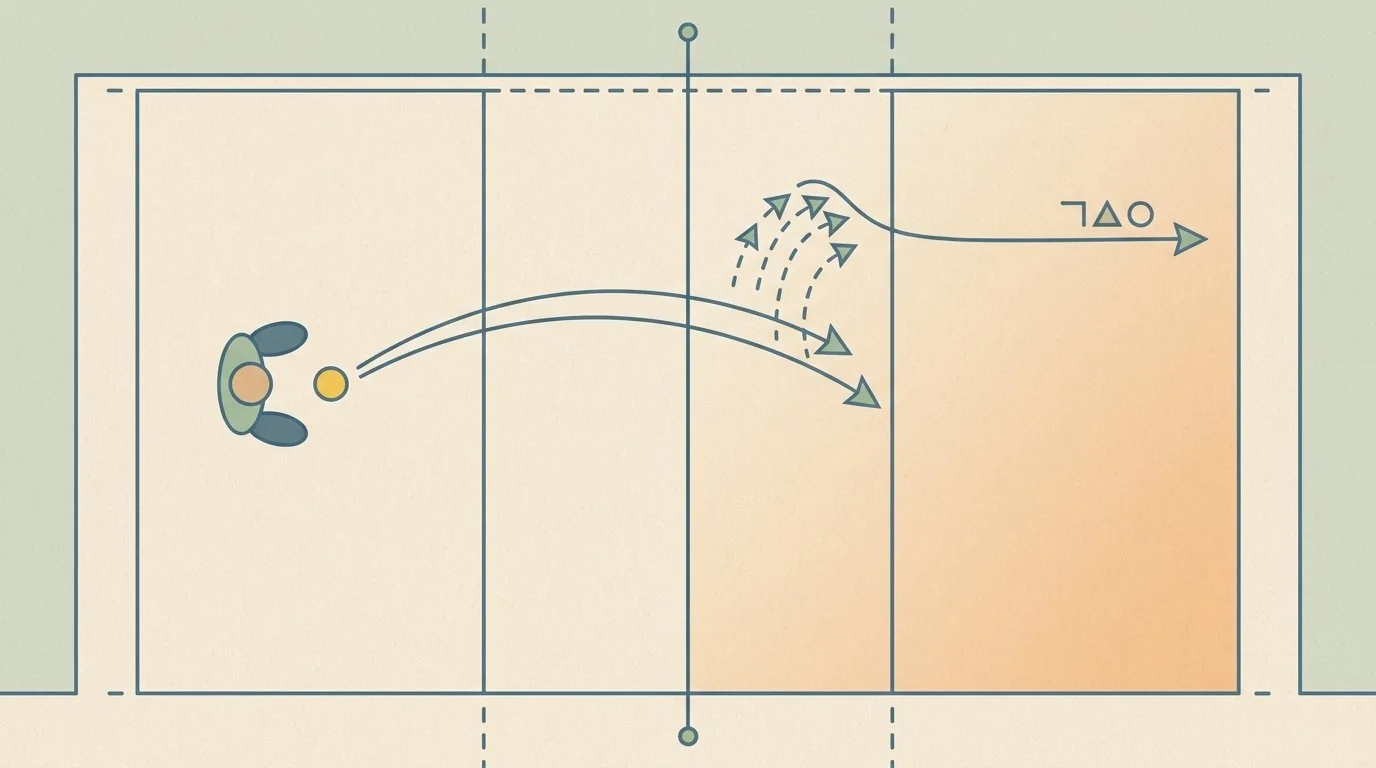
A technically sound drop does not end the play. Once the ball is safely away, move forward in stages toward the kitchen. Take controlled steps, watch the opponent’s contact, and split before the next ball. Do not sprint blindly through the transition zone. A low reply may require a reset, while a higher reply may allow another step.
In doubles, move with your partner. The player who hits the drop should not leave a large gap behind, and the partner should adjust without crowding the middle. Arrive balanced enough to block, reset, or dink instead of reaching from a run.
Practise one problem at a time
Use cooperative feeds and isolate each error. First, hit ten drops while focusing only on clearing the net. Repeat while checking whether the ball lands short enough to deny an easy attack. Then add the recovery rule: after every drop, take controlled steps and split when the feeder makes contact.
Change only one variable between rounds: paddle-face angle, contact height, swing length, or starting position. Have the feeder call the next ball high, low, or wide so you practise choosing rather than repeating a memorized stroke. Count balanced decisions and useful recoveries, not only balls that land in the kitchen.
A reliable third-shot drop is a decision-and-movement pattern, not a magic swing. Give the ball room over the net, recognize the pressure in front of you, and keep your feet connected to the next shot.