Pickleball Third-Shot Sequences: Read the Fifth Shot
A practical guide to third-to-fifth-shot sequences: split step on contact, read ball height, and choose a drop, attack, or reset.
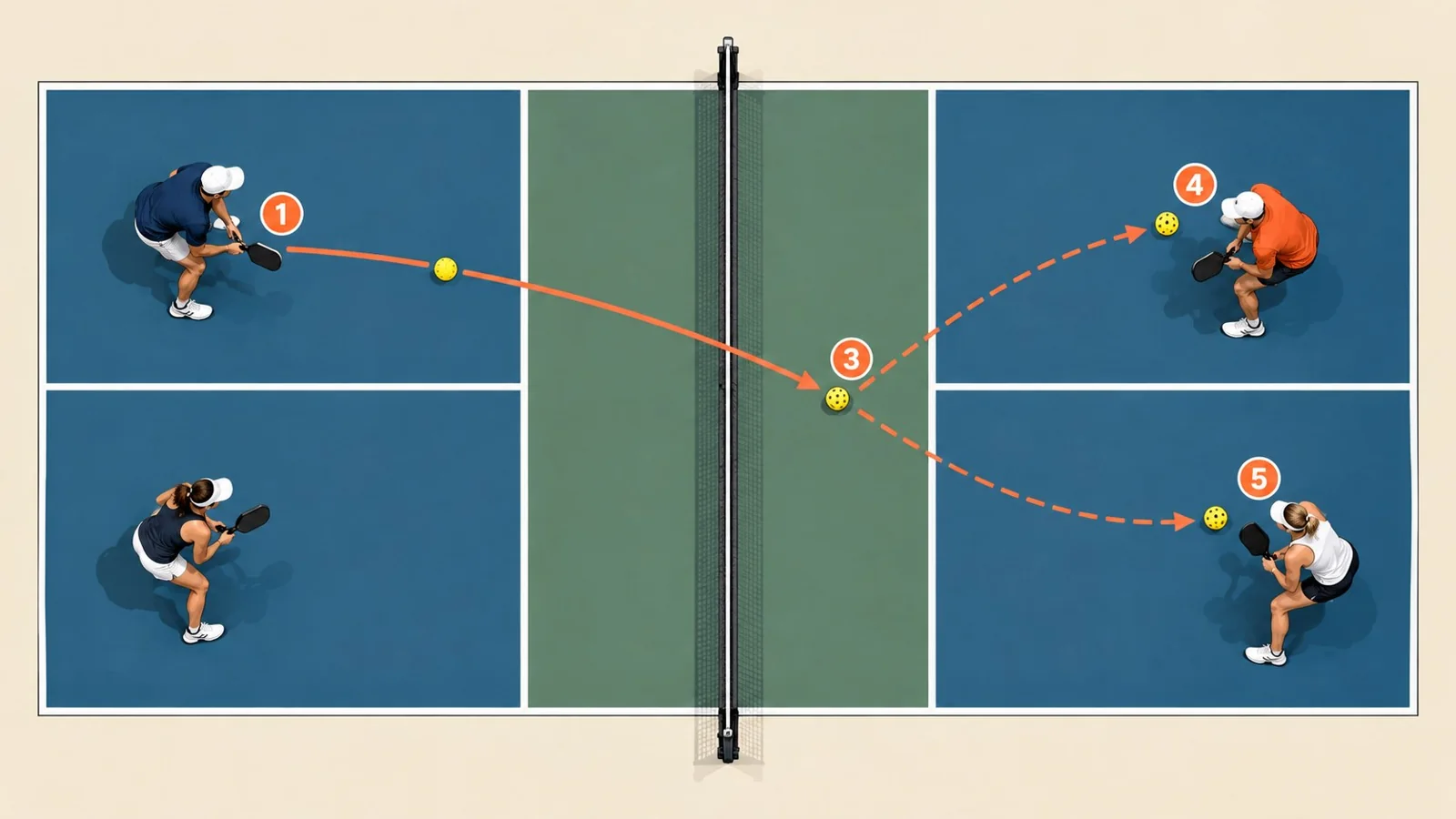
A third shot is only the beginning of the point. The useful question is what that shot makes possible next: a controlled fifth-shot drop, a counterattack, or another reset that buys time. The pickleball third-shot sequence turns that idea into a practical reading habit. Move after your shot, stop as the opponent contacts the ball, and let the height of the reply decide whether you attack or soften the exchange.
Why the split step connects the sequence
After the third shot, move forward only while the ball gives you time. As the opponent prepares to hit, stop your momentum and land in a compact split step. This balanced pause keeps both directions available. Without it, you run through the opponent’s block or arrive on your heels when the next ball reaches you.
The split step is not a separate trick reserved for one pattern. It anchors a good drive, a poor drive, a soft drop, and a ball that forces you to retreat. Use the opponent’s contact as the timing cue. You should be ready to read the next ball at the moment it leaves the paddle, not after it has already passed your feet.
Three useful third-to-fifth-shot patterns
The first pattern is drive to drop. A firm third-shot drive from deep can provoke a shorter block into the transition area. Hold your position or take only a small step until you see the reply. Then move into the shorter ball, keep the swing compact, and drop it into the kitchen. Do not let the drive turn into a reckless charge; a balanced fifth shot is the purpose of the sequence.
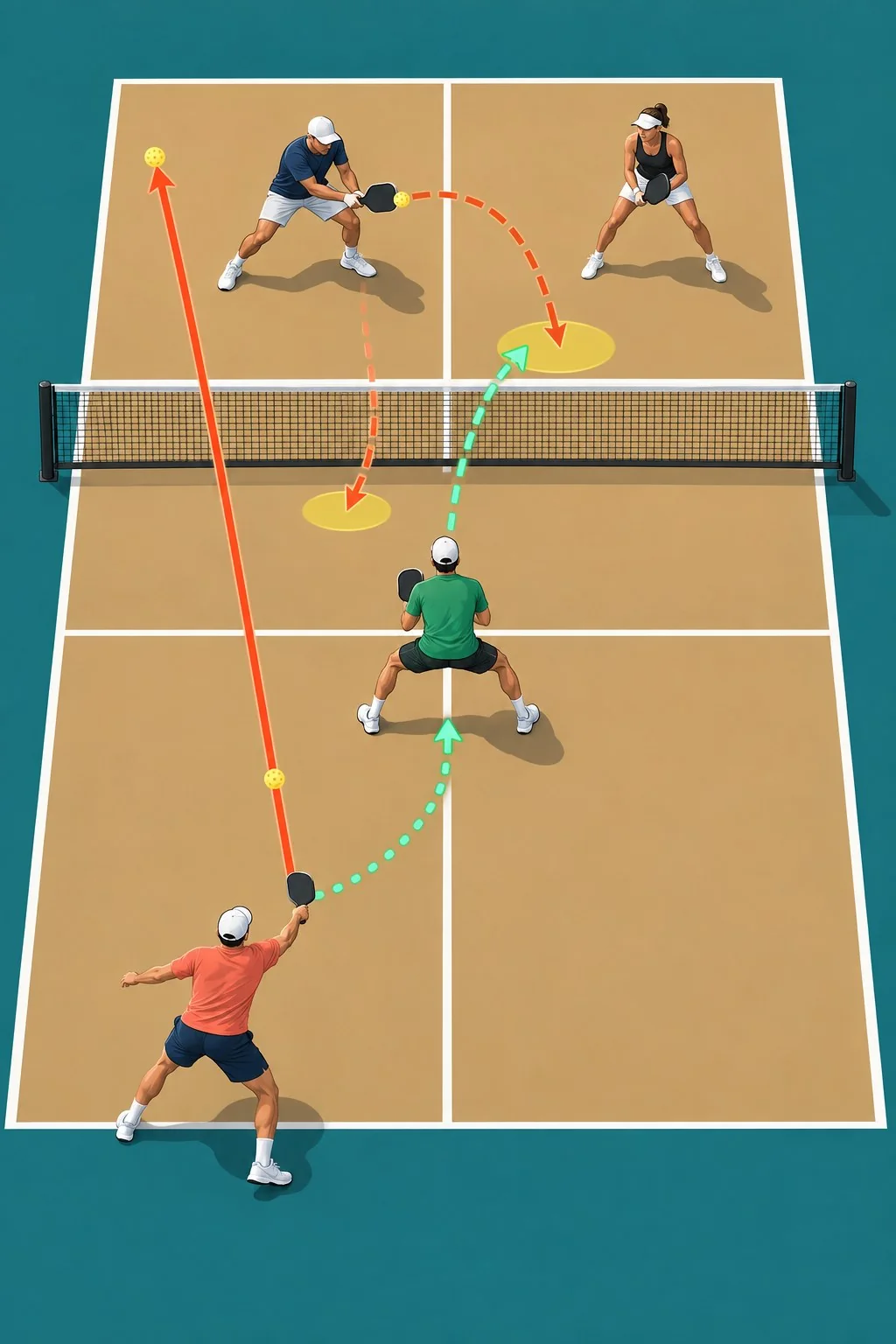
The second pattern is drive to attack. Use it when the return is short, your drive forces a popup, and the next ball is above the net. Attack the favorable ball rather than swinging hard by habit. If the opponent’s reply is low, the same sequence changes: stabilize and reset instead of trying to manufacture a winner.
The third pattern is drop to attack. A quality third-shot drop can make the opponent reach or hit from below the net. Move forward while the ball travels, split step as they contact it, and look for a fifth shot that sits above the net. The attack comes from the advantage created by the drop, not from a predetermined plan to hit hard.
Let ball height choose attack or reset
Ball height is the simplest decision rule in the sequence. When the opponent is hitting up, you may have an attackable ball. When the opponent is hitting down, reset or block with soft hands. Court position still matters, but height tells you whether pace is safe at that moment.
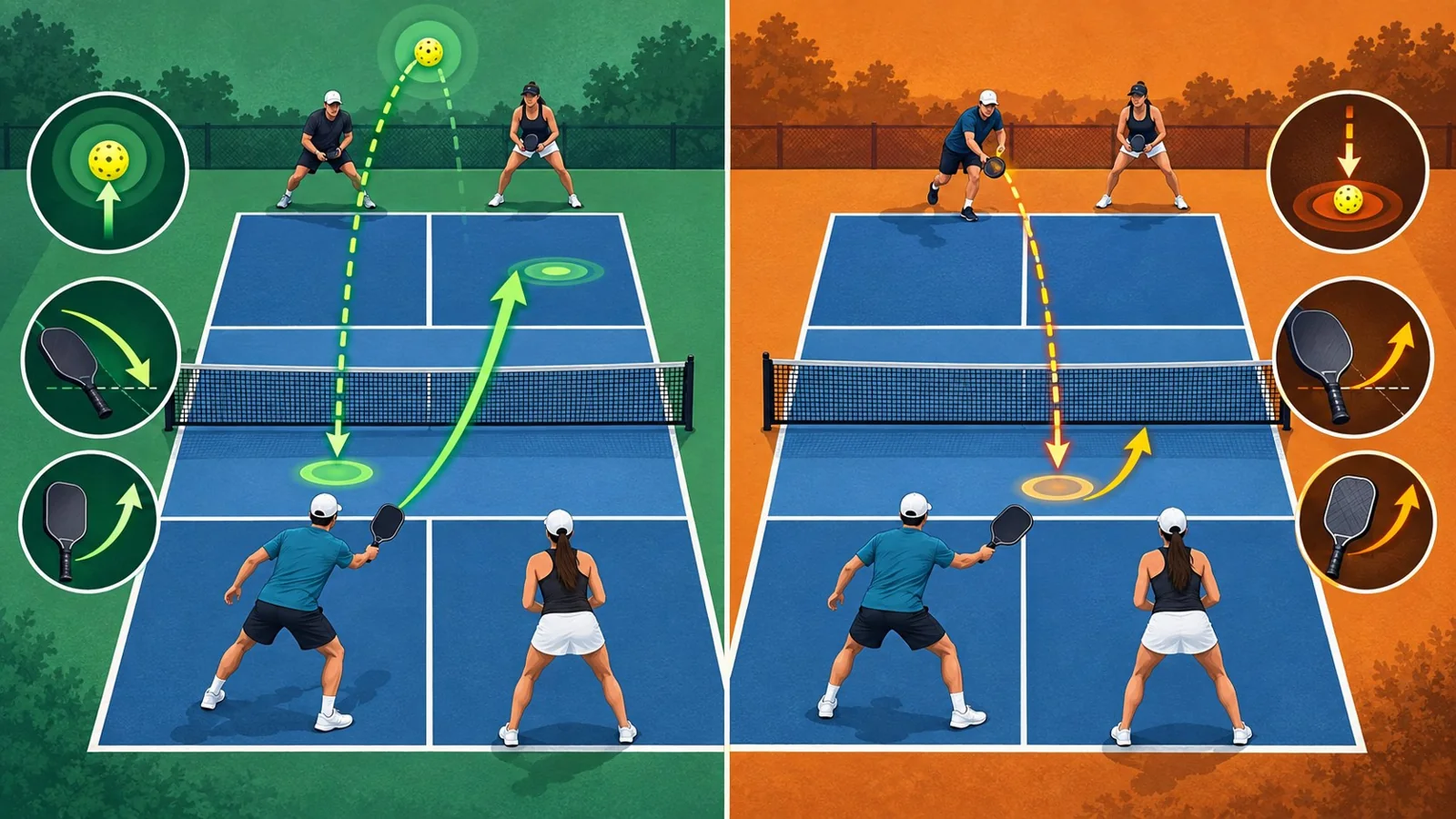
A decent drop can still produce two different replies. If the opponent steps in and drives from low to high, prepare to stabilize and counter when the ball allows it. If they are above the ball and driving down, hold your ground, absorb the pace, and send a low reset to the kitchen. Read the swing path and body position before choosing the stroke.
Recover from a poor third shot
A high third-shot drop is not an automatic lost point. Once you see that the opponent can attack, stop your forward movement and protect your balance. The next ball is usually another controlled drop or reset. Push forward with intention, but do not swing as though the rally must end immediately. Neutralizing the attack can still bring you to the kitchen.
Practise the pattern in stages. First, rehearse the split step without a ball: move forward, stop on a partner’s contact call, and land ready. Next, drill the drive-to-drop sequence with a predictable block. Then vary the feed so you must call “attack” or “reset” from the opponent’s ball height before you swing. Finish with live points where the third shot is judged by the quality of the fifth-shot decision, not by whether the first ball looked impressive.
The best sequence is rarely the flashiest one. Link the third shot to the next contact, stop before you strike, and choose pace only when the ball gives you the height to control it.