Pickleball Transition Checkpoints: Move Forward Without Rushing
A practical guide to advancing through pickleball transition in short bursts: stop, split step, reset when needed, and recover with court awareness.
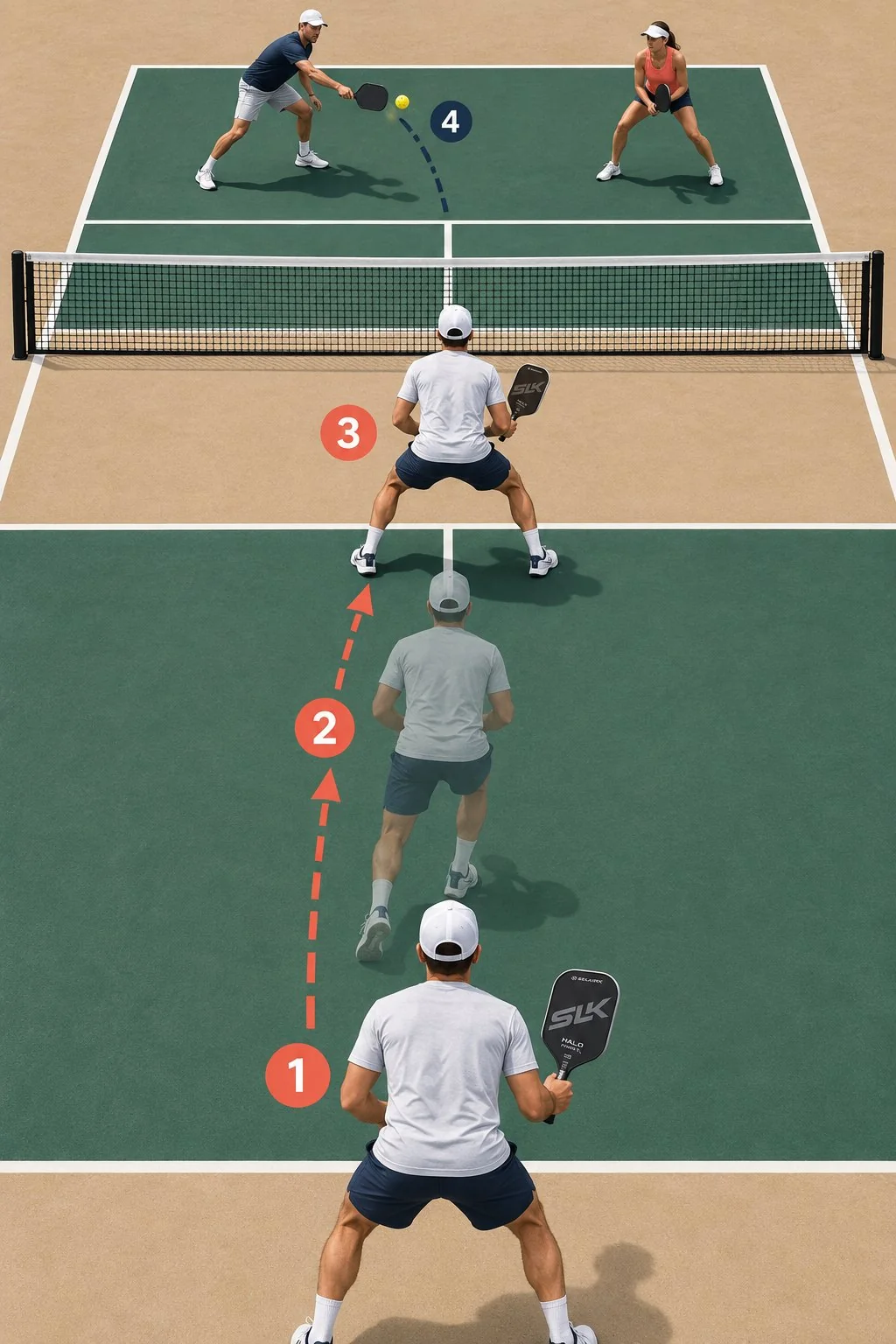
Good transition footwork is not a sprint from the baseline to the kitchen. It is a sequence of short advances, well-timed stops, and decisions made while the ball is traveling. Players who run continuously often arrive with their feet still moving, then try to hit a difficult ball from an unstable position. The better habit is to move forward in checkpoints.
Start low and land ready
Between shots, bend at the knees rather than folding at the waist. Keep your head up, weight slightly forward over the balls of your feet, and the paddle in front. This coiled position lets you push in any direction without first standing up or resetting your balance.
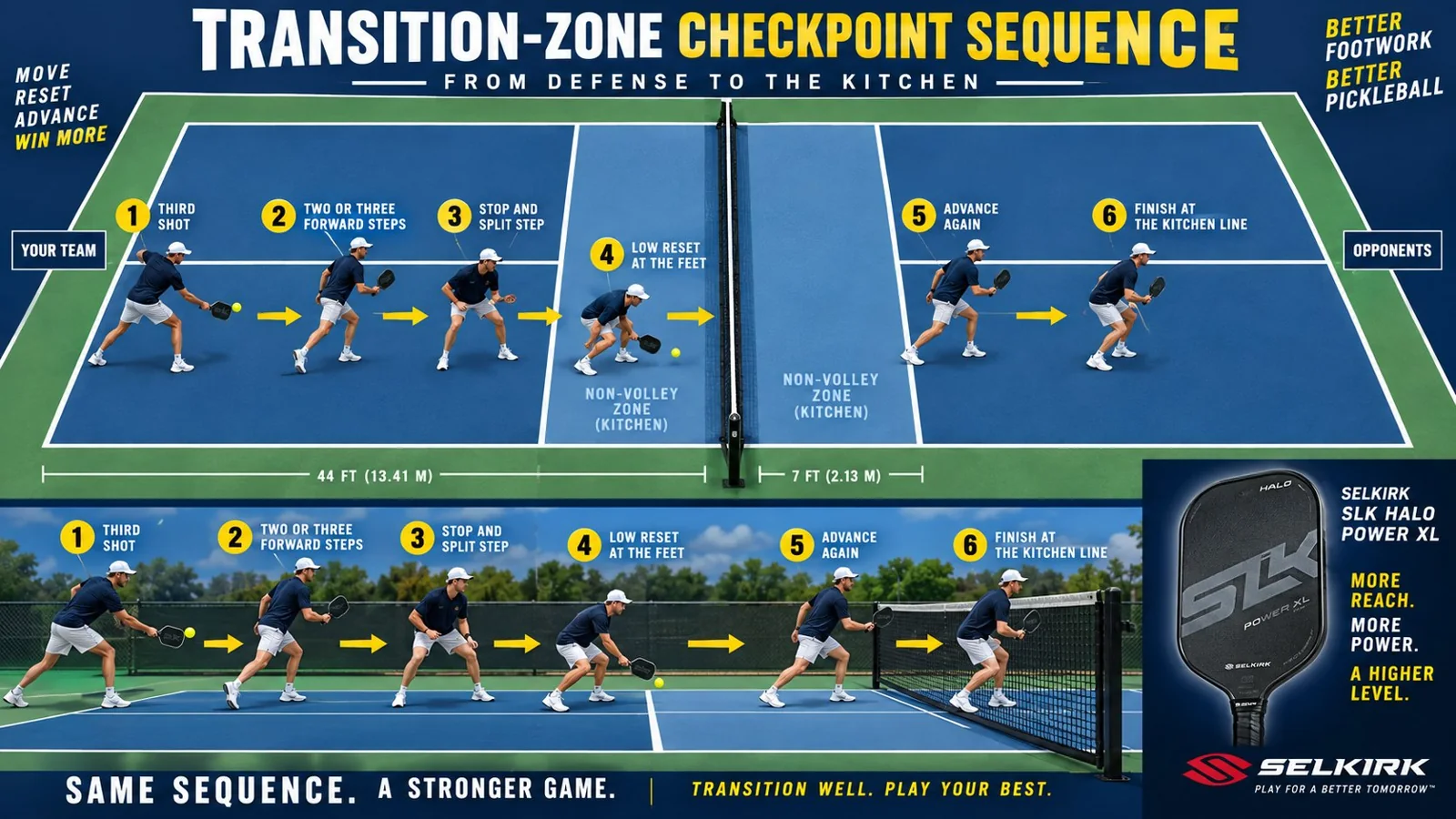
The first checkpoint is the opponent's contact. As the opponent is about to strike, make a compact split step and land balanced. The timing matters: landing too early leaves you flat-footed while the ball is still traveling; landing too late means the ball has already forced your first move. Use a partner's call of “hit” as a simple timing cue during practice.
Move through transition in bursts
After your third shot, take two or three purposeful steps forward while the ball is in flight. Then stop, split step, and read the next contact. Do not treat the transition zone as a place to stand indefinitely, but do not run through it blindly either. Your pattern is advance, stop, read, and advance again when the next ball allows it.
If the next ball reaches your feet before you arrive at the kitchen, lower the paddle and play a controlled reset rather than forcing a hard attack. A low reset buys the next movement opportunity. Keep the swing compact and let the paddle absorb pace; the goal is to bring the ball down into the non-volley zone and continue forward when the opponents cannot attack comfortably.
When the ball is high enough to attack, you may use a drive or firm volley, but the footwork rule remains the same: stop before contact whenever possible. Hitting while drifting forward makes the face harder to control and leaves you late for the reply.
Use the right path after a wide ball
After a wide shot, recover diagonally toward the middle instead of running straight back to the place where you started. The diagonal path covers more likely angles and helps restore court balance. In doubles, recovery is shared: if one player is pulled wide, the partner shades toward the center without abandoning the opposite lane.
Stay aware of the ball and your partner at the same time. Better players begin moving while their own shot is in flight, using its height and depth to estimate how much time they have. That small head start is often more valuable than taking extra frantic steps later.
Practice the checkpoint pattern
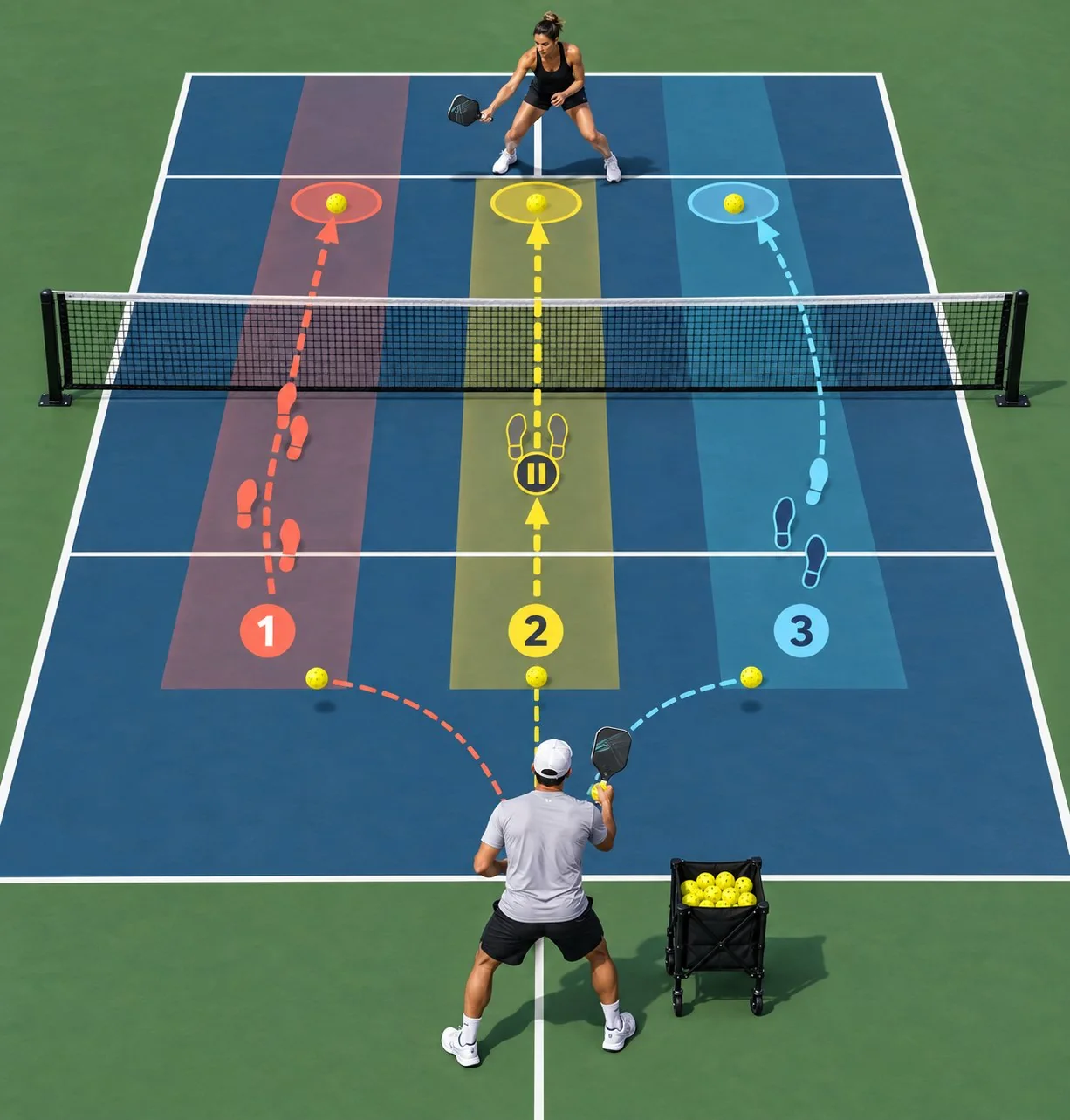
Start with shadow work. From the baseline, rehearse two or three forward steps, a quiet stop, and a split step. Repeat the pattern ten times without a ball, focusing on landing with the paddle up and knees bent. Then add a partner feed: advance after your shot, freeze at the opponent's contact, and reset if the feed arrives low at your feet.
A useful kitchen drill is a lateral shuffle without crossing the feet. Keep the chest facing the net, use short steps, and maintain the ready position. Add random feeds only after the movement feels controlled. For fatigue, finish practice with a brief rapid-fire rally while keeping the split step timed to each contact. The aim is not speed for its own sake; it is preserving the same decisions when tired.
The lasting lesson is simple: feet first, then hands. Move forward in deliberate bursts, stop before the opponent's contact, reset low when necessary, and recover toward the best coverage position. Repeating that sequence turns the transition zone from a place of panic into a series of manageable choices.