Pickleball Transition Reset: Absorb Pace and Move Forward
A practical guide to the pickleball transition reset, covering soft contact, controlled forward movement, split-step timing, mistakes, and drills.
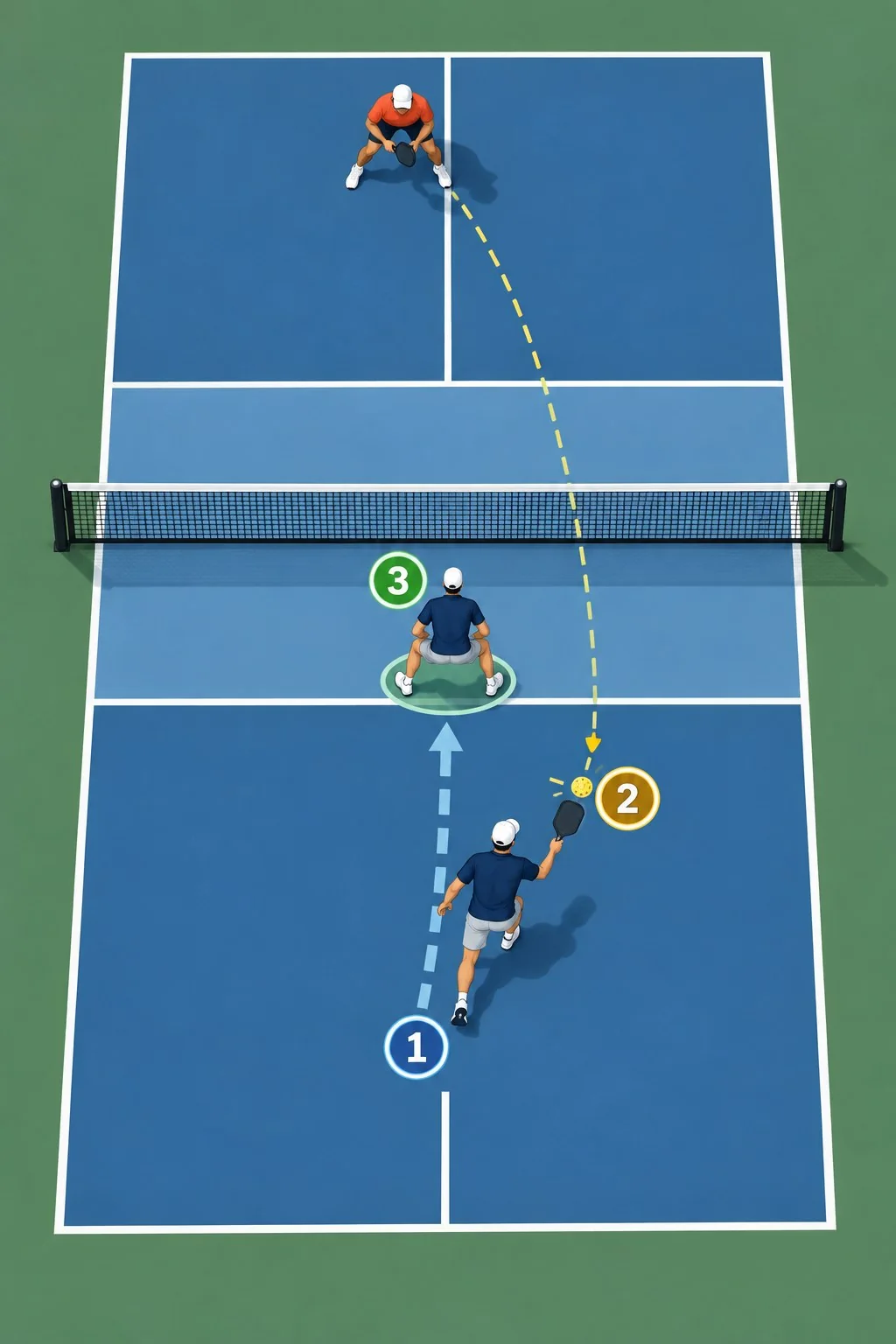
A transition reset is the soft shot that helps you survive the space between the baseline and the kitchen. Instead of trying to win the rally from an unstable position, you absorb the incoming pace, send the ball low over the net, and use the extra time to move forward. The shot works best when your feet and your stopping point are planned around the opponent’s contact, not around a fixed rush to the line.
What the transition reset should accomplish
The reset has two jobs. First, it should make the opponent hit up or take a less comfortable ball. Second, it should give you enough time to improve your court position. A soft ball alone is not enough if you are still drifting forward when the reply arrives. The goal is to finish the exchange balanced, with the paddle ready and the next movement available.
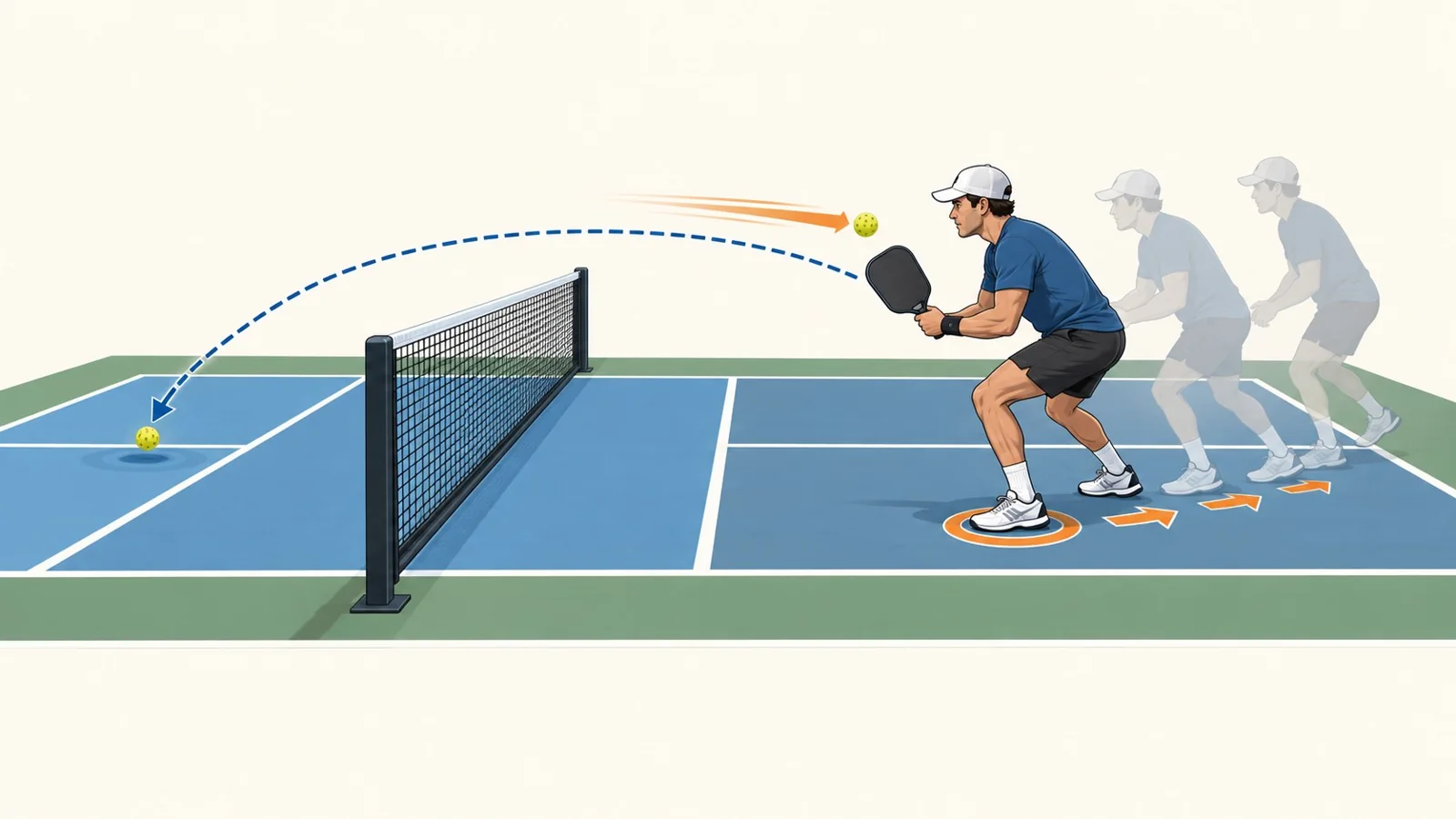
Use a compact swing and a quiet paddle face. Let the incoming speed do much of the work instead of adding a large backswing. Bend through the knees, keep the contact in front, and guide the ball with a controlled path. If you reach while standing tall, the face often opens and the reset floats high.
How to move after the reset
Do not sprint blindly toward the kitchen. Take small, progressive steps while watching the opponent. If your reset is low and the reply is soft, continue forward. If the opponent can attack, slow down and prepare to defend. The key moment is the split step: land with a stable base before the ball reaches you so you can push in either direction.
A practical rhythm is simple: reset, take small steps, read the reply, split, then react. Try to be stopped or re-balanced as your ball crosses the net, rather than arriving upright at the kitchen line. That pause lowers your center of gravity and keeps the paddle prepared for a block, counter, or another soft shot.
Common transition-reset mistakes
The first mistake is treating every ball as permission to keep moving. A poor reset or a high reply requires caution; continuing forward can leave you leaning into an attack. The second is standing tall as you arrive. A low athletic posture gives you more time to handle a fast ball. The third is stepping too far into the non-volley zone. Preserve room to retreat and adjust instead of crowding the line.
The safest correction is to separate the tasks. Contact the ball with control, then move. As you approach the kitchen, use shorter steps and let the opponent’s preparation determine whether you continue or stop. Think “get there fast, play it slow”: cover ground early, then reduce momentum before the next contact.
A three-stage drill for better timing
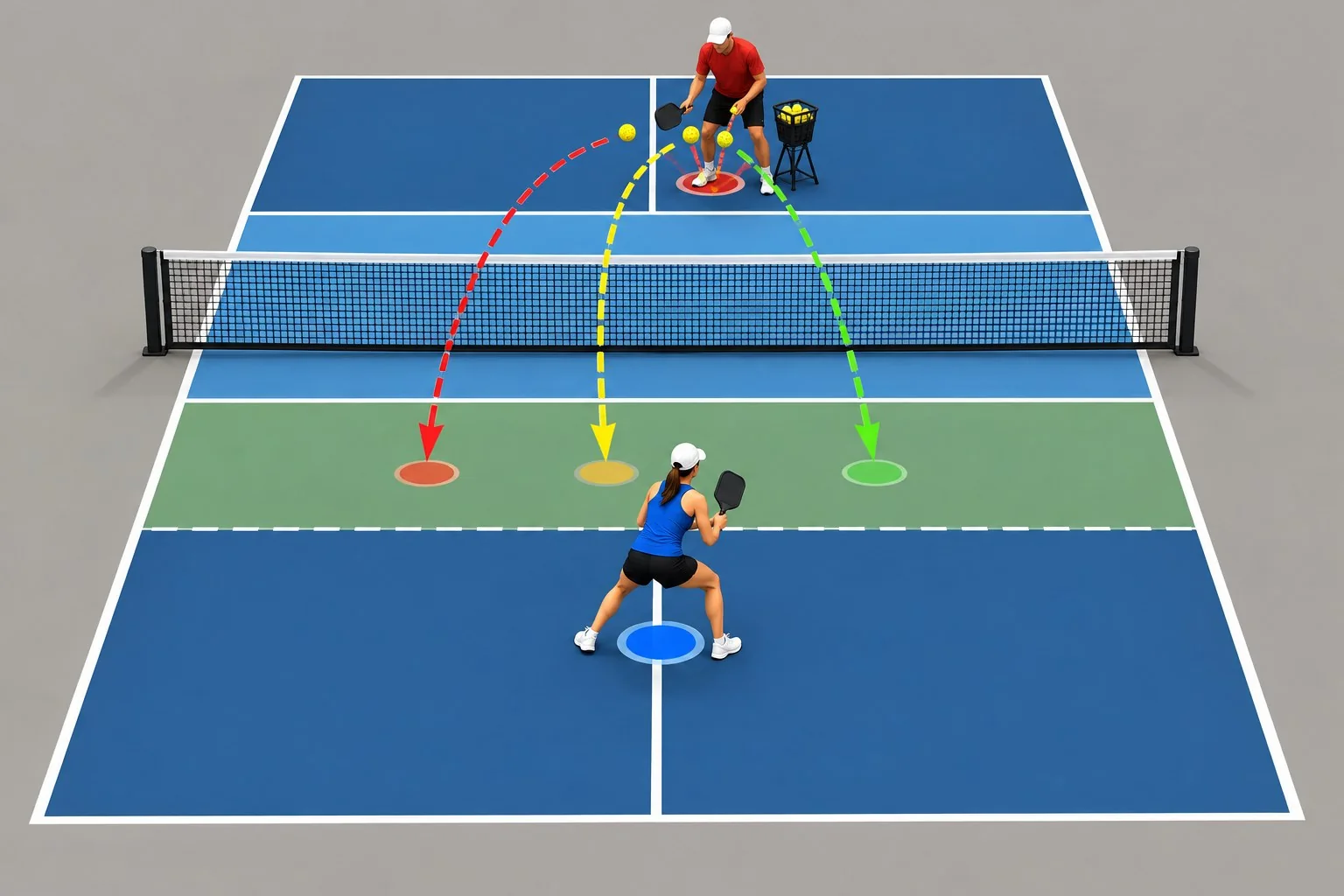
Begin with a cooperative feed from the kitchen. Start in the transition zone and reset ten balls, counting only those that travel low and land in the kitchen. After each shot, take two small steps and finish balanced. The point is not speed; it is learning to connect the reset with controlled movement.
Next, have the feeder mix soft and fast balls. Reset the fast feed, but continue only when the ball gives you time. Finish with live points in which the objective is to arrive balanced, not merely to touch the kitchen line. Review three questions: Did the paddle absorb pace? Did the feet stop before the reply? Was the body ready for either side?
A dependable pickleball transition reset turns a vulnerable part of the court into a sequence you can manage. Move early, soften the contact, and make the final steps quiet enough that the next ball finds you ready.