The Pickleball Two-Bounce Rule: A Clear Beginner Guide
A clear beginner guide to the pickleball two-bounce rule, including the serve, return, first legal volley, kitchen limits, and practice routine.
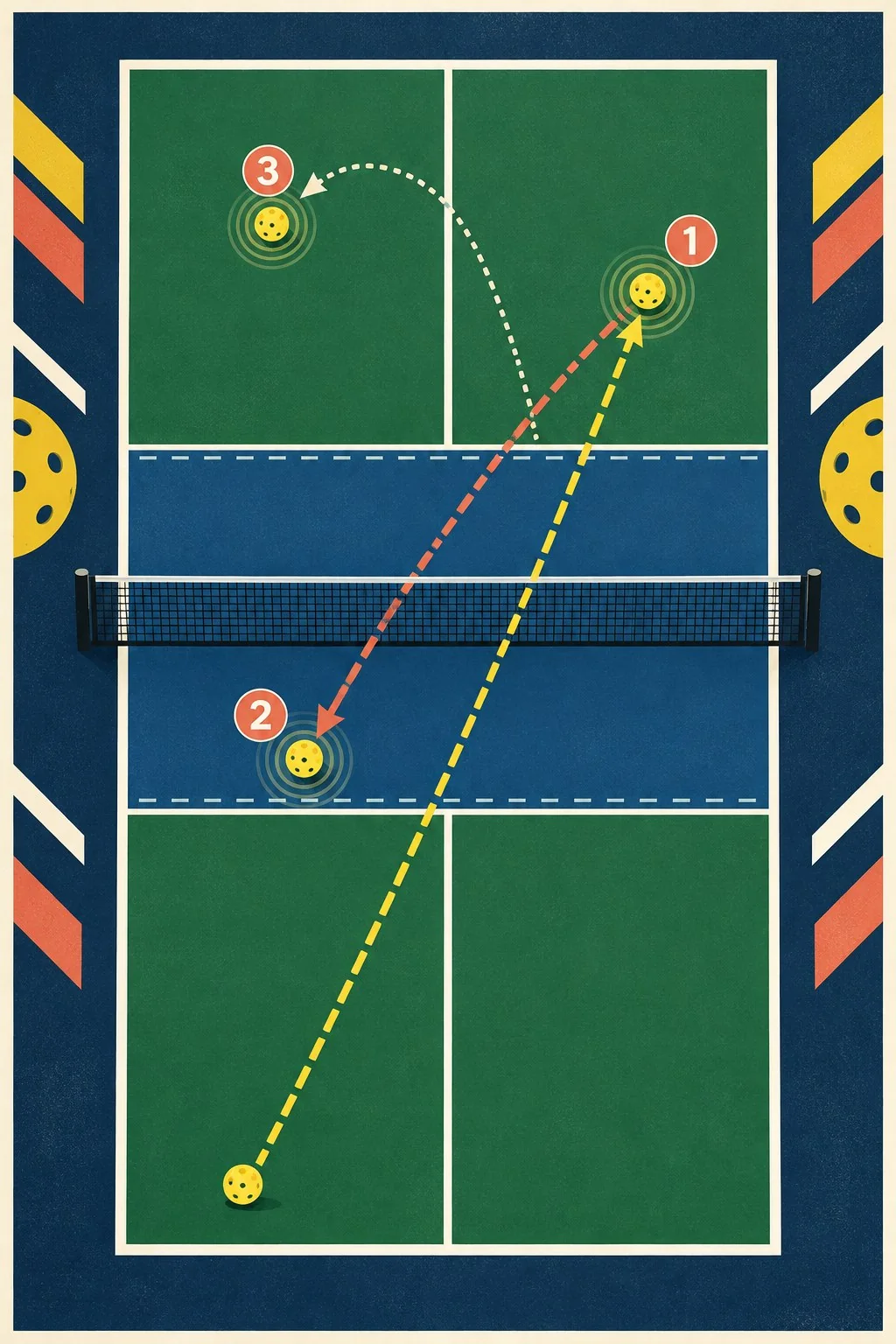
The pickleball two-bounce rule is simple: the serve must bounce once, and the receiving team’s return must also bounce once before either team may volley. After those two required bounces, players can choose between a volley and a groundstroke. The rule shapes the opening exchange and gives both sides time to move into a balanced position.
What the two-bounce rule requires
The sequence starts with a legal serve landing in the diagonal service court. The receiving player must let that serve bounce before returning it. The serving team then must let the return bounce on its side before striking the ball. Those are the two required bounces—one on each team’s side, in that order.
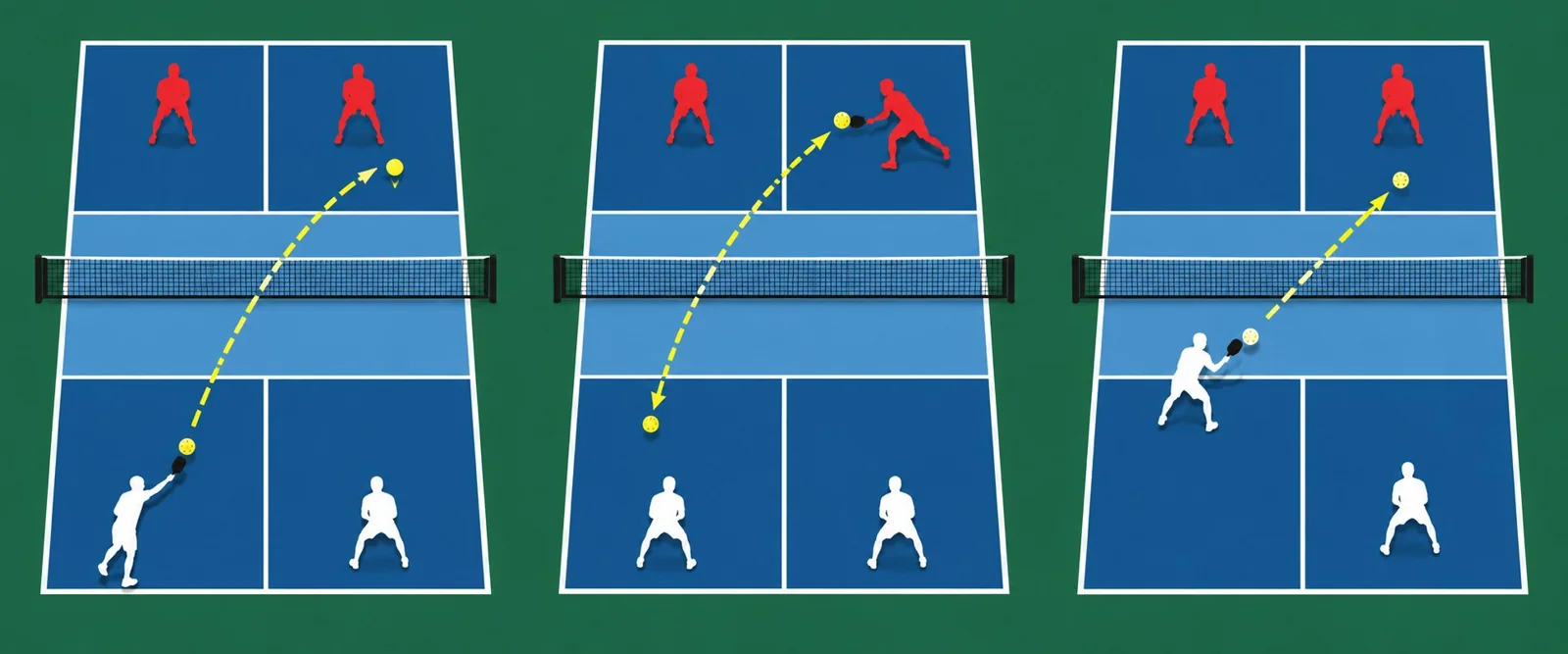
A useful example is a doubles rally in which Team A serves deep. Team B waits for the ball to land, plays the return after the bounce, and Team A lets that return bounce before hitting its next shot. Only then may either side hit the ball out of the air, provided the player also follows the non-volley-zone rules.
The rule does not mean the ball must bounce twice on the same side. It also does not require every later shot to bounce. Once the serve and return have each bounced, the rally becomes more flexible: a player may volley, let the ball bounce, or mix the two choices as the situation demands.
When volleys become legal
A volley is a shot hit before the ball touches the ground. During the opening sequence, a volley is premature if the required bounce on that player’s side has not happened. The most common error is rushing toward the net and taking the serve out of the air; the receiver must wait. The serving team’s common error is volleying the return before it bounces.
After the second bounce, the two-bounce rule no longer prevents a volley, but the kitchen still matters. A player may not volley while standing in the non-volley zone or touching its line, and momentum from the shot cannot carry the player into that zone. The ball may be volleyed from behind the kitchen line, or played after a bounce inside the zone.
A high return can tempt a player to attack early, yet the correct response is still to respect the sequence. Watch the ball, identify which bounce is next, and move into position without crossing the rule. Good footwork makes the rule easier because the player arrives ready for the first legal volley instead of reaching from an unstable stance.
Common mistakes and an easy match routine
Players often confuse the two-bounce rule with a requirement that every shot bounce. That is not the case. Another mistake is counting a bounce that happened before the serve or treating a ball clipped by the net as exempt. The relevant question is whether the served ball and the returned ball each bounced on the correct side before the first volley.
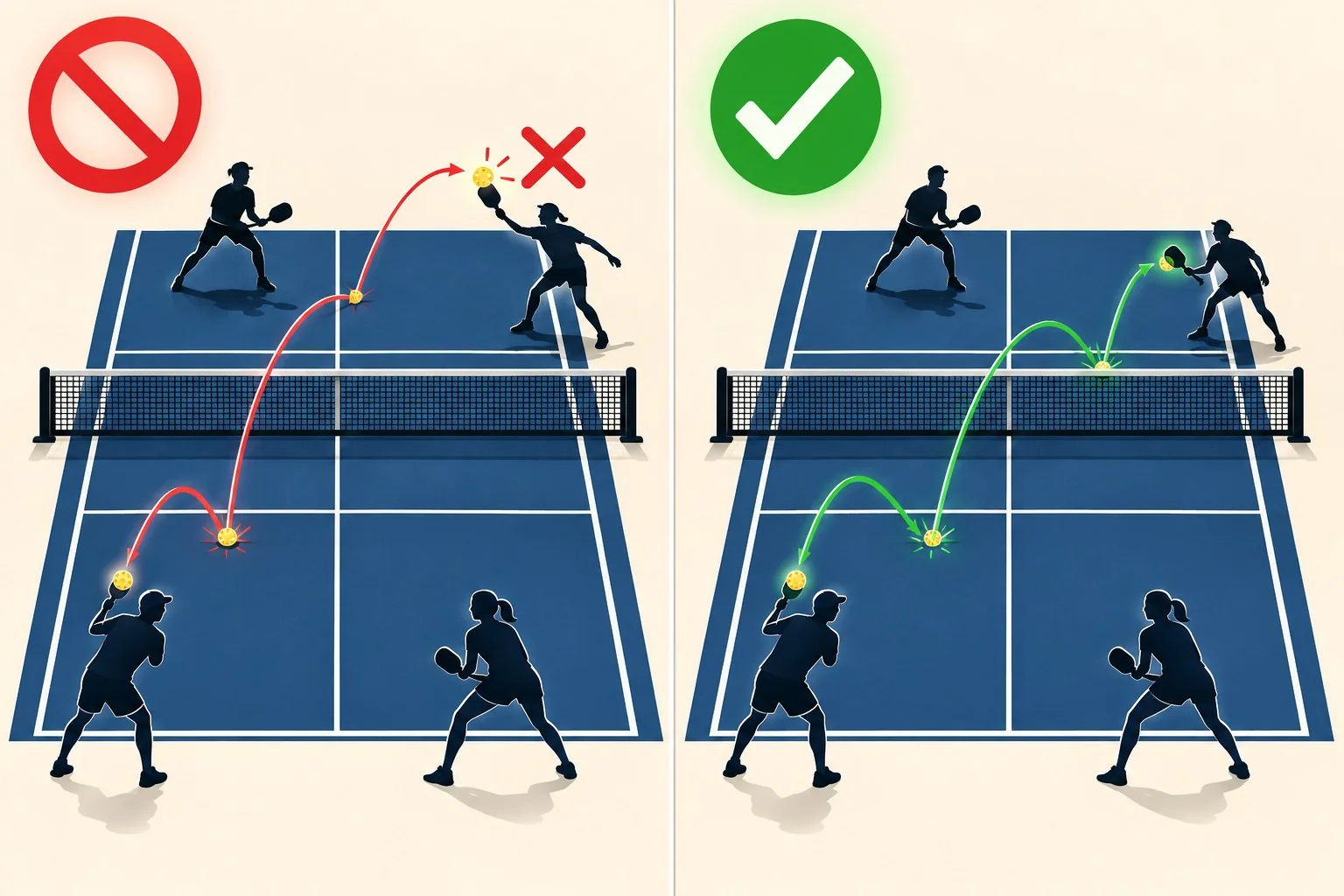
Before each rally, remember three checks: the serve must travel diagonally into the correct service court, the receiver waits for the serve to bounce, and the serving team waits for the return to bounce. After that, check the kitchen before volleying. This short routine is easier to use than trying to memorize a long exception list.
For practice, have one player serve softly while the receiver calls “bounce” and returns the ball. The serving player calls “bounce” again before playing the next shot. Repeat the sequence slowly, then add movement and realistic depth. The goal is not merely to delay contact; it is to arrive balanced after the second bounce and make a deliberate choice between a volley and a groundstroke.
Once the opening exchange becomes automatic, the rule stops feeling restrictive. It creates a predictable first phase, rewards patient movement, and then opens the rally for normal shot selection.